What Causes and How is Nerve Death in the Tooth Treated?
Have you ever experienced a sudden disappearance of your toothache, only to find that your tooth has turned gray or perhaps black at the same time? Doesn’t it sound scary? Now it seems like you are going through an episode of tooth nerve death, the only difference is that it is easier to experience than you could think. In a world where people don’t want to lose their natural teeth, it’s about time to be real – not all natural teeth are healthy ones. At times, your natural smile might cause more damage than good.
So in this case, it is not the wisest thing to just sit back and see if the condition gets better—it’s time to start discovering the unexplored territories of science and get the most suitable treatments available in this industry, for example: Dental veneers, Dental implants, or maybe a thorough Hollywood Smile makeover in Lema Dental Clinic in Istanbul, Turkey, all executed professionally with the help of technology and experienced dental experts.
What is Dental Pulp Necrosis?
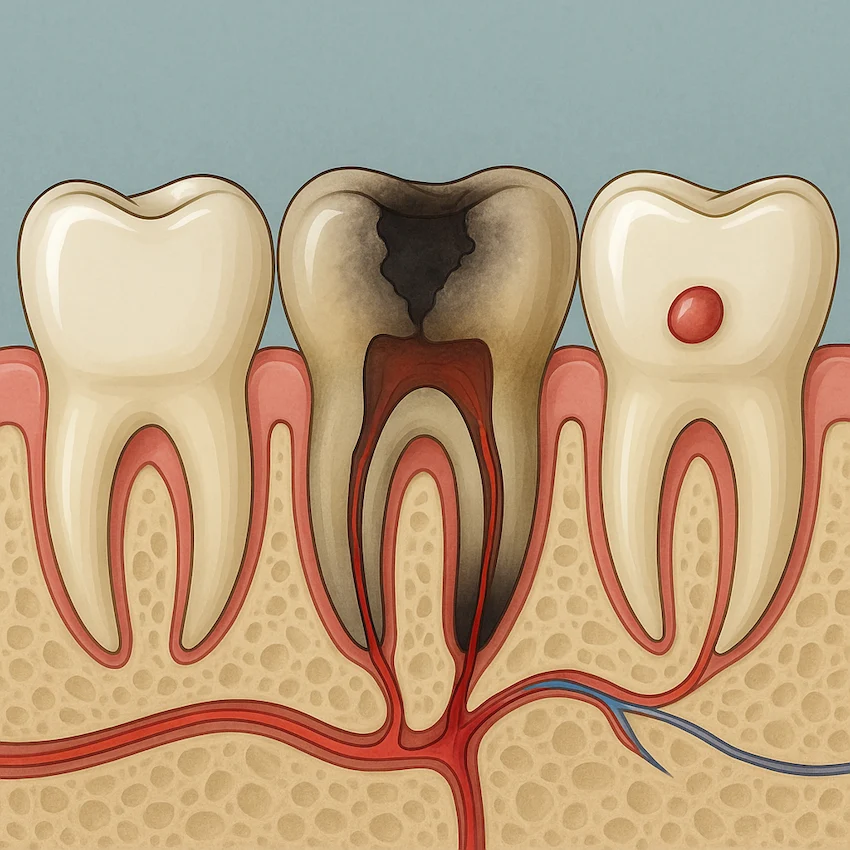
Allow me to provide the following clarifications. Every tooth has a central portion, which is called the dental pulp, and within this part, we have the nerves and the blood vessels., Hence, the pulp is the part that maintains your tooth’s well-being. Unfortunately, in the case where the pulp is affected, be it by trauma, a cavity, or any other reason, it then becomes something morbid that can only endure to accomplish its role; hence, the nerve and the blood cells would die. This is called dental nerve death, or, using medical terms, it is called pulp necrosis.
With a dead nerve, we might not have pain at the very moment. This is the weird part. It leaves some folks in peace for some weeks, months, or years. However, we are mistaken if we think that the matter is closed. There are some issues underneath, but they have not yet broken the surface. Then, when they start showing, it could be very ugly.
A majority of those who are carrying dead teeth are not within the reach of a normal dentist, and only pass their time. They just find it as if they were not aware of any problems, but the real situation is that these teeth are like time bombs that are about to blow up. So, if you are wondering why your tooth has turned gray or has bad breath, it’s high time to schedule an appointment for the nerve to be examined!
Which Factors Aggravate Dental Nerve Death?
A dental nerve can die in several ways, and it does not have to happen overnight. Keep an eye out for the following:
Extensive Tooth Decay
This is the main reason for dental nerve death. When cavities are left unattended for too long, the bacteria enter the pulp, which then causes infection, and coincidentally, the pulp closes down. This means that the tooth is almost certainly dead if you have delayed a cavity for a long time without treating it.
Physical Injurious Impacts
Examples here include falling on your face while playing during PE class or getting elbowed in a basketball game. When a tooth doesn’t crack or break, the force alone can still damage the nerve lying deep inside.
Multiple Fillings
What about having too many refills on the same day? Or, for example, let’s say that you replaced a crown a couple of times? Regular drilling or several treatments can, over time, pressure the pulp too much and result in nerve death.
Gum Condition
More severe gum disease, which is also known as periodontitis, not only affects your gums but also has a detrimental impact on the bone and the tissues surrounding the tooth. The result is that the blood supplying the pulp is cut off.
Chronic Grinding (Bruxism)
Bruxism, that is, the habitual clenching and grinding of one’s teeth, particularly while sleeping, is one of the main causes of severe pressure on the pulp. Through all this continuous action, eventually, tooth death is discovered.
And thus, your teeth, despite their good looks and being in good shape, may hold a real yet unseen danger. Consequently, many patients these days adopt dental veneers and Hollywood Smile makeovers, choose not to wait, and have something better, stronger, and beautiful instead of damaged or dull natural teeth.
What Are the Symptoms of Dental Nerve Death?
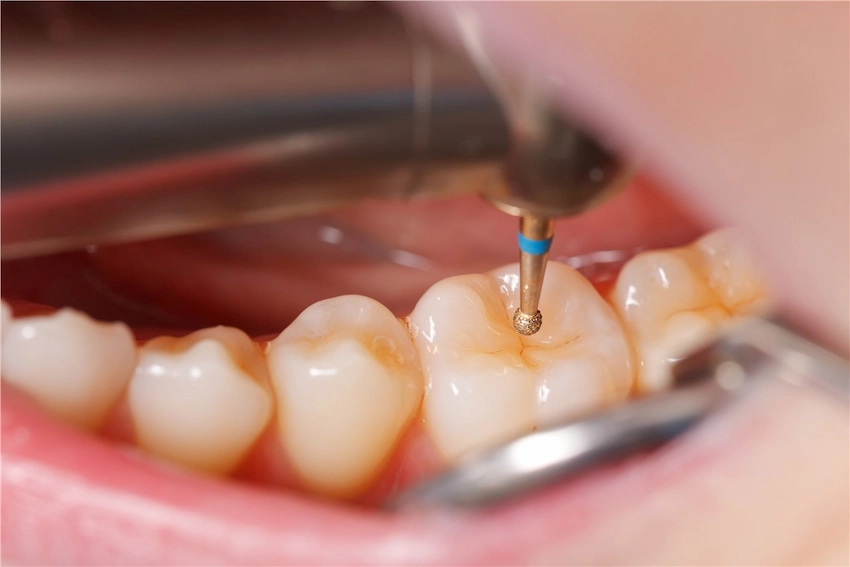
There might be occasions when dental nerve death does not show any symptoms, but there are clear warning signs that can be recognized. You may be worried if you notice any of the following symptoms in your mouth:
Discoloration
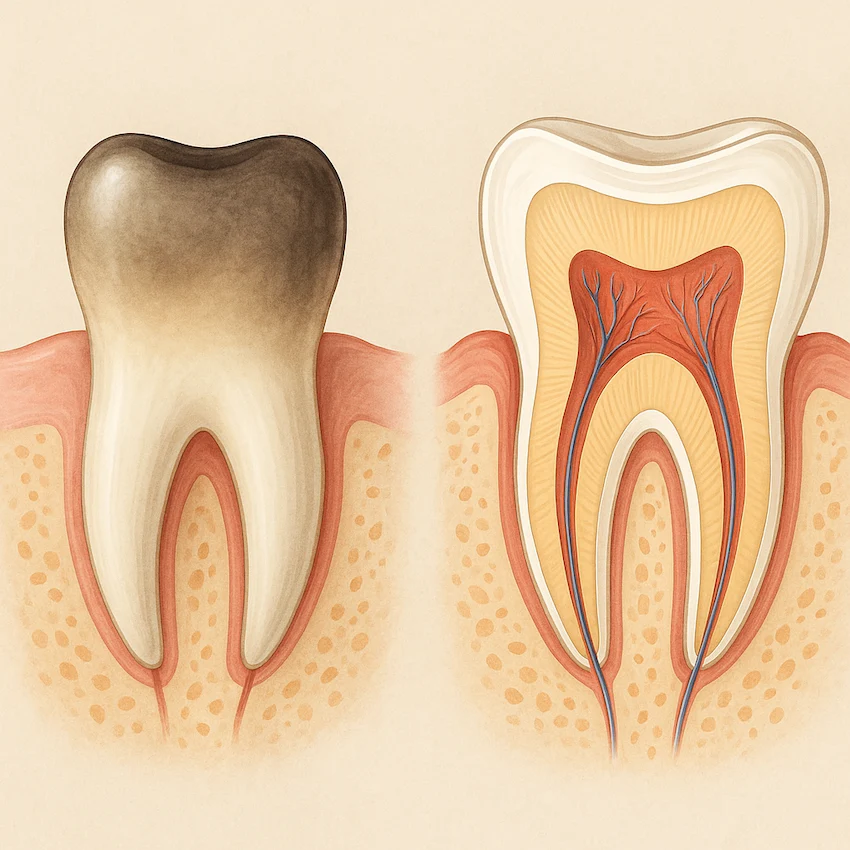
The first and foremost sign of the problem with a tooth is when it changes color the one that is gray, dark brown, or black would be a clear high-point situation. This is the ultimate sacramental condition for the tooth, giving decay a chance to set in.
Pain or Sudden Relief
Surprisingly, the highlight here is that the pain may all of a sudden cease, as the nerve has already died. Nevertheless, do not make a mistake with this silence. The problem can already have gotten the better of your condition.
Swelling or Pus
If the nearby area has swollen up and there’s a small, possibly pimple-like bump on the gum, that is probably an abscess from a dead nerve.
Bad Smell or Taste
An unusual taste in the mouth or a persistent bad breath, not going away even after regular toothbrushing, can be a reflection of the leakage of pus from a dead, infected tooth.
Sensitivity to Pressure or Temperature
Sometimes the nerve isn’t completely dead. You will experience a bit of pain every time you bite or have very hot or very cold drinks if the tooth is still alive but not in good condition.
If one or some of the symptoms are familiar to you, put away the concept of “natural is always better” and consider the choices at a medical facility such as Lema Dental Clinic, which can be not only healthier but also attractive, as well as customized, like veneers and implants.
How Can Dental Nerve Arrest Be Determined?
We can receive a controlled substance in an outpatient setting, but how exactly does the dentist confirm nerve death?
Dental X-Rays
When patients suspect they have dental nerve death, dental X-rays are normally used to detect it first. Mostly, they showcase the problem that is in the bone, but they sometimes reveal the infection and the root changes of the tooth. The presence of a dark spot on the x-ray film shows the doctor the infection around the root of the tooth sign of urgency.
Cold or Electric Pulp Tests
A method for dental pulp and electric pulp tests implies that a dentist assesses the tooth’s sensitivity to low temperatures or uses a small tool to check whether the tooth responds. If there is no reaction, it is a sign of a dead nerve.
Visual Clues
Yellowing, swelling, or a collection of pus (abscess) by the gumline all signal that things are not normal biologically, despite the visible or sensed symptoms that one might notice. A good dentist can tell these signs at a glance.
Special equipment used in Lema Dental Clinic can provide early detection of nerve issues without the need to run extra tests before they become bigger problems and, thus, can save time and your smile.
How Can Dental Nerve Death Be Healed?
There is no arguing that a tooth that is dead is not only the loss of your smile but also of the tooth itself, if not for the fact that there are some great treatments now that are less invasive and with a longer life span.
Root Canal Therapy
Such a procedure is the standard treatment when a tooth is infected. Through it, the infected pulp is removed, the canals disinfected, whose subsequent sealing (often accompanied by a crown) is most likely to ensure the tooth’s health and safety in the future.
Dental Crowns
When a root canal is still a pretty weak tooth, the dental crown will help the tooth regain its power and offer the tooth an attractive and natural look. Furthermore, the crown function involves the hiding of any blemish and the preservation of the enamel of the tooth.
Implants and Dentures
The smile is severely beyond repair with the tooth taken out. Thank goodness for dental implants, the friend in need of toothless jaws. They are an effective replacement with properties of a permanent, hard-wearing, easy-to-care-for, and quite aesthetically pleasing product that is exactly like a real tooth in all aspects, which is yet available in the market.
Dental Veneers or Hollywood Smile
Do you want your teeth to get their natural shine and glow back, or are you looking for a totally new, fabulous look? Whatever the reason, dental veneers in Istanbul are definitely the first solution you should consider. Maybe you have worn and discolored teeth. No worries, Hollywood Smile makeover is quick and effective at Lema Dental Clinic in Istanbul. The procedure can help you to cover flaws, fix gaps, and give you a Hollywood smile look without problems. Veneers work perfectly in all of the above cases, and would not let anybody know about the problems you had faced with your real teeth.
FAQs About Tooth Nerve Death
That tooth will be non-vital and will not have any feeling in it. This may seem like something of no consequence, however, it is a likely candidate for an infection attack as well as some (aesthetic) problems if it remains untreated.
The only trait a patient can expect from this tooth is a change of color; likely, blame them for it if they do not get it treated. Furthermore, most cases of teeth having a dead nerve can only be saved (if they are to be saved) by undergoing a root canal treatment, and later, having a crown to cover the tooth.
Damage of limited extent may cause a sensation of discomfort temporarily, while serious damage can result in the death of the nerve, which can cause immediate or later pain or an abscess.
The majority of cases can be solved using a method that involves a root canal; after that, a crown can be placed on the area repaired. As for serious cases, extraction of the tooth and insertion of an implant become the only available options.
One of these can be the inability to sense anything in terms of temperature and pressure in the tooth. The tooth will also be more brittle, and it may easily break if a crown is not put over it.