What are the Side Effects of Dental Anesthesia/Sedation?
The local application of anesthetics in dentistry is a major necessity and an advanced medical tool helping a patient to have a treatment without feeling pain. It is a common practice to numb an area around the teeth and gums during different dental procedures. Even though it makes a patient’s experience top-notch, the existence of side effects is enough to make patients enquire about the same, particularly if the patient is considering more complex dental treatments such as dental veneers, implants, or a Hollywood Smile at Lema Dental Clinic in Istanbul, Turkey. It is always a wise idea to know the unwanted outcomes, as this will give you the confidence you need regarding dental procedures.
What are the Types of Dental Anesthesia?
Dental medication is actually of a wide range of varieties, and their mission varies from the lowest to the highest when getting a treatment. Being well aware of the types will answer your doubts as to what comes next.
- Local Anesthesia: This is the most popular kind of anesthesia in dental procedures. It is about numbing the area around the tooth or teeth only. Local anesthesia is perfect for minor operations like cleanings, fillings, and crowns. The effect of anesthesia wears off after a few hours; thus, the dentist will be able to work on your teeth without you feeling any discomfort.
- Sedation Anesthesia: Sedation is a procedure that addresses the anxiety issue in patients or the ones seeking a deeper state of relaxation during a procedure. In sedation, multiple levels of dosages are applied, and the range is from minimal sedation (where you are conscious but relaxed) to deep sedation (where you are almost asleep but you can be easily awakened). Sedation is applicable in more complex operations like a root canal, dental implants, or wisdom teeth extractions when the patients have to undergo them. It is designed to keep you calmer, and you will be less conscious of the whole procedure.
- General Anesthesia: The use of general anesthesia is the most preferred way for any dental surgery, like complex cases or when a client needs a very long time for the treatment. The patient is, in this case, induced into a deep sleep state during the whole time of the treatment by the use of general anesthesia. The most common categories of dental surgeries where this method is practised are full mouth reconstructions, several dental implants, as well as surgeries involving either the jaw or the gums. With general anesthesia, you will have no recollection of the surgery, and it leads to a state of total unconsciousness to all pain and discomfort.
For every patient, every case is different in terms of the type of anesthesia the patient needs, the complexity of the procedure, and the dentist’s judgment.
When Would You Have Dental Anesthesia?

One commonly encountered situation that requires dental anesthesia is a situation where the patient is expected to feel some discomfort that is beyond normal, the area to be operated on is small and needs pinpointed work, or the procedure is lengthy. Typically, these scenarios could be:
- Tooth Extractions: Anesthesia is used whether it is a straightforward cavity extraction or a more complex impacted wisdom tooth removal case, such that the area around the tooth is anesthetized and hence comfortable and painless for the patient during the procedure.
- Root Canal Treatments: The term “root canal” means the removal of the tooth’s pulp that is either decayed or infected. The procedure needs to be done inside the tooth, and it is impossible to do it without anesthesia, as this is going to be very painful.
- Cavity Fillings: In such cases, the use of local anesthesia is undertaken to numb the part that the dentist is working on, and therefore, the patient will not experience the pain from the procedure.
- Dental Implants: Anesthesia is usually given to the patient when a dental implant is used to replace a lost tooth. It is necessary to ensure that he or she is pain-free while the implant is being fixed in the jawbone.
- Cosmetic Dentistry Procedures: In many cases, patients are anesthetized if they are looking forward to going through cosmetic dentistry treatments, which involve teeth whitening, use of veneers, or having a Hollywood Smile, particularly if the procedure requires the recontouring of the gums or the enamel.
When you are in such situations, anesthesia is beneficial to the patient, since it is essential to calm down the patient and is of great help for accurate and painless procedures.
What Are The Side Effects of Dental Anesthesia?
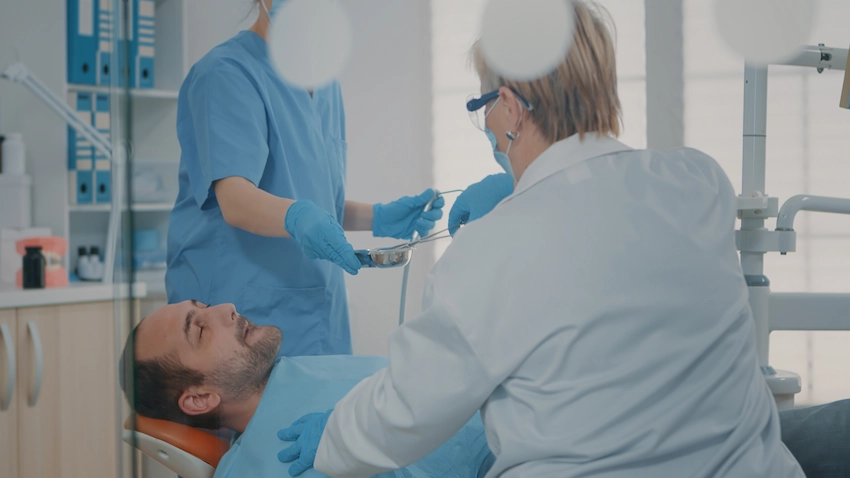
Even though dental anesthesia is highly efficient in getting rid of pain, it still can possess a variety of side effects. Most of them are transitory, though it is better to learn about them, especially if you are going to have dental veneers, implants, or a Hollywood Smile at Lema Dental Clinic in Istanbul, Turkey.
- Numbness and Tingling: The common side effect encountered during local anesthesia introduction is a tingling and numbing sensation in the treated region, mostly referred to as pins and needles. This indication continues for up to two hours after the procedure and might even get worse until the cheek and tongue go mouth-dead.
- Swelling and Bruising: The appearance of light swelling around the spot where the anesthesia has been given is natural. Also, the presence of slight bruising can be another outcome. These are temporary symptoms that generally disappear within a few days.
- Dizziness or Lightheadedness: Generally, some patients report feeling that they are about to faint, especially feeling lightheaded if they have been given sedation anesthesia. The sensation may persist for minutes after the procedure; thus, it would be great to have a relative or friend accompany you to the dental office and back to your home.
- Headaches: Sometimes, though not a common symptom, one may experience headaches, which are in fact a sign of having been sedated, or one might be given general anesthesia. The cause may be associated with drugs or the tension of the very process.
- Nausea: Sedation anesthesia is considered to have nausea as one of its side effects, and nausea may linger for several minutes after the procedure. The routine intake of water and eating of light foods are good remedies for this case.
- Sore Gums or Tenderness at Injection Site: The place where the needle penetrated the skin might be sore within 24-48 hours. This is often mild and goes away without any treatment.
Nevertheless, the effects can be very quick to disappear and are more often than not self-curing. Nevertheless, if the symptoms take longer than they are expected or if they start to cause any inconvenience, then it is good to ask your dentist if everything is in the right place.
What Are the Advantages of Using Anesthesia in Dental Treatment?
Indeed, local anesthesia in dentistry offers patients a lot of advantages, making dental procedures much more bearable for both the patient and the dentist. Below, we enumerate the most important benefits:
- Painless treatment: Through anesthesia, patients are assured that the treatment is carried out without any pain or discomfort. Especially for invasive treatments like root canals, extractions, and dental implants, the patient can be without pain.
- Lowered Anxiety: The majority of individuals experience so-called dental phobia, the latter causes people to be nervous even at the thought of seeing a dentist. Anesthetization, in particular, the one that involves putting people to sleep, has been proven highly effective in reducing anxiety and maintaining a patient’s calmness, which ultimately results in better treatment acceptance rates.
- Enhanced Precision: Treatment becomes less obstructed and hence is performed more accurately when patients are not experiencing pain or anxiety, and thus, the focus on the procedure is not lost. The use of this kind of anesthesia helps not only in veneers and implants but also in carrying out other cosmetic procedures.
- Quicker recovery: Not all patients can bear the feeling of pain, and some of them can also suffer afterwards. Sedation can be a great help in these cases. Patients equipped with such a tool are less likely to experience postoperative pain or complications, and hence, healing occurs quickly without much care being needed.
Given that you picked the right variety of anesthetic, your treatment goes smoothly, and you will find that the experience was quite pleasant after all.
How is Dental Anesthesia Used in Children?
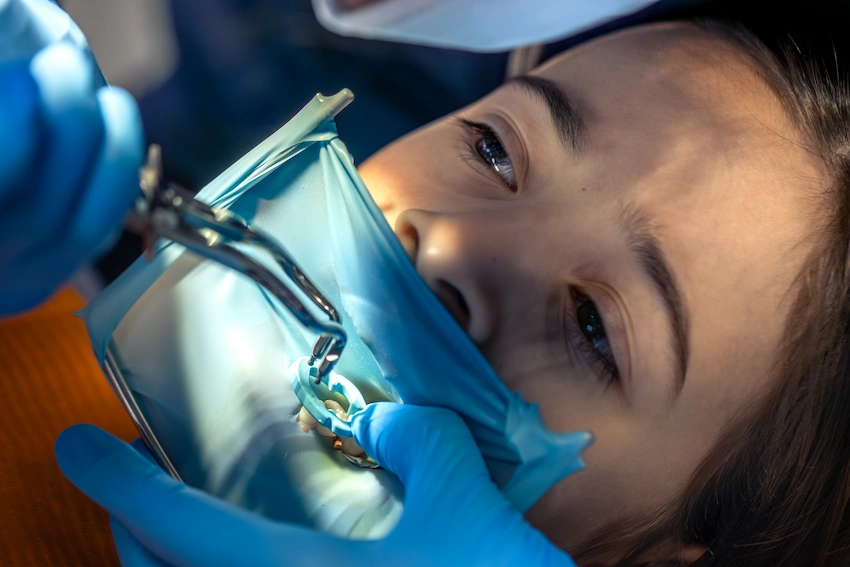
Dental anesthesia in the case of children is primarily used along with relatives with special concern and care. Dentists for children know that kids are sensitive to pain and that they usually have dental anxiety. The most prevailing issues are the course of the procedure and the age of the child, as well as whether they have an anxiety level.
- Local Anesthesia: In most cases, treatment with a local anesthetic alone is enough to allow the child to perform the procedure without pain and, besides that, feel comfortable during a simple procedure, for example, filling a tooth cavity.
- Sedation: More complicated procedures in multidisciplinary dentistry could demand the child’s sedation as a recommendation from the dentist, and in this case, the child would feel at their best. For example, performing procedures like many fillings, the removal of teeth, or treating a very anxious child can be done in an atmosphere of calm.
- General Anesthesia: Whenever a child has to undergo a very painful and/or difficult procedure -e.g., the extraction of multiple teeth, major surgical intervention- anesthesia is the best option. In this case, the child will be sleeping till the procedure finishes.
They are well-trained, abreast with modern methods, and have the skills in anesthesia, which the specialists at Lema Dental Clinic use in offering services, to make children’s dental experience stress-free and painless.
FAQ: What are the Side Effects of Dental Anesthesia?
With dental anesthesia, the numbness sensation is usually gone in a couple of hours. The time this lasts at the utmost depends on the anesthetic kind and dosage, and the patient’s metabolism rate.
The injection of dental anesthesia being unsafe is a myth, and it is a safe method if undertaken by trained staff. It is controlled properly to make you feel safe and comfortable.
Unlikely but possible, the moment the needle touches the nerve, it can bring out either a temporary feeling of less sensitivity or a tingling sensation. Normally, a person is not in a serious condition, and generally, the problem can be alleviated. However, the duration can be quite long in some circumstances before it completely stops.
Although there are some instances of facial palsy from the tooth nerve that occur, they are notably rare. The condition is usually transient, and it resolves itself within several hours.
Lip stiffness and crowding from the anesthetic typically last for only a few hours before they finally wear off and everything returns to normal.