


The best full-mouth implant options in Turkey are All-on-4, All-on-6, and zygomatic implants.
Navigating the Best Options for Full Mouth Implants
Losing a whole arch of teeth is more than a dental problem, it’s a loss of confidence, the way you understand the flavour of food changes, and you are constantly worrying about your speech. At Lema Dental Clinic in Turkey, we don’t only see gaping holes in the gums.
They are a basis to be rebuilt. The truth is that “full mouth implants” is not the same solution for everyone. The “best” choice varies according to your bone density, your beauty objectives, and even your habits. Professor Doctor Coşkun Yıldız correctly asserts that a restoration that works well is not only about the titanium screws but it is also about creating a smile that appears to have always been the case.
The Foundation: Why Bone Matter?
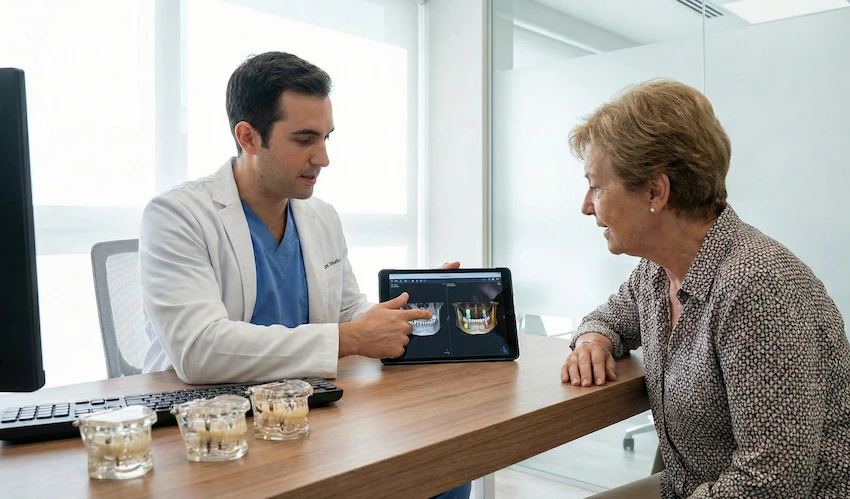
Think of your jawbone as the foundation of a house. If the soil is thin or sandy, you can’t just hammer in a standard pillar. You need specialized engineering. This is exactly how we approach full mouth restorations.
When you lose teeth, the bone begins to “resorb” or melt away. Dentist Polen Akkılıç and her team spend significant time in the diagnostic phase using 3D imaging to see exactly how much “soil” we have to work with before recommending a specific path.
1. The All-on-4® Treatment Concept
This is often the “Gold Standard” for patients who have lost most of their teeth but still have decent bone in the front of their jaw.
By tilting the rear implants at a 45-degree angle, we can bypass the need for extensive bone grafting. It’s a clever bit of geometry that provides maximum stability with minimum surgery. In our clinical experience at Lema Dental Clinic, this is the go-to for patients who want a fixed, non-removable bridge that looks and feels remarkably natural.
2. All-on-6: For the Heavy Biters
If the All-on-4 is a sturdy chair, the All-on-6 is a heavy-duty sofa. By adding two extra implants, we distribute the biting force more evenly across the jaw.
But let’s look closer: who actually needs those extra two implants? Usually, it’s patients with a very strong bite or those who have a larger jaw structure. The extra pillars provide a level of “over-engineering” that ensures the bridge won’t flex or fail under pressure.
3. Zygomatic Implants: The “Last Resort” Success
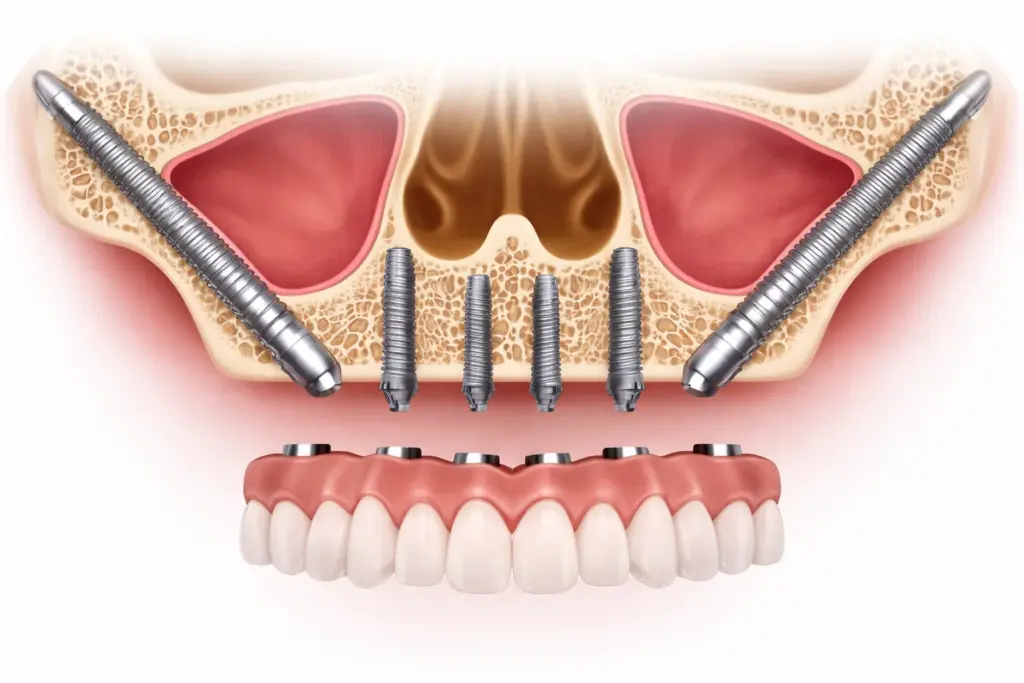
What happens if you’ve been told you don’t have enough bone for implants? Many clinics might turn you away, but at Lema, we look higher—literally.
Zygomatic implants are longer than traditional ones. They anchor into the cheekbone (the zygoma) rather than the jawbone. It’s a sophisticated procedure, but for patients who have suffered severe bone loss, it is often the only way to achieve a fixed smile without years of bone grafting.
Comparing Your Full Mouth Restoration Options
| Feature | All-on-4 | All-on-6 | Zygomatic Implants |
| Ideal Candidate | Moderate bone loss | Good bone density | Severe bone loss |
| Number of Implants | 4 per arch | 6 per arch | 2-4 (anchored in cheekbone) |
| Bone Grafting | Rarely needed | Sometimes needed | Not needed |
| Stability Level | High | Very High | Exceptional |
| Typical Recovery | 3-5 days | 5-7 days | 7-10 days |
Why Turkey is the Global Hub for Full Arch Restoration
The question remains: why travel to Istanbul for this? Beyond the cost savings, which are significant, the clinical volume handled by specialists like Professor Doctor Coşkun Yıldız means our team has seen every possible anatomical challenge.
At Lema Dental Clinic, we combine this experience with “Digital Smile Design” technology. This allows Dentist Polen Akkılıç and her team to show you a digital preview of your smile before we even start. It’s not just about the surgery; it’s about the art of the final result.
The “Teeth in a Day” Myth vs. Reality
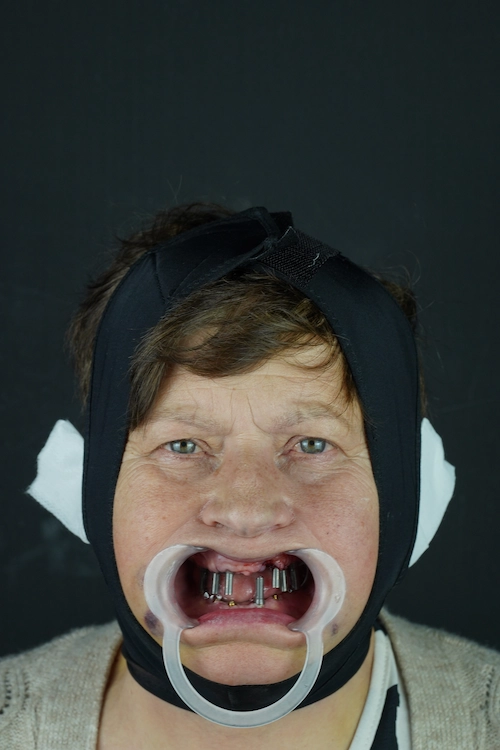
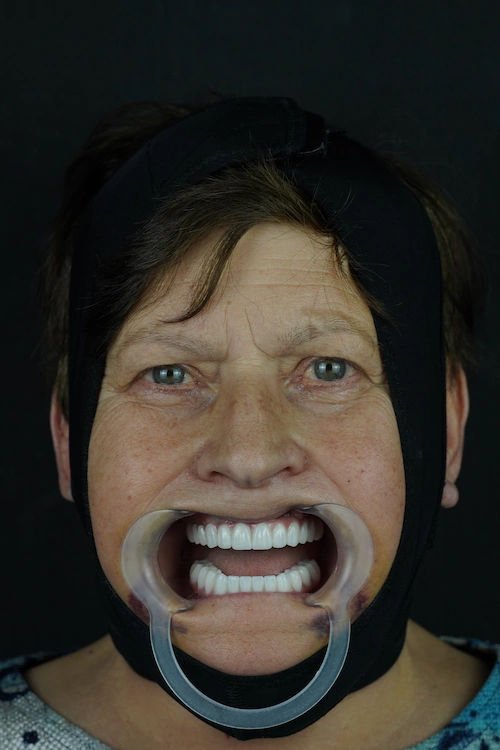
Perhaps you have come across marketing campaigns for “Teeth in a Day.” Here is what we generally experience at the clinic: while we can most probably put a temporary and usable bridge on the day of your surgery, the final, permanent porcelain or zirconia bridge will take time.
Bone tissue has to regenerate and grow around the titanium to fix it in place. This is a process termed osseointegration. It can be compared to waiting for the cement slurry to get hard so that you can lay bricks on top of it. Rushing this step is, in fact, the most common reason for failure of implants all over the world. We put your long-term well-being first, not a 24-hour marketing stunt.
FAQ: Straight Talk from Our Doctors
“To make sure the patients do not experience any pain during the surgery we give local anesthesia and very often sedation as well. A lot of patients mention to us that recovering was even less painful than the toothaches they had prior to the operation,” – Dentist Polen Akkılıç.
If you keep up good oral hygiene and go for regular check-ups, they are designed to last you a lifetime. Actually, the titanium posts become one with your body.
Not at all. We use Zirconia and E-max materials which have the same translucency as natural enamel. Practically, most people will simply think that you have beautiful natural teeth.
“Absolutely! That is the best thing about it. These, unlike dentures that can move, are fixed. Once the healing period is over, you will be able to enjoy eating steak, apples, and nuts again.”
“Usually, two trips. The first one is for implant placement and a temporary bridge. The second trip, mostly after 3 to 6 months, is when the permanent, high-strength final bridge is fitted.”
- Malo, P., de Araújo Nobre, M., Lopes, A., Moss, S. M., & Molina, G. J. (2011). A longitudinal study of the survival of All-on-4 implants in the mandible and maxilla: A 1- to 9-year follow-up. Journal of the American Dental Association.
- Chrcanovic, B. R., Albrektsson, T., & Wennerberg, A. (2015). Survival and complications of zygomatic implants: An updated systematic review. Journal of Oral & Maxillofacial Surgery.
- Babbush, C. A., Kutskut, A., & Brokloff, P. (2011). The All-on-Four immediate function treatment concept with NobelActive implants: A retrospective study. Journal of Oral Implantology.
- Jensen, O. T., & Adams, M. W. (2012). All-on-4 treatment of the marginal bone volume. Oral and Maxillofacial Surgery Clinics.
- Aparicio, C., & Polido, W. D. (2021). Zygomatic Implants: The Anatomy-Guided Approach. International Journal of Periodontics & Restorative Dentistry.

