


Good oral hygiene prevents decay around veneers.
Understanding the Marginal Seal in Biological Terms
Your dentists are very careful about the long-term biology of natural teeth and how to make sure you don’t develop caries underneath dental veneers. When you get dental veneers, the dentists remove a fine layer of dentin, which is very thin, and this process can only be safely managed by high-standard and well-developed dental practices. Dentures will not decay beneath these ultra-thin restorations because this has nothing to do with the fear of bacterial colonization under the veneers but has everything to do with the science behind today’s adhesive bonding.
It is only in the expert hands of the clinician that a hermetic seal is formed by applying a chemical bonding method which has three main steps: hydrofluoric acid etching of the porcelain, silanization as a coupling agent, and the use of resin cements in dual mode. By doing this, the ceramic material is completely chemically bonded to the enamel. Therefore, this kind of thorough three-dimensional joining eliminates all the tiny gaps that bacteria could exploit and makes the inside of the tooth inaccessible from the oral environment that is hostile, enzyme-rich, etc.
Microvascular Protection and Microadhesive Techniques
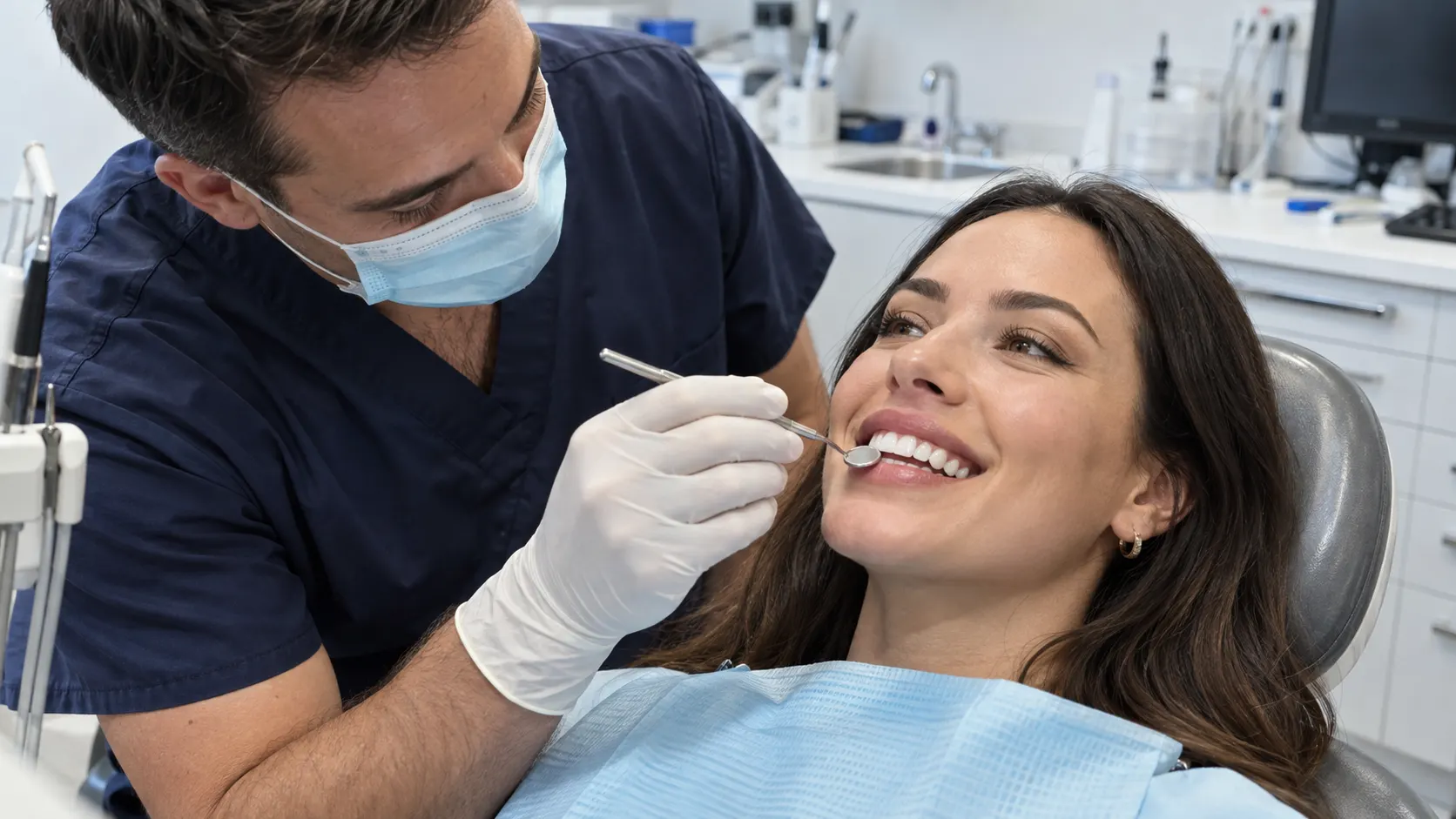
The success of any dental reconstruction depends mainly on microscopic-level compatibility between restorative materials as well as natural tissues of the patient. In order to prevent microbial invasion, which might cause decay, the dentist has to handle very carefully the issue of the microvascularization of the soft tissue and the contour of the alveolar ridge, which is quite a complex area. The bonding process requires total moisture control, which means that isolation of advanced kinds is being used to avoid contamination of the operative field by sulcular fluid or saliva.
If only a tiny amount of moisture is present during the curing phase of the cement that bonds the veneer to your tooth, the weakening of the adhesive will result in bacterial infiltration of the dentin-enamel interface and subsequent caries. Also, the architecture of the cervical third (i.e., the area near the gum line) of the porcelain veneer is important to avoid subgingival decay. A well-made veneer should fit seamlessly into the gum line without overhanging margins or bulkiness, which could become a perfect habitat for bacterial plaques.
Digitization in Dentistry: A Path to Accurate Fabrication
Today& rsquo;s dental techniques rely primarily on digitization that can give the highest possible levels of accuracy in the prevention of caries underneath a porcelain veneer. In particular, very powerful intraoral scanners can be used to capture the exact shape of the tooth preparation in 3 dimensions, thereby minimizing distortions that usually happen with traditional impression materials. The captured data can be sent directly to sophisticated computer-assisted design and manufacturing systems (CAD/CAM), where ceramic blocks can be cut at precision levels of micrometer dimensions.
Such a level of precision means that the inside of the veneer perfectly fits with the prepared tooth, so there should not be any empty spaces in between where the cement could leak out, and bacteria could enter afterwards. However, to have the longest possible benefits, you have to do a very accurate selection of patients before doing any cosmetic procedures. Your gums must be absolutely healthy with no bleeding at all, and there should be no active cariogenic lesions, because placing a veneer on badly demineralized dentin will cause the latter to deteriorate extremely quickly.
Preserving the Biological Health and the Procedural Limits

The main point in this article is that you should not violate the protective and behavioral limits during the post-operative care if you really want rapid and flawless dental recovery as well as the long-term survivability of your restorations. New porcelain veneers, as well as delicate gums healing around the restoration, need total mechanical safeguards in order to keep the margins fully sealed. Occlusal protection has to be provided consistently if a patient wants to prevent microscopic cracks at the margin that can let harmful bacteria attack teeth.
You can be assured that your smiling face, which you will have after veneers, will stay healthy for many years to come as long as your oral hygiene is perfect. Flossing and the use of non-abrasive, highly fluoride-containing toothpastes are a must in your oral care routine to get rid of plaque that forms the biofilm before becoming hardened plaque. Also, quitting nicotine and tobacco is an absolute must if you do not want the tissues in your mouth to get worse before and after the work has been done. Because the use of nicotine significantly reduces the amount of oxygen-rich bloodstream which your tissues need to survive, you will not be able to keep your gums healthy, which is the main natural defense of your roots against tooth decay and degenerative problems of your periodontal (gum) tissues.
Veneers in Istanbul
The choice of Lema Dental Clinic means the opening of a first-class dental paradise all around the world, where not only the perfection of a beautiful face and the science behind implantology, the way your teeth will integrate with your bones, and other aspects of smile creation can be managed through highly skilled dental techniques, but also through very empathic care.
We give our patients the best, most thorough diagnostic services so that every aspect of your dentition can be accurately and safely evaluated. We deliver complete and detailed 3D pre-operative maps, high-resolution panoramic reviews, and personalized healing checklists that will step-by-step help you get through every stage of the healing and integration processes of your dental tissues and prosthetic elements. Our top-class dental specialists guarantee that your cosmetic treatment will be totally safe, your health at a systemic level will remain untouched, and the best outcome can be expected: not only your dazzling smile but also a functional one with minimal effort.
Frequently Asked Questions
Do teeth decay faster under veneers?
No, teeth do not decay faster under properly applied veneers. In fact, the porcelain material itself cannot decay, and the hermetic resin seal protects the underlying natural tooth structure from bacteria, provided you maintain standard oral hygiene.
Can I get a cavity under my porcelain veneer?
While the covered portion of the tooth is protected, a cavity can still develop at the margin where the veneer meets the natural tooth if plaque is allowed to accumulate. Daily flossing and brushing are essential to keep these vulnerable margins clean.
What happens if a tooth rots under a veneer?
If decay breaches the margin and infects the underlying dentin, the veneer must be carefully removed by a prosthodontist. The decayed tissue is then excavated, and depending on the remaining tooth structure, a new veneer or a full dental crown will be fabricated.
How do dentists ensure all bacteria are gone before placing a veneer?
Before cementation, the tooth is meticulously cleaned, and any existing caries are entirely excavated. The enamel is then treated with an acidic etching gel and antibacterial protocols, creating a sterile, microscopic retention grid for the bonding agent.

