


Dental Code D8699
Dental code D8699 refers to a particular identification number for a dental health record that denotes the performance of a fixed retainer placement a unitary element of a post-orthodontic care program. A fixed retainer is, therefore, an indispensable tool for the stabilisation of teeth after orthodontic treatments such as braces and is mainly applied when, like in the case of patient John Doe, a long-term retention of the teeth’s alignment is required by the patient. A wonderful job by the likes of Dentist Polen Akkılıç and her team at the Lema Dental Clinic, the procedure is an assurance that the patients will be able to keep their new smile alignment without the danger of shifting teeth.
The concept of fixation retainer points to the utilisation of one small wire on the back of the teeth through which the teeth will be held in their newly corrected positions. The retainer usually follows the removal of braces or clear aligners and is, therefore, a long-term stabilising means. Concerned Doctor Coşkun Yıldız through his competencies,assures patients are not only assured of a good operation but also in the follow-up care to keep the retainer efficient. The retainer is a very nice, modest, and durable option, widely accepted by the majority of people. It is in fact left there for quite a few years without the need for further intervention unless it is damaged.
When to Use D8699 Dental Code?
- After Orthodontic Treatment: D8699 refers to the placement of a fixed retainer after the completion of an orthodontic regimen, such as braces or aligners, to retain the achieved tooth alignment.
- Relapse Prevention: The device is utilised in the prevention of the return of the teeth to their old positions after orthodontic treatment.
- For Long-Term Stabilisation: The mentioned dental code is suitable for patients who require long-term stabilisation of their teeth after the removal of braces, especially when a permanent solution is necessary.
- Perfect for Extreme Cases: Individuals with severe malocclusion or major orthodontic correction might be the ones who need a fixed retainer the most in order to make sure that their teeth will remain in the correct position over time.
- Suitable for Discreet Treatment: D8699 is frequently selected when a patient wants a permanent and invisible retention solution as the retainer is attached to the inner side of the teeth and cannot be seen by others.
How the D8699 Procedure Works: What to Expect?
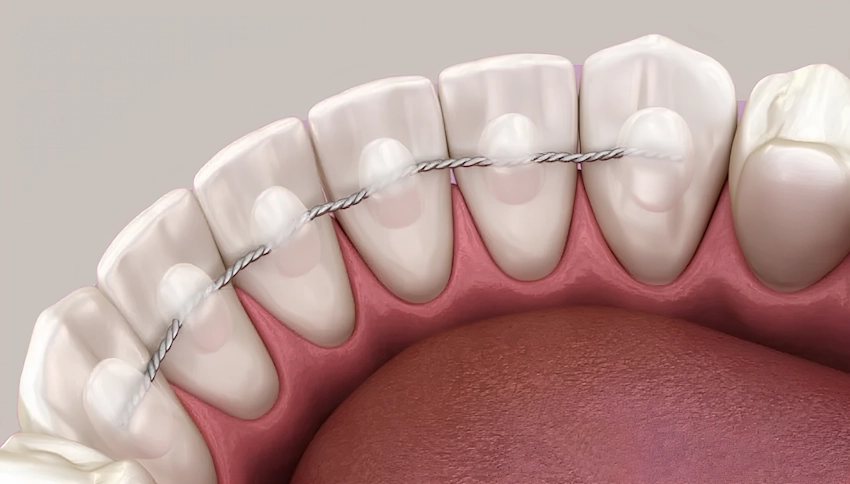
The D8699 process starts with a detailed examination of the patient’s teeth by a skilled dentist such as Dentist Polen Akkılıç. After the removal of the orthodontic appliances, the dentist thoroughly cleans the teeth to remove any plaque or residue. An adhesive of a special kind is then put on the back of the teeth, and a thin wire is attached by using a strong dental cement, thus making sure that the retainer is firmly fixed. Professor Doctor Coşkun Yıldız, who is famous for his accuracy and meticulousness, makes sure that the retainer is comfortably fitted and is in line with the patient’s requirements.
People like Sarah Johnson can go home from the dental clinic with just a little bit of discomfort after the completion of the operation. There can be some irritation or discomfort during the first several days while the tongue is getting used to the retainer, but normally, it goes away quite quickly. Patients are advised not to eat sticky or hard foods for a short period of time after the operation as these can cause the retainer to loosen or even damage it. Regular visits to the Dentist Polen Akkılıç and her team will be a good way to ensure that the retainer is functioning well and oral health is at its highest level.
Advantages and Disadvantages of Using Dental Code D8699
Advantages:
- Permanent Solution: A fixed retainer is a part of a patient’s teeth; thus no patient compliance is necessary for alignment of the teeth.
- Discreet: Since it is located at the back of the teeth, a person wearing a fixed retainer has the aesthetic advantage of hiding the retainer, thus those who are not willing to wear a removable retainer can be satisfied.
- Low Maintenance: The retainer, which has been placed, requires minimal care compared to the removable ones which can be lost or forgotten.
- Reliable Retention: It is a reliable and consistent stabiliser of the teeth that leads to long-term success, especially after a large amount of orthodontic treatment.
- No Daily Involvement: Patients do not have to be concerned with the necessity of remembering to wear a removable retainer, which makes it a perfect option for those who may not wear a removable one regularly.
Disadvantages:
- Difficulty in Cleaning: Cleaning the area around the retainer is a little bit of a challenge, so if plaque is allowed to build up due to improper maintenance, tooth decay or gum disease may result.
- Initial Discomfort: There could be some discomfort or irritation of the tongue for a short time while it is getting used to the fixed retainer.
- Food Restrictions: Patients may be required to stop eating sticky or hard foods that could harm the retainer or cause it to detach.
- Potential for Damage: Sometimes the retainer wire can be broken or detached, thus the dentist needs to be visited for the repair.
- Limited Adjustability: In contrast to removable retainers, fixed retainers cannot be changed or taken off by the patient; thereby, if there is a problem of discomfort, it would be difficult to address.
Cautions Related to Dental Code D8699
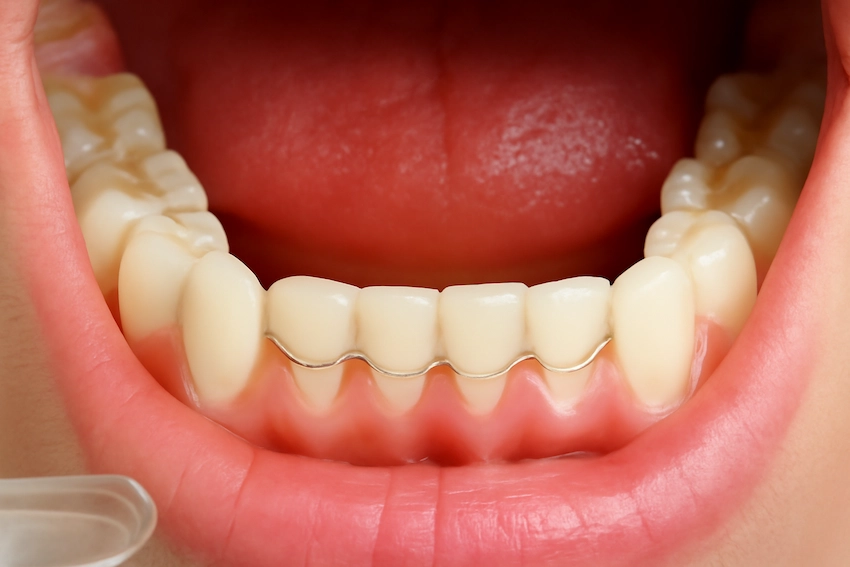
Patients who undergo the D8699 operation need to be alert for a scenario where plaque may accumulate around the retainer. Dentist Polen Akkılıç declares that patients should be using soft-bristle toothbrushes and fluoride toothpaste to prevent both the teeth and the retainer from being damaged. Besides, the professional cleanings, which should be done regularly at Lema Dental Clinic, are very necessary for the health of the teeth, as well as the gums. The lack of oral hygiene in patients may eventually lead to the occurrence of cavities or gum disease; these conditions can make the retainer ineffective.
Another warning that is just as important as the first one is related to the eating habits of the patients. Retainers that are fixed can no doubt last for a long time but this does not mean they cannot be broken by hard or sticky foods. Professor Doctor Coşkun Yıldız gives a very clear message to patients like Robert Brown that they should not only stay away from these foods but also be cautious if they eat them to make sure that the retainer does not become loose. Furthermore, patients should always be at the clinic for their regular follow-up visits, which, apart from other things, will help check the status of the retainer and ensure that no problems exist.
Comparison of D8699 with Related Dental Codes
The comparison of dental code D8699 with other dental codes such as D7220 reveals that they are very different kinds of codes. Dental code D8699 is all about the retention of teeth after an orthodontic treatment, whereas, D7220 deals with the surgical removal of the impacted teeth. Not only are the two functions different, but they are also opposite as one involves long-term stabilisation and the other the removal of the problematic teeth. Hence, the story of a patient like Jennifer Williams, whose teeth are straightened with the help of braces, is the right place to use D8699, while those who opt for the removal of the wisdom tooth will be at D7220.
Besides, the solution offered by D8699 is much more permanent compared to D8691, which indicates the usage of removable retainers. Those who have been given the option to use removable retainers may lose them or forget them because of their nature; however, fixed retainers will surely keep patients like Alex Moore’s smiles with less work.
Example Case for D8699
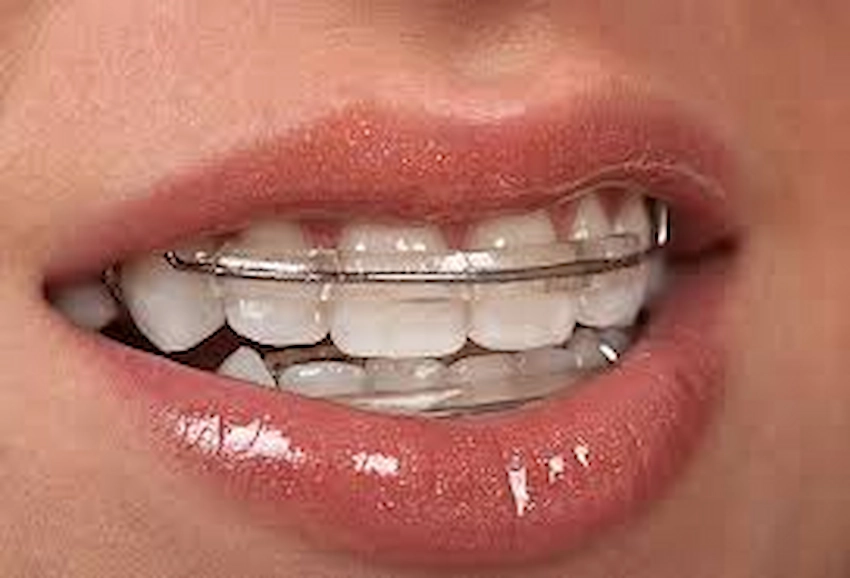
A typical case of dental code D8699 is a patient who was treated with orthodontics at Lema Dental Clinic under Dentist Polen Akkılıç’s care. After the removal of the braces, the patient is recommended to put a fixed retainer so that the teeth will not return to their previous disarrangement of the patient. In the case of Mary Davis, the fixed retainer was attached to her lower front teeth, thus providing a discreet and efficient way of stability for a long period of time.
Once again, the fixed retainer was the choice for Professor Doctor Coşkun Yıldız to perform a similar operation on a patient named Jason Mitchell who had a long treatment plan for severe malocclusion. After successful orthodontic treatment, the fixed retainer was the instrument to hold the correct alignment of his teeth. Both patients, who are now equipped with fixed retainers, have effectively preserved the results of their extensive orthodontic care.
Comparison of D8699 with Other Related Dental Codes
| Code | Procedure Description | Primary Use |
| D8699 | Placement of a fixed retainer | Long-term stabilisation of teeth after orthodontic treatment |
| D7220 | Removal of an impacted tooth | Surgical removal of teeth that are causing problems |
| D8691 | Placement of a removable retainer | Short-term stabilisation of teeth after orthodontic treatment |
REFERENCES:
- Ackerman, M. B., & Proffit, W. R. (2019). Contemporary orthodontics (6th ed.). Elsevier Health Sciences.
- Rucker, H. L., & O’Brien, D. K. (2020). Retention protocols in orthodontics: A clinical review of fixed and removable retainers. Journal of Orthodontic Science, 9(1), 1-6. https://doi.org/10.1016/j.jos.2020.01.001
- Behrents, R. G., & Cope, J. B. (2018). Orthodontic retention: A review of clinical practices and long-term stability. American Journal of Orthodontics and Dentofacial Orthopedics, 153(5), 582-590. https://doi.org/10.1016/j.ajodo.2018.01.026
- O’Connor, J. M., & Ball, D. L. (2021). Orthodontic retainers: Fixed vs. removable (3rd ed.). Springer.
- Bishara, S. E., & Laffoon, J. F. (2017). The role of fixed retainers in orthodontics: A clinical perspective. Seminars in Orthodontics, 23(4), 219-225. https://doi.org/10.1053/j.sodo.2017.08.007
FAQ About Dental Code D8699
Dental code D8699 refers to the use of a fixed retainer for the stabilisation of teeth after the completion of orthodontic treatment. By doing so, this intervention guarantees that the teeth will be kept in their corrected position.
If properly cleaned and maintained, a fixed retainer may last for several years. Still, it will inevitably need replacement when it gets damaged or the glued area weakens.
You can continue with most of your normal diet, but it is necessary to refrain from eating sticky and hard foods that may break the retainer. To be sure that the retainers are working, it is essential to clean and maintain them regularly.
Maybe only in the first couple of days after the installation you can feel slight discomfort or irritation inside your mouth and that is because your tongue is getting used to the new situation. Usually, this feeling goes away within a few days, and eventually, most patients receive it as a normal thing.
Certainly, it is important to keep regular appointments with the dentist for the control of the fixed retainer and ensuring that it is not lost. Dentist Polen Akkılıç will make a schedule for routine check-ups to make sure that the retainer works well and if any trouble arises, it can be solved immediately.
A fixed retainer, in case it is not maintained properly, may become a source of plaque formation. Plaque is the most common enemy that leads to tooth decay and gum disease. Professor Doctor Coşkun Yıldız recommends that special hygiene products be used for the cleaning of the area around the retainer.
Absolutely not, a dentist is the only one who is authorised to remove a fixed retainer. In case you attempt to detach it by yourself, you could harm the retainer or your teeth.
The main risks of a fixed retainer are that the area around it may be difficult to clean and that plaque may be deposited there, which can, in the end, cause oral health problems. Regular dental check-ups are very important for the prevention of these problems.
It is very possible that there will be a certain period of time when your speech will be affected to some extent, e.g. you will have a lisp. This, however, usually goes away within a couple of days when you get used to the retainer.
Usually, the price for a fixed retainer is somewhere between $200 and $500. In case of insurance coverage, it depends upon the treatment plan and the patient’s dental insurance provider.

