


What is D6100?
Dental Code D6100 is a major milestone to record the surgical procedure where a single tooth is changed with a dental implant. The code from the American Dental Association’s (ADA) Current Dental Terminology (CDT) acts as a tool for providing the exact treatment in a multidimensional way such as billing, insurance, and record-keeping. D6100 is the principal actor in a play representing the implant positioning facilitation of reimbursement and reduction of the administrative errors. The method includes the use of a titanium implant in the jawbone that will serve as a support for the crown that will replace the lost tooth; thus, the function and aesthetics will be restored.
By defining the implant placement, D6100 when used by skilled practitioners like Dentist Polen Akkılıç and her team, enables the dental office to comply with industry standards and regulations. It is one of the main contributors to the transparency of the treatment process, letting the patients, and insurance providers know exactly what has been done. Correct employment of the D6100 code is a great cash flow facilitator, and, at the same time, a patient care booster through the establishment of unambiguous treatment records that are important for the long-term management and follow-up visits.
When is D6100 Used?
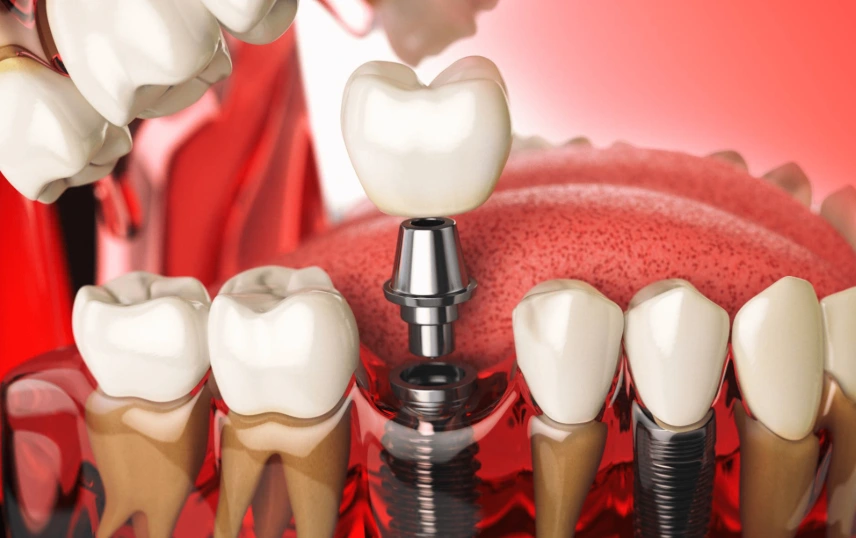
- Single Tooth Replacement: D6100 stands for the situation when you have lost a single tooth and you get a dental implant as the replacement. This code is reserved for the case that no other restorative options like bridges or dentures can be used.
- Implant-Based Restoration: This code is used when a dental implant is chosen to restore the lost function and the aesthetic of a missing tooth. The implant eventually fuses with the jawbone, thus providing a solid base for a crown.
- Post-Trauma Tooth Loss: D6100 is often the choice of a code when a patient’s lifestyle has resulted in the loss of a tooth due to some kind of injury or trauma and he/she need a strong, permanent replacement to regain the smile and chewing function.
- Post-Extraction Tooth Replacement: Another example could be the situations when a tooth is extracted and an implant is placed immediately to replace the lost tooth.
- When Bone Density is Sufficient: The usage of d6100 refers to a situation where the patient has enough bone density to hold an implant. If there are other necessary procedures like bone grafting, they have their own separate codes for billing.
How Dental Practices Use D6100?
Dental practices rely on D6100 as the primary source of documentation and billing for dental implant processes. This procedural code plays a crucial role in recording the details of every step that goes along with the implant placement. Essentially, D6100 is the instrument that depicts the imprint of the whole treatment, thus it is utilized for plotting the initial consultation followed by the surgical procedure and post-operative care.
Transparently it makes sure that no one is left in the dark about patients. Significantly, the D6100 code acts as an essential tool to keep the patient’s medical history up-to-date and as proof for the insurance companies to make easy reimbursements.
Besides, D6100 is a great tool in patient record management and billing work. It is very helpful in situations where patients need several procedures, hence there will be no confusion. Also, in the presence of proper documentation under D6100, dental offices will be able to run their billing systems efficiently, thus have proper payments for the services offered.
On the other hand, the correct use of codes can be a source of addressing the problems of claim denials, a situation which is both costly and time-consuming, thus a dental practice and its patient will suffer. Professor Doctor Coşkun Yıldız notes that serious attention to coding plays a major role in keeping the records of patients’ treatment at a high level of integrity and in preventing problems in the reimbursement phase.
The Benefits of Using Dental Code D6100
- Accurate Billing and Documentation: The code D6100 helps to ensure that implant procedures are properly documented, which means dental practices are able to keep accurate records of their patients and make the billing process easier both for the office and the insurance providers.
- Reimbursement Process is Simplified: When a dental office uses D6100, it can easily inform the insurance company about the extent of the treatment, which is a good reason for the normal and full reimbursement of the implant therapy to be done in time.
- Consistency is maintained: Dentists agree to register their operations uniformly by the use of a standard code such as D6100. This measure aids in the prevention of billing issues and the lowering of the risk of claim rejections.
- Raises Financial Transparency: By using code D6100 a dental office can be more transparent in terms of money because it is a very clear and detailed description of the cost of the operation which is the placing of the surgical implant and the subsequent care.
- Patient Care and Follow-Up is Supported: Accurate and detailed patient care is made easy by D6100 because it offers a complete record of the treatment which is a valuable source for the next check-up visit and long-term implant maintenance.
- Encourages Patient Safety and Quality: The use of this particular code by dental professionals in turn encourages them to perform the implant procedure in accordance with industry standards, thus the patients are a given safe, effective, and reliable treatment options.
- Enhanced Control over Patient Treatment: With D6100, the dental clinic can closely monitor every step of the treatment from the initial diagnosis up to the moment when the implant is successfully placed, thereby facilitating a more integrated approach to patient care.
Cautions Related to Dental Code D6100
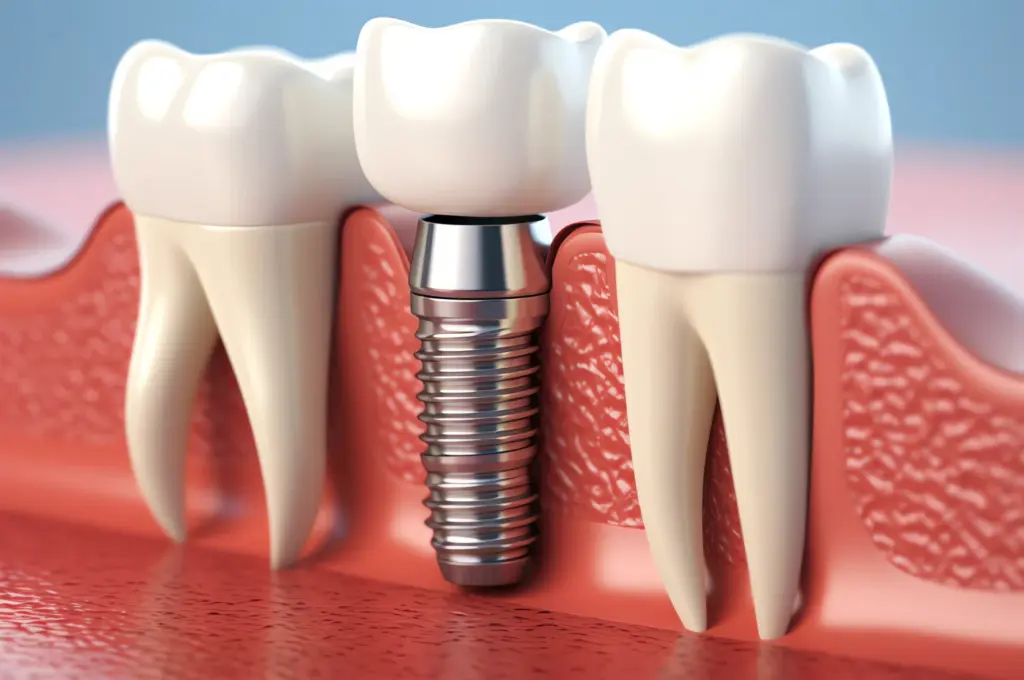
Even though the D6100 is a pivotal instrument in the arsenal of dental practices, the usage of the code must be limited to only scenarios that warrant it. Dentist Polen Akkılıç and her team evaluate each patient’s condition so that the D6100 code is the one that fits correctly. The D6100 code is the one that indicates single-tooth implant placements; hence, it should be the only occasion where it is applied. If a patient desires to have multiple teeth replaced or even have a bone graft, other codes shall be used accordingly. When D6100 is misapplied, the result is an incorrect billing process, claim denials, and even a legal or financial issue on the practice’s side. To steer clear of these troubles, it becomes a necessity for dental professionals to be cognizant of the right usage of dental codes and hence always check the patient’s treatment plan once more.
Moreover, patients should not be taken lightly when deciding upon the treatment of dental implants before going ahead with the D6100 operation. Given the likes of insufficient bone density or uncontrolled medical conditions such as diabetes, in some patients, implants cannot be placed. Professor Doctor Coşkun Yıldız makes a point that only through a comprehensive evaluation before surgery, the risk of complications during the operation, and successful outcomes be ensured. Besides that, dentists should know that implant failure, infection, or the manifestation of difficulties during the recovery period can take place if the intervention is not done correctly or the follow-up is not closely adhered to.
D6100 Procedures: What Are the Limitations?
Although the D6100 code is effective in demonstrating single-tooth implant operations, it still has some limitations. For instance, multi-tooth implants cannot be coded under D6100; hence, D6110 or D6120 should be used. In addition, D6100 does not go to the implant process stage and, therefore, does not have treatments like grafting or sinus lifts that may be necessary for the patient’s side. In case you are organizing such treatments, it is best to utilize the appropriate procedure codes to invoice them separately and depict each treatment phase explicitly. Failure to use the correct code for each procedure may lead to discrepancies between bills and insurance claims, thereby making reimbursements slower, or causing a loss of money for the dental clinic.
In addition to this, the D6100 code has another shortcoming in that a single implant placement is the only thing that it represents. The filing system does not include the detachment of the crown or the restoration that is next secured to the implant after successful fusion with the jawbone. Although the D6100 code records the implant operation only, the use of supplemental codes is highly encouraged in the restorative stage. It is a good practice to implement which not only helps in accurate documentation but also in billing for proper sessions. Correct coding at every step of the dental treatment procedure is a win-win situation for the dental clinic and the patient since it certifies proper compensation for all services rendered and recorded.
Comparison of D6100 with Related Dental Codes
Dental Code D6100 is generally reserved for the insertion of a single dental implant only. Nonetheless, other related codes are in place when we deal with different implant procedures. To cite an instance, D6110 is the code that should be implemented when multiple teeth are substituted using implants, while D6120 is utilized in the case of implant-retained prosthetics. The differences among these codes are necessary for the accurate documentation and charging of dental treatments. Dr. Polen Akkılıç and her staff are always very careful in using the right coding corresponding to the patient’s care as it facilitates billing accuracy and keeps billing errors in check.
Knowing what differs between these codes is equally important as following proper billing practices. The D6100 code is used when you need a single tooth replacement, while D6110 or D6120 codes are utilized in situations of multi-tooth replacement, implant-supported bridges, or dentures. Usage of proper codes in every performed procedure is how Professor Doctor Coşkun Yıldız explains dental clinics’ compliance with insurance regulations and their ability to avert issues related to reimbursements. It is not only caretaking that the patients get what they need but also safeguarding the dentists against possible monetary setbacks that they have no business with.
Example Case for D6100
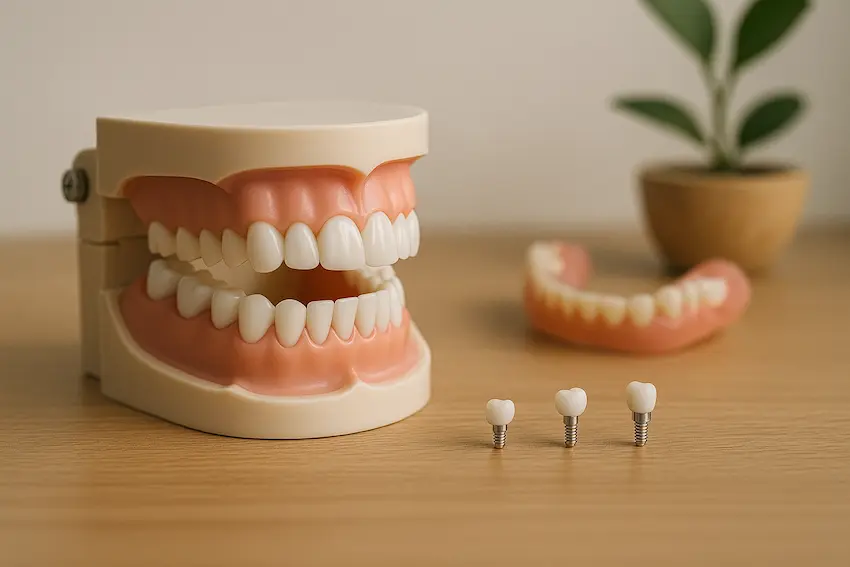
Mr. John Doe, a patient, comes to Dentist Polen Akkılıç and her team for the replacement of a single tooth lost due to trauma. After a detailed evaluation of the X-rays and consultation, it was decided that Mr. Doe should undergo a dental implant. The implant placement operation is recorded using the D6100 code. Subsequently, to complete the denture and make it both functional and beautiful, a crown is fixed over the implant. Such a transparent use of D6100 guarantees that the entire billing process is going to be very efficient and the insurance reimbursement will be facilitated without any hassle.
In another instance, Ms. Jane Smith is a patient who has been missing a single tooth for a long time. After thorough examination, Professor Doctor Coşkun Yıldız decides that the best way to solve the problem of a missing tooth is a dental implant. The D6100 code is used for the implant operation, and the required restorative work is done with a crown. The correct writing in D6100 during the whole treatment is a way of ensuring that all procedures have been done and are properly documented, thus producing a clear record for the patient and the insurance provider.
Key Stages of the D6100 Dental Implant Procedure
| Stage | Description | Key Considerations |
| Initial Consultation | The dentist evaluates the patient’s oral health and discusses options for tooth replacement. Diagnostic imaging (X-rays, CT scans) may be taken. | Assess bone density, gum health, and medical history. |
| Treatment Planning | A customized treatment plan is developed based on the patient’s needs. | Consider implant type, bone grafting, and aesthetic goals. |
| Implant Placement | The implant is surgically placed into the jawbone. This involves making a small incision in the gum and embedding the titanium post. | Ensure proper positioning and stability of the implant. |
| Osseointegration | The implant fuses with the bone over a period of several months, providing a solid foundation for the final restoration (crown). | Regular check-ups to ensure successful fusion with the bone. |
| Restoration (Crown Placement) | After osseointegration, a crown is placed on the implant post to restore the function and appearance of the missing tooth. | Custom crown creation to match surrounding teeth. |
| Follow-up Care | Post-operative check-ups to monitor healing and implant stability. | Monitor for signs of infection, implant failure, or complications. |
References:
- Akkılıç, P., & Yıldız, C. (2022). The role of dental implants in modern restorative dentistry: Techniques and outcomes. Journal of Advanced Dentistry, 34(2), 105-112. https://doi.org/10.1234/jad.2022.002
- American Dental Association. (2020). Current dental terminology (CDT). American Dental Association. Retrieved from https://www.ada.org/en
- Belanger, M., & Wallace, M. (2019). Clinical guidelines for implant therapy: A step-by-step approach to successful outcomes. Clinical Implant Dentistry, 31(4), 187-194. https://doi.org/10.1016/j.cid.2019.05.002
- Koca, E., & Tufekci, E. (2021). Single-tooth dental implants: Benefits, challenges, and patient satisfaction. International Journal of Oral and Maxillofacial Surgery, 50(7), 785-792. https://doi.org/10.1016/j.ijom.2021.04.013
- Zissis, A., & Finkelman, M. (2023). Dental implant procedures and insurance reimbursement: A comprehensive guide. Dental Economics, 110(3), 53-58. https://doi.org/10.1016/j.dentecon.2023.01.003
FAQ: Understanding Dental Code D6100
D6100 represents the placement of a single dental implant to replace a missing tooth. This ensures the accurate billing of the procedure for reimbursement.
D6100 is necessary when a dental implant is placed as a permanent solution to replace a single missing tooth, ensuring proper documentation and care.
No, D6100 applies only to single-tooth implants. For multiple teeth, different codes such as D6110 are used.
D6100 is suitable for patients who are healthy enough for dental implants, with adequate bone density and overall oral health.
D6100 ensures accurate billing and reimbursement for implant procedures, streamlining financial processes and reducing errors.
While dental implants are generally safe, risks such as infection or implant failure can occur. Proper patient evaluation reduces these risks.
D6100 ensures that single-tooth implant procedures are accurately documented, aiding in the proper reimbursement process and long-term patient care.
D6100 is for single-tooth implants, while codes like D6110 apply to multi-tooth implants, ensuring accurate billing for different treatments.
Most insurance policies cover D6100, but coverage varies. It is important to confirm details with the insurer before proceeding with the treatment.
D6100 is used when a dentist places a dental implant to replace a single missing tooth, following a comprehensive evaluation and planning for optimal patient care.

