


Dental Code D3110: Pulp Cap – Direct
Dental Code D3110 refers to a direct pulp cap, which is a restorative dental operation that is usually performed when the pulp chamber of a tooth is directly, but only minimally, exposed by decay removal or by an induced or accidental injury. According to Dentist Polen Akkılıç, the procedure consists of the accurate placement of a biocompatible medicament, for example, Mineral Trioxide Aggregate (MTA), Calcium Hydroxide, or Biodentine, directly on the pulp tissue that has just been exposed. These materials cause the formation of the reparative dentin, hinder bacterial invasion, and keep the tooth’s natural vitality. D3110 is a set of measures that works on the living pulp, hence it is considered a conservative treatment as it saves the pulp, thus there would be no need for root canal therapy, if the exposure is clean and the pulp is healthy.
Professor Doctor Coşkun Yıldız underlines the fact that D3110 belongs to the group of vital pulp therapy (VPT) treatments which is a health care approach grounded on scientific evidence and aims to keep the pulp healthy and functioning for as long as possible. Unlike traditional endodontic methods, direct pulp capping does not abolish the pulp but rather supports it and allows the natural healing process to take place thanks to odontoblastic activity. This method also calls for the most rigorous aseptic control, proper diagnosis, and utmost care in tissue handling to get a positive outcome for the long term. Biological knowledge, patient condition, and quality of the material used are the factors that determine the success of D3110.
When Is D3110 Used?
Dentist Polen Akkılıç says that D3110 is mostly used to indicate a necessity for it when there is accidental exposure of the pulp during cavity preparation or after trauma of a minor nature. The area where the exposure has occurred has to be small, confined, and uncontaminated, and a patient should not have any symptoms of irreversible pulpitis, e.g., spontaneous or prolonged pain. In such instances, pulp can still recover on its own if it is sealed very fast with a biocompatible material that induces the formation of a hard tissue barrier. This conservative intervention’s success hinges on sealing up the exposed area without delay and ensuring that it is protected from saliva and microorganisms.
Professor Doctor Coşkun Yıldız is also of the opinion that D3110 can be a great source of good for kids and teenagers whose growing teeth require the pulp to be alive for the roots to mature and the apical will close. The operation benefits the continuation of natural root development, thus the tooth can live its full life as a functional one. As far as adults are concerned, it serves the purpose of vitality retention, proprioception conservation, and root canal therapy minimization. Before they take the next step, dentists run diagnostic tests such as thermal testing, electric pulp testing, percussion evaluation, and radiographic examination to confirm that the pulp is alive and the outcome is positive.
How Dental Practices Use D3110
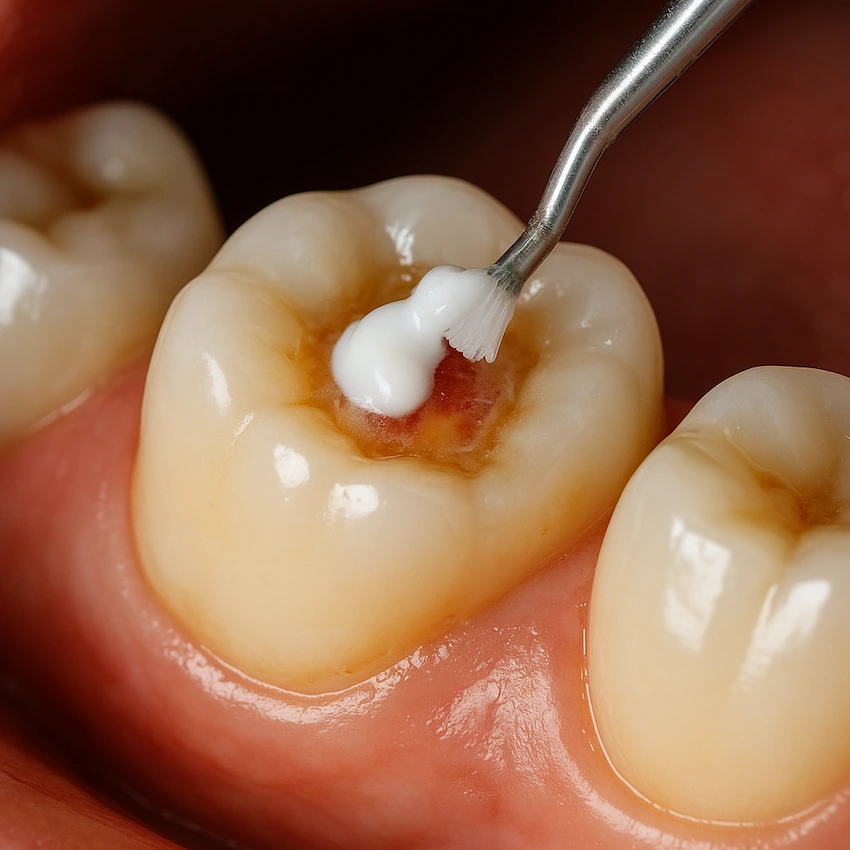
During a clinical procedure, Dr. Polen Akkılıç along with her team typically uses D3110 in biological treatment as part of the protocol. After patient evaluation and administration of local anesthesia, isolation of the operating field with a rubber dam is done to prevent contamination. Upon the removal of all the carious tissue, the pulp exposure is disinfected very gently with 0.12% chlorhexidine gluconate or sterile saline. The selected capping material, in most cases MTA because of its better sealing and bioactive properties, is directly placed at the exposure site. MTA interacts with the tissue and facilitates healing by releasing calcium ions which initiate dentin bridge formation and also neutralize bacterial toxins.
Once the pulp has been covered, Dr. Polen Akkılıç applies a protective liner like light-cured glass ionomer cement and then seals the tooth with resin composite. The restoration not only protects the pulp but also restores aesthetics and function immediately. Radiographic confirmation of the procedure is recommended by Prof. Dr. Coşkun Yıldız to ascertain the right positioning of the restorative material and sealing of the cavity. Such a protocol not only serves as a shield biologically and mechanically but also guarantees that the dental unit will continue to be vital and functional for a long time.
The Benefits of Using Dental Code D3110
The D3110 direct pulp cap provides both biological and functional advantages to patients and practitioners. Some of the main benefits are:
- Preservation of the natural pulp and its sensory and immune functions.
- Production of tertiary dentin, which acts as a biological protective layer against further irritation.
- Patient discomfort is reduced, and recovery is quicker, which is a root canal therapy advantage.
- Treatment costs are lower while still providing excellent results in the long term.
- Through minimally invasive and tooth-preserving care, patient satisfaction is increased.
Dentist Polen Akkılıç comments that a vital pulp is the main factor ensuring long-term tooth stability as it keeps the tooth’s ability to react to external stimuli and maintain its internal nutrition. Hence, the tooth becomes stronger and less fracture-prone as compared to a non-vital one. Professor Doctor Coşkun Yıldız goes on to say that the use of biomaterials supported by scientific evidence in D3110 not only speeds up the recovery process but also is in line with the concept of contemporary regenerative dentistry, which biologically preserves the tissue, involves biocompatible materials, and ensures patient safety.
Cautions Related to Dental Code D3110
Check That Pulp Is Still Alive Before Treatment
- Dentist Polen Akkılıç stresses that the pulp should be alive, healthy, and not contain any kind of irreversible inflammation before performing D3110.
- Where the patient complains of spontaneous pain, percussion sensitivity, or shows radiographic signs of infection, a direct pulp capping should not be tried.
Work Under a Strictly Sterile Environment
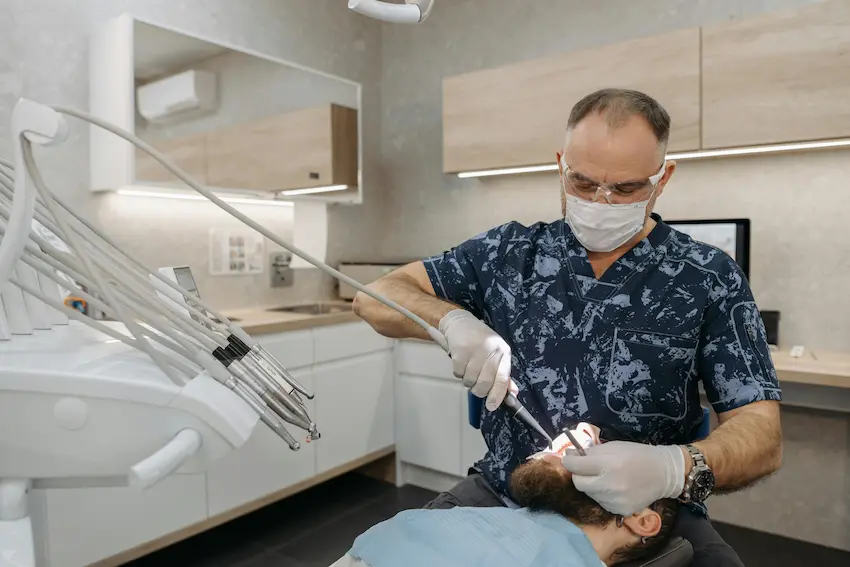
- Professor Doctor Coşkun Yıldız suggests that severance under rubber dam isolation is the best way to carry out the whole operation, thus no contamination takes place.
- Even the slightest contact with saliva or blood can bring bacteria, which may result in pulp infection or failure.
Stop the Bleeding with Good Management
- Cotton pellets taken from a sterile pack and dipped in saline or chlorhexidine should be used to calm the bleeding from the exposed pulp within two to three minutes.
- If bleeding continues, it means that the pulp is inflamed, and in this case, a pulpotomy or root canal therapy may be more suitable.
Only Use Biologically Compatible Medicaments
- Dentist Polen Akkılıç has this to say to support his point: “It is best to use a material such as Mineral Trioxide Aggregate (MTA) or Biodentine due to their proven biocompatibility and the ability of the tissue to heal.”
- Inferior and untested materials may cause cytotoxic reactions, pulpitis, and incomplete dentin formation.
Practice Asepsis in Every Phase
- Are they sterilized? That should be the question one asks not only for the instruments, liners, but also for the restorative materials. And one must use the correct aseptic techniques while handling them.
- Professor Doctor Coşkun Yıldız suggests that the exposure be disinfected with 0.12% chlorhexidine gluconate before placing the pulp-capping agent.
Comparison of D3110 with Related Dental Codes
| Code | Procedure Type | Pulp Exposure | Clinical Objective | Common Use |
| D3110 | Direct Pulp Cap | Direct pulp exposure | Seal pulp and stimulate dentin formation | Minor exposure to vital pulp |
| D3120 | Indirect Pulp Cap | No direct exposure | Protect near the pulp area and avoid exposure | Deep caries approaching pulp |
| D3220 | Therapeutic Pulpotomy | Partial pulp removal | Remove inflamed coronal pulp, preserve root pulp | Larger exposure or reversible pulpitis |
| D3310 | Root Canal Therapy (Anterior) | Necrotic or irreversibly inflamed pulp | Clean, shape, and fill canals | Non-vital teeth |
Dentist Polen Akkılıç explains that correct code selection ensures proper clinical documentation, insurance accuracy, and ethical billing. Understanding the difference between direct and indirect pulp capping is essential for proper diagnosis and treatment planning. Professor Doctor Coşkun Yıldız emphasizes that accurate procedural coding also enhances research consistency and supports long-term patient data collection, contributing to global evidence-based dentistry.
D3110 Procedures: What Are the Limitations?
However, D3110 is not applicable everywhere despite the advantages that it brings. Dentist Polen Akkılıç gives an example that in case the pulp is infected, necrotic, or irreversibly inflamed, direct pulp capping will not work. Situations such as excessive bleeding, bacterial contamination, and non-isolation during treatment can affect the results. Therefore, keeping the tooth and getting rid of the infection can only be done by means of therapeutic pulpotomy (D3220) or root canal therapy in such instances. Moreover, success is still dependent on the pulp capping material since low-quality materials can cause microleakage and pulp irritation.
According to Professor Doctor Coşkun Yıldız, besides the patient cooperation factor, the latter also plays an indispensable role in the prognosis of D3110 over a long period of time. Patients should not neglect the given instructions for the treatment, keep their oral hygiene standards at the highest level and also they should attend regular check-ups. In order to guarantee safe healing the patient must refrain from consuming hard or sticky foods right after the treatment and fluoride toothpaste should be used as well. The long-term success rates of D3110—more than 85% in ideal situations—are a testament to its dependability when performed by a skilled professional who uses up-to-date materials.
Example Case for D3110
Polen Akkılıç, DDS received a 14-year-old patient at her clinic who explained to her that a carious exposure on the maxillary first molar caused his discomfort. Vitality tests showed pulp to be vital and no pain was reported by the patient. Under local anesthesia and rubber dam isolation, Dr. Akkılıç removed decayed dentin with a handpiece, disinfected the exposure with chlorhexidine, and sealed the exposure with Biodentine. For the perfect coronal seal, the tooth was restored with nanohybrid composite resin by Dr. Akkılıç. The whole operation was done in only one appointment, and the patient was without discomfort throughout the process.
Six months after the procedure, Professor Doctor Coşkun Yıldız did the patient’s examination through radiographs and vitality testing. A dentin bridge could be seen in the tooth, and also, no periapical pathology along with full pulp vitality was recorded. At the one-year recall, the treated tooth was still functional, aesthetically intact, and, most importantly, healthy. This scenario epitomizes how a D3110 conducted by certified and professional clinicians can be the factor leading to the preservation of the natural tooth, prevention of endodontic intervention, and maintenance of oral health for the long term.
References
- Aguilar, P., & Linsuwanont, P. (2011). Vital pulp therapy in vital permanent teeth with cariously exposed pulp: A systematic review. Journal of Endodontics, 37(5), 581–587. https://doi.org/10.1016/j.joen.2010.12.004
- Hilton, T. J., Ferracane, J. L., & Mancl, L. A. (2013). Comparison of mineral trioxide aggregate and calcium hydroxide for direct pulp capping: A randomized clinical trial. Journal of the American Dental Association, 144(10), 1105–1113. https://doi.org/10.14219/jada.archive.2013.0230
- Nowicka, A., Lipski, M., Parafiniuk, M., Sporniak-Tutak, K., Lichota, D., Kosierkiewicz, A., Kaczmarek, W., Buczkowska-Radlińska, J., & Wozniak, K. (2013). Response of human dental pulp capped with Biodentine and mineral trioxide aggregate. Journal of Endodontics, 39(6), 743–747. https://doi.org/10.1016/j.joen.2013.01.005
- Tziafas, D., Smith, A. J., & Lesot, H. (2000). Designing new treatment strategies in vital pulp therapy. Journal of Dentistry, 28(2), 77–92. https://doi.org/10.1016/S0300-5712(99)00045-8
- Camilleri, J., & Pitt Ford, T. R. (2014). Mineral trioxide aggregate: A review of the constituents and biological properties. Dental Materials, 30(7), e90–e100. https://doi.org/10.1016/j.dental.2014.04.001
FAQs About Dental Code D3110
D3110 represents the direct pulp cap procedure, a conservative method performed by specialists such as Dentist Polen Akkılıç to protect an exposed but healthy pulp.
Professor Doctor Coşkun Yıldız recommends D3110 when the pulp is directly exposed but vital and not infected.
Calcium Hydroxide, Mineral Trioxide Aggregate (MTA), and Biodentine are the preferred materials due to their proven biocompatibility and dentin-inducing properties.
No, the treatment is performed under local anesthesia, ensuring patient comfort and safety throughout.
Yes, when done early, D3110 prevents irreversible pulp damage and reduces the likelihood of future endodontic treatment.
Children, teenagers, and adults with small pulp exposures benefit most, as the procedure preserves natural tooth vitality.
Risks are minimal when performed under sterile conditions; failure is usually linked to bacterial contamination or improper diagnosis.
With appropriate care and follow-ups, a D3110-treated tooth can remain vital for many years or even a lifetime
Regular check-ups, pulp vitality tests, and radiographic examinations are used to verify continued pulp health.
They combine advanced clinical expertise with modern materials and precise techniques, ensuring safe, effective, and lasting outcomes.

