


Dental Code D0270: Bitewing – Single Radiographic Image
Dental Code D0270 pertains to a singular radiographic method that zeroes in on capturing a single bitewing image. The procedure is all about revealing as much detail as possible of the occlusal surfaces of both the upper and lower arches. What is more, the image defines the interproximal areas—the spaces between the teeth—where the main culprits of cavities and decay are always lurking. Besides, a bitewing film enables detection of decay, periodontal disease, and bone loss, which may not be apparent on clinical examination. By the provision of this image, dentists are capable of problem-solving at early stages, which in most cases, thus saves the patients from going through more complex treatments or dealing with the consequences of the problem.
The D0270 method is very limited and targeted in contrast to full-mouth radiographs or panoramic images, which display more comprehensive sections of the mouth. Therefore, it is a new high-tech focused check-up for those who are moderately and lowly prone to dental infectious diseases. Besides, the D0270 is usually the forefront of diagnostic work for routine preventive care, giving dentists a clearer picture of the patient’s dental health.
When is D0270 Used?
D0270 usage is a preventive program in the framework of the next dental regular checks. Usually, it’s recommended for an asymptomatic patient, who has no dental problems or is hardly ever in pain. In relation to the visual examination, the bitewing identifies decay, tooth decay, or bone loss in the areas that are very difficult to see. When the focus is on a close inspection of the interproximal areas, one cannot miss the importance of the bitewing image in the continuous monitoring of the condition of the teeth and gums in-between routine visits.
Furthermore, D0270 is the mainstay of the program in a series of treatment visits following a dental treatment such as a filling or other restorations. The film supports the staff in the confirmation of the achievements as planned and this is an indicator that none of the new problems have surfaced. For patients with a history of dental problems or those who are at a higher risk of caries and gingivitis, use of D0270 can become a habit, thus turning into a powerful tool to safeguard their oral health and prevent the complications from ever coming forth.
How Dental Practices Use D0270?
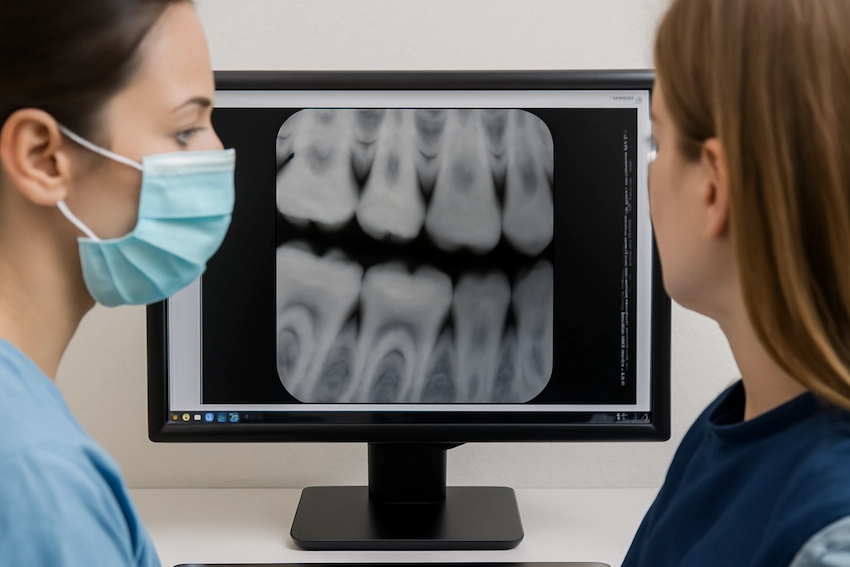
In dental practices, D0270 is a code that references the capture of a single bitewing radiograph. This can be achieved through various dental X-ray machines. The patient is made to sit in a comfortable chair, and a small X-ray film or sensor is placed between the teeth of the upper and lower jaws. The patient is instructed to bite down on the film or sensor, thus making sure that the teeth are properly aligned for the image to be recorded. After the image has been taken, it is looked at by the dentist or dental hygienist who can use it to evaluate the dental health, find the decay, keep track of the bone levels, and also check for any other indications of problems in the oral cavity.
The use of D0270 is a very fast and efficient process; thus it is usually done within a few minutes at a routine checkup. It is also one of the most frequent operations in preventive dentistry because of the ease and effectiveness with which the occurrence of early dental problems can be recognized. Dentists and dental hygienists find it very convenient that this code facilitates the identification of common issues that are common which in turn makes it an indispensable instrument in the maintenance of the patient’s oral health. Actually, since it is just a small, concentrated image, the intervention is less invasive and is normally met with the patient’s approval.
What Are the Advantages of Using Dental Code D0270?
- Focused and Clear Imaging: A D0270 focused bitewing radiograph gives a high-resolution image of interproximal areas (the space between teeth) that are visually the most difficult to assess. It is the most accurate way to detect cavities and bone loss between the teeth.
- Streamlined Workflow for Dentists: By the fast and easy method of getting a D0270 radiograph dental practices can streamline their diagnostic workflow thus assessing a patient’s oral health without long procedures more feasible. It serves as a good practical option for checkups and follow-up visits.
- Increased Patient Compliance: Since D0270 is a fairly quick and non-invasive procedure, patients willingly comply with regular dental checkups and X-ray exams. The positive outcome of this can be better dental health management and early intervention of the arising issues.
- Essential for Preventive Care: Periodic utilization of D0270 in a preventive dental care program is the main factor that leads to the detection of decay, cavities, bone loss, and other dental problems in their earliest stages. It is instrumental in maintaining proper oral hygiene and in avoiding the development of more severe dental conditions later on.
- Versatile for Various Age Groups: D0270 accommodates the needs of a wide variety of patients; it can be used for routine examinations, post-treatment follow-ups, and risk assessments in both children and adults. The flexibility of this instrument makes it a must-have in general dentistry.
Cautions Related to the Dental Code D0270
Despite D0270 being a very powerful tool for diagnosis, it still requires users to observe certain precautions when handling this code. One of the major points that has to be looked into is making sure that the right method is used to prevent the occurrence of the wrong radiograph. Not only should the X-ray sensor position be changed, but the patient’s bite also must be properly adjusted if the image is to accurately depict the area of interest. If the position is wrong, the image may lack some details, which can make it impossible to find some diseases.
Besides that, a dental X-ray such as D0270 is a low-dose radiation procedure; however, it is always better to avoid the over-exposure of radiation hence limiting the number of X-rays to those that are necessary. The dental workers are following particular regulations to keep the radiation exposure at the lowest levels and only permit imaging when it is necessary from the clinical point of view. Women who are expecting or people who are very sensitive to radiation may take a few more steps to be safe or may have to put off the X-rays unless it’s a must. Implementing all safety measures to avoid any harm to patients is a prerequisite for dental facilities.
D0270 Procedures: What Are the Limitations?

D0270 involves taking one single bitewing radiograph, which normally shows four to eight teeth of the upper and lower molars or premolars, or any other relevant parts of the teeth. This operation is mostly utilized in prevention which makes it possible to obtain the state of the teeth with their accompanying bone stalk. The picture enables dentists to confirm by what they see if any of the cases such as decay, bone loss, or periodontal problems which are invisible to the eye and felt by the clinical are even present.
The first aspect of dental radiographs that is not D0270 is an extensive type of imaging; i.e., full-mouth radiographs (D0210) or panoramic X-rays (D0330). Such methods are not only those whose images show the teeth and the jaw as well as the different supporting bones and ligaments but also exclude the bitewing radiograph referred to by D0270. D0270 is a very detailed and close look at the interproximal decay and bone health of a few teeth fingers without implying the general condition of the oral cavity.
Key Advantages of Using D0270 Dental Code
- First of all, Early Detection of Dental Issues: Through a focused D0270 radiographic image, dental professionals can detect cavities, decay, and bone loss at an early stage, usually even before the patient experiences symptoms. Hence, an early intervention has the potential to stop the progression of the dental problems, thus giving the occurrence of these severe problems a very low chance and the need for extensive treatment will be reduced.
- Cost-Effective Diagnostic Tool: D0270 is a less expensive option that offers vital diagnostic information without the need for costly devices or several images, when compared to full radiographic procedures. In this way, it is an excellent preventive care and regular checkup solution.
- Non-Invasive and Quick Procedure: D0270 is a minimally invasive procedure in which a small sensor is briefly placed in the patient’s mouth. Thus, patient comfort is guaranteed while accurate and detailed images of teeth and bones are obtained.
- Improved Treatment Planning: When dental issues are found through D0270 as early as possible, better treatment planning is also possible. Dentists can intervene at the earliest stages of the problem and thus, the patient is provided with timely and effective treatment which in turn will result in better long-term dental health.
- Prevents Extensive Procedures: In this way, the D0270 device assists in a regular checkup by revealing dental problems at an early stage and thus the necessity for aggressive procedures such as root canal, crown, and extraction is minimal. Consequently, the patient saves time and money and the risk of complications is reduced as well.
Example Case D0270
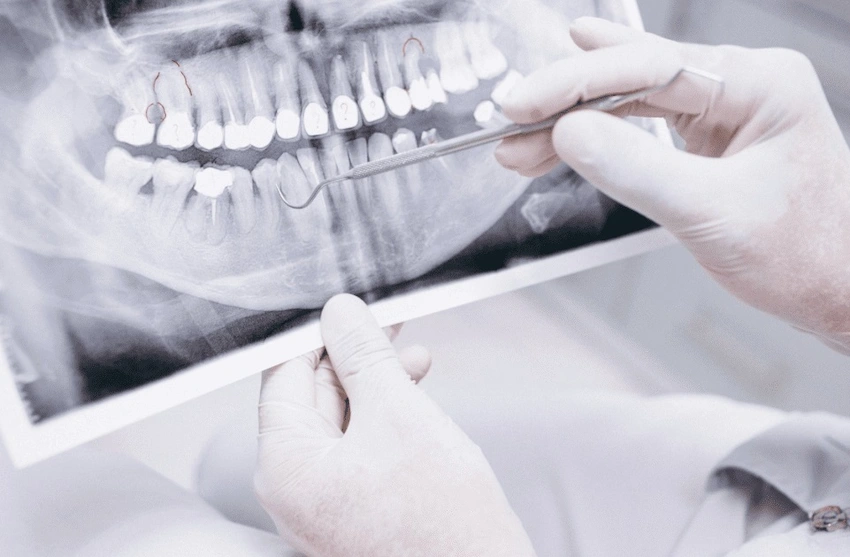
D0270 is often used in a scenario where a patient comes for a dental check-up without any symptoms or complaints of dental problems. To determine the interproximal decay, which is the most common type of decay that is usually overlooked during a visual examination, the dentist might decide to employ D0270. With D0270, the dentist is able to find out which teeth have small cavities that are at the early stage of development and thus no pain has been caused, but if the situation continues to develop unchecked, it will become a significant problem. Hence, the dentist has the opportunity to recommend decay-preventing treatment such as fluoride application or minor fillings if necessary, thus the patient will not have to undergo the more serious and destructive procedures later on.
Summary of D0270 Use in Dental Practice
| Procedure | Description |
| Code | D0270 |
| Type of Image | Single bitewing radiograph |
| Purpose | Detect cavities, bone loss, and other dental issues between teeth |
| Included Areas | Interproximal areas of the upper and lower teeth |
| Exclusions | Full-mouth radiographs, panoramic X-rays |
| Ideal Patients | Patients with no significant symptoms or as a routine check-up |
| Frequency | Typically once a year or more often for high-risk patients |
References:
- American Dental Association. (2024). Appendix 2: CDT Code to ICD Diagnosis Code Crosswalk. American Dental Association. https://www.ada.org/-/media/project/ada‑organization/ada/ada‑org/files/publications/cdt/appendix2cdtcodetoicddiagnosiscodec.pdf ada.org
- American Dental Association. (2022). CDT Code Action Request Inventory – Single Radiographic Image (D0270). American Dental Association. https://www.ada.org/-/media/project/ada-organization/ada/ada-org/files/publications/cdt/march2022_cdtcodeactionrequestinventory_public_2022mar10.pdf ada.org
- American Association of Endodontists. (2023). Endodontists’ Guide to CDT© 2024 (includes D0270 – bitewing single radiographic image). American Association of Endodontists. https://www.aae.org/specialty/wp-content/uploads/sites/2/2023/12/CDTGuide_2024.pdf American Association of Endodontists
- “HCA Washington Dental‑Related Services Program Billing Guide”. (2023, April 1). Dental‑Related Services Billing Guide – D0270 Bitewing Single Image. Washington State Health Care Authority. https://www.hca.wa.gov/assets/billers-and-providers/Dental‑Related‑Serv‑bg‑20230401.pdf hca.wa.gov
- Teero. (n.d.). Dental Code D0270: Single Radiographic Image. Teero. https://www.teero.com/cdt-codes/dental-code-d0270-single-radiographic-image teero.com
Frequently Asked Questions About Dental Code D0270: Single Radiographic Image
Dental Code D0270 is used to capture a single bitewing radiograph, providing a focused image that helps dentists detect cavities and other dental issues between the teeth.
D0270 benefits dental practices by offering a quick, cost-effective, and precise method for detecting early signs of decay, enabling timely interventions and reducing the need for more complex procedures.
Yes, D0270 is specifically designed to capture the interproximal areas between the teeth, which are often the most difficult to inspect visually, making it an effective tool for identifying cavities.
No, D0270 is a focused image of the upper and lower teeth in a bitewing position, while full-mouth radiographs capture a broader view of the entire set of teeth and jaw.
D0270 is typically taken during regular checkups, usually once a year, or more frequently if the patient is at higher risk for dental problems.
Yes, D0270 is considered safe when used correctly. Dental professionals follow strict protocols to minimize radiation exposure, ensuring patient safety.
The bitewing allows for a clear view of the contact points between the upper and lower teeth, making it easier to detect issues like cavities or bone loss.
No, D0270 focuses on the teeth and bone health. Additional imaging may be required to assess gum disease.
Yes, D0270 is commonly used for children during dental check-ups to monitor the development of their teeth and detect early signs of decay.
D0270 only includes a single bitewing radiograph, excluding panoramic or full-mouth radiographs, which provide a broader view of the teeth and jaw.

