


Dental retainers are the main tools for keeping the effects of orthodontic treatments, examples of these treatments being braces or aligners. When your braces or clear aligners have moved your teeth to the right places, retainers are what they use to keep the teeth still. The time and effort to undergo braces or aligners may be heavy, but the importance of donning retainers after the treatment is on another level. This article will help you understand the different types of retainers, the ways of taking care of them, and their various benefits for a healthy mouth in the long run.
What are Dental Retainers?
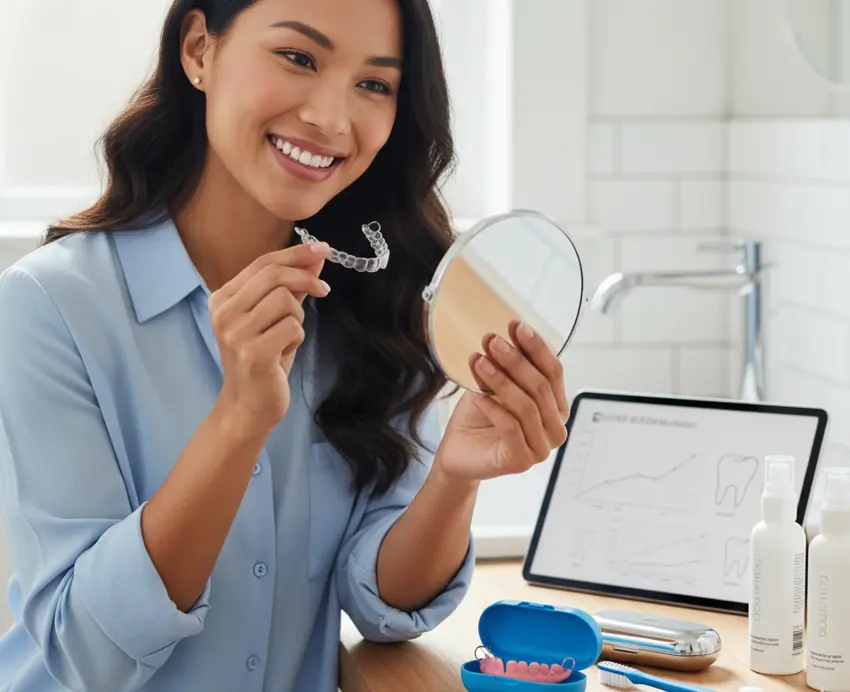
Dental retainers are specially designed devices that take care of the teeth’s positioning after the completion of orthodontic treatment. They shield the teeth from the risk of misplacement once that the teeth have been aligned with braces or clear aligners. Retainers differ in types, materials, and designs, and later on, we will be discussing each of them. The wearing of retainers regularly is the key that ensures the hard work with braces is not wasted and that the beautiful smile remains.
Types of Dental Retainers
There are mainly three types of dental retainers: fixed retainers, removable retainers, and clear plastic retainers. Each type features its own set of benefits and issues, and the decision of which one is suitable for you will be determined by your orthodontic requirements.
1. Fixed Retainers
Fixed retainers are permanent retainers that are connected to the backside of your teeth, most commonly the lower front teeth. This retainer type is attached to the teeth with a strong adhesive, and as a result, it is a non-removable variant. Fixed braces offer support to the teeth constantly and thus they are able to prevent loosening of the teeth and in this way, a long-term solution for stability is guaranteed. They are especially good for patients who can forget to put their removable retainers or who are at a high risk of relapse.
Even though fixed retainers provide great stability, they necessitate more detailed care. It is not easy to brush and floss around the wire, so the utilization of special tools such as interdental brushes or floss threaders is highly recommended for plaque prevention and gum health maintenance.
2. Removable Retainers
Removable retainers, like the Hawley retainers, are the most chosen orthodontic solution. These retainers are composed of plastic and wire and can be removed easily as well as worn during the time advised by the doctor. Usually, the wire runs through the front of the teeth, and the plastic piece lies against the palate or the lower teeth.
Removable retainers are more comfortable due to their flexibility; however, they require more willpower from the side of the users. Patients are obliged to wear them during the prescribed hours each day, normally 22 hours for the first couple of months after the treatment. Non-compliance with retainer use can lead to the shifting of teeth and as a consequence, the achievement of the orthodontic treatment will be at a loss.
3. Clear Plastic Retainers (Essix Retainers)
Essix dental retainers are a good alternative for individuals who want a more visually pleasing retainer rather than a conventional metallic one. The material used for these retainers is transparent, strong plastic that is shaped to fit over the teeth, so when it is worn, one can hardly see it.
Essix retainers share some similarities with removable retainers; however, they are often considered more comfortable and less visible. They are a perfect solution to those who look for cosmetic ways to keep their teeth after orthodontic treatments. Still, just like removable ones, they have to be worn regularly, and cleaning must be done often to prevent staining.
Benefits of Wearing Dental Retainers
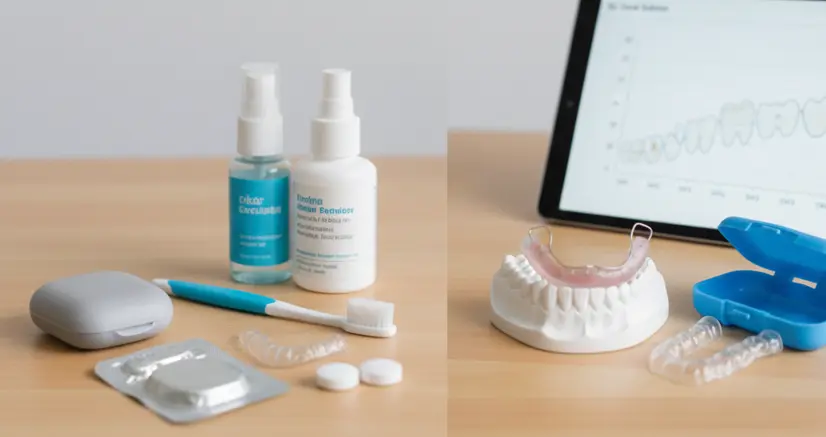
Dental retainers are a source of many benefits that help not only in the maintenance of teeth alignment but also the long-term oral health. Here are some important benefits of using retainers after orthodontic treatment:
1. Preventing Relapse
The most important reason for wearing a retainer is to stop teeth from moving back to where they were initially. After orthodontic treatment, teeth are still unstable in their new positions. Retainers serve as a means to keep the alignment and relapse to previous situations is blocked so that the smile stays straight and symmetrical.
2. Improving Bite and Functionality
By using retainers, you are helping your bite become more stable as well as improving the overall functionality of your teeth. This situation gains even more importance in cases where the patient has undergone orthodontic procedures to correct the misalignment of the jaw, e.g., overbite or underbite. A correctly worn retainer is an efficient way to have teeth in good positions for doing the work of chewing and speaking.
3. Maintaining Your Smile Aesthetics
The main reason of straightening one’s teeth through orthodontic treatment is the aesthetic factor. Retainers are the determining factor in the very concept of keeping that smile and therefore they are the most dependable when it comes to the results of braces or clear aligners. In fact, by following the wearing instructions of retainers, the aesthetic benefits brought about by your orthodontic treatment can last for a lifetime.
4. Protecting Your Teeth from Wear and Damage
One of the ways in which teeth are protected from wear and damage is by the use of retainers. What is more, misalignment may cause uneven wear on your teeth that would eventually lead to dental sensitivity and other issues of oral health. The retainer is a device that keeps teeth in the right position and thus lessens the chance of unnecessary wear.
How to Take Care of Your Dental Retainers
The right maintenance and cleaning of a dental retainer are indispensable for its production period and the achievement it makes. Parts of retainer care, which will lead to the retainer’s serving without oral health compromise, are introduced in the following paragraphs.
Cleaning Your Retainer
For the better hygiene of the removable retainers, they must be cleaned on a daily basis. You should rinse the retainer with lukewarm water after each use. To clean deeply, one may use a soft toothbrush and soap; however, toothpaste should not be used as it damages and scratches the surface of the retainer. Then again, for an occasional deep cleaning, you may place your retainer in a denture cleaner or in a retainer-specific cleaning solution.
Good oral hygiene around the wire is a must for those who have fixed retainers. Between the teeth and the wire, one can use floss-threaders or interdental brushes to remove plaque and thus avoid gum infection. Fixed-retainer maintenance will be made easier by regular professional cleanings, such as those with Professor Doctor Coşkun Yıldız, which will also ensure the retainer’s good condition.
Storing Your Retainer
When the removable retainer is out of the mouth, it should be kept in a neat, dry place for safety or hygiene. A retainer should never be left in a hot place, for instance, in a car, as heat has the ability to change the shape of and damage the retainer. Likewise, do not keep your retainer under direct sunlight for a long time as it makes the material brittle.
Dental Retainers and Long-Term Oral Health
Dental retainers comprise the life-support system of the results from orthodontic treatment as well as the long-term oral health. The keeping of retainer usage as per the doctor’s orders combined with appropriate retainer care will be the way to a smile protected from time. Whatever your decision is – fixed, removable, or clear plastic retainer, – you will be rewarded with good oral health and thus with a confident and well-groomed smile in the long run.
| Retainer Type | Description | Advantages | Maintenance | Best For |
|---|---|---|---|---|
| Fixed Retainers | Bonded to the back of the teeth, typically on the lower front teeth. These are permanent and not removable. | Offers constant support; no need to worry about forgetting to wear it. | Requires careful cleaning with floss threaders or interdental brushes to avoid plaque buildup. | Patients who need long-term, continuous support without the need to remember to wear it. |
| Removable Retainers | Made from plastic and wire, can be removed when eating, cleaning, or sleeping. Most commonly used type. | Flexible, comfortable, and easy to clean; can be taken out for eating and cleaning. | Must be worn for the prescribed number of hours each day; cleaned daily with a soft toothbrush and mild soap. | Patients who prefer flexibility and comfort. |
| Clear Plastic Retainers | Transparent plastic retainers, like Essix retainers, that are molded to fit snugly over the teeth. | Discreet, comfortable, and nearly invisible; provides a less noticeable option. | Must be removed before eating; cleaned with lukewarm water and mild soap; occasional deep cleaning required. | Patients seeking a cosmetic and discreet option. |
| Hawley Retainers | A combination of a thin wire and a plastic plate that fits over the roof of the mouth or under the teeth. | Durable, adjustable, and customizable; can last for many years if cared for properly. | Requires regular cleaning with a toothbrush and mild soap; stored in a protective case when not in use. | Patients needing a durable and adjustable option. |
Conclusion
Oral dental retainers are necessary implements that keep the changes brought about by orthodontic treatment. So, by selecting the suitable type of retainer, strictly following the care instructions, and wearing it as advised, you will be able to keep your teeth properly aligned forever. If you were worried about your retainer or oral health, Lema Dental Clinic located in Istanbul, Turkey, is ready to help you with professional care and giving you personal advice. Led by Dentist Polen Akkılıç and her team, a well-organized, committed group, you can be sure that your dental health is taken care of properly. Whether you require retainers or other dental treatments, Lema Dental Clinic will take excellent care of you and provide the necessary assistance throughout your smile improvement journey.
Frequently Asked Questions About Dental Retainers
The duration of wear varies depending on your orthodontist’s instructions. Typically, you will need to wear your retainer full-time for several months, then transition to part-time wear.
For removable retainers, it’s best to remove them before eating to prevent food from damaging the retainer and to maintain good oral hygiene.
Rinse your retainer with lukewarm water after each use, and clean it with mild soap and a soft toothbrush. Avoid using toothpaste to prevent scratches.
Yes, it is generally recommended to wear your retainer every night, especially during the first few months after your orthodontic treatment, to keep your teeth in their proper position.
Yes, losing your retainer can happen, which is why it’s important to store it safely when not in use. If you lose your retainer, consult your orthodontist immediately for a replacement.
Your retainer should fit snugly around your teeth without causing discomfort. If it feels loose, tight, or causes any pain, visit your orthodontist for an adjustment.
Yes, dental retainers can break if dropped or exposed to extreme conditions. It’s important to handle them with care and store them properly when not in use.
If you don’t wear your retainer as prescribed, your teeth may shift back to their original position, which is why consistent retainer use is essential.
- Ackerman, M. B., & Proffit, W. R. (2004). Orthodontics: Current principles and techniques (4th ed.). Mosby.
- Livas, C., & Karel, A. M. (2015). Comparison of the effectiveness of various types of retainers. American Journal of Orthodontics and Dentofacial Orthopedics, 148(6), 958-965.
- O’Brien, K., & Wright, J. (2018). The role of dental retainers in orthodontic treatment: A clinical review. European Journal of Orthodontics, 40(5), 561-567.
- Shroff, B., & Kachalia, S. (2020). Retainers: Importance and maintenance. Journal of Clinical Orthodontics, 54(2), 108-112.
- Graber, T. M., & Vanarsdall, R. L. (2017). Orthodontics: Principles and practice (6th ed.). Elsevier.

