When you lose a tooth, it’s more complicated than just aesthetics; it can also interfere with how your bite works, how you speak, as well as your overall dental health. However, dental bridges can provide a remedy to make these issues go away altogether. Bridges are designed to support the gap between missing teeth and act as a connection to the other healthy, remaining dental structures on your jaw. But did you know that different types of bridges for teeth offer various solutions to unique dental patients? Many people in contemporary society wonder what type of these will work wonders for them.
This blog will guide you through a journey of knowing the different types of dental bridges available, their variations, and how each would benefit your mouth according to your specified condition, identifying the kind most compatible with your smile as if it were made with you in mind.
What Is a Dental Bridge?
A dental bridge is nothing more and nothing less than a prosthetic device that provides a permanent solution to tooth loss. In terms of bridges, it literally allows you to establish that structure between missing teeth, as its name suggests. The device consists of one or more replacement teeth called pontics held by the neighboring natural teeth, also known as abutments, or by neighboring implants.
Besides restoring proper chewing and speaking, the following aims may be achieved by the use of dental bridges overall:
- Digitally reconstructing your smile and increasing confidence that everyone deserves.
- Restoring proper chewing functions on the remaining teeth, thereby preventing functional distress due to misshaping within your mastication
- Safeguarding facial structure by replacing missing teeth; this means teeth determine our shape, by omission, leading to sagging cheeks.
- Simply ensuring that other natural teeth are prevented from unwanted movements, providing recurrent torturous conditions. However, with the right dental bridges, patients regain well-being and good function as if the lost tooth had not even been absent.
1. Traditional Dental Bridge
The traditional dental bridge constitutes one of the most commonly applied forms of replacement teeth in present dental practice as it gives stability and strength over longer timeframes than other systems. It consists of bringing together adjacent teeth on both sides so that they can support an apparent space left as a result of missing a tooth or teeth while keeping within the constraints of effective & affordable prosthetic techniques.
How It Works:
- The artificial tooth, called a pontic, rests on the last true teeth of the crowns, being attached to them, making it too stable to wiggle around. The actual teeth need to be ground down along their top edges next for crowns to be fitted; however, this procedure is carried out with great care, often
- Not suitable if the surrounding teeth are weak or already damaged
2. Cantilever Dental Bridge
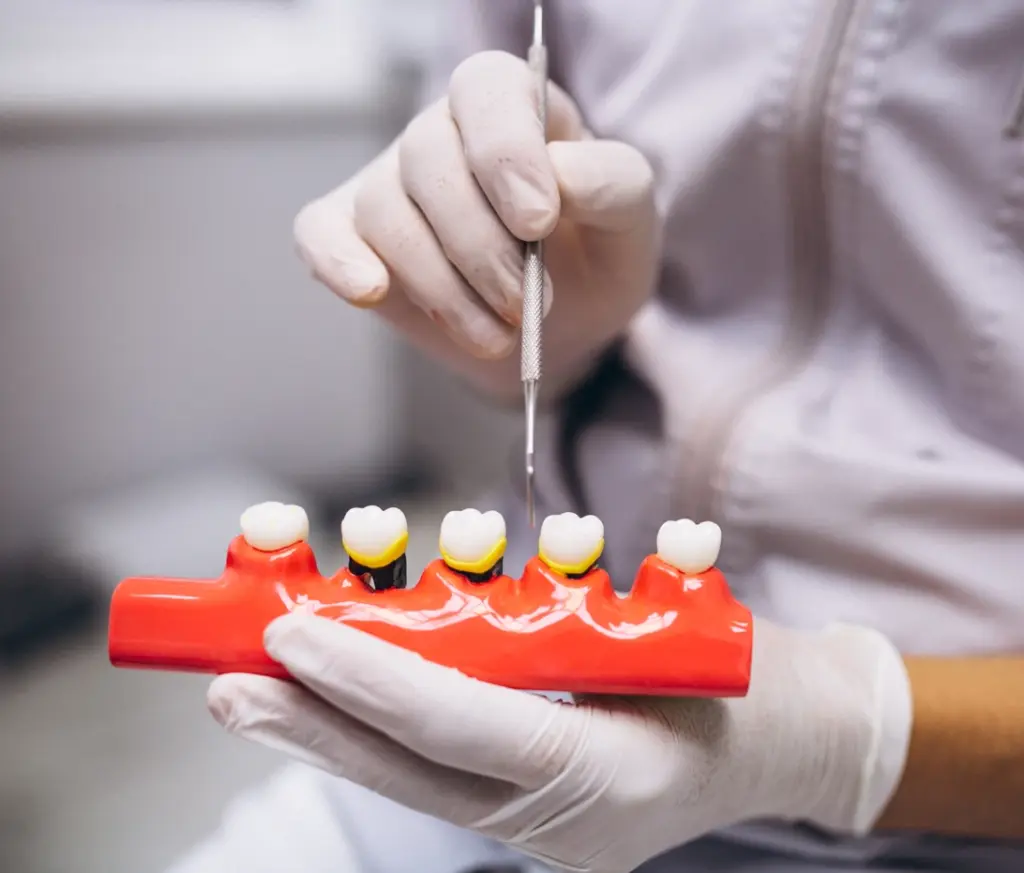
In the world of restorative dentistry, the cantilever bridge tends to occur almost as a variation of the traditional bridge, but relying on just one adjacent tooth that serves as a strong anchor for a pontic, along with a unique design based on both necessity and ingenuity on the part of the dentist for either esthetics or functional restorations.
How It Works:
- In this type of bridge, the dental technician works in an innovative way to anchor a pontic; hence, only utilizing a single crown on the neighboring supporting tooth, thereby providing that stability and strength that are characteristic of a well-done cantilever bridge.
Pros:
- These bridges give good results when it comes to replacing back teeth. Since they can be anchored by just one adjacent tooth, making they a very favorable choice where only one adjacent tooth is available, since it does not require much dental work.
- Compared favorably with conventional bridges concerning their practical approach and minimal complications, they will require less attendance from solid support as these bridges making them tend to be less intrusive procedure-wise, thus providing abundant side benefits.
Cons:
- Being designed as part of an unsupported single tooth structure, the cantilever name puts pressure on the lone supporting tooth, making it practically subject to additional wear and tear deterioration over the years.
- Accordingly, since restoration is not supported by additional anchorage, the cantilever might be expected to sustain undue stress for any prolonged periods of time, thus seen as a fracture or loosening risk during chewing pressures and from sporadic movements.
3. Maryland Bonded Bridge (Resin-Bonded Bridge)
Much understated yet not easily accessible within fixed prosthodontics practice groups, the Maryland bridge is likely one of the most efficient and least invasive replacement options for almost any single gap between anterior teeth, and where aesthetic concern is critical, avoidable.
How It Works:
- This bridge relies mainly on a simple, innovative yet effective mechanism where a pontic is held in place securely with thin metal or porcelain “wings” that are bonded onto the back surfaces of adjacent teeth to hold them firmly together from behind, thereby minimizing any significant alteration of the remaining dentition.
Pros:
- Minimal alteration of neighboring teeth. The Maryland Bridge requires minimal alteration of the healthy adjoining tooth structures. In comparison to other types, the drillings are often shocking and painful.
- Great for front teeth replacements. As said earlier, this type of dental bridge is effective in the replacement of missing front teeth since they look almost the same as natural teeth. Actually, when fitted, it is nearly impossible to tell; it is not a natural tooth since it is fitted well, looking & feeling just right.
- Affordable and quick to place compared to other methods, this type of bridge is relatively cheaper and less stressful since it can be done within a day. Subsequently, this method is largely used by patients who want a replacement before their wedding or a general function.
4. Implant-Supported Bridge
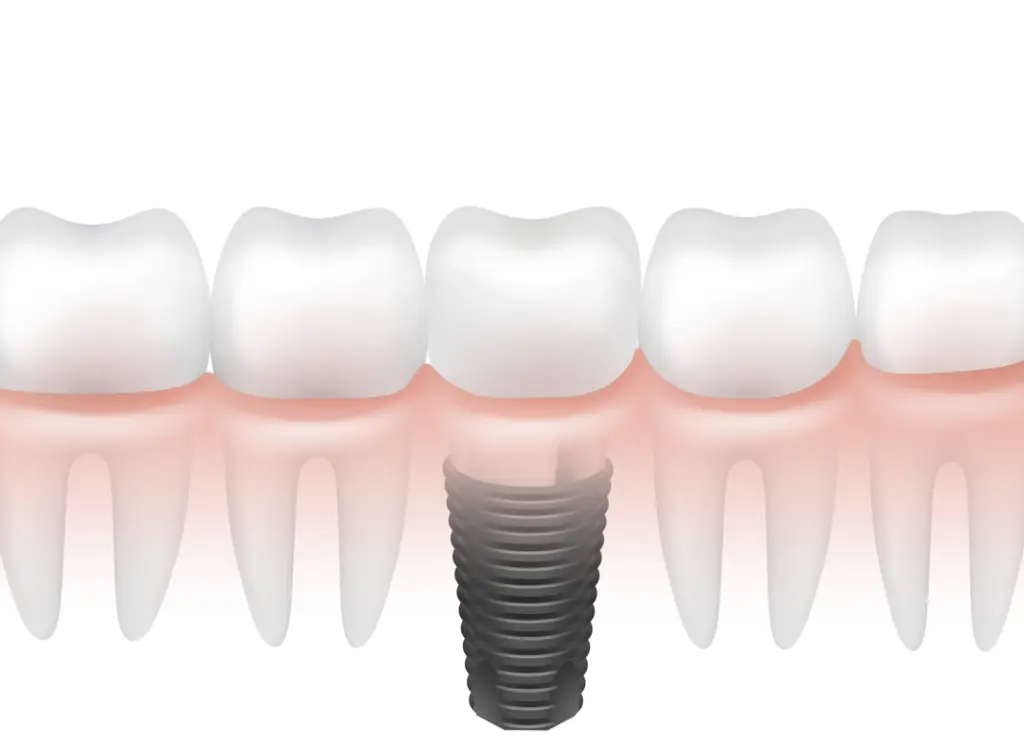
This type of dental bridge is fit for the most advanced and stable option for having a firm replacement for multiple missing teeth.
How It Works:
- This type of bridge does not use crowns or adhesives; instead, dental implants are surgically placed in the jawbone to act as supports for the bridge.
- This process sees to it that implants are securely placed into the jaw to ensure that the bridge grinds as one with the natural tooth roots, thus giving a normal feel to it.
Pros:
- As one of the strongest options, this is extremely stable and long-lasting, with low chances of displacing or breaking apart even when using force on the temporary bridge.
- The implant-supported bridge preserves the structure of the jawbone and protects against bone loss as the
- If you want to know whether you are a proper candidate for dental implants
Your dentist will conduct a personalized assessment by evaluating your oral health and other important factors on how dental implants will meet your criteria and advise you on the right option for restoring your function and smile.
Restore Your Smile with the Right Bridge at Lema Dental Clinic
Dental bridges are not just any beautiful accessory; they help in correcting fixation and preventing future orthodontic and periodontal issues. However, it does not matter the kind of bridge you would settle for whether traditional bridges, cantilevers, Maryland bridges, or even implants, make it a point that you do take the time and effort that your teeth need and get that beautiful smile you want back with the same confidence as before.
At Lema Dental Clinic in Istanbul, Turkey, a team of doctors is not only well-experienced but also competent in modern procedures and appealing techniques to create smiles using advanced knowledge and creativity to make them unique and appealing for the years to come. After analyzing your situation and what your expectations for treatment are, as well as the result you want, we take into consideration all your needs during the initial care and the following stages of it. Dedicated follow-ups and supportive counseling make for not only a strong wearing dental prosthesis but also a beauty and timeliness for years.
FAQ – Frequently Asked Questions
With good oral hygiene and regular dental visits, bridges can last 5 to 15 years or more.
No. The procedure is usually done under local anesthesia, and most patients experience minimal discomfort.
Yes. Once adjusted, a dental bridge allows you to chew and eat comfortably, though you should avoid very hard or sticky foods.
Implants are often more durable and don’t affect other teeth, but they require surgery and higher costs.
Yes. Replacing even one tooth prevents shifting, bite issues, and bone loss in the jaw.