


Titanium offers strength and durability, while porcelain provides better aesthetics.
Titanium vs. Porcelain: What’s the Real Winner?
We get it. You’re likely sitting there, scrolling through dozens of dental websites, feeling a bit overwhelmed by all the technical jargon. When you’re looking at a full-mouth restoration like the All-on-6, you aren’t just buying “teeth.” You’re buying the ability to laugh at a wedding without covering your mouth and the freedom to order whatever you want from a menu.
At Lema Dental Clinic in the heart of Istanbul, we’ve seen thousands of patients face this exact crossroads: Titanium or Porcelain?
The reality is, neither one is “better” in a vacuum. It all comes down to what your jawbone needs and what you want to see when you look in the mirror every morning.
Titanium: The “Shock Absorbers” for Your Smile

Think of your jawbone like a busy highway. Every time you chew, you’re sending “traffic” (force) down into the bone. Titanium has been the industry backbone for decades for one simple reason: it’s tough as nails but knows how to flex.
Professor Doctor Coşkun Yıldız often explains it this way: titanium is like the suspension system on a high-end car. It absorbs the bumps.
- Bone Love: Titanium has a unique “secret sauce”—it’s biocompatible. Your bone doesn’t just tolerate it; it grows into it. This process, osseointegration, makes the implant part of your actual skeleton.
- The “Grinder” Friendly Choice: If you’re a person who clenches their teeth when stressed, titanium is your best friend. It has a tiny bit of “give” that prevents the implant from cracking under pressure.
- Reliability: We’ve seen titanium implants last 30+ years. It’s the “buy it for life” option.
Porcelain & Zirconia: The “Red Carpet” Aesthetic
Now, when patients ask for “porcelain,” what they are usually talking about is a Zirconia bridge. This is the gold standard for anyone who wants that flawless, light-reflecting glow. Dentist Polen Akkılıç and her team often recommend this for patients who have a “high smile line”—meaning you show a lot of gum when you laugh.
- Zero Metal, Zero Shadows: Titanium can sometimes leave a tiny gray tint near the gums. Zirconia is white through and through. It looks so much like real enamel that even some dentists have to look twice.
- Gingival Health: Gums actually love Zirconia. It’s incredibly smooth, which means bacteria (plaque) has a hard time hitching a ride on your new teeth.
- Hypoallergenic: If you’re that 1% of the population with a metal sensitivity, Zirconia is a lifesaver. It’s completely inert.
The Comparison: What You Actually Need to Know
Here is the “no-nonsense” breakdown we give our patients here in Turkey during their initial consultation.
| Feature | Titanium (The Workhorse) | Porcelain/Zirconia (The Showstopper) |
| Feel | Natural, with a bit of “flex.” | Very solid; feels like “strong” teeth. |
| Durability | Extremely high; almost impossible to break. | Very high, but can chip if you’re reckless. |
| Aesthetics | Great, but can show a gray line. | Flawless. Best light reflection. |
| Gum Response | Standard. | Exceptional; stays very clean. |
| Cost | Usually more affordable. | A premium investment. |
The Lema Approach: Why Choose One When You Can Have Both?

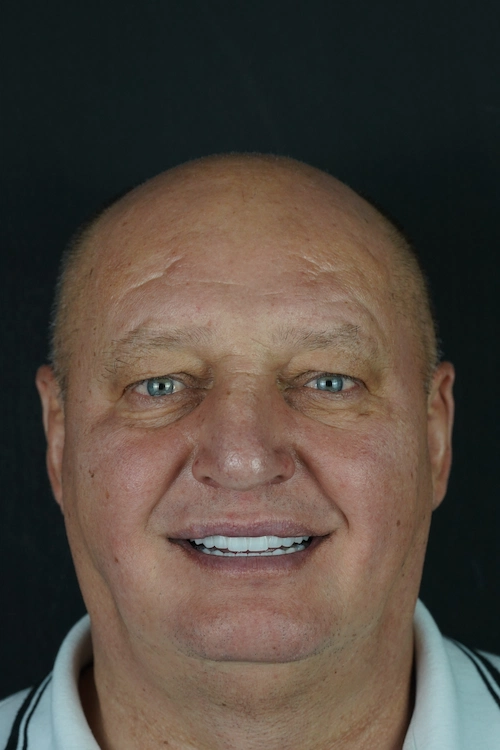
The question remains: do you have to pick just one?
Actually, the “secret” we use at Lema Dental Clinic is often a hybrid approach. We might use Titanium for the actual screws (the parts buried in your bone) because of their legendary stability, and then top them with a custom-crafted Zirconia bridge. This gives you the “shocks” of a titanium system with the “paint job” of a luxury porcelain finish.
Look, coming to Turkey for dental work is a big move. We don’t just want to give you new teeth; we want to give you a result that doesn’t keep you awake at night worrying about repairs.
Let’s Clear the Air: FAQ
“Honestly? The thought of it usually hurts more than the actual day. We use local anesthesia and sedation. You’ll be ‘floating’ through the procedure, and most of our patients are back to light meals within 48 hours.” — Dentist Polen Akkılıç.
“Plan for about 7 to 10 days for the first trip. We need to make sure the implants are settled and your temporary bridge fits perfectly before you fly home.”
“That’s the whole point! Once the healing phase (about 3-6 months) is over and your permanent bridge is in, you can go back to eating the foods you love. Just don’t use your teeth as tools to open bottles!”
“It’s simple economics—lower overhead and living costs. But at Lema, we don’t cut corners on materials. We use the same top-tier Swiss and German brands you’d find in London or New York.”
“Treat them better than your original teeth. A water flosser is a game-changer for All-on-6. Keep the area under the bridge clean, and they’ll likely last the rest of your life.”
- Albrektsson, T., & Wennerberg, A. (2019). On the osseointegration of different implant materials. International Journal of Oral & Maxillofacial Implants, 34.
- Apratim, A., et al. (2015). Zirconia in dental implantology: A review. Journal of International Oral Health, 7(3), 117-121.
- Malo, P., & de Araújo Nobre, M. (2011). The All-on-4 concept for full-arch rehabilitation of the edentulous maxilla: A 7-year retrospective study. Clinical Implant Dentistry and Related Research.
- Pjetursson, B. E., et al. (2018). A systematic review of the survival and complication rates of All-on-4 and All-on-6 concepts. Journal of Clinical Periodontology.
- Wenz, H. J., et al. (2008). Osseointegration and clinical outcomes of zirconia dental implants: A systematic review. International Journal of Prosthodontics, 21(1).

