


Remove denture adhesive from gums gently with warm water, a soft brush, and careful rinsing.
We really understand your feelings. At last, you take out your dentures after a taxing day, but the sticky glue residue almost always remains on your gums. Apart from being uncomfortable, it affects the flavor of your meal. In addition, bacteria may form if residue is neglected, which only leads to bacterial accumulation when left alone.
Here’s a situation that often occurs in our office. The majority of patients, in fact, are so focused on removing the glue that they scrub their was gums with great force. This leaves their gums red and very sore. Wearing dentures the following day is extremely painful.
The fact is, you don’t need to be forceful at all. All you have to do is be very gentle with yourself.
After many years of clinical work and research in Lema Dental Clinic, prioritizing the health of your soft tissues has become a habit. These are the most effective and pain-free techniques for removing that stubborn, glued paste.
Why Does the Glue Stick So Hard?
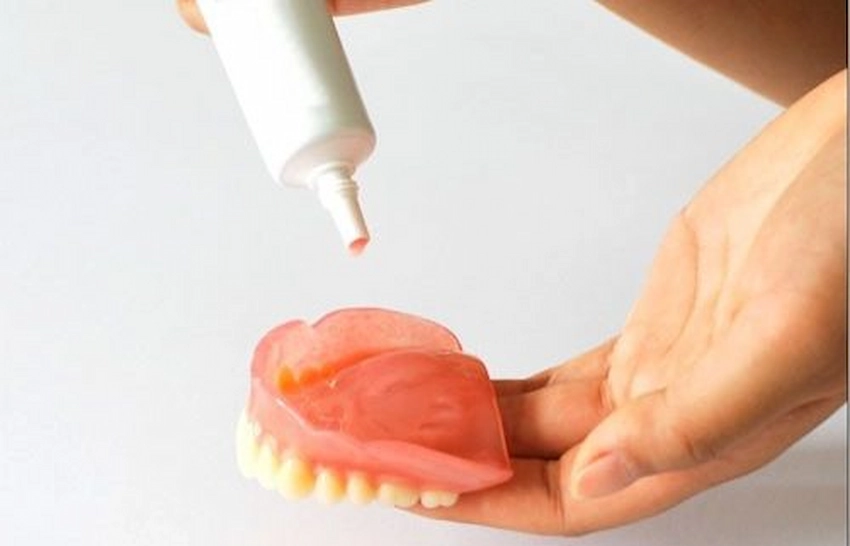
Denture adhesive is something like a strong, waterproof glue that is stuck on a wet tile surface. Your mouth is wet. Your saliva makes the glue swell and hold firmly.
Dr. Polen Akkılıç and her team are very diligent in reminding our patients about this. It is because basically the same mechanism that keeps your teeth in the jaw also makes the glue difficult to wash away.
Still, we should figure out how to safely “dissolve” that glue!
4 Easy Steps to Clean Your Gums
You should create a strategy that will allow you to remove the paste. Don’t destroy your oral mucosa while scraping!
- Step 1: Warm Water Rinse
Fill your mouth about three-quarters with warm (not hot!) water. Swish it around for about 30-60 seconds. The warm water is going to loosen the glue. After spitting it out, repeat if there is still glue.
- Step 2: Soft Brush Sweep
Take a soft-bristled toothbrush, or better yet, a baby one. Dampen it thoroughly with warm water. Softly make small circular movements with your finger covering the gums. You should never put regular toothpaste on bare gums,s as it is too harsh. Hold the brush very tenderly and exert the least possible pressure.
- Step 3: The Washcloth Trick
If you determine that, even after the first two steps, you have some unwanted paste even in the hardest-to-reach places, use the “cloth method” as a last resort. Take a clean, damp washcloth or medical gauze and wrap it around your finger. Using this little finger, give your gums a quick wipe. Any bits of paste can be easily picked up with the cloth.
- Step 4: Oil Pulling
Some glues are more resistant to the usual removal means than others. Place a tablespoon of either olive or coconut oil in your mouth. Hold it in your mouth and swish it about for one minute. The oil loosens and dissolves even the most waterproof glue.
What You Must Avoid
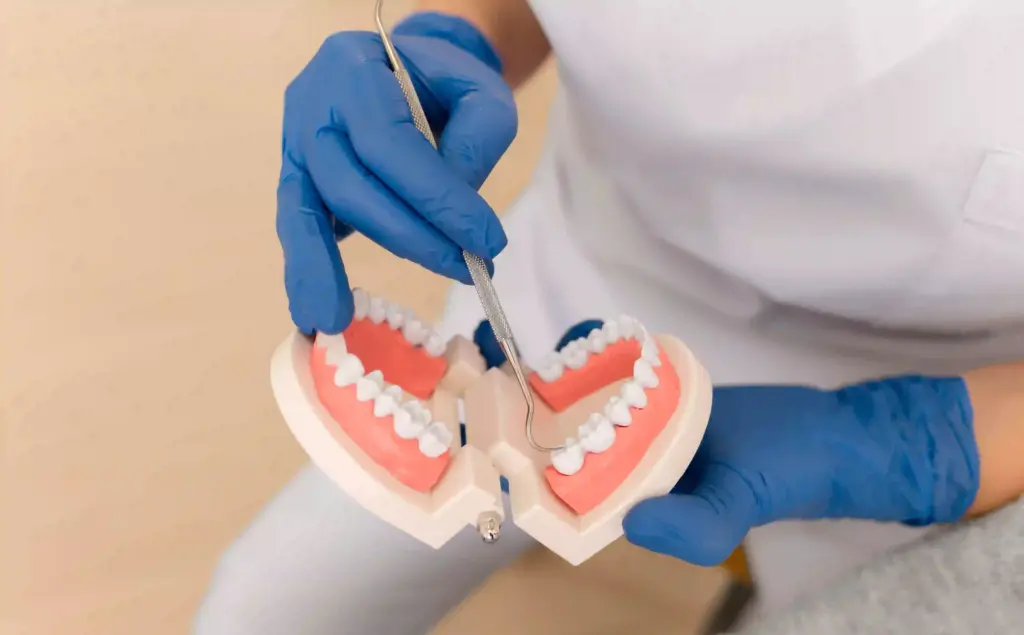
Professor Doctor Coşkun Yıldız, in his lecture,s raised the fact that a very big problem arises when people quite consciously or unconsciously scrub their gums so hard that they can even end up damaging their jawbones as a result. Bone is covered by gum, so injuring the latter will also lead to damage to the bone.
- Don’t scratch with your fingernails while trying to remove the glue.
- Don’t use toothbrushes with hard bristles.
- Do not use sharp dental instruments on oral soft tissues.
Which Method Is Best for Your Daily Routine?
We often get asked these questions: Which method is so effective that it is not harmful to the gums, and also which method takes the least time?
Compare Cleaning Methods
| Method | Does It Work Well? | Risk to Gums | Time It Takes |
| Warm Water Rinse | Low | Very Low | 1-2 Minutes |
| Soft Brush | High | Low | 2 Minutes |
| Damp Cloth | Very High | Low | 1 Minute |
| Oil Pulling | High | Very Low | 2-3 Minutes |
| Fingernail Scraping | Medium | Very High | Varies |
Doctor-to-Patient FAQ
“I can’t say no strongly enough! Leaving glue on your gums creates a warm, inviting, nutritious environment for bad bacteria to flourish and cause a painful infection called denture stomatitis. Your gums will be red, swollen, and extremely painful.”
“No, you shouldn’t. Regular toothbrushes are designed for regular, hard enamel teeth. So they are simply too harsh and rough for soft gum tissues. Get yourself a special, extra-soft baby toothbrush just for your gums.”
“Generally, no. Almost all mouthwashes contain some kind of alcohol. Alcohol dries out the mouth,th and it doesn’t melt glue. Go for warm water or oil instead.”
“Maybe your dentures feel loose, and so you are using too much glue. Your jawbone shrinks over time, and this changes the way your dentures fit. Thus, if you require additional glue, come to our clinic for rebasing and adjustment of dentures.”
“Most definitely yes, and this is something that we see very often here in Turkey. We insert several dental implants into your jaw. After that, your dentures simply snap in, like magnets opposing each other. Then you won’t need to have messy glue.”
- Coates, A. J. (2000). Usage of denture adhesives. Journal of Dentistry, 28(2), 137-140.
- Felton, D., Cooper, L., Duqum, I., Minsley, G., Guckes, A., Haug, S., … & Sweitzer, B. A. (2011). Evidence-based guidelines for the care and maintenance of complete dentures. Journal of the American Dental Association, 142(2), 1S-20S.
- Grasso, J. E. (2004). Denture adhesives: changing attitudes. The Journal of the American Dental Association, 135(1), 81-86.
- Kotsiomiti, E., Chrysanthopoulos, G., & Samaras, N. (2010). Denture stomatitis and oral hygiene practices in Greek complete denture wearers. Gerodontology, 27(1), 76-82.
- Slaughter, A. (2011). The effects of denture adhesives on the oral mucosa: a clinical perspective. Journal of Prosthodontic Research, 55(4), 213-218.

