


Start using denture adhesive only after gums heal and your dentist approves it.
Living with new dentures is like starting to walk all over again. You experience the first days with a mixture of excitement and irritation. A foreign object is inserted into your mouth, and your mouth needs to get used to it. In addition, you will want security. You will want that tube of paste in your hands to make everything stay put. You only want to get back to normal life.
Truth is, timing measures everything. Using adhesives too early may completely throw off your healing process. Besides that, it can even bring you severe, painful complications.
The Immediate Aftermath: Why Patience is Crucial
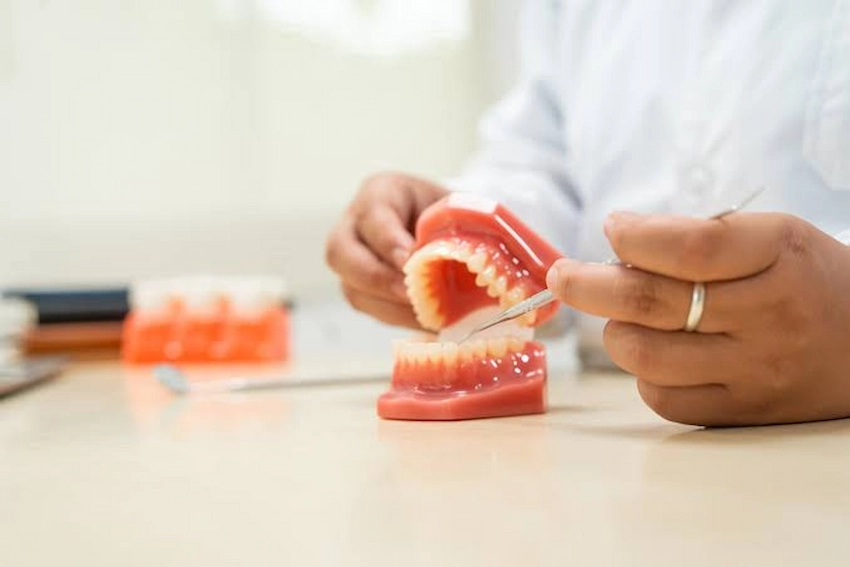
Once teeth are extracted, a significant remodeling of your bone and gums begins. You can compare the jawbone to a concrete slab just poured. It must be allowed to rest and cure before it becomes strong. The gum tissue covering your jawbone is very vulnerable. It is similar to the thin inner membrane of an eggshell. A harsh pressure or chemicals can easily tear it.
Simply, this is the phase patients are eager to get through. They just want a snugger fit. In fact, Prof. Dr. Coşkun Yıldız has pointed out several times that putting adhesive on freshly extracted sites is risky. Adhesives not only cause discomfort but they can be harmful.
Besides the fact that the chemicals in a paste can irritate the tissue, the artificial suction can even pull out the blood clots in the healing sockets, causing a very painful condition called a dry socket.
The Timeline: From Surgery to Stability
This is the protocol we have seen patients happily follow, resulting in healing of their oral wounds. The process from oral surgery to a steady smile is well defined, and the steps are always the same.
| Healing Phase | Timeline | Can I Use Adhesive? | Clinical Recommendation |
| Immediate | Days 1–10 | Absolutely Not | Rely on natural suction. Eat a strict liquid or soft diet. |
| Transitional | Weeks 2–4 | Very Sparingly | Only with dentist approval. Keep paste away from sockets. |
| Maturation | Months 2–6 | Yes | Tissue is healing. Hard relines are needed as the bone shrinks. |
| Stable | 6+ Months | Yes | If plates are still loose, it is time to consider implants. |
The Hidden Risks of Rushing the Adhesive
We understand that you feel that a tiny amount of paste can’t possibly hurt you. After all, you just want to get through a family dinner. Yet let’s have a closer look at the things happening under that acrylic plate.
If adhesive goes through to an open surgical wound, severe consequences can happen. They contribute to local infections, which may further delay healing by several weeks.
Besides, we must advise against heavy and prolonged use. Since the jawbone shrinks very rapidly during the first year of tooth loss, some patients resort to using large quantities of zinc-based adhesives to fill the increasing gap. Excess zinc intake can eventually lead to zinc poisoning, which is a serious nerve disorder causing numbness and permanent bodily damage.
Beyond the Paste: The Zirconium and Implant Revolution
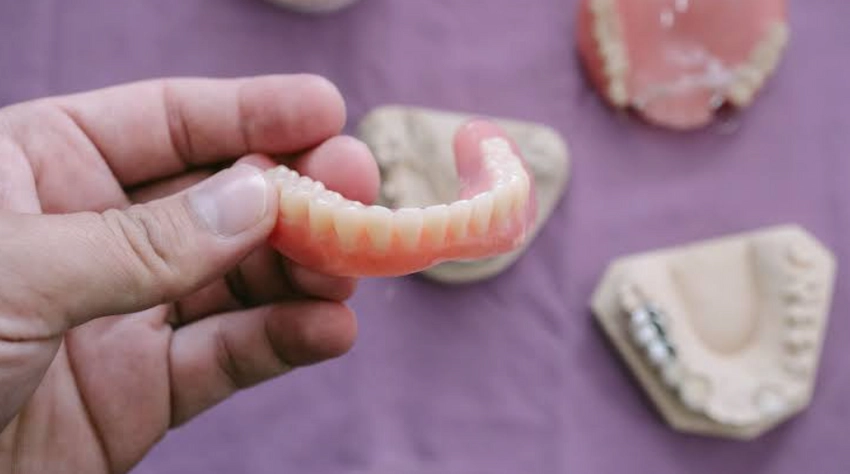
The question is: why should one be content with sticky,y messy adhesives when modern dentistry provides permanent and fully functional stability?
Every day at our cutting-edge surgical center in Turkey, Dentist Polen Akkılıç, together with the clinical team, is helping patients who have given up hope, locally and from abroad. Instead of living in the nightmare of dentures, patients can live without them thanks to our permanent solutions.
Trying to get speech or eating right by just using a thick layer of adhesive indicates that your denture has become incompatible with your body. Your bone has vanished.
Since there is nothing left for the dentures to hold onto, they become a floating plate. By utilizing advanced All-on-4, All-on-6, and Zygomatic implant systems and custom-made gorgeous Zirconium fixed bridges, we can completely change the smile and the lives of our patients.
After the procedure, the patients wear the rigid fixture all day, and the only thing on their mind is how natural the teeth feel!
Patient FAQs: Your Top Questions Answered
I am still wearing my immediate dentures, and they wobble a lot on day three. What could I do if glue is not an option for me?
Your gums are very swollen at this very moment and are changing shape quite fast. By gently biting down, keep the plate in the correct position and stick to liquid or soft food only. We realize that it is very frustrating for you; however, this stage is going to pass in no time. Your delicate tissue needs to be allowed to heal.
I’d like to know what happens if I accidentally get the adhesive deep into a fresh socket?
The pain will be extreme, and the infection will most probably begin. You must not try to remove it using a toothpick or a sharp object. Rather, you can try a very gentle saltwater rinse and then call your dental team for a safe and sterile cleaning.
Is there a safe type of adhesive for early use?
There are no adhesives safe for open wounds. You must wait until your dentist has given you the go-ahead (usually around week 3 or 4). When you do get going, always go for a zinc-free paste. Use the whole arch and only three tiny, pea-sized dots.
Why do I need to put more paste in my dentures now than what I was doing at month three?
This is because your jawbone keeps on shrinking. Normally, natural tooth roots help maintain the bone. When teeth are lost, bone resorption occurs. Your denture has not been altered, but your mouth has. You need an expert hard reline to fill up the gap, definitely not more paste.
How soon can I be changing from the old style dentures to the implants at your clinic?
There are quite a few patients who come to Turkey just to get away from the adhesive sticky cycle. Based on how good your bone is, your implants can be placed and a fixed temporary bridge inserted immediately following your surgery. We discover your particular requirements with a comprehensive 3D tomography,y and your safety is 100% ensured.
Academic References
- Carlsson, G. E. (2014). Responses of jawbone to pressure. Gerodontology, 31(1), 2-7.
- Felton, D., Cooper, L., Duqum, I., Minsley, G., Guckes, A., Hage, S., … & Sweitzer, B. (2011). Evidence-based guidelines for the care and maintenance of complete dentures: a publication of the American College of Prosthodontists. Journal of the American Dental Association, 142(2), 1S-20S.
- Polyzois, G. L., & de Baat, C. (2012). Attitudes and practices of dentists toward denture adhesives: a questionnaire survey in Greece. Journal of Prosthetic Dentistry, 108(4), 253-260.
- Singh, K., & Aeran, H. (2015). Denture adhesives: A review. Journal of Indian Prosthodontic Society, 15(4), 302–306.
- Zhao, K., Mai, Q. Q., Wang, X. D., Yang, W., & Zhao, L. (2014). Zinc-induced copper deficiency: a report of three cases initially recognized by prosthodontists. Journal of Prosthetic Dentistry, 111(2), 99-103.

