


Premium Gold Teeth in Turkey
There is a certain weight to the word “gold” that transcends mere currency. In the world of dentistry, it is the undisputed heavyweight champion of durability. Although the majority of contemporary clinics have shifted almost exclusively to the use of white ceramics, the demand for gold still serves as one of the main factors in luxurious restorative and cosmetic treatments. So, if you are wondering where one can get such a high level of artistry, the answer will unavoidably take you to Istanbul’s center.
At Lema Dental Clinic in Turkey, we view gold not just as a metal, but as a “tailored suit” for a tooth. It is a material that moves with you, adapts to the pressures of your bite, and carries a legacy of prestige that porcelain simply cannot mimic.
Beyond the Shine: Why Gold Still Rules
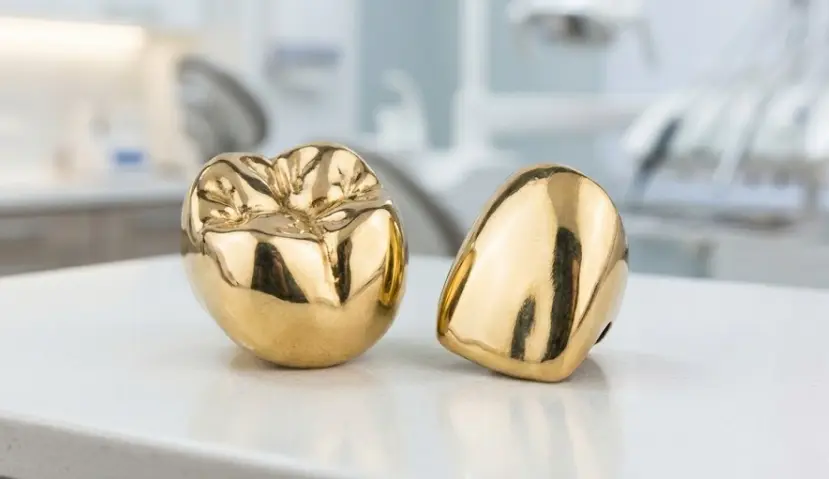
The reality is that gold is perhaps the most biocompatible material we have in our toolkit. Professor Doctor Coşkun Yıldız often notes that, from a mechanical standpoint, gold is the closest thing to natural human enamel. It doesn’t just sit in your mouth; it functions in harmony with it.
Think about your jawbone as the foundation of a house. Every time you chew, you exert a whole lot of pressure—hundreds of pounds. Sometimes ceramic can be compared to glass, fragile though it is, still pretty and very hard. Gold is really like a shock absorber in this case. Being slightly malleable, it can “give” a little under the bite pressure instead of cracking, which is very important for people with bruxism (teeth grinding) habit.
The Lema Experience in Istanbul
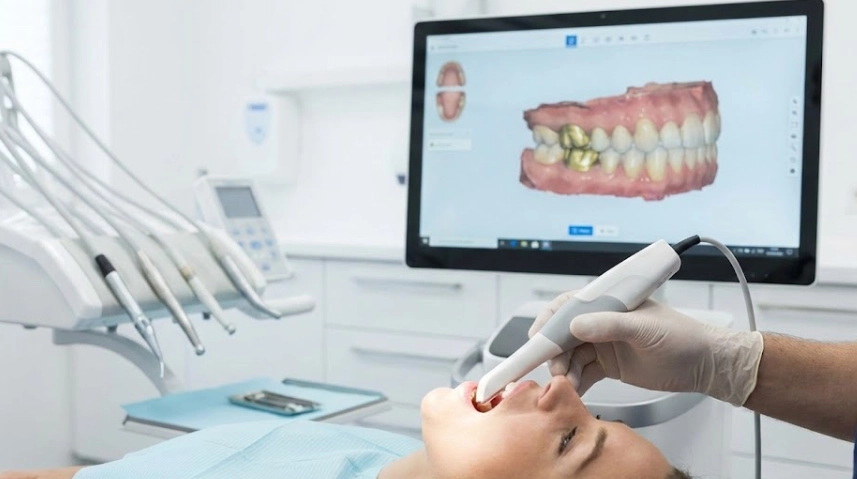
When patients arrive at our clinic, they are often surprised by the marriage of ancient luxury and space-age technology. Dentist Polen Akkılıç and her team utilize 3D intraoral scanners to capture every nuance of your dentition.
The question remains: Why choose Turkey for this specific treatment? It comes down to the concentration of skill. In our clinical experience at Lema Dental Clinic, crafting a gold crown is an art form that requires a “master jeweler’s” touch. We don’t just order these from a massive factory; they are precision-cast to fit your tooth to the micron. This ensures that the “seal” between the gold and your natural tooth is airtight, preventing future decay.
The Clinical Advantages of Choosing Gold
In our daily practice at Lema Dental Clinic, the decision to use noble metals isn’t just about the “look”—it is a strategic choice for long-term oral health. Here is why Professor Doctor Coşkun Yıldız and our surgical team prioritize this material for our international patients in Turkey:
- Maximum Conservation of Tooth Structure: Gold is incredibly strong even when cast in very thin layers. This allows Dentist Polen Akkılıç and her team to be extremely conservative, meaning we shave away far less of your natural tooth compared to what is required for bulky porcelain crowns.
- Gentle on Opposing Teeth: Some modern ceramics can act like sandpaper, wearing down the healthy teeth they bite against. Gold, however, has a wear rate almost identical to natural enamel. It protects your overall bite rather than damaging it.
- Superior Marginal Integrity: The way we cast gold at our Istanbul facility allows for a “seal” that is measured in microns. This precision fit eliminates the tiny gaps where bacteria usually hide, effectively acting as a fortress against secondary decay.
- Periodontal Harmony: High-noble gold is what we call “biologically quiet.” It does not irritate the sensitive gum tissue, which prevents the chronic inflammation or the unsightly “dark tattoo” lines often seen with cheaper metal alloys.
- Thermal Stability: Gold has a coefficient of thermal expansion almost identical to that of a tooth. It does not matter if you are having a hot Turkish coffee or a cold dessert, the adhesion of gold to your tooth remains intact, thus no microscopic leaks are formed which are the main cause of sensitivity.
Comparing Your Restoration Options
But let’s look closer at how gold stacks up against the modern alternatives we offer in our clinic.
| Feature | High-Karat Dental Gold | Monolithic Zirconia | Porcelain-Fused-to-Metal (PFM) |
| Durability | Exceptional (30+ years) | Very High (15-20 years) | Moderate (10-15 years) |
| Tooth Preservation | Requires minimal shaving | Requires moderate shaving | Requires significant shaving |
| Opposing Tooth Wear | Very Low (Gentle) | Moderate | High (Abrasive) |
| Best For | Back molars & Grinders | Visible smile line | Budget-conscious cases |
| Biocompatibility | Highest | High | Moderate (Metal sensitivities) |
Resurgence in Dental Fashion
In recent years, we have seen a shift. Gold is no longer just for the hidden back molars. In Turkey, gold “grillz” and permanent gold incisors have become a bold statement of individuality. Here is what we see in the clinic: patients are no longer asking for gold to be “hidden.” They want the 18K or 22K yellow glow to be part of their aesthetic identity.
Whether you are seeking the medical benefits of a gold crown or the cultural statement of a gold smile, the procedure in Turkey is handled with the same surgical rigor as a full mouth reconstruction. We ensure that the biological width of your gums is respected, avoiding the “gray line” or inflammation often seen with lower-quality alloys.
FAQ: Straight Talk on Gold Teeth
At Lema Dental Clinic, we use high-noble dental alloys containing a high percentage of gold mixed with metals like platinum or palladium for strength. And no, you won’t be held up at security; dental work is non-ferrous and too small to trigger standard walk-through detectors.
Gold is incredibly biocompatible, but we always take it seriously. Professor Doctor Coşkun Yıldız will review your medical history. Usually, high-karat gold is the safest option for those sensitive to the base metals found in cheaper crowns.
True dental gold does not tarnish or ‘turn green.’ Because it is an alloy, it is actually stronger than 24K pure gold. It may dull slightly over decades of chewing, but a professional cleaning in our clinic can easily restore its original luster.
We generally recommend a 5-to-7-day stay. This allows us time for the digital scans, the precision casting in our laboratory, and a final fitting to ensure your bite is absolutely perfect.
Actually, you can eat better. Because gold expands and contracts at a rate very similar to natural teeth when exposed to hot and cold foods, you’ll likely experience less sensitivity than you would with other materials.
- Anusavice, K. J., Shen, C., & Rawls, H. R. (2012). Phillips’ Science of Dental Materials. Elsevier Health Sciences.
- Christensen, G. J. (2002). In praise of gold castings for posterior teeth. The Journal of the American Dental Association, 133(4), 493-495.
- Donovan, T. E., & Stevenson, B. (2007). The role of gold foil in contemporary clinical practice. Journal of the California Dental Association, 35(10), 697-701.
- Kelly, J. R., & Nishimura, I. (2008). Science-based guidelines for maximizing service life of crowns and fixed partial dentures. Journal of Esthetic and Restorative Dentistry, 20(1), 38-51.
- Yıldız, C. (2025). Biomechanical Analysis of Noble Metal Alloys in Restorative Dentistry. Istanbul International Journal of Dental Research.

