


What Is the D0180 Dental Code? An Unveiling of Thoroughness
Your route to ideal oral hygiene does not start with a treatment, but with a discovery. The D0180 dental code given by the American Dental Association stands for the very first step: the Comprehensive Oral Evaluation. This evaluation is beyond a standard checkup; it is a methodical and detailed assessment that results in a complete depiction of the patient’s oral health.
For individuals new to the practice and patients who have new concerns, this evaluation is the indispensable support for dental care coming next in line. With an understanding of the extent and objective of D0180, your healthcare becomes participative and informed. This detailed guide is meant to escort you through every element of this examination, reveal the advanced instruments that facilitate it, and demonstrate its indelible benefits not only for your smile but also for your general health.
The Crucial Difference: D0180 Comprehensive Evaluation vs. D0150 Periodic Exam
Knowing the difference between these two codes leads to the very necessity of the more detailed D0180.
- D0150 – Periodic Oral Evaluation: The code stands for a regular check-up of an already known patient, who is a continuator of his/her ongoing care. The dentist executes such an evaluation to determine your present health condition against your well-documented history. The visit is a maintenance one, aimed at keeping your oral health stable and, thus, minor changes since your last consultation can be easily handled.
- D0180 – Comprehensive Oral Evaluation: The concerted efforts during a much more extensive process are what this code is about. A D0180 is the work of a dentist who finds it necessary to establish a new baseline of oral health. It is a primary, diagnostic-oriented interaction.
- D0180 – Comprehensive Oral Evaluation: The code here refers to the detailed extent of the process. A dentist carries out a D0180 when they are required to do a complete examination of the patient’s oral health. It is an initial, mainly diagnostic, type of visit. Examples of situations where a D0180 would be required are:
- You are a new patient at the dental practice.
- You are an established patient, but you are coming back after a long break from professional care (usually, several years).
- Your oral health is newly complex, for example, chronic facial pain, a persistent soft tissue lesion, or significant tooth mobility.
- Your general health has changed significantly, for instance, after a cancer diagnosis, organ transplant, or new diabetes diagnosis, a condition that can seriously affect oral health.
By selecting the right code, your dentist will be able to give you the correct amount of time and the necessary resources to thoroughly grasp your needs, and thus, from your very first visit, you will get the highest standard of care.
A Step-by-Step Journey Through the D0180 Comprehensive Evaluation

The appointment of a D0180 is a multi-layered operation where every element is predicated on the previous one to eventually arrive at a holistic health picture. Here is a point-by-point account of what you are allowed to expect.
Phase 1: The Health History Review
Your appointment begins with a confidential and detailed discussion of the patient’s health. Your dentist or dental hygienist will thoroughly record your entire medical history, consolidating all chronic diseases, hospitalizations, and operations. Aside from recording them, a complete list of all the medications and supplements you are taking will be made, and any allergies, especially drug or latex allergies, will be noted. After this, a glance will be cast over your dental history, and in this, they will involve you as well. The past treatments, your dental anxiety or ease, as well as your current worries and expectations regarding the smile, will be discussed with you. This data, far from being merely an administrative formality, plays a vital role in ensuring your safety. It allows the dentist to avoid drug interactions, to understand how your general health issues influence your oral tissues, and to modify the therapeutic procedures according to your unique physiological profile.
Phase 2: The Extraoral and Intraoral Soft Tissue Examination (The Oral Cancer Screening)
In this step, your dentist does a detailed examination for oral cancer and other pathological conditions, which is a routine preventive health measure.
- Extraoral Examination: Besides seeing the dentist visually examines and with a light touch feels those parts which are not inside the mouth but are around it. Part of the work is checking the lymph nodes by feeling the neck, under the jaw, and also in front of the ears, for any pain, swelling, or irregularity. Apart from that, the doctor will watch the working of the temporomandibular joints (TMJs) as you open and close your mouth. The possible clicking, popping, or restricted movement will be assessed by him/her.
- Intraoral Examination: Using the light and a mirror, the dentist looks very closely at the entire inside of the mouth, each and every surface. The lips, cheeks, roof, and floor of the mouth, the tongue (even the sides and base), and the throat are also included in the examination. The search is for any kind of abnormality – red or white patches, ulcers, swellings, or changes in the texture. This safe and rapid method is able to find the very first signs of oral cancer which is highly curable if diagnosed at the earliest stage.
Phase 3: The Periodontal (Gum and Bone) Assessment
The gums and bone that support your teeth are of great significance. Your dental practitioner or dental hygienist will conduct a thorough examination of your periodontium with the aid of a particular instrument, known as a periodontal probe.
- Periodontal Probing: The instrument is gently inserted into the space between a tooth and gum (the sulcus) at a few places around each tooth. The size of these spaces is measured in millimeters. Typical pockets are usually of 1-3 millimeters. In some instances, deeper pockets may indicate the existence of periodontal disease, an infection that eventually destroys the bone that supports your teeth.
- Assessment of Other Factors: While at it, the clinician will be looking for other symptoms of gum disease, such as bleeding, gum recession (when gums move away from the teeth), tooth mobility, and furcation involvement (loss of bone between the roots of a single tooth). This information is very significant for the diagnosis of gingivitis (reversible inflammation of gums) or periodontitis (irreversible bone loss) and the development of an exact treatment plan for it.
Phase 4: The Detailed Clinical Examination of the Dentition
This means a very thorough check of every tooth with a detailed record being kept of the condition and soundness of each individual tooth.
- Caries Detection: The dentist visually examines and feels each tooth surface for decay (caries) and uses an explorer to check for areas of the tooth that are sticky or softened.
- Restoration Assessment: The inspection of the restorations in the mouth, e.g., fillings, crowns, bridges, and any other kinds of restorations, is conducted in terms of their marginal integrity, contour, and function. That is why the dentist examines if there are any cracks, splits, open joints, or wear that can cause the restoration to fail and, as a result, decay to take place again in that area.
- Structural Analysis: Looking at the teeth, the dentist can find the dental problems besides the cracks (craze lines or fractures), the wear caused by grinding (bruxism), and dental erosion resulting from acids.
Phase 5: The Occlusal (Bite) Analysis
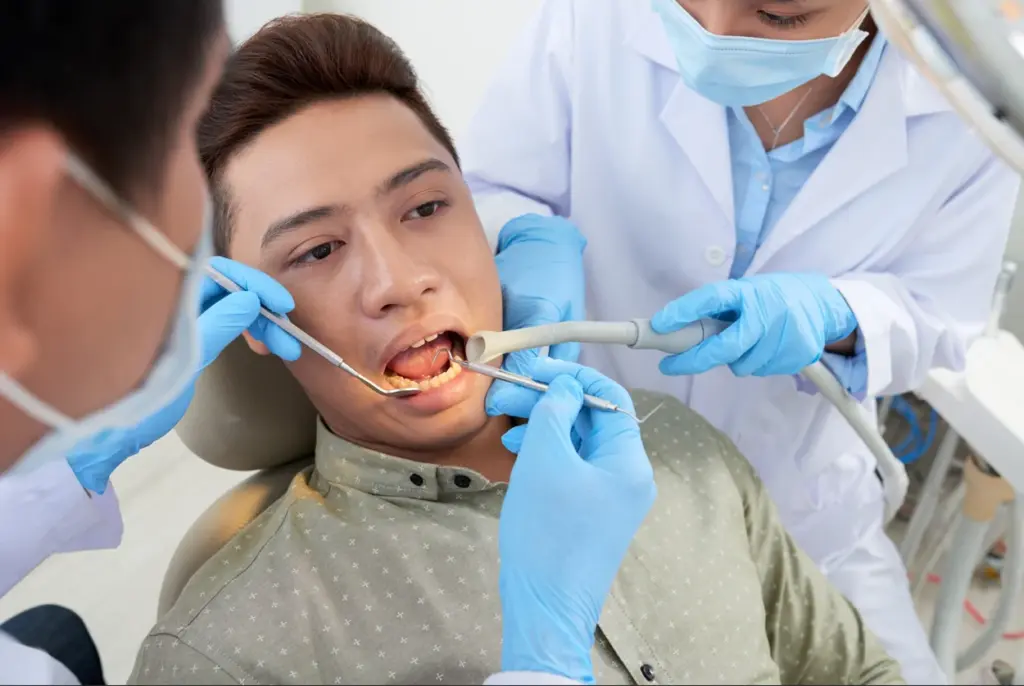
How your teeth come together when you bite and chew is very important for your oral health. Your dentist will check your occlusion to locate any misalignments or interferences. Besides, they will be seeking the signs of parafunctional activities like clenching or grinding that could be pointed out by the worn surfaces of teeth, broken teeth, or muscle tenderness. An incorrect bite may cause a great number of problems, e.g., tooth sensitivity, headaches, and TMJ disorders.
Phase 6: The Diagnostic Radiographic (X-ray) Examination
Radiographs are the imaging tools that reveal to your doctor the mechanisms that are not only very deep but also non-intuitive in his clinical examination. The kind and amount of X-rays that are taken on you depend on your personal needs, age, and risk factors and, at the same time, are always carried out in accordance with the ALARA principle (As Low As Reasonably Achievable) in order to minimize the radiation exposure.
- Bitewing X-rays: These shots primarily display the upper and lower side teeth and are excellent for locating dental caries which cannot be seen directly in-between teeth and also for assessing the bone levels between them.
- Periapical X-rays: They illustrate the entire tooth, starting from the crown, going down to the absolute end of the root, as well as the surrounding bone. In fact, these are the only sources from which the information can be obtained when the conditions of abscesses, impacted teeth, and root abnormalities are figured out.
- Panoramic X-ray (Panorex): With only one shot, a wide-angle view of the whole oral anatomy is visible, which includes not only teeth but also jawbones, TMJs, and the sinuses. So that it can be used for locating the position of various impactions such as impacted wisdom teeth, tumors in the jaw and bone diseases.
- Cone Beam Computed Tomography(CBCT): In case of the intricate dental implant planning or unspecified pathological condition evaluation, your dentist may come up with a recommendation of a 3D CBCT scan. The unit is able to generate highly detailed, 3-dimensional imagery of the bone framework, nerve routes, and sinuses thus absolutely treatment planning accuracy can be raised along with safety.
Phase 7: The Personalized Treatment Plan Development
The last and most important moment of the D0180 investigation is the integration of all the information that has been gathered. The doctor will combine the data from your health history, the results of the clinical examination, and the radiographs to formulate an individualized care plan. This plan is a guide for your oral health journey. Hence, it will vividly illustrate:
- A brief review of all the medical issues identified with the priority based on the degree of seriousness.
- An exhaustive listing of the suggested procedures.
- The logical order of performing the treatment.
- The different choices for treatment, along with the pros and cons.
- The charges and an outline of your dental insurance benefits.
This team-based method makes sure that you get all the necessary information, and so, along with your reliable dental team, you can decide on your treatment, taking your knowledge and confidence into account.
The Direct and Long-Term Benefits of a Comprehensive Oral Evaluation
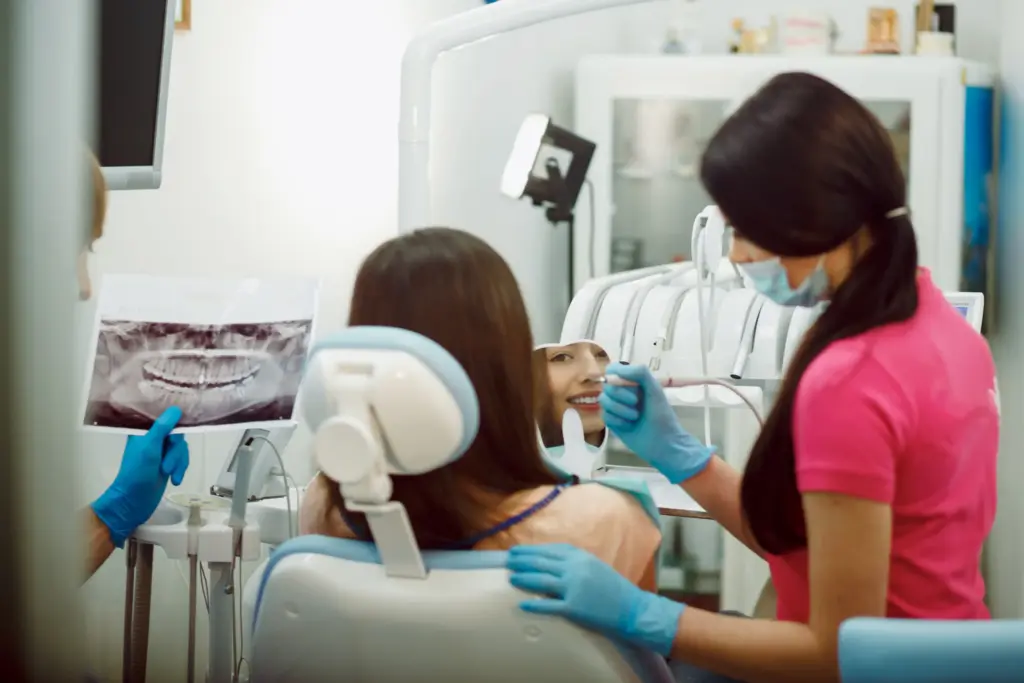
By investing your time in a D0180 evaluation, you will be the beneficiary of substantial rewards in your health, money, and peace of mind.
Proactive Disease Detection and Prevention
Care through such an extensive exam allows the dentist to pinpoint problems at their earliest, most easily manageable stages. The detection of a small cavity in case it only affects the enamel, means that the treatment can be done in a simple, conservative way by using a filling. Diagnosing the first stage of gum disease (gingivitis) helps to reverse it through professional cleaning and better home oral hygiene practices. The approach undertaken is preventive and it does not allow minor issues to develop into complex, painful and expensive conditions such as root canals, extractions, and advanced periodontal surgery.
A Sure Platform for Personalized, Long-Term Health Strategy
The results of the D0180 evaluation will transform the dental care given to you by your dentist from cure (the model of “fix”) to prevention and strategy. The dentist will be able to draw up a long-term maintenance program tailor-made for you and your specific risk factors. For example, in case you are a person who is prone to caries, they could suggest certain fluoride treatments or dietary counseling. In case of early signs of periodontal disease, a doctor can provide more frequent recall schedules. The patient-specific plan is the main factor that enables one to keep a healthy and functional smile for the whole lifetime.
Oral-Systemic Health Link: an Indicator of Your General Health
Numerous studies published in peer-reviewed journals have established a strong association between oral health and systemic health. The oral cavity acts like a window through which the rest of the body can be seen. An extensive oral examination can uncover symptoms of systemic diseases. For example, uncontrolled diabetes may show its manifestation in the form of severe gum disease and poor wound healing. Osteoporosis can be indicated by bone loss in the jaw. Nutritional deficiencies may alter the tongue and oral tissues. Upon encountering those oral signs, the dental practitioner may suggest that the patient see his/her medical doctor and thus, facilitate the early diagnosis and management of the general health issues.
Getting Acquainted and Open Dialogue:
Trust building is a result of the thorough and unhurried character of a D0180 session, and it goes on to establish a strong, collaborative rapport between you and your dental team. Apart from that, it constitutes a perfect opportunity to ask questions, reveal your fears, and discuss your aesthetic goals. The trust and effective communication skills that underlie the positive dental experience, as well as the fact that you will feel comfortable and confident throughout the treatment journey, are among the benefits arising from the foundation.
Conclusion: The D0180 Your First Step of Lifelong Oral Wellness
The first step, D0180 comprehensive oral evaluation, is not just a procedural code; it is the essence of the new, preventive, and patient-centered dental care. It stands for a pledge to know your health wholly before any treatment is suggested. In fact, this thorough inspection is a powerful health investment you cannot resist making—choosing a route of prevention, knowledge, and personalized care rather than experiencing the shock of dental emergencies and taking reactive solutions. It is, therefore, the single most important appointment to set you on a journey to a healthy, confident, and radiant smile that will be with you forever.
Sources:
- American Dental Association. (2023). Current Dental Terminology (CDT). Code D0180.
- American Dental Association. (2021). Guidelines for Comprehensive Oral Evaluation. ADA Center for Professional Success.
- Patton, L. L. (2019). The Importance of the Comprehensive Oral Examination. The Journal of the American Dental Association, 150(1), 1-3.
- Villa, A., & Polimeni, A. (2018). The Patient-Centered Comprehensive Oral Evaluation. Dental Clinics of North America, 62(4), 539-551.
- Glick, M., et al. (2016). The New Definition of Oral Health and Its Relationship to Overall Health. The Journal of the American Dental Association, 147(12), 920-922.
Frequently Asked Questions About D0180 Dental Code
The D0180 dental code refers to a comprehensive periodontal examination. This procedure involves a detailed assessment of the gums, teeth, and surrounding structures to diagnose the presence of periodontal disease and evaluate overall oral health.
The D0180 exam is essential for detecting early signs of gum disease, which can lead to tooth loss and other oral health problems if left untreated. Regular periodontal exams help ensure that any issues are identified early, allowing for timely intervention and preventing more serious complications.
The D0180 exam is generally non-invasive and does not cause significant pain. However, some patients may experience mild discomfort when the periodontal probe is used to measure gum pocket depths. Local anesthesia may be used if additional procedures, such as scaling or cleaning, are needed during the exam.
It is recommended that you have a comprehensive periodontal exam at least once a year, especially if you are at higher risk for gum disease due to factors like age, smoking, diabetes, or a family history of periodontal issues. However, your dentist may recommend more frequent exams depending on your oral health needs.
Most dental insurance plans cover the D0180 periodontal exam, as it is an essential part of maintaining oral health. However, coverage can vary depending on the plan. It’s a good idea to check with your insurance provider to confirm coverage before scheduling the procedure.

