


What is D2140 Dental Filling?
Dental code D2140 is related to the method of placing a posterior composite filling. Generally, a specialist dentist like Dentist Polen Akkılıç and her team would perform a procedure under this code. When a dentist cures caries in the molars, which are also called posterior teeth, the dentist applies this code. The material used for the filling is a composite resin that is created to imitate the color and the surface of the tooth as close as possible, thus, giving a perfect and almost invisible restoration. Composite is a very useful material because a composite tooth filling can be designed to fit the shape of the tooth and provide a very strong bond with the tooth.
Usually, this dental treatment is the most suitable option for patients whose teeth have small cavities only because it gives the opportunity to remove barely any healthy tooth tissue. Professor Doctor Coşkun Yıldız and his team are sure that using composite fillings, in particular, under dental code D2140, ensures the best function and aesthetic of the teeth while still maintaining tooth structure. Apart from being quite resistant, the resin material also bonds with the tooth chemically, thus, increasing the tooth’s strength and, consequently, preventing it from being decayed further. Those who are concerned with aesthetic considerations will find that composite fillings are perfect because the restoration will not be visible at all.
When to Use Dental Code D2140?
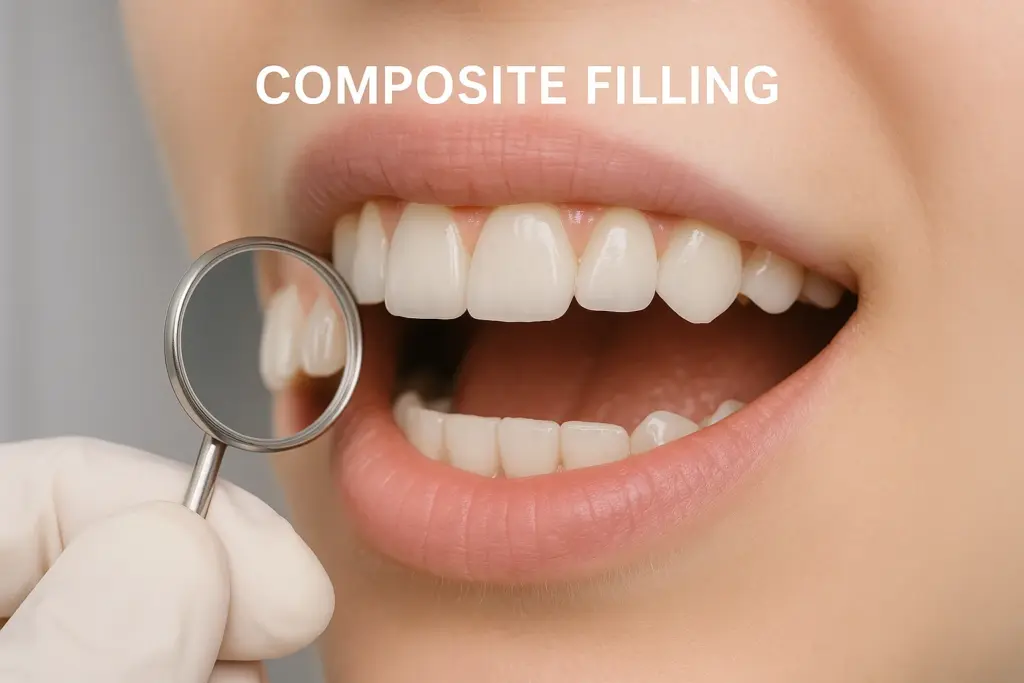
Dental code D2140 is the appropriate one when the decay of the back teeth such as premolars or molars is of moderate size and can be satisfactorily treated with composite resin. This treatment is mostly suitable for people who want a filling while still preserving the aesthetic aspect of their teeth. As composite materials are similar to the natural color of teeth, this is the perfect solution for those who want dental restorations that are not very noticeable and look like real teeth. Dentist Polen Akkılıç and her team do not decide to go for a composite filling under D2140 unless they are completely sure of the size of the cavity.
If the cavity is very large or deep, the tooth will lack the proper structure to support a composite filling. For these professionals like Professor Doctor Coşkun Yıldız who is always checking the health of a tooth before any dental treatment, would thus suggest the use of more powerful restorative options such as crowns or inlays. The extent of decay, the condition of the tooth, and the patient’s needs are the factors that determine the procedure that a thorough assessment will come up with. D2140 is a perfect option for patients with a natural look in mind and who have a cavity in their back teeth.
What Are the Benefits of Using the Dental Code D2140?
- Aesthetic Appeal: Composite resin utilized in D2140 is a natural tooth shade, thus allowing the material to be almost invisible, which solves the problem of the restoration of teeth aesthetically in the back ones.
- Strong Bonding: The composite material merges directly with the tooth framework, thus increasing the strength of the repaired tooth and lessening the danger of fractures or splits.
- Minimal Tooth Removal: Composite fillings consume less healthy tooth structure than other filling materials thus more of the natural tooth is preserved.
- Versatility: Composite fillings can be deftly shaped to the natural tooth grooves thus providing an indistinguishable restorative and functional one.
- Durability: Composite fillings, though not as durable as crowns or gold fillings, protect for a long period and are capable of withstanding the normal pressures of chewing.
- Less Sensitivity: Composite fillings normally cause less sensitivity as compared to amalgam fillings because they do not expand and contract with temperature changes in the mouth.
- Ideal for Smaller Cavities: D2140 is perfect for small to medium cavities; thus, it is a great option for many patients with a minor degree of tooth decay.
Warnings and Cautions For the Dental Code D2140
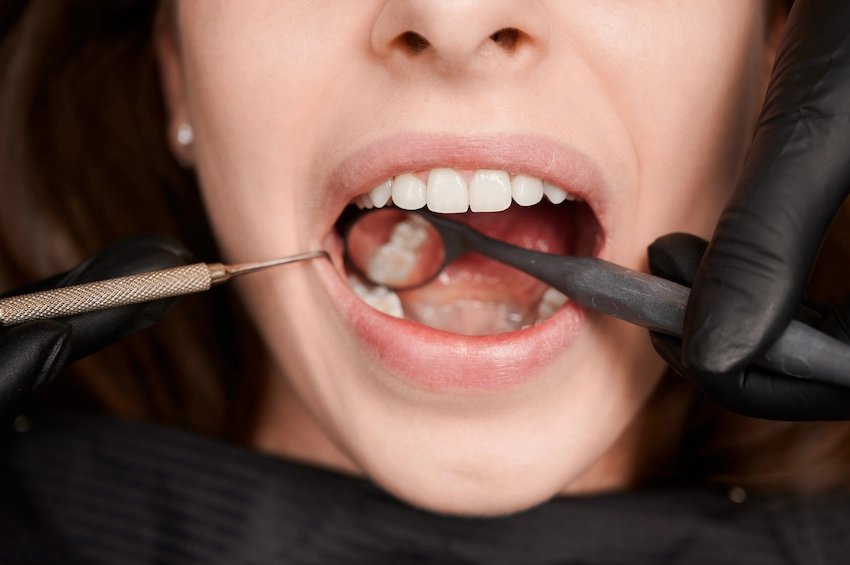
Though D2140 has been a strong and popular code for composite fillings, there are a few considerations that should be taken into account. Dr. Polen Akkılıç and her team of dentists inform that composites may not be suitable for extremely large cavities, as they may not be able to provide enough support for the tooth. When a large part of the tooth is weakened, other restorative choices such as crowns or inlays may be better options. In such situations, Professor Doctor Coşkun Yıldız could decide on a different approach in order to fully restore and strengthen the tooth.
Besides that, composite fillings that are generally considered to be long-lasting may eventually become worn and discolored in certain areas, especially in patients who frequently eat staining foods and drinks, or those who have the habit of grinding (bruxism). Dr. Polen Akkılıç ensures that patients who have such habits receive proper aftercare instructions in order to keep the filling intact. Good oral hygiene including regular brushing and flossing is a must for the life and the look of the composite fillings. It is advised to have regular dental visits to make sure the filling is still in good condition and the tooth is not getting infected further.
When Should You Avoid Using D2140 and What Should You Use Instead?
- Don’t Use for Cavities That Are Too Big: If the cavity is too big or too deep, a composite filling may not be able to provide enough support. Therefore, crowns or inlays are the best choices as they give more strength and complete coverage.
- Don’t Use for Extremely Weak Teeth: If the tooth structure is heavily weakened due to decay, composite resin may not be strong enough. To regain the tooth’s full function and strength, crowns or dental implants can be the solution.
- Don’t Use for Teeth That Are Likely to Be Worn Out: In the case of a patient who grinds their teeth (bruxism) or is at a high risk of wear, composite fillings will wear down quickly. In such cases, porcelain or zirconia crowns are suggested for longer life and stability.
- Don’t Use for Highly Cosmetic Implications: When a patient is worried about their smile and a composite filling does not meet the aesthetic requirements, porcelain veneers can be a more durable and luxurious option.
- Don’t Use for Patients Having Severe Allergies: A very limited number of cases in which patients develop allergic reactions to composite materials. Then, amalgam or gold fillings would be the solution.
Comparison of Common Dental Filling Materials
| Material | Aesthetic | Durability | Cost | Best Use |
| Composite Resin (D2140) | High | Moderate | Medium | Ideal for visible cavities in posterior teeth |
| Amalgam | Low | High | Low | Suitable for larger cavities in back teeth |
| Porcelain | High | High | High | Best for front teeth and cosmetic restorations |
| Gold | Low | Very High | Very High | Used for large fillings in back teeth requiring high durability |
References
- American Dental Association. (n.d.). Dental code D2140: Posterior composite filling. Retrieved from https://www.ada.org
- Chamberlain, D. S., & Sampson, C. S. (2021). Dental materials in restorative dentistry: A comprehensive guide. Wiley-Blackwell.
- Harrison, L. (2020). The benefits and risks of composite fillings in restorative dentistry. Journal of Dental Research, 99(3), 456-462. https://doi.org/10.1177/0022034520902405
- Kiat-Amnuay, S., & Ahrari, F. (2021). Dental restorations and their long-term performance: A clinical perspective. International Journal of Dentistry, 2021, Article 3576890. https://doi.org/10.1155/2021/3576890
- Polk, J., & Mayer, M. (2019). Post-operative care for dental fillings: Patient guidelines and instructions. Journal of Clinical Dentistry, 32(4), 512-518. https://doi.org/10.1016/j.jclin.2019.03.010
Frequently Asked Questions About Dental Code D2140
D2140 is used to classify the procedure for placing a posterior composite filling to treat cavities in the back teeth, restoring both function and aesthetics.
Composite fillings are tooth-colored and blend seamlessly with the natural tooth, while metal fillings are visible and can be more noticeable, making composites a preferred choice for aesthetic reasons.
Composite fillings can last anywhere from 5 to 10 years, depending on factors such as the size of the cavity, the location of the filling, and the patient’s oral hygiene routine.
?
Yes, you can eat after receiving a composite filling. However, it is advisable to avoid hard or sticky foods for the first 24 hours to allow the filling to fully set.
The risks include potential staining over time, and in some cases, the filling may wear down or crack if subjected to excessive pressure from grinding or chewing hard objects.
Composite fillings do not require special care beyond regular brushing, flossing, and maintaining good oral hygiene. It is important to follow your dentist’s aftercare instructions to ensure long-term success.
Most dental insurance plans do cover composite fillings under dental code D2140, but coverage may vary based on the insurance policy. It’s advisable to check with your insurer to understand the extent of coverage.
D2140 applies to composite fillings in posterior teeth, while other codes may refer to different materials, such as amalgam or resin-based fillings for front teeth.Can composite fillings be used on front teeth?
No, D2140 is specifically for posterior (back) teeth. For front teeth, different dental codes apply, as the cosmetic requirements are different.
Yes, D2140 is safe for children, particularly when they have cavities in their back teeth. The dentist will evaluate whether composite resin is the best option for each child’s needs.

