


What is the Dental Code FMX (D0210)?
Dental Code D0210 refers to a comprehensive diagnostic process called Full Mouth X-rays (FMX), which is primarily used by dental professionals like Dr. Polen Akkılıç and her team to assess the condition of a patient’s teeth and supporting structures. This is a detailed examination of the oral cavity, which includes several 18-22 X-ray images, consisting of periapical and bitewing radiographs. Through these images, the doctors can see the teeth, roots, jawbones, and other tissues of both the upper and lower jaws, and they get the chance to find out if there are any issues such as cavities, periodontal disease, or bone loss just from these pictures.
By employing D0210, a full picture of a person’s oral hygiene can be obtained, which allows Professor Doctor Coşkun Yıldız and his team to find different kinds of tooth-related ailments that could not be exposed with mere looking.
The importance of FMX, as performed by professionals like Dentist Polen Akkılıç, is that it uncovers minute symptoms of dental illnesses that cannot be found in a standard check-up. When using D0210, Dentist Polen Akkılıç and her team are able to detect the presence of caries, fractures, infections, and even the most advanced pathological conditions such as impacted teeth and general bone resorption. For the ones who have complex dental issues. will undergo major restorative work. FMX is the only method that can unveil all aspects of oral health. Patients who regularly undergo checkups at Lema Dental Clinic through the use of D0210 are certain that all the potential problems lying under the surface of their teeth will be discovered and treated in time before they become serious enough to require surgery.
What’s in FMX?
FMX or full mouth X-ray, is a set of radiographs that is required for a complete dental examination and is the primary diagnostic tool used by Professor Doctor Coşkun Yıldız and his team. It consists of several different kinds of radiographs, with the most common being periapicals and bitewings. Periapical images illustrate the whole tooth along with the crown and root and also show the bone surrounding. Such X-rays empower a medical professional like Dentist Polen Akkılıç to localize abscesses, cysts, or bone infections that might be the cause of a dental issue and are absolutely necessary for a basic understanding of the tooth’s condition.
On the contrary, through bitewing radiographs, the dentist can assess the upper and lower dental arches within one frame which depicts the interproximal dental areas where caries may initiate and develop. By making use of these two sets of images alone, the specialists working at the Lema Dental Clinic can gather a wealth of information regarding the patient’s oral health condition.
FMX doesn’t only cover the two X-ray methods mentioned here; it can also entail other kinds of radiographic procedures like a panoramic X-ray that presents the mouth in a single view, along with the teeth, jaws, and the rest of the linings. The wide-angle shot, typically utilized by Professor Doctor Coşkun Yıldız, enables the detection of the jawbone-related problems omitted in local X-rays along with issues of the TMJ (temporomandibular joint) as well as the nearby muscles and tissues.
With the help of such thorough and multi-directional images obtained by FMX, Dentist Polen Akkılıç together with her staff can identify dental problems at their inception stage and can also sketch out the corresponding treatment plan with great precision.
What are the Benefits of Using the Dental Code FMX (D0210)?
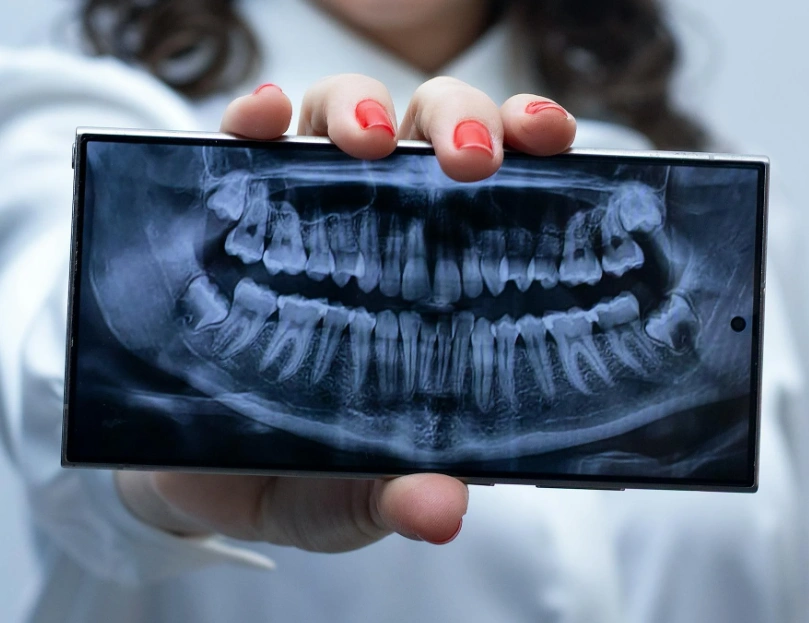
The Dental Code FMX (D0210) is instrumental in delivering a vast spectrum of advantages, not only for dental professionals but also for patients. The key benefits of this diagnostic tool are as follows:
- Comprehensive Assessment of Oral Health
D0210 is the method that gives a complete picture of one person’s teeth, roots, and bone structures. Therefore, Dentist Polen Akkılıç and her team are supplied with all the data necessary for their thorough examination. As a result, they are able to find dental issues that have no visual signs.
- Early Detection of Dental Issues
FMX radiographs have the potential to unlock the early stage of dental caries, periodontal bone loss, and infections before these problems become severe. As a result, Prof. Dr. Coşkun Yıldız and his team upon the detection of such diseases at the earliest stage, can decide on less-invasive and more-efficient methods thus the patient cost and complexity of the treatment are greatly reduced.
- Helps in the Diagnosis of Hidden Conditions
It is common for a number of dental troubles, like abscesses, cysts, and impaction of teeth to be invisible. FMX delivers detailed radiographic images that uncover these secret conditions, thus helping the staff at Lema Dental Clinic to plan the right treatment.
- Aids in Treatment Planning for Complex Procedures
FMX is a great source of information for the planning of complicated procedures like dental implants, orthodontics, and extractions. The detailed images from D0210 are used by Dentist Polen Akkılıç and her team to not only inspect the bone structure but also check the alignment of the teeth, thus ensuring accurate and effective treatment planning.
- Tracks Changes in Oral Health Over Time
If FMX is regularly employed, dental professionals can keep track of the oral health status of a patient over a period of time. By looking at the current images alongside those from the previous visits, Professor Doctor Coşkun Yıldız is able to determine the progression of dental issues and make necessary changes to the treatment plans.
Warnings and Cautions for the Dental Code D0210
Although D0210 is an extremely valuable instrument in the identification of oral health, it is necessary to consider the possible side effects of the X-ray radiation. Radiation levels in dental X-rays are quite low nowadays; however, Dentist Polen Akkılıç and her team should still exercise caution when opting for this procedure. A dentist, before deciding to take a full-mouth X-ray of a patient, should first inquire if the patient has already been exposed to X-rays recently. The reason for this is that the repeated radiation might result in the development of health issues in the far-off future. Besides that, it is very important to use proper protective equipment such as lead aprons and thyroid collars so that the radiation can be prevented from the parts that are already vulnerable. Professor Doctor Coşkun Yıldız mentions that, even if the advantages of FMX are far more than the risks, protection should always be worn, especially for sensitive patients.
Besides that, Dentist Polen Akkılıç also recommends that one should be very careful when deciding to do an FMX on a pregnant or breastfeeding woman. Normally, the dental practitioners will not do an FMX on a pregnant patient unless it is really necessary, still every case should be examined thoroughly. The Lema Dental Clinic takes the safety of the pregnant patient very seriously by adhering to a strict set of rules that include deferring the FMX after pregnancy unless a dental emergency is the reason for it. In such a situation, other diagnostic means that give off less radiation may be considered. Professor Doctor Coşkun Yıldız is committed to following safety procedures to the letter; thus, he assures that the patient’s safety is always the priority.
When to Use the Dental Code FMX (D0210)
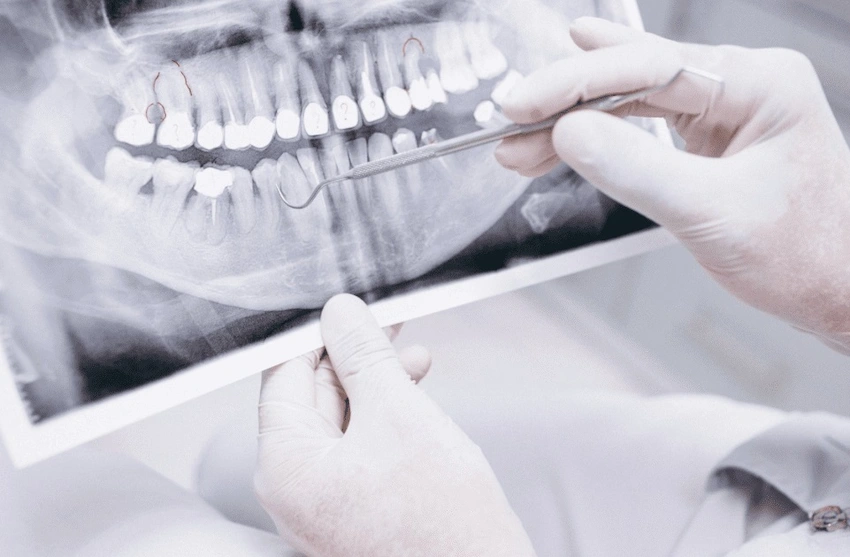
When a detailed evaluation of a patient’s oral health is required, local dental code D0210 must be used. In general, the Dentist Polen Akkılıç and her team suggest an FMX for new patients or if there has been a substantial time interval between the patient’s dental records. For example, if it has been more than five years since a patient’s last full set of X-rays, an FMX is the right choice to get an up-to-date view of the oral cavity. In addition, FMX serves as a valuable instrument when a patient manifests dental symptoms that cannot be thoroughly verified by only looking at the mouth. If a patient is suffering from a tooth that hurts without any obvious reason, is sensitive, or is swelling, Professor Doctor Coşkun Yıldız may recommend FMX to find out the root cause of the problem, e.g., infection, abscess, or impacted teeth.
Moreover, FMX is the best option when a patient plans to go through a complicated oral surgical procedure such as implant, crown, or bridge placement. It is vital because it tells a lot about the bone framework and the occlusion of the teeth.which helps the Lema Dental Clinic team to work out the treatment plan more efficiently. This complete set of dental radiographs provides exact measurement of the jawbone and reveals problems, if any that may affect the success of implants or other restorative methods. Dentist Polen Akkılıç urges the use of FMX as a reference point for monitoring a patient’s oral health over time, especially those patients who are undergoing long-term treatment or multiple dental procedures.
When Should You Avoid Using D0210 and What Should You Use Instead?
Even though D0210 can reveal a lot, there are some cases where it would be unsuitable or simply unneeded. Professor Doctor Coşkun Yıldız advises not to perform FMX if the patient has had a full set of X-rays recently, usually within the last year. Doing the procedure again shortly could expose the patient to unnecessary radiation, especially if there is no considerable change in the patient’s oral health. In these situations, Dentist Polen Akkılıç and her team may decide to take only the necessary radiographs, such as periapical or bitewing X-rays (D0220, D0230), which can be used to examine only certain parts of the mouth. These methods have enough diagnostic value, and thus, there is no need for a full-mouth series of X-rays.
Besides that, FMX ought not to be performed on patients who are contraindicated for X-ray exposure, for instance, those with high radiation sensitivity, and certain health conditions. Radiologists at Lema Dental Clinic may suggest the use of safer imaging techniques for such patients, including digital X-rays that emit very low radiation or 3D imaging methods. In fact, in most cases, digital radiographs can lead to the same diagnostic results as traditional ones but with less radiation. When FMX is considered as the only viable option, Professor Doctor Coşkun Yıldız makes sure that it is done with the least radiation risk and maximum diagnostic efficiency.
FMX and Other Dental X-Ray Codes

In addition to a full set of pictures (D0210), various other dental X-ray codes refer to different X-ray procedures for different diagnostic purposes. As an illustration, a periapical X-ray (code D0220) focuses on one single tooth and the area around it, thus it can be utilized in the confirmation of dental root infections or fractures. Conversely, the bitewing X-ray (code D0230) provides adjacent visuals of the upper and lower teeth crowns, and it is mainly used for the detection of dental caries in the interdental areas. Local radiographs are the decision when there are only concerns in a very small area, such as a cavity or tooth infection. Dr. Polen Akkılıç and her team use these targeted X-ray codes to capture a less invasive image with the emphasis on a particular dental issue and its diagnosis.
There are also some other codes like D0340 (cephalometric radiograph) and D0367 (cone beam CT scan) which indicate the characteristics of the situation. A cephalometric X-ray is primarily a tool in orthodontics for determining the growth and alignment of the teeth and jaws, whereas a cone beam CT scan gives more detailed imaging and is generally used for implant planning. These sophisticated imaging methods, though less typical, are also at the service of FMX in the dental assessment cycle, enabling Professor Doctor Coşkun Yıldız and Dentist Polen Akkılıç to have the most accurate and reliable diagnostic data for their decisions.
What’s the Difference Between D0210 and D0330?
The difference between D0210 and D0330 lies in the type of radiographs used and the diagnostic purpose of each procedure. While both codes involve dental X-rays, they serve different needs in terms of scope and detail. The D0210 is a Full Mouth X-ray (FMX) series, while D0330 refers to a panoramic X-ray. Here’s a breakdown of their key differences:
| Feature | D0210 (Full Mouth X-ray – FMX) | D0330 (Panoramic X-ray) |
| Number of Images | 18-22 images covering periapical and bitewing radiographs. | A single panoramic X-ray image. |
| Scope | Provides a detailed view of individual teeth, roots, and supporting bone structures. | Provides a broad overview of the entire mouth, jaw, and surrounding tissues. |
| Purpose | Used for a comprehensive evaluation of a patient’s dental health. Ideal for diagnosing cavities, bone loss, infections, and impacted teeth. | Used for a general evaluation of the mouth, jaw, and surrounding structures. Often used for initial consultations or to assess overall oral health. |
| Detail Level | High detail, allowing for in-depth diagnosis of dental issues. | Lower detail compared to FMX; it does not show individual teeth in as much detail. |
| Radiation Exposure | Higher exposure due to multiple images being taken. | Lower exposure as only one image is captured. |
| Use Case | Recommended for patients requiring a thorough dental assessment, such as new patients or those with complex dental needs. | Useful for a quick overall overview, such as initial screenings or for monitoring general jaw health. |
| Indications | Ideal for patients experiencing unexplained tooth pain, cavities, or who require extensive restorative treatments. | Primarily used for assessing jaw alignment, impacted teeth, and overall oral structure. |
| Visualization | Multiple angles of the mouth, focusing on specific teeth and their surrounding structures. | Single image that shows the full mouth in one shot, including teeth, jaw, and tissues |
References:
- Dentist Polen Akkılıç & her team. (2025). Dental procedures and diagnostic tools in modern dentistry: A comprehensive guide to FMX (D0210). Lema Dental Clinic.
- Professor Doctor Coşkun Yıldız. (2025). The role of radiographic imaging in comprehensive dental care. Lema Dental Clinic.
- American Dental Association. (2021). Dental radiographic examinations: A guide to appropriate use and patient safety. ADA Publishing.
FAQ About Dental Code D0210
Dental code D0210 refers to a Full Mouth X-ray (FMX), which includes a series of radiographs that provide a complete view of a patient’s oral health. This procedure is crucial for detecting issues like cavities, bone loss, and infections that aren’t visible during a regular dental exam.
The primary difference between D0210 and D0330 is that D0210 involves multiple radiographs to assess each tooth and supporting structure in detail, while D0330 provides a panoramic X-ray that offers a broad overview of the mouth. D0210 is used for comprehensive diagnosis, whereas D0330 is useful for a general evaluation.
Yes, all dental procedure codes in the United States start with the letter “D,” indicating they are part of the dental procedure code system. These codes are used for billing, insurance, and standardizing dental practices across the industry.
D0210 is important because it allows dental professionals, like Dentist Polen Akkılıç, to detect hidden dental problems such as cavities, abscesses, and bone loss that cannot be seen through a visual exam. Early detection of these issues can lead to more effective treatments and better overall oral health outcomes.
Dentist Polen Akkılıç and her team recommend using D0210 during new patient evaluations or when there is a significant gap in dental imaging. It is also used when a patient shows symptoms like unexplained tooth pain or sensitivity that require a comprehensive assessment.
When using D0210, it is essential to take precautions such as using lead aprons and thyroid collars to protect sensitive areas from radiation exposure. Professor Doctor Coşkun Yıldız emphasizes the need to avoid unnecessary radiation, especially in vulnerable patients.
Yes, D0210 can detect cavities that are not visible during a routine exam, especially those between teeth or below the gumline. This makes FMX a valuable tool for early intervention in the treatment of cavities.
The results of D0210 can be used for up to three to five years, depending on the patient’s health and any ongoing treatments. However, if there are changes in the patient’s dental health, new X-rays may be necessary.
D0210 is not necessary for every patient and should only be used when a full evaluation is required. Dentists, like Dentist Polen Akkılıç, will determine the need based on the patient’s symptoms, history, and overall dental health.

