


Yes, aging teeth require a completely new approach to care.
Growing older is a privilege. Still, it forces our bodies to change in ways we do not always anticipate. The reality is, most of us are ready for stiff knees or a weaker prescription for our reading glasses. Yet, we totally ignore the massive shifts happening right inside our mouths. In our clinical experience at Lema Dental Clinic, we see this exact scenario every single week. International patients fly to Turkey for advanced care, only to be completely shocked by one hard truth. The brushing habits that kept their teeth perfect at age 35 simply will not work at age 75.
Taking care of an aging smile is not just about drilling and filling cavities. It is about learning to manage a completely new oral environment.
The Vintage Foundation: Why Older Teeth Act Differently
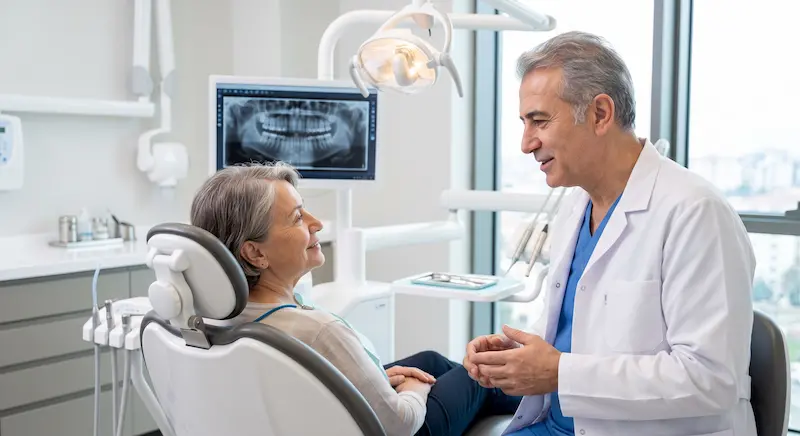
Picture a beautiful, vintage house. The original stone and wood might be stunning. However, after fifty or sixty years of people living there, the plumbing and foundation need a much softer, highly specialized kind of maintenance. Professor Doctor Coşkun Yıldız often notes that your tooth enamel goes through the exact same process. It endures decades of heavy mechanical wear from chewing and grinding. Tiny micro-cracks form over time. Slowly, the hard protective shell thins out, which exposes the soft, dark yellow dentin underneath. This makes the entire tooth incredibly brittle and prone to snapping.
The question remains: why do cavities suddenly spike in older adults who have never had a single filling before?
But let’s look closer at the average daily routine. Most older adults rely on a few daily prescriptions to manage blood pressure, cholesterol, or heart conditions. A massive percentage of these medications share one highly destructive side effect. They dry out your mouth. Saliva is your body’s natural defense mechanism. Without a heavy, constant flow of saliva to wash away food debris and neutralize dangerous acids, plaque hardens and turns acidic at a terrifying speed.
Receding Gums and the Danger of Root Decay
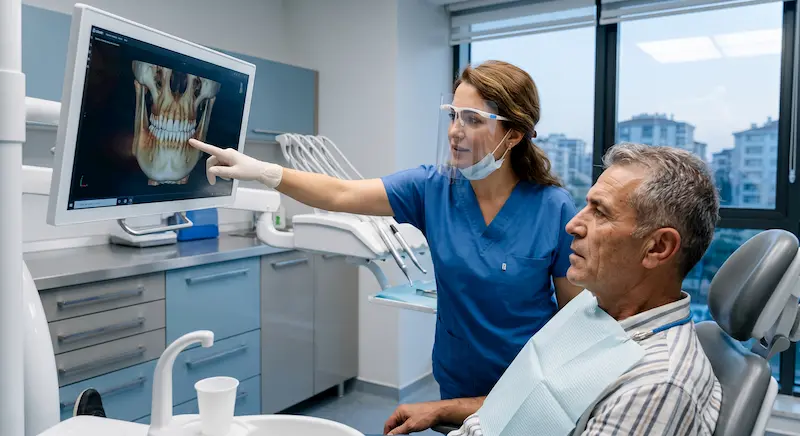
Gum tissue naturally pulls back as the years pass. Unfortunately, this leaves the roots of your teeth completely exposed to the elements. The visible top of your tooth has a hard enamel shield, but the root does not. It is covered by a tissue called cementum. This material is incredibly soft, porous, and highly vulnerable to acid attacks.
Here is what we see in the clinic: aggressive decay can destroy these exposed roots in just a few short months if you are not careful. Dentist Polen Akkılıç and her team constantly warn patients that brushing harder at this stage is a huge mistake. It literally scrubs away the fragile root structure. Instead, aging smiles desperately need ultra-soft bristles and highly targeted prescription fluoride therapies to harden those weak spots.
Evolving Risks: Adult vs. Geriatric Dental Care
| Dental Concern | Typical Adult Presentation | Geriatric Presentation & Risk | Clinical Strategy |
| Tooth Decay | Occurs on the crown (hard enamel). | Occurs on the root (soft, exposed cementum). | High-fluoride varnishes, atraumatic restorative treatments. |
| Gum Health | Mild gingivitis or localized inflammation. | Advanced periodontitis, jawbone density loss. | Deep scaling, tailored periodontal maintenance plans. |
| Missing Teeth | Single tooth gaps due to isolated trauma/decay. | Multiple missing teeth affecting chewing and digestion. | Implant-supported dentures, All-on-4 surgical systems. |
| Saliva Levels | Normal, healthy flow protecting teeth. | Severe dry mouth (Xerostomia) due to polypharmacy. | Artificial saliva sprays, xylitol therapy, hydration tracking. |
Frequently Asked Questions
1. Are dental implants safe for seniors?
Age itself is not a barrier to dental implants. What matters most is your bone density and overall health. We successfully place implants for patients in their 70s and 80s every week. We simply take extra precautions to evaluate your jawbone volume and healing capacity before proceeding.
2. Why is my mouth always so dry now?
In most cases, it is a direct result of prescription medications. Drugs for high blood pressure, depression, and bladder control drastically reduce salivary gland function. We recommend sipping water constantly and using xylitol products to stimulate moisture naturally.
3. Can I just use regular toothpaste for my sensitive, aging teeth?
We highly recommend switching to a prescription-strength fluoride toothpaste or a formula specifically designed to rebuild enamel. Standard commercial toothpastes can sometimes be too abrasive for exposed tooth roots and thinned enamel.
4. Is it too late to fix my receding gums?
It is never too late to stop the progression. While we cannot magically regrow lost gum tissue without surgical grafting, we can halt the recession through deep cleaning, adjusting your brushing technique, and eliminating the bacteria causing the inflammation.
5. How often should an older adult visit the dentist?
Because changes in the mouth happen much faster when saliva levels drop and gums recede, we usually shift our geriatric patients to a three-to-four-month recall schedule rather than the standard six months. Catching root decay early is absolutely critical to saving the tooth.
Academic References
-
- Thomson, W. M., & Ma, S. (2022). An ageing population and the implications for dental care. Gerodontology, 39(1), 3-9.
- Walls, A. W., & Meurman, J. H. (2021). Approaches to caries prevention and management in the elderly. Journal of Dental Research, 100(8), 793-801.
- Scully, C., & Ettinger, R. L. (2023). The influence of systemic diseases on oral health in older adults. Journal of the American Dental Association, 154(4), 312-321.
- Petersen, P. E., & Yamamoto, T. (2024). Improving the oral health of older people: The approach of the WHO Global Oral Health Programme. Community Dentistry and Oral Epidemiology, 52(2), 114-120.
- Turner, M. D., & Ship, J. A. (2022). Dry mouth and its effects on the oral health of elderly patients. Journal of Clinical Periodontology, 49(5), 455-463.

