


Subperiosteal implants suit patients with limited jawbone but carry risks.
A Deep Dive into Subperiosteal Dental Implants
For a large number of patients at Lema Dental Clinic, the aspiration of an immaculate smile is frequently impeded, figuratively, by the jawbone. After long periods of tooth loss which have caused severe bone resorption, the typical “screw-in” implant may no longer be feasible. At this point, we talk about subperiosteal dental implants. However, are they the proper option for you in 2025? A closer look at this.
What Exactly is a Subperiosteal Implant?
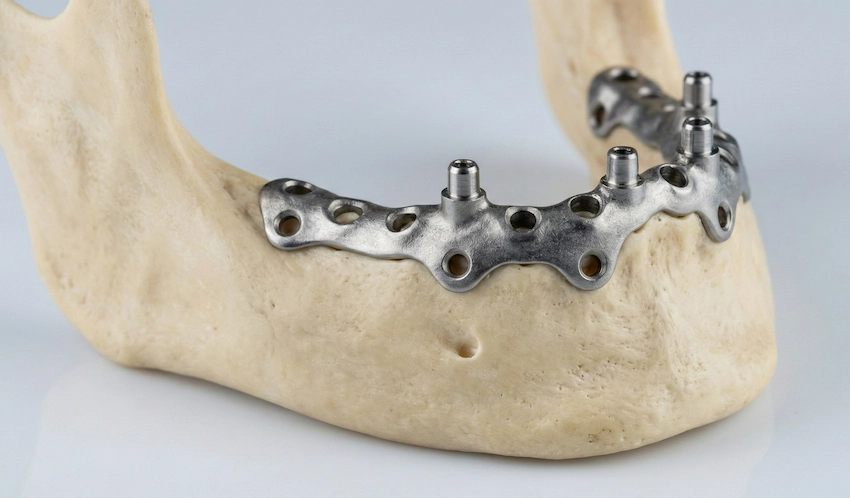
Imagine a conventional dental implant as a steel bolt that is tightly driven into a solid concrete foundation. If that foundation (your jawbone) is too thin or “honeycomb, ” the bolt will not be able to hold.
A subperiosteal implant works differently. It is not inserted into the bone but is placed on top of the bone and under the gum tissue. Consider a metal framework that is specially made to fit the curves of your jaw like a saddle fits a horse. A few posts protrude through the gums to which your new teeth can be attached.
The Clinical Perspective: Why We Consider Them
In our clinical experience at Lema Dental Clinic, we see many patients who have been told elsewhere that they simply “don’t have enough bone.” Professor Doctor Coşkun Yıldız often notes that while bone grafting is the gold standard, some patients aren’t candidates for extensive reconstructive surgery.
This is where the subperiosteal approach offers a unique lifeline.
The Advantages (The Pros)
- No Bone Grafting Required: This is the primary “win.” If you want to avoid the months of healing required for a sinus lift or bone block graft, this method bypasses that need.
- Faster “Teeth-in-Function”: Because we aren’t waiting for a graft to integrate, the overall timeline from surgery to final bridge can be significantly shorter.
- Custom Fit: Modern subperiosteal implants are designed using 3D CT scans and CAD/CAM technology. Dentist Polen Akkılıç and her team utilize these precise digital blueprints to ensure the framework fits your unique anatomy like a glove.
The Challenges (The Cons)
The reality is, no medical procedure is without its trade-offs.
- Complexity of Fit: If the framework isn’t 100% precise, it can shift.
- Infection Risk: Because the framework covers a larger surface area under the gum, if an infection starts, it can spread along the metal-to-bone interface more easily than with a single screw.
- Difficult Repairs: If a traditional implant fails, we remove one screw. If a subperiosteal framework fails, the entire structure usually needs to be addressed.
Comparing Your Options at Lema Dental Clinic
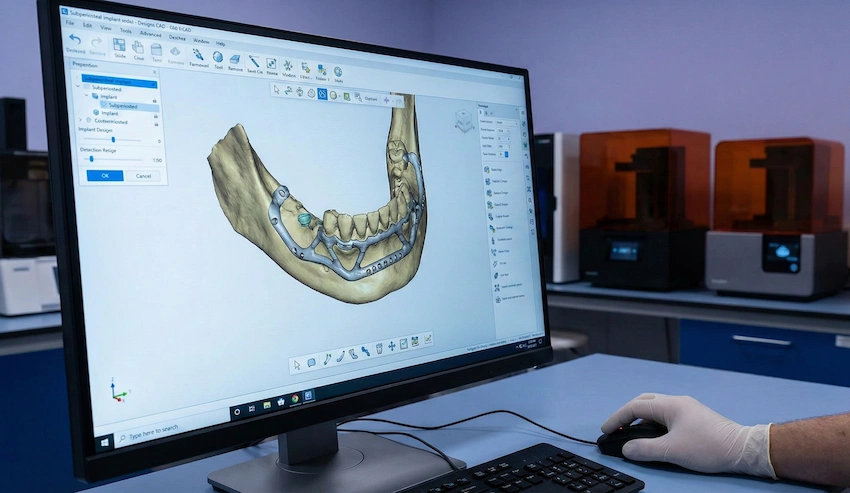
The question remains: is this the best path, or should you look at alternatives like Zygomatic implants? Here is what we see in the clinic when comparing these heavy-hitters for low-bone-density cases.
| Feature | Subperiosteal Implant | Zygomatic Implant | Bone Grafting + Standard Implants |
| Bone Requirement | Minimal | Minimal (Uses cheekbone) | High |
| Surgery Complexity | Moderate | High (Specialized) | Moderate to High |
| Healing Time | 2–4 Months | 3–6 Months | 6–12+ Months |
| Success Rate | Good (with 3D Tech) | Very High | High |
| Primary Use Case | Severe atrophy | Severe upper jaw loss | Moderate bone loss |
The “Turkey Advantage”: Why Travel for This?
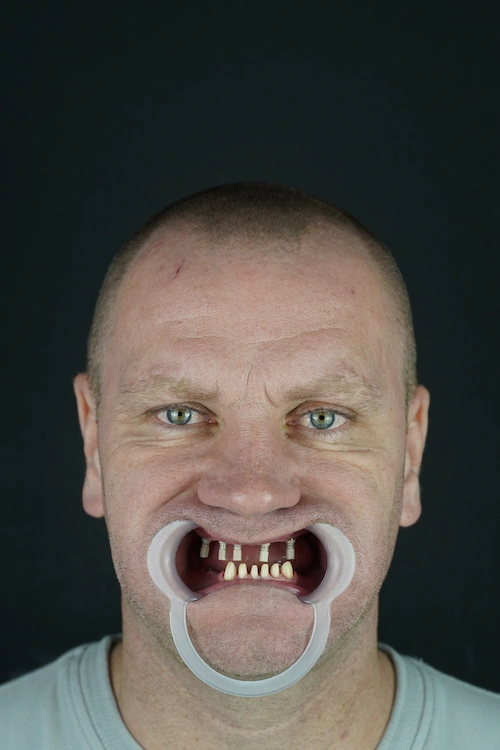
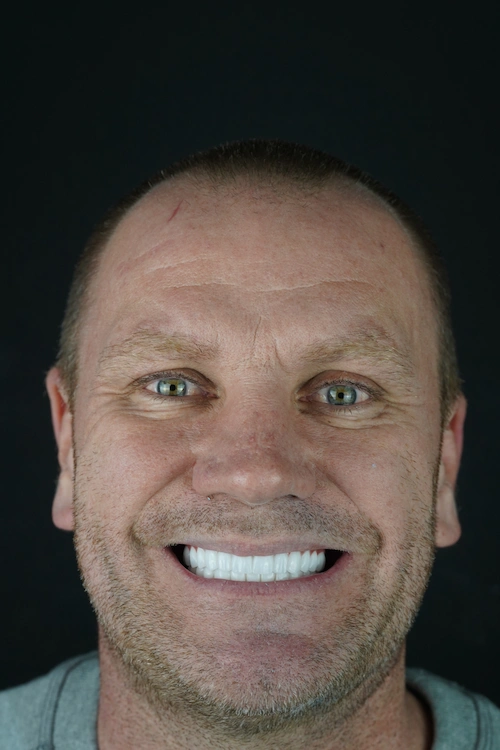
Choosing to have your procedure in Turkey isn’t just about the cost savings—though those are significant. At Lema Dental Clinic, we combine high-tech diagnostic suites with a level of hospitality that reduces the stress of surgery.
But let’s look closer at the tech. We don’t rely on old-school impressions. Dentist Polen Akkılıç and her team use high-resolution 3D imaging to map your jaw’s “topography.” We treat your jawbone like a landscape, ensuring the implant framework distributes biting forces evenly, preventing the bone from thinning further.
Is It Right For You?
The “perfect” implant doesn’t exist in a vacuum; it only exists in the context of your specific health history. If you have been told you are “boneless,” don’t lose hope. Whether it’s a subperiosteal solution or advanced Zygomatic placements, there is almost always a path back to a functional, beautiful smile.
FAQ: Directly From Dentist Polen Akkılıç and Professor Doctor Coşkun Yıldız
“We ensure you are completely comfortable using local anesthesia or conscious sedation. Most patients tell us the recovery feels similar to a standard extraction—mostly just pressure and some soreness for a few days.” — Professor Doctor Coşkun Yıldız.
“With the CAD/CAM precision we use today, these can last many decades. However, your oral hygiene is the ‘secret sauce.’ You must keep the posts clean to prevent gum irritation.” — Dentist Polen Akkılıç
“Time and biology. Some patients have medical conditions that make bone grafts less likely to ‘take,’ or they simply don’t want to wait a year for a new smile. This is a shortcut that, when done correctly, works beautifully.” — The Lema Medical Team.
“Once the healing phase is over and your final bridge is attached, yes! You’ll go from eating soft foods back to enjoying a steak. That’s the whole point of the procedure.” — Professor Doctor Coşkun Yıldız.
“Not at all. The framework is hidden under the gum line. All anyone will see are your beautiful, custom-designed prosthetic teeth.” — Dentist Polen Akkılıç
- Bambini, F., Santarelli, A., & Putignano, A. (2021). Evolution of subperiosteal implants: From manual craftsmanship to CAD/CAM technology. Journal of Clinical Medicine.
- Gellrich, N. C., et al. (2020). Customized titanium implants for the treatment of severe jaw atrophy. International Journal of Oral and Maxillofacial Surgery.
- Mommaerts, M. Y. (2019). Evolutionary steps in the design and biofunctionalizing of the Additive Manufactured Sub-Periosteal Jaw Implant (AMSJI). Journal of Cranio-Maxillofacial Surgery.
- Yıldız, C. (2023). Advanced Prosthetic Solutions in Severely Atrophic Maxilla. Turkish Journal of Dentistry.
- Akkılıç, P. (2024). Digital Workflow and Patient Outcomes in Modern Implantology. European Journal of Dental Research.

