


Sore gums need early dental care to prevent gum disease.
Think of your gums as the nourishing earth that sustains a giant tree. And if all that earth gets swept away, the tree will fall .
Actually, your gums are quite similar. They keep your teeth firmly in place. They create a strong, protective barrier right around the roots. If you experience gum pain, bleeding or swelling, it is a very loud sign. Based on our experience at Lema Dental Clinic, a little gum pain, if left unattended,d can quickly lead to bone loss.
Here is some essential information for you to get your gums back to health and maintain your beautiful smile.
Symptoms: When It Is Beyond a Simple Toothache
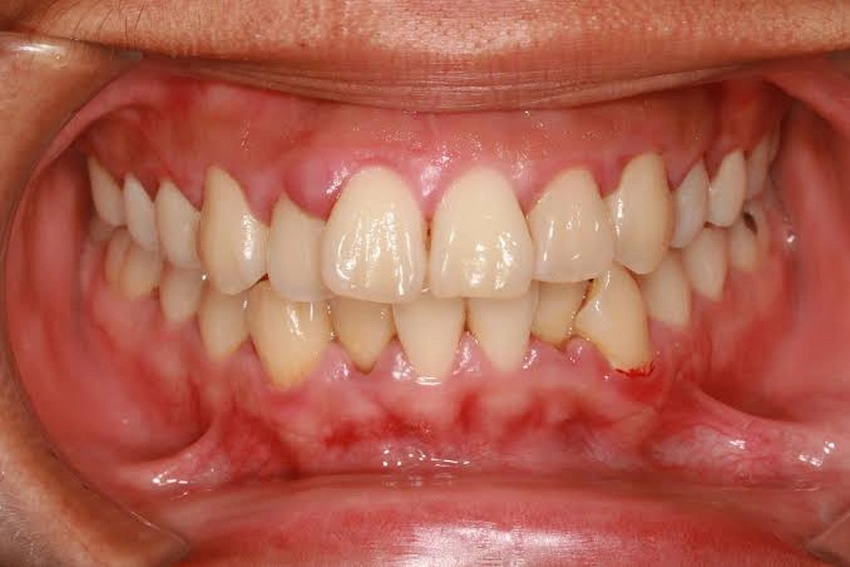
Pain in the gums rarely comes as a single symptom. Good to note, healthy gums are not just doing well. They are also visibly firm and a nice pale pink. On the other hand, unhealthy gums may be both seen and felt to be very different. Here are some of the most obvious symptoms indicating problems:
- Bleeding: You notice the presence of blood while brushing or flossing.
- Swelling: Your gums appear to be puffy and bright red.
- Recession: Your teeth seem longer as the gums are retreating.
- Bad Breath: You have an unpleasant taste and/or breath that does not go away.
- Tenderness: Touching your gums or eating hard food causes pain.
What Actually Causes Gums To Be Sore?
But when you dig beneath the surface to find out why this happens, the biggest factors are harmful bacteria and overbrushing.
Professor Doctor Coşkun Yıldız, a renowned professor, has been saying over and over again that most of the time, patients don’t even realize that their daily habits are causing harm to their gums. These are the usual causes:
- Plaque & Tartar: If a fresh plaque is not removed, it will gradually turn into hard tartar. Once the mouth is full of harmful bacteria, your immune system will react by causing inflammation of the gums and pain.
- Brushing Too Hard: Treating the gums roughly with a hard brush or scrubbing is like sanding silk paper. The organs of the support system are torn.
- Hormone Changes: For example, the change in blood circulation in pregnancy and puberty may affect the gums becoming very sensitive to plaque.
- Bad Dental Work: If the dental crowns are very old, they can trap bits of food near the gums. This will be a constant source of pain and decay.
Our Approach To Repair Sore Gums
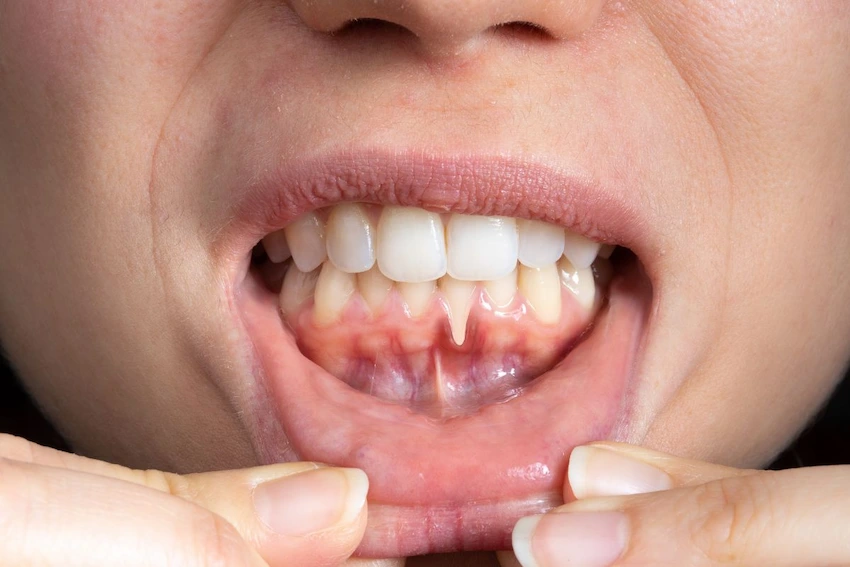
The question is still live: How do we treat the gums? Numbing gels do not get rid of the deep infection.
This is something that we encounter in our practice. When you decide to visit our state-of-the-art center in Turkey, Dentist Polen Akkılıç and her team verify the level of damage exactly. By addressing the cause, we are able to preserve your smile for many years.
Our Therapeutic Procedures at Lema Dental Clinic
To get your gums to heal, we use exact and completely pain-free methods:
- Professional Cleaning: We remove the remnants of plaque, even those invisible to the naked eye, above the gum line. This will give the gums a fresh start to attach themselves tightly to the teeth.
- Deep Cleaning (Scaling): We achieve a meticulous cleaning of the area beneath the gum lines. Following the cleaning, the roots are flushed of toxic substances so that they may be restored.
- Laser Care: A gentle beam of light kills the bacteria that are targeted. Recovery is super quick, and the pain is minimal.
Treatment Options Comparison Chart
| Treatment Type | Best For | What It Does | Healing Time |
| Basic Cleaning | Initial swelling | Removes tartar on the surface of the gums | Same day |
| Deep Cleaning | Advanced infection | Eliminates deep bacteria | 1 to 2 days |
| Laser Therapy | Severe infection | Uses light to destroy germs | 1 to 3 days |
| Gum Grafting | Extreme recession | Provides extra tissue to cover roots | 1 to 2 weeks |
Frequently Asked Questions
Not a chance! Just picture yourself washing your hands, and suddenly, they start bleeding. Would you visit a doctor if your hands bled after each hand wash? If you bleed when washing your hands, that means there is still an infection inside yo,u ant it is active.
Unfortunately, the gum tissue will not grow back by itself. However, we are capable of stopping the gum recession by doing something. If it is extremely bad, we can take tissue to put the gum line back to the way it was.
No, definitely not! Local anesthesia is administered before doing the procedure. You may feel a slight pushing motion during the treatment, but otherwise, it is very bearable.
The Lema Dental Clinic gives you excellent dental care and also takes care of all your travel details: VIP airport transfers and luxury hotel accommodations. You get the best dental treatment in the world, and then you can rest in the beautiful city of Istanbul.
When there is a minor level of infection, improvements can be expected within a few days. More extensive treatments require about one or two weeks for the gums to become fully healed and firm again.
- Caton, J. G., Armitage, G., Berglundh, T., Chapple, I. L. C., Jepsen, S., Kornman, K. S., … & Tonetti, M. S. (2018). A new classification scheme for periodontal and peri‐implant diseases and conditions–Introduction and key changes from the 1999 classification. Journal of Clinical Periodontology, 45, S1-S8.
- Kinane, D. F., Stathopoulou, P. G., & Papapanou, P. N. (2017). Periodontal diseases. Nature Reviews Disease Primers, 3(1), 1-14.
- Pihlstrom, B. L., Michalowicz, B. S., & Johnson, N. W. (2005). Periodontal diseases. The Lancet, 366(9499), 1809-1820.
- Highfield, J. (2009). Diagnosis and classification of periodontal disease. Australian Dental Journal, 54(s1), S11-S26.
- Lang, N. P., & Bartold, P. M. (2018). Periodontal health. Journal of Periodontology, 89, S9-S16.

