


Professional care for deeper health.
It is a common situation at Lema Dental Clinic in Turkey where people who are very careful about their oral health bring beautiful sets of electric toothbrushes and the latest water flossers, but they are still diagnosed with the beginning of gum disease. It almost feels like a betrayal. You put in the effort, you obey the “two-minute rule,” and still, the dentist discovers something to clean.
The reality is that home brushing, no matter how disciplined, is like sweeping a floor. It keeps the surface clean, but it cannot remove the “barnacles” that eventually attach themselves to the hull of a ship. In the world of dentistry, those barnacles are known as calculus or tartar.
The Hard Truth About Plaque and Tartar
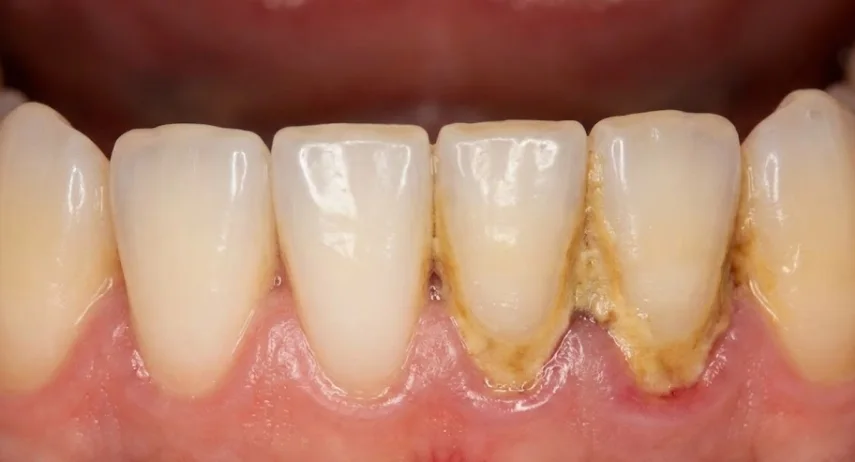
Plaque is a soft, sticky film of bacteria; it is quite easy to get rid of a toothbrush. But, what if we focus our attention on the situation when a very small microscopic fragment of plaque has escaped our brush?Within about 48 hours, minerals in your saliva begin to “petrify” that plaque. It transforms from a soft film into a rock-hard mineral deposit.
Once plaque has calcified into tartar, it is chemically bonded to your enamel. No toothbrush on earth, no matter how expensive, can vibrate it off. Professor Doctor Coşkun Yıldız often notes that tartar is essentially like coral growing on a reef; it provides a rugged, porous surface where even more bacteria can hide, multiply, and thrive.
Why Scaling is the “Deep Clean” Your Gums Crave
When you go to Dentist Polen Akkılıç and her team, scaling will be done through the use of specialized ultrasonic tools. These instruments vibrate at very high frequencies to break the tartar loose from the tooth as if it were being ”shattered”.
The question remains: why is this so critical?
If tartar is allowed to stay, it begins to creep beneath the gum line. Here is what we see in the clinic: the body views this hardened bacteria as a foreign invader. Your immune system sends white blood cells to the area, causing inflammation (gingivitis). If left untreated, this chronic inflammation begins to dissolve the very “foundation” of your smile.
Professor Coşkun Yıldız, PhD, makes an analogy between the jawbone and the concrete ground of a skyscraper. He explains that tartar can be compared to salt corrosion that is gradually spread by the sea breeze. The damage caused by tartar is not limited to the tooth surface, as it invades the bone structure that supports the tooth. That is the primary reason why a dental cleaning goes beyond merely giving you a fresh feeling; it also contributes to the long-term stability of your teeth.
The Role of Polishing: More Than Just Aesthetics
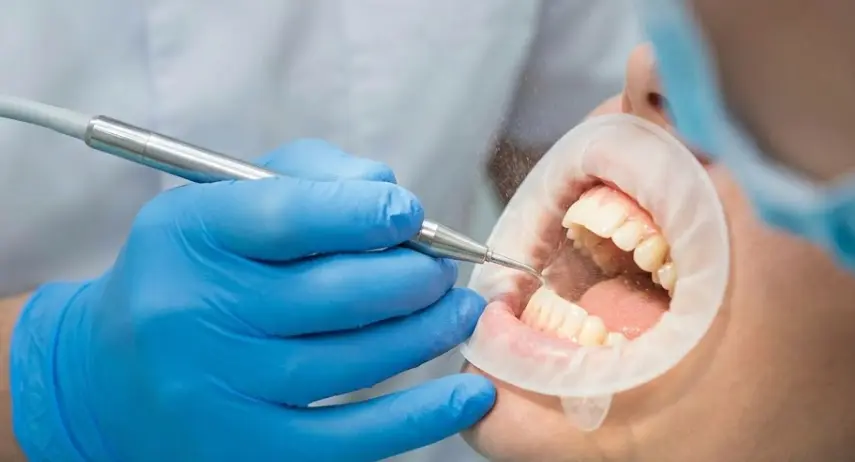
After the “heavy lifting” of scaling is finished, we move to polishing. Some see this as a purely cosmetic step to make the teeth look shiny for a few days, but the reality is much more functional.
Even after the tartar is removed, the tooth surface can be microscopically rough. A rough surface is a magnet for new plaque. By using a specialized prophylactic paste, Dentist Polen Akkılıç creates a surface as smooth as polished glass. Bacteria find it much harder to “grip” onto a perfectly smooth surface, which buys you more time and makes your home brushing significantly more effective between visits.
At-Home Care vs. Professional Scaling & Polishing
| Factor | Home Brushing & Flossing | Lema Dental Clinic Professional Care |
| Primary Target | Soft Biofilm (Plaque) | Calcified Deposits (Tartar/Calculus) |
| Reach | Above the gum line only | Subgingival (Deep below the gums) |
| Tooling | Nylon bristles / Water pressure | Ultrasonic scalers & hand curettes |
| Stain Removal | Surface-level only | Deep extrinsic stains (tobacco/coffee) |
| Frequency | Twice daily | Every 6 months |
The Lema Dental Clinic Experience in Turkey
Many of our patients travel to Turkey specifically because they want a level of thoroughness that they feel is missing in their routine check-ups at home. We don’t just “clean” teeth; we perform a clinical decontamination. By utilizing advanced technology, we ensure that every hidden pocket of bacteria is addressed, preserving the long-term integrity of your dental health.
FAQ: Straight Talk from Our Clinical Team
The reality is that it shouldn’t be painful. If you have significant tartar buildup or receding gums, you might feel some ‘zingers’ or sensitivity. However, at Lema Dental Clinic, we can use topical numbing gels or adjusted ultrasonic settings to ensure the experience is entirely comfortable for you.
This is a common fear, but it’s a misconception. Enamel is the hardest substance in the human body. The ultrasonic tips we use are designed specifically to vibrate the tartar off without harming the underlying tooth structure. It’s like removing gum from a sidewalk; the sidewalk stays intact.
Here is what we see in the clinic: gums only bleed when they are inflamed. If your gums bleed during scaling, it’s a sign that the bacteria were already causing an infection. Once the tartar is gone, your gums can finally heal and stop bleeding.
For most, every six months is the ‘sweet spot.’ However, if you have a history of gum disease or if your saliva is particularly mineral-rich (which causes faster tartar buildup), we might suggest a visit every three to four months to keep the ‘foundation’ stable.
Scaling and polishing remove extrinsic stains—like those from coffee, tea, or smoking. While it won’t change the natural ‘internal’ color of your teeth like chemical whitening does, most patients find their smile looks significantly brighter and ‘fresher’ immediately afterward.

