


Root canal instruments are the means through which the tissue infected in the pulp is removed in a precise manner, the canal system is shaped in a controlled way, and the internal space is sealed completely, thus they help to keep the tooth intact. At Lema Dental Clinic, Dentist Polen Akkılıç and her team aim to deliver results that every patient expects and deserves by combining the use of digital imaging, rotary nickel-titanium systems, and bioceramic materials. These instruments provide clinicians with the opportunity to clean parts of the anatomy that are extremely difficult or even impossible to reach, and to create a treatment plan that preserves healthy dentin and eliminates bacteria.
A properly organized set of instruments enables the clinician to recognize the disease, open the pulp chamber, disinfect the canal, and close the space with materials that are safe for the body. Professor Doctor Coşkun Yıldız points out that the success of modern root canal therapy is entirely dependent on the precision of these instruments as there are microscopic variations in the internal structure of the tooth. Good quality instruments lead to patient comfort, the healing process being as expected, and the stability of the restoration being maintained for a long period of time.
What Tools Are Used In Root Canals?
- Apex Locator: A medical tool that by electronic measurement defines the exact working length of the canal and hence reduces radiographic errors.
- Digital Radiography / CBCT: A technique that shows the real shape of the canal in three dimensions, also revealing hidden canals and the extension of the infection.
- Endodontic Explorer: A very thin and precise tool that is used for finding the opening of the pulp chamber.
- Access Burs: A removal of enamel and dentin in a controlled way to create a clean access to the pulp chamber.
- Stainless Steel Hand Files: These are the tools for the very first canal shaping and can provide the user with strong tactile control in narrow or calcified canals.
- Nickel-Titanium Rotary Files: These are flexible, safe, and fast shaping tools, which at the same time can keep the natural curvature of the canal.
- Irrigation Syringes: They are used to infuse chemical solutions into the canal during the disinfection process in a safe manner.
- Rubber Dam: The tool that isolates the working field, a device that also keeps sterility, and prevents the saliva from contaminating the area.
- Paper Points: They are sterile, absorbent points, which are used to thoroughly dry the canal before obturation.
- Obturation Devices: These are the tools with which the canal gets sealed through the use of gutta-percha and the sealer to create a three-dimensional, leak-proof filling.
Classification of Root Canal Instrumentation and Its Clinical Roles

Root canal tools are divided into several groups based on their clinical functions. Diagnostic tools help understand the tooth’s internal structure, while shaping tools prepare a proper taper for irrigation and obturation. Irrigation units get rid of the microorganisms and debris, and obturation tools complete the sealing of the canal with thermoplasticized gutta-percha or bioceramic sealers. Every group is a direct contributor to the success that lasts, and the choice of tools depends on the intricacy of the tooth morphology.
At Lema Dental Clinic, Professor Doctor Coşkun Yıldız conveys the significance of each tool being compatible with the anatomy of the tooth. As an instance, nickel-titanium rotary files are the most suitable for curved canals as they lower transportation and keep the original shape intact. Bioceramic sealers become the material of choice in obturation because of their antibacterial property, dimensional stability, and strong bonding to dentin. These are the instruments that not only yield predictable outcomes but also elevate the level of patient satisfaction.
Advanced Diagnostic Modalities and Endodontic Access Technologies
The very first step and the most important one throughout a root canal therapy is a correct understanding of what has to be done. In fact, Digital radiography together with cone-beam computed tomography is able to clearly establish the three-dimensional views of canal morphology, root fractures, and periapical lesions. Apex locators are devices that measure canal length on the basis of electrical impedance; thus, they drastically lessen the number of radiographs that are required throughout the procedure and thereby the process becomes more efficient. All these diagnostic devices make it possible for dental practitioners to plan and execute the most suitable therapy for their patients.
With the help of endodontic access components such as diamond burs, ultrasonic micro-tips, and magnification systems, one can precisely reach the pulp chamber. At Lema Dental Clinic, Dentist Polen Akkılıç and her team use dental operating microscopes for better visualization of heavily calcified canals and for restoration removal in a non-invasive way. Hence, they not only retain the tooth’s strength but also decrease the chances that the tooth will be perforated.
Mechanical and Chemical Systems for Root Canal Cleaning and Shaping
Mechanical Systems
- Hand Files: These are instruments that are used when the canal is being initially enlarged and give exact control, particularly in narrow or calcified canals.
- Rotary NiTi Files: These are motor-driven flexible files that keep the canal curvature, minimize the mechanical stress, and are efficient in shaping.
- Reciprocating Systems: These systems use an alternating forward–backward motion to lessen the risk of file separation and thus safety is improved in complex anatomy.
- Gates-Glidden Drills: These drills enlarge the coronal part of the canal and make the penetrations of the irrigant easier.
- Mechanical Activation Devices: These are ultrasonic or sonic instruments that can be used to increase the distribution and effectiveness of the irrigation solutions.
Chemical Systems
- Sodium Hypochlorite (NaOCl): Is used to dissolve tissues that are dead (necrotic) and to eliminate bacteria that are present in the canal.
- EDTA (Ethylenediaminetetraacetic Acid): Is used to remove the smear layer and opens dentinal tubules to further disinfection.
- Chlorhexidine (CHX): An antimicrobial irrigant that can be used for the elimination of resistant microorganisms.
- Saline Solution: Is used to neutralize chemical irrigants between cycles and also helps in debris removal.
- Irrigation Activators: Enable the chemical solutions to reach more depth in the dentinal tubules, thus biological cleaning becomes more efficient.
Endodontic Obturation Devices and Techniques

Obturation uses a heated method to put the gutta-percha (which is a thermoplasticized material) into the root canal along with the bioceramic sealer, to prevent bacterial penetration. The vertical compaction devices give off controlled heat which makes the gutta-percha able to fit very well to the canal irregularities. In this way, the final seal becomes more perfect by just carrier-based obturators that provide a uniform fill in long or curved canals.
The Lema Dental Clinic chooses bioceramic sealer materials because they chemically bond to dentin, are dimensionally stable, and also, they release antimicrobial ions. These characteristics not only contribute to the long-term results but also lower the risk of reinfection. Professor Doctor Coşkun Yıldız advises the use of the bioceramic method for complicated anatomy due to the very predictable way they merge with the canal walls.
Root Canal Procedure with Instruments: Step-by-Step
An initial step for the operation constitutes diagnostic imaging and clinical assessment for ascertaining the state of the tooth. To make the patient comfortable local anesthesia is given. Isolation of the tooth with a rubber dam helps in maintaining a sterile environment. With the help of precision burs and ultrasonic tips, access preparation is done to open the pulp chamber. Guided mechanical shaping by digital apex measurements helps in the removal of the infected tissue in a controlled manner.
Mechanical and chemical instrumentation are used side by side for the refinement of canal morphology. Irrigation activation devices help antibacterial solutions to reach lateral canals and anatomical irregularities more effectively. After that, the canal is dried and obturated using thermoplasticized materials. At Lema Dental Clinic, the procedure is finished by Dentist Polen Akkılıç and her team who place a definitive restoration to not only protect the treated tooth but also to restore occlusal function.
Clinical Advantages of Modern Root Canal Instruments
New components accomplish the objectives of therapy more effectively, i.e. by making the procedures more precise, faster, and more comfortable for the patients. Thus for instance the use of Ni-Ti files in the root canal system can be instrumental in reducing the risk of the file cutting through the canal wall and preserving the canal anatomy. Meanwhile, the use of such activation methods in irrigation can enable the removal of bacteria from parts of the root where the mechanical tool cannot reach and therefore the post-treatment period can be without relapse of the disease.
By employing digital diagnostics tools errors in diagnostics can be drastically reduced and in addition the clinicians can be more confident in carrying out the treatment of complicated cases. Advanced endodontic systems at Lema Dental Clinic enable Professor Doctor Coşkun Yıldız to achieve predictable results even in cases of calcified canals or severe curvature. Patient satisfaction increases further as a result of this holistic treatment concept which not only stabilizes the function of the teeth but also improves their esthetics.
Emerging Innovations in Endodontic Instrument Systems
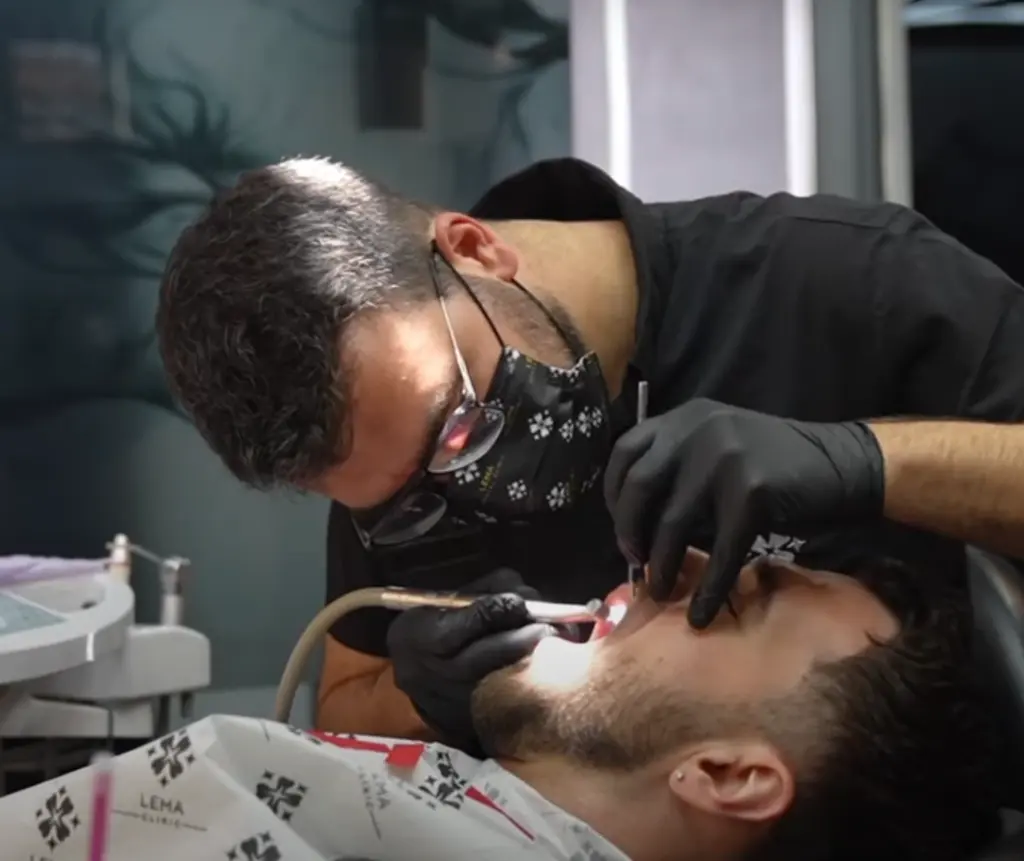
The most recent changes in endodontics feature the use of adaptive motion systems, the implementation of a single-use file technology, the employment of laser-assisted irrigation techniques, and the use of nanostructured bioceramic materials. These are some of the ways to increase the cutting efficiency of the instrument, to reduce the risk of file separation and to improve the decontamination process. Later on, artificial intelligence-assisted diagnosis and enhanced navigation tools for complex anatomy are expected to be among the innovations in this field.
Lema Dental Clinic is still bringing in scientifically proven innovations that are beneficial for patient safety and clinical perfection. Dentist Polen Akkılıç and her team only take up new ways after they have verified their biomechanical advantages and their durability.
Patient-Focused Insights on Root Canal Instrument Safety
Knowing that top-notch tools lessen the chances of complications, make the treatment more comfortable, and help the success of the restoration patients benefit. Disposable rotary files remove the possibility of cross-contamination and guarantee the same performance every time. Cutting-edge irrigation systems lessen the discomfort after the treatment by enabling a deeper disinfection.
Clinicians at Lema Dental Clinic not only perform the procedure but also explain every stage to the patient in order to be transparent and gain trust. Such communication makes patients get informed, supported and, hence, confident, during their whole treatment journey.
Clinical Instrumentation Table
| Instrumentation Category | Primary Purpose | Tools Used at Lema Dental Clinic | Clinical Benefit for Patients |
| Diagnostic Systems | Determine canal length and morphology | CBCT, apex locator | Accurate planning and reduced errors |
| Access Instruments | Create a precise entry into the pulp chamber | Ultrasonic tips, micro-burs | Preserves healthy dentin |
| Mechanical Shaping | Remove infected pulp and shape the canal | NiTi rotary files | Faster treatment and greater comfort |
| Chemical Irrigation | Disinfect and dissolve debris | NaOCl, EDTA, CHX | Eliminates bacteria and supports healing |
| Obturation Systems | Seal the canal permanently | Gutta-percha, bioceramic sealer | Prevents reinfection and strengthens the outcome |
References:
- Peters, O. A. (2004). Current challenges and concepts in the preparation of root canal systems: A review. Journal of Endodontics, 30(8), 559–567. https://doi.org/10.1097/01.DON.0000129039.59003.9D
- Siqueira, J. F., & Rôças, I. N. (2004). Clinical implications and microbiology of bacterial persistence after treatment procedures. Journal of Endodontics, 30(6), 441–446. https://doi.org/10.1097/00004770-200406000-00011
- Haapasalo, M., Shen, Y., Wang, Z., & Gao, Y. (2014). Irrigation in endodontics. British Dental Journal, 216(6), 299–303. https://doi.org/10.1038/sj.bdj.2014.204
- Schilder, H. (2006). Filling root canals in three dimensions. Journal of Endodontics, 32(4), 281–290. https://doi.org/10.1016/j.joen.2005.12.007
- Plotino, G., Nagendrababu, V., Bukiet, F., Grande, N. M., & Somma, F. (2020). Influence of nickel–titanium file design on root canal shaping outcomes. International Endodontic Journal, 53(2), 176–189. https://doi.org/10.1111/iej.13215
Frequently Asked Questions About Root Canal Instruments
Every tool is designed to carry out a specific diagnostic, mechanical, or biological task that is essential for thorough disinfection. This serves as the guarantee of consistent results and the conservation of the tooth over time.
Dentists generally employ similar groups of tools, however, the level of technology differs. Lema Dental Clinic utilizes state-of-the-art nickel-titanium systems and digital diagnostics for greater accuracy.
Patients can talk to their doctor about what instruments they would like to use. Advice is given according to the clinical evidence and the anatomical complexity of the tooth.
Single-use files offer the highest safety level and are thrown away after each operation. In this way metal fatigue is decreased and reliability is enhanced.
Instrument separation hardly happens with modern systems. In case it happens, sophisticated retrieval methods and imaging help to find the safest way.
Yes. Disposable rotary files do away with the risk of cross-contamination and guarantee that the performance remains consistent.
They create more even, physiologically more accurate canal shapes. Consequently, this facilitates irrigation and lowers the mechanical stress level.
Modern tools make treatment faster and more accurate. Patients are more comfortable because of controlled instrumentation and efficient anesthesia.

