


Pterygoid implant aftercare involves hygiene, rest, and following dentist’s advice.
Beyond the Traditional: Master Your Recovery After Pterygoid Implants
Dental implants have evolved far beyond the standard “screw in the jaw” approach. For patients who have been told they lack the bone density for traditional implants—often due to years of wear or severe bone loss in the upper jaw—pterygoid implants are nothing short of a miracle. These implants bypass the need for complex sinus lifts by anchoring into the dense, stable bone of the pterygoid process at the back of the maxilla.
But here is the reality: the surgery is only half the battle. At Lema Dental Clinic in Turkey, we believe that what happens after you leave the chair is just as vital as the precision of the placement itself. Whether you were treated by Professor Doctor Coşkun Yıldız or worked with Dentist Polen Akkılıç and her team, your recovery roadmap is your blueprint for a lifetime of smiles.
Why Pterygoid Implants Require a Specific Touch?
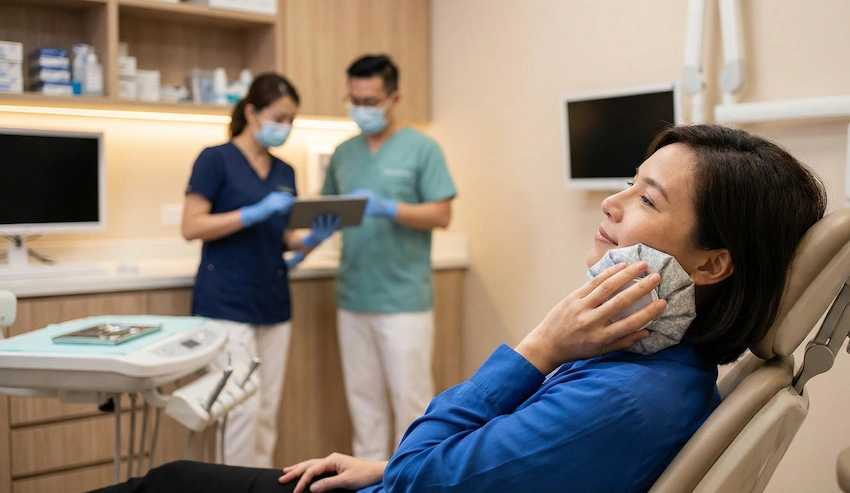
Imagine the difference between a conventional implant and a pterygoid implant by comparing the two scenarios. One might compare a traditional implant to a nail that is hammered into a solid wooden beam. Whereas, a pterygoid implant would be more like an anchor that is driven into the reinforced steel frame at the corner of a skyscraper.
The reason why the “settling” process seems to be different is that these implants are located at the back of the mouth and at a certain angle. Still, the question remains: what steps are taken to ensure that such an innovative piece of hardware will work perfectly with your biology?
The First 48 Hours: The Critical Window
At Lema Dental Clinic, based on our clinical experience, the initial 48 hours are fundamental to the outcome of your healing. The situation should not be perceived as mere “recovery”; it is a period during which you are letting your body engage in a sophisticated biological handshake with titanium.
- Pressure is Your Ally: Make sure that the gauze pads are kept in the same place as it is instructed. It is not only about stopping blood; it is also about stability.
- The Cold Defender: Keep ice packs on the outside of your cheek. 20 minutes are on and 20 minutes are off. This prevents the internal “fire” (inflammation) from getting larger.
- Keep the Head Higher: Use an extra pillow when lying down. Nature uses gravity as a drain for the swelling.
Long-Term Maintenance: Keeping the Foundation Strong
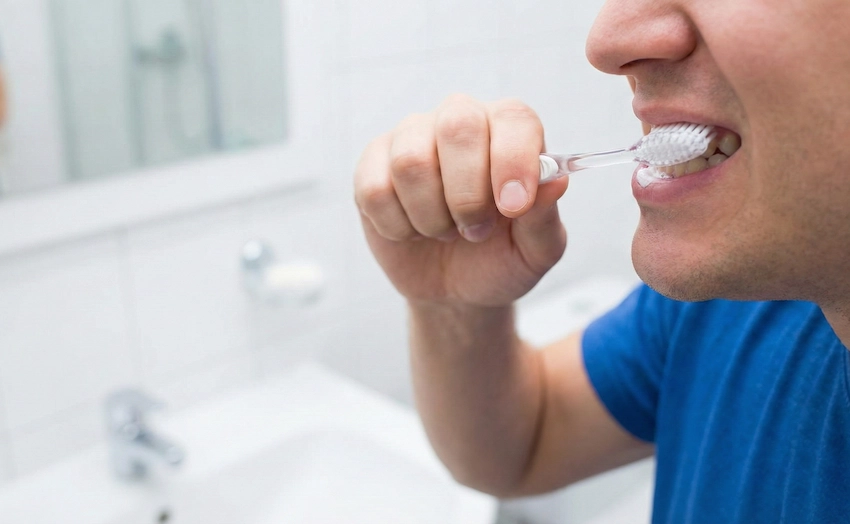
Once the initial tenderness fades, the real work begins. We often tell our patients that a pterygoid implant is like a high-performance engine; it requires the right fuel and regular maintenance.
Hygiene Without Agression
You cannot treat a fresh implant like a stubborn stain on a carpet. You must be gentle. We recommend a soft-bristled brush and, eventually, specialized “superfloss” or interdental brushes designed to reach the posterior regions where pterygoid implants live.
The Diet Evolution
You won’t be eating steak on day three. But you shouldn’t be on a liquid-only diet for a month either.
| Phase | Duration | Recommended Foods | What to Avoid |
| Acute Healing | Days 1–7 | Lukewarm soups, protein shakes, Greek yogurt. | Straws, spicy food, crunchy chips. |
| Soft Integration | Weeks 2–6 | Flaky fish, mashed potatoes, overcooked pasta. | Seeds, nuts, chewy bread crusts. |
| Full Function | Month 3+ | Gradually reintroduce all favorite foods. | Non-food items (ice cubes, pens). |
Insights From the Clinic

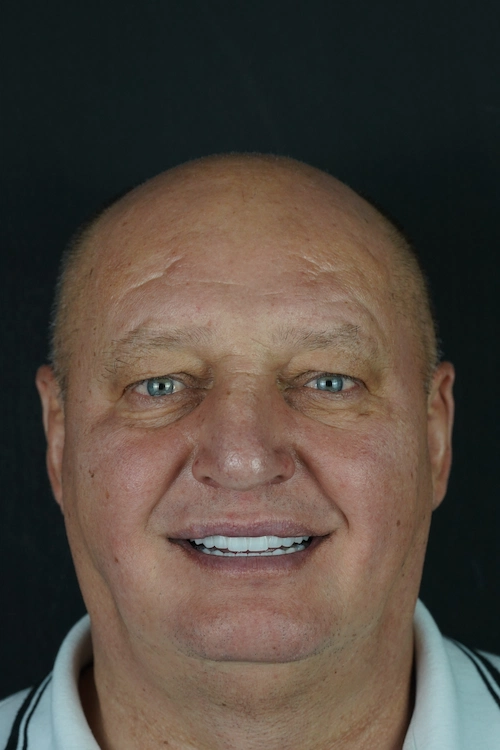
Dentist Polen Akkılıç frequently states that patients are amazed at how a pterygoid implant feels significantly “deep” and that the sensation is usually compared to anti gingival front teeth. This is absolutely normal. It means that you are using the bone which hasn’t “felt” the pressure of the same chewing for a long time. Its very similar to the process of waking up and working a dormant muscle. However, let’s focus more on the “Turkey Experience.” A great number of our international patients express concerns about the possibility of flying back to their countries shortly after the operation. We have altered our procedures in such a way that when you get on your plane from Istanbul, your “foundation” is firm and safe.
Common Questions: A Conversation with Your Surgeon
It’s more of a “heavy pressure” than a sharp pain. Most patients find that over-the-counter management is sufficient by day three. If you feel throbbing that keeps you awake at night, that’s when you call us.
Give it a week. Intense cardio increases blood pressure, which can literally “push” against the surgical site and cause bleeding or throbbing. Think of this week as a forced, well-deserved vacation.
Initially, your tongue will be very curious. It will find the new hardware. However, within a few weeks, the brain performs “habituation”—it begins to ignore the implant just as it ignores your natural molars.
Efficiency and stability. By using the pterygoid bone, we avoid the “eggshell” fragility of the sinus floor. You get a stronger anchor with a faster overall timeline to your final teeth.
The honest truth? Smoking is the leading cause of implant failure. It constricts blood flow, starving the bone of the oxygen it needs to heal around the titanium. We strongly urge you to pause for at least two weeks post-op.
- Aparicio, C., et al. (2012). The use of pterygoid implants in the atrophic posterior maxilla: A 5-year retrospective study. International Journal of Periodontics & Restorative Dentistry.
- Candel, E., et al. (2012). Pterygoid implants: A review of relevant literature. Journal of Oral Implantology.
- Tulasne, J. F. (1992). Implant treatment of the atrophic posterior maxilla: The pterygoid implant. Journal of Oral and Maxillofacial Surgery.
- Yıldız, C. (2023). Advanced Anchoring Techniques in Posterior Maxillary Rehabilitation. Istanbul Clinical Review.
- Rodriguez, X., et al. (2016). Anatomical considerations for pterygoid implant placement. Clinical Implant Dentistry and Related Research.

