


Modern crowns and bridges restore smiles with stronger, lighter, and natural materials.
Losing one tooth can cause many problems, as it can even affect your natural bite. Maybe you even end up hiding your smile in photos or avoiding your favorite foods because your mouth no longer feels complete.
You have to understand that the mouth is a very complex system. If we compare a tooth to a wall in a house, a damaged tooth is like a cracked wall. It’s impossible to just paint over a broken wall. Instead, you will have to fix the foundation first so that the whole structure remains safe and stable.
That is exactly what we witness at our Lema Dental Clinic, day after day. Gone are the days of heavy and dull materials. Crowns and bridges made in today’s technology are a work of art. Not only are they much lighter, but also incredibly strong. Most important of all, they look exactly like real teeth.
Leaving the Era of Metal: Zirconia and E-max
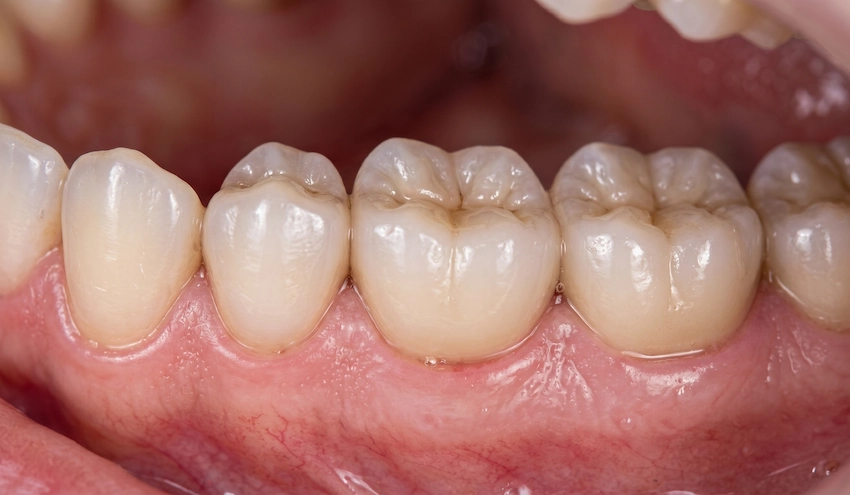
Metal crowns were the favorite choice of dentists for many years. They worked structurally well. However, their dark metal core often led to a gray line at the gums.
At the same time, let’s think about today’s choices.
Professor Doctor Coşkun Yıldız frequently mentions the huge revolution in the field of modern restorative dentistry. Monolithic zirconia and E-max literally changed the whole industry. Now, we don’t have to decide whether to have raw strength or natural beauty. We can have both with no problems.
- Zirconia: You can say it is a ceramic’s equivalent of titanium. It is taken from a whole piece of crystal. Therefore, it is able to withstand heavy chewing forces very well. In fact, it is the ultimate choice for molars.
- E-max: The composition of this material is translucent. It behaves in the light the same way natural enamel does by catching and reflecting it. This is why it is an ideal choice for incisors.
Bridging the Gap: Contemporary Approaches
Simply put, a dental bridge stands in the place of a missing tooth. Just visualize it as a suspension bridge over a river. Your healthy teeth serve as the sturdy pillars to hold the new tooth securely in the middle.
This is what happens around here. Patients tend to be afraid that a bridge will feel big and heavy. They worried it would also trap food. Completely new digital technologies solve these concerns.
Here in Turkey, Dentist Polen Akkılıç with her team first checks your bite thoroughly. They employ 3D scanner technology that is very modern. They create bridge designs that fit around your gum perfectly. There is no more hassle of bulky edges.
Comparing Your Dental Options
If you understand your options, you will be able to choose the best one confidently. Here is a short overview of the materials we use regularly:
| Material Type | Main Benefit | Best Used For | Look and Feel |
| Monolithic Zirconia | Very powerful and long-lasting | Back teeth (Molars) | Simple and bright |
| E-max (Lithium) | Excellent light reflection | Front teeth (Incisors) | Highly natural |
| Layered Zirconia | Strength and beauty are well balanced | Full smile makeovers | Very natural |
| Legacy PFM | Less expensive | Teeth out of direct view | Darker metal edges |
The Question Remains: Why Go Digital?

We still have one question: how can the crowns be made to fit exactly so well at the very first try?
Well, it is our digital workflow that makes it possible. We eliminated the use of messy putty impressions. Besides being highly uncomfortable, they are left behind in history. We have a digital wand that looks like a pen. It takes thousands of pictures very quickly. Then, it creates a perfect 3D image on our screens. This way, our crew is able to design your crowns very accurately. The position of your new teeth is spot on.
Frequently Asked Questions
It will never happen that way. Our ultimate goal is for your dental work to be invisible to everyone. The materials of very high quality that we use, e.g., E-max, will exactly match your natural teeth. The reflection is so natural that even if you look at it closely, it won’t seem artificial.
First of all, your comfort is our priority. So we will make sure that you feel no pain during the treatment. We will numb the area that is to be treated. Some people may experience slight tooth sensitivity to cold a few days later, but this usually goes away very fast.
Zirconia is strong and resistant to breakage. Don’t forget to brush and floss every day. And, visiting your dentist for regular check-ups is also part of a good care routine. With these good habits, your bridge may well last for 15 to 20 years or even longer. It is quite common that it lasts for a lifetime.
Why not! The only things to avoid would be chewing hard ice or using your teeth as a tool to open the packages. With all other foods, a normal diet is fine. The reason is that E-max is bonded very firmly to the tooth structure. So, regular day-to-day eating should not pose any problems.
If you come to Lema Dental Clinic, you will find excellent medical expertise. We have the equipment and tools, digital technology that many local clinics lack. You also get access to the best ceramic materials in the world. As well as that, you benefit from a luxury patient experience, which is carried out very efficiently.
- Al-Amleh, B., Lyons, K., Swain, M., & Payne, A. G. (2010). Clinical trials in zirconia: a systematic review. Journal of Oral Rehabilitation, 37(8), 641-652.
- Guess, P. C., Schultheis, S., Bonfante, E. A., Coelho, P. G., Ferencz, J. L., & Silva, N. R. (2011). All-ceramic systems: laboratory and clinical performance. Dental Clinics of North America, 55(2), 333-352.
- Kelly, J. R., & Benetti, P. (2011). Ceramic materials in dentistry: historical evolution and current practice. Australian Dental Journal, 56(1), 84-96.
- Miyazaki, T., Nakamura, T., Matsumura, H., Ban, S., & Kobayashi, T. (2013). Current status of zirconia restoration. Journal of Prosthodontic Research, 57(4), 236-261.
- Pjetursson, B. E., Sailer, I., Makarov, N. A., Zwahlen, M., & Thoma, D. S. (2015). All-ceramic or metal-ceramic tooth-supported fixed dental prostheses (FDPs)? A systematic review of the survival and complication rates. Dental Materials, 31(6), 624-639.

