At Lema Dental Clinic in Istanbul, Turkey, they appreciate that each smile has its own unique identity — meaning, each smile is as different as the problems it presents. Microdontia may seem like a small issue, but it is definitely one that can have a large impact on one’s confidence. This is the reason for our availability to provide you with cosmetic solutions that are compatible with the world’s best standards. We have a full spectrum of solutions to remedy any kind of smile problem that may be bothering our customers, from superiorly made porcelain veneers to the Hollywood Smile complete makeovers.
What are Micro Teeth and How Do They Appear?
Micro teeth that are also known as microdontia in the scientific world refer to a condition where an individual or several teeth are, in fact, the size that is definitely smaller than the average size of teeth. These teeth do not look good aesthetically, and they may not fit the required functions as well. Microdontia can exist on both baby teeth and permanent teeth, and it may be restricted to one tooth (usually the upper lateral incisors) or several teeth throughout the mouth.
Microdontia is divided into several types, such as localized microdontia (affecting only one or two teeth), generalized true microdontia (where all teeth appear to be smaller for real), and relative generalized microdontia (where teeth are said to be small because the jaw is larger than average). While some people might interpret it as a symbol of youth or “baby tooth” look, others might feel that it disfigures the smile and therefore affects their self-confidence, especially in social contexts.
What are the Causes of Microdontia in Children and Adults?
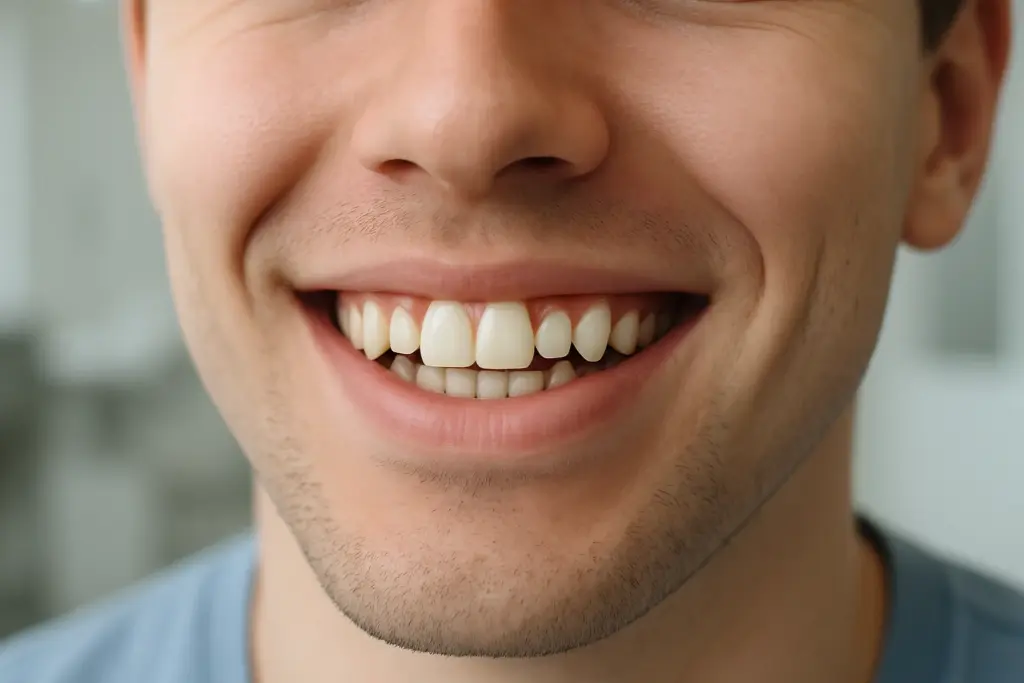
Microdontia, in most cases, is determined by genetics as the main cause. The lesser size of teeth being the result of your ancestors means that you, too, could have gotten the same dental registry. Not to mention, that genetic factor is not the superpower. Diseases that include pituitary dwarfism, Down syndrome, and ectodermal dysplasia are among those ones that hinder normal tooth development, respectively, the cause for microdontia.
Another reason could be exposure to radiation, especially during early childhood, some medications used during teeth development, or dental trauma during the early years of life. Children who had nutritional deficiencies in their childhood, being short of vital minerals such as calcium and phosphorus, may also experience abnormal dental growth, which can be the cause of one or more teeth being small in size or underdeveloped.
On some occasions, however, microdontia may occur in a single tooth only and not at all connected to the genetic or medical history of an individual. These teeth are generally referred to as “peg laterals” by dentists, which are the lateral incisors being very small and pointy compared to the normal-sized and fully-developed teeth.
Problems Associated with Having Small or Undersized Teeth
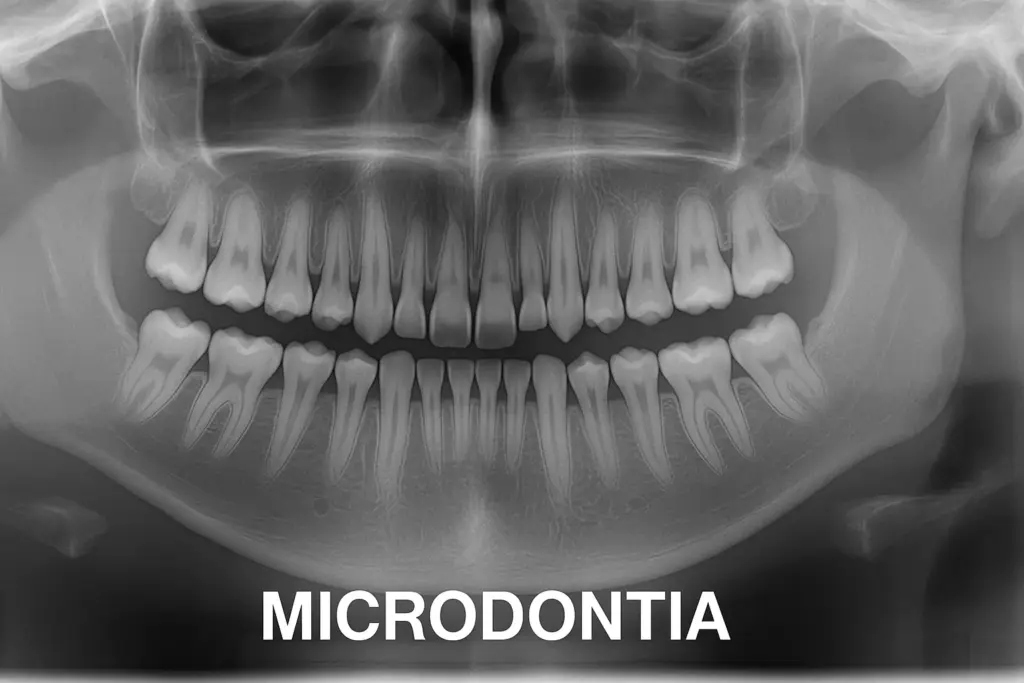
While an observer might regard them as being cute, mini teeth can actually cause both functional and cosmetic trouble. Physically, teeth that are too small affect the bite’s equilibrium. The possible result is that larger adjacent teeth might drift into fill the void, and erupt malocclusion, crowding, or even jaw pain in the future. Meanwhile, the empty spaces may also be the reason for food impaction, plaque formation, and gum issues.
Additionally, from a mental or social perspective, many patients experience feelings of shame or dislike that stem from their smiles. The effect made by microdontia is shown both in pictures and conversations. This condition can affect the self-esteem of the person and hinder them from freely smiling; this will, in turn, affect their personal and professional relationships. Regarding these emotional effects, teenagers and young adults are the most affected and more, especially because of the “digital world” that has made everyone conscious of their image.
Furthermore, small teeth can lead to malocclusion, which may result in challenges in the dental department. The issue is not only with the aesthetics, but it is also very important to have teeth that work to the best of their ability and still keep the mouth healthy and in a state of equilibrium.
Is Microdontia Identifiable and Recoverable?
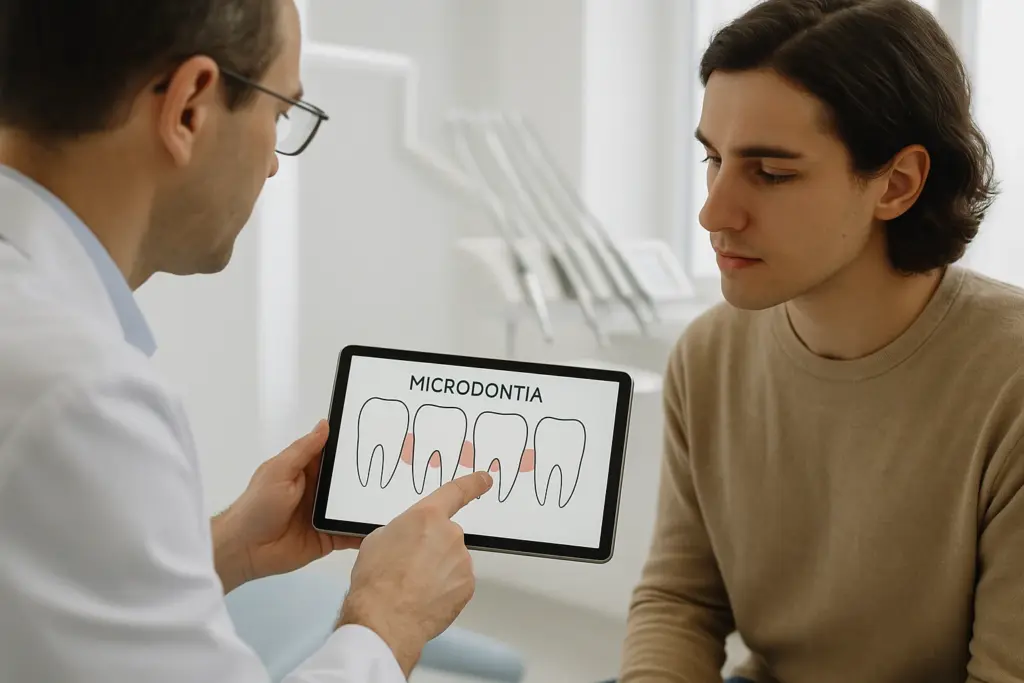
The detection of the deficiency of the number of teeth is a simple process because it usually happens in a dental clinic. The dentists will view the shape, width, and arrangement of the teeth and could also order X-rays to confirm if the teeth are fully developed or only part of the crown is visible. In the latter two cases, the dentist will also take into account the condition of the patient’s bone structure, as it might be the cause of the problem, to suggest the correct diagnosis of the problem, be it is true or relative microdontia.
The treatment will be chosen in accordance with the gravity or the primary cause of the disease. No treatment is prescribed if the small teeth do not pose any functional or aesthetic problems. In the case of patients who are not self-conscious or have no functional problems, there are noticeable ways to change the teeth. These include procedures for the basic reshaping of the teeth that can be done in outpatient care and restoration of the dental arch of teeth that can be the root of the problem of malocclusion.
Some of the patients may have a course of action that will start with orthodontics. This is done to close the remaining gaps and also make the neighboring teeth straight before starting the cosmetic work. Sometimes, the dentist may advise the patient to do crown or veneer work whereby the crown will change the visible part of the affected tooth and the veneer will lunch.
Are there any Cosmetic Options for Small Teeth?
If you want to adjust small teeth to be a beautiful smile, have in mind that the dental field of cosmetic surgery is very extensive nowadays. One of the most well-known techniques is the use of porcelain veneers, which has proved to be very effective in treating microdontia. The procedure uses this thin shell that’s cut to fit your existing teeth and put on top of them to instantly change their size, shape, and color. The veneers are a preferred method at Lema Dental Clinic, mostly by patients looking for naturally perfect and durable results.
Another one of the quickest ways to beautify your teeth is composite bonding – a simple procedure, where a tooth-coloured resin is applied to the little teeth directly, thereby increasing their size. Though it is not as hardwearing as veneers, bonding is a good temporary and economic solution which can provide a huge difference in just one visit.
If we are talking about the more difficult cases, when teeth are not only small but also structurally weak, the probable solution is the implementation of ceramic crowns. Crowns can deliver all-around protection to the tooth and can be made fit for any size. Furthermore, in situations of gaping teeth, cosmetic and orthodontic treatments may be used at the same time, thus obtaining a win-win effect.
The final objective is to bring back symmetrical conditions, functionality, and confidence – for a balanced smile is a beautiful smile. From a single peg tooth, the case can be expanded to a whole package of mini molars, and a tailored course of action – a game-changer for the patient – can be provided.
FAQ: Micro Teeth (Microdontia): Causes and Treatment Options
Microdontia is a dental condition where one or more teeth are significantly smaller than average. It can affect children or adults and is often noticed during early dental development or teenage years.
Yes, micro teeth can be inherited, but they can also result from medical conditions, trauma, or environmental factors that affect tooth development during childhood.
Definitely. While some cases are only aesthetic, micro teeth can lead to bite misalignment, jaw discomfort, gaps between teeth, and increased risk of cavities and gum disease due to food getting trapped.
Treatments include porcelain veneers, crowns, composite bonding, and orthodontics. These solutions aim to improve both the size and appearance of small or underdeveloped teeth.
Yes. When some teeth are smaller than others, it can cause spacing or shifting that affects overall alignment. Orthodontic treatment may be necessary to fix or prevent crowding and misalignment.