


Professional whitening ensures safer, lasting results.
If you go into any pharmacy in Istanbul or any other city, you will notice that shelves are loaded with white strips and charcoal powders claiming to give a Hollywood smile for the price of a lunch meal. It is really tempting. We understand. However, as clinicians, we also witness the consequences of these quick fixes: gum sensitivity, thinning enamel, and spotting.
The issue is not merely whether it is expensive to have your teeth professionally whitened. The real problem is: Are you merely getting a product, or are you paying for the medical precision?
Based on the clinical experience at Lema Dental Clinic in Turkey, we see that patients most of the time perceive whitening as a mere cosmetic add-on, like putting on a layer of nail polish. But wait a minute. Teeth are living tissues with pores, nerves, and a complex chemistry. Hence, it is not sufficient to just give them a generic bleach; you need to do an architectural restoration of your smile’s brilliance.
The Chemistry of Value: Why “Store-Bought” Can’t Compete
When Dentist Polen Akkılıç is working on a smile makeover in Istanbul, she uses this figurative example very often: Using whitening strips is akin to spot-cleaning a silk rug with a wet wipe. You can clear the surface of some dust, but the deeply ingrained dullness remains.
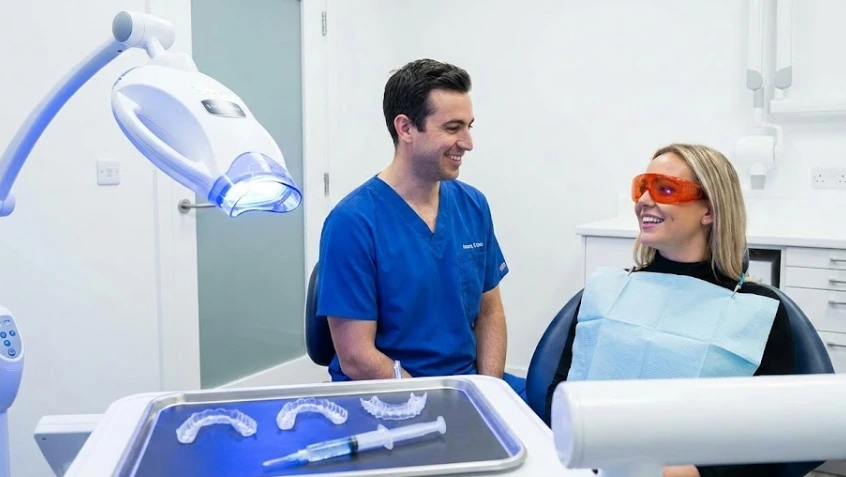
Professional whitening not only removes the dirt on the surface. It employs high-concentration peroxide gels that are activated by laser technology and penetrate the enamel of the teeth to remove the deeply embedded stains.
- The OTC Reality: Store kits are only allowed by law to contain minute amounts of the active ingredients (often <0.1% hydrogen peroxide in Europe/UK). This is why they have to rely on abrasives that can wear out the enamel.
- The Clinical Advantage: Under medical supervision, potent and safe gels can be used (up to 35-40% concentration) because gingival barriers are put in place to protect your gums.
The Hidden Cost of “Cheap” Whitening
Professor Doctor Coşkun Yıldız is always telling our patients that the cost of the most expensive dental treatment is the one you will have to redo later. We have witnessed many patients who have brushed their gum tissue with generic trays that did not fit them or have worn the enamel by using abrasive charcoal pastes.
If you come to Lema, the price that you will be charged will not simply be for the gel. In addition, you will be paying for:
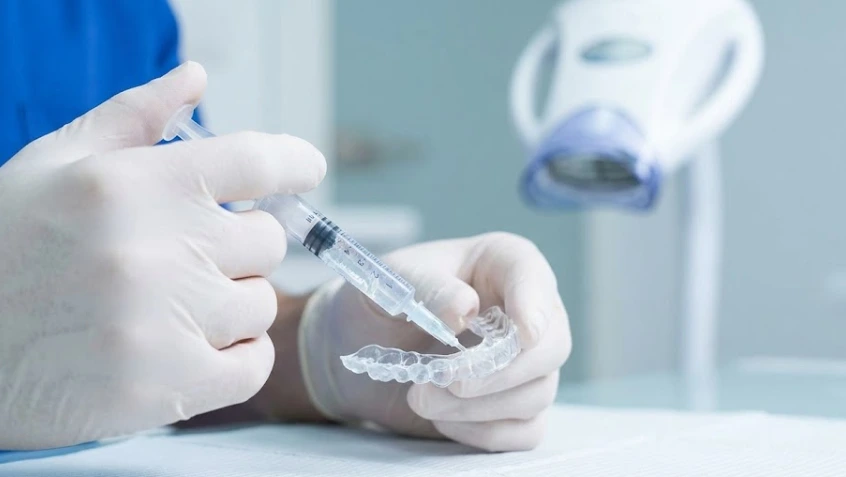
- Customization: A tray that is carefully fitted to your mouth will give you the gel effect on your teeth without hurting your gums.
- Desensitization: We apply products that contain potassium nitrate and fluoride to make the enamel stronger even during the period.
- Speed: In the clinic, the work is completed in an hour in contrast to weeks when you will have to use the slippery strips in the night repeatedly.
Comparative Breakdown: DIY vs. Clinical Whitening
Here is how different options compare from safety and longevity perspectives, which may help you make a decision.
| Feature | At-Home Strips / Gels | Professional Laser Whitening (Lema Clinic) |
| Active Ingredient | Low-dose Peroxide or Abrasives | High-concentration Hydrogen/Carbamide Peroxide |
| Time to Results | 2–4 Weeks of daily use | 45–60 Minutes (Single Session) |
| Longevity | 1–3 Months | 1–3 Years (with maintenance) |
| Gum Safety | Low (High risk of leakage/burns) | High (Protective Gingival Barrier used) |
| Sensitivity | Uncontrolled | Managed with desensitizing agents |
| True Cost | Low upfront, high recurring cost | Higher upfront, long-term value |
“Is It Just Paying for the Brand?”
Absolutely not. In Turkey, specifically at Lema Dental Clinic, the “cost” dynamic is different. Because of the currency exchange and operational costs in Turkey, you can access top-tier laser technology—the same systems used in London or New York—for a fraction of the price. You are getting the Rolls-Royce treatment for the price of a standard sedan.
Our team doesn’t just “whiten.” We assess. If your discoloration is due to trauma or medication (like tetracycline), standard whitening won’t work. Dentist Polen Akkılıç and her team would instead recommend veneers or bonding. A store-bought kit can’t diagnose you; it can only sell to you.
Top Queries on How We Brighten Your Smile
Yes. The laser or LED light acts as a catalyst. It excites the molecules in the whitening gel, speeding up the chemical reaction. This allows us to achieve in one hour what would otherwise take days, minimizing the time your teeth are exposed to the chemicals.
No. This is a common fear. Professional whitening restores your natural brightness; it doesn’t paint over it. We aim for a shade that matches the whites of your eyes—the universal standard for a natural, healthy look.
Most patients feel a tingling sensation, often described as “zaps,” but it is temporary. Because we apply desensitizing gels before and after the treatment, this discomfort is significantly lower than what you might feel using abrasive strips on sensitive teeth for two weeks.
With proper hygiene (and perhaps cutting back on the espresso), clinical results typically last between one to three years. We also provide custom home-maintenance kits to top up the brightness before big events.
The reality is that porcelain does not change color. If you have existing crowns that match your current yellowed teeth, whitening your natural teeth will result in a mismatch. This is why we always recommend whitening before getting any restorative work.
- Carey, C. M. (2014). Tooth whitening: What we now know. Journal of Evidence-Based Dental Practice, 14, 70-76.
- Epple, M., Meyer, F., & Enax, J. (2019). A critical review of modern concepts for teeth whitening. Dentistry Journal, 7(3), 79.
- Joiner, A. (2006). The bleaching of teeth: A review of the literature. Journal of Dentistry, 34(7), 412-419.
- Kugel, G., & Ferreira, S. (2005). The art and science of tooth whitening. Journal of the Massachusetts Dental Society, 54(1), 12-15.
- Majeed, A., Grobler, S. R., & Moola, M. H. (2011). Surface roughness and hardness of enamel after bleaching with different concentrations of carbamide peroxide. Journal of Dentistry, 39, S16-S22.

