


Small amounts are usually harmless, but too much can cause problems.
We have encountered numerous patients in our dental office who tightly hold a tube of denture adhesive and can’t help asking the one question that truly matters. “Will it really be fine if some of this goes down my stomach?”
Actually, a single tiny drop that you swallow once will not cause you to panic. However, it is not that straightforward. What if you take this chemical paste not just once but for several years every day? The environment of the mouth is warm, moist, and full of life. Naturally, after a period of time, adhesives will break down, especially while eating and speaking. Consequently, swallowing very small amounts of denture adhesive almost becomes a routine for users of traditional dentures.
The Dangers of Swallowing Your Denture Cream
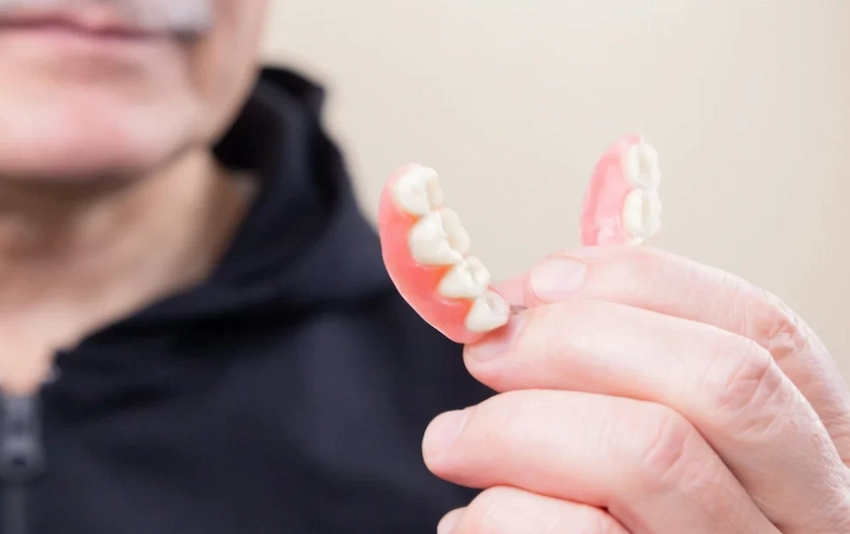
Traditional denture adhesives consist of synthetic plastics, very strong preservatives, and heavy metals. Your stomach cannot digest these substances.
The Zinc Issue
The most significant danger of swallowing a piece of denture adhesive is zinc poisoning. For a long time, the brands that were widely used contained very high levels of zinc. It was responsible for giving the paste extremely tight and water-resistant adhesion.
One might consider zinc as the lubricant oil in the car engine. A very minimal amount is required to make the system function. But if the engine is flooded with oil, the whole mechanism will stop working. Consuming a lot of zinc will cause the body to be unable to take up copper. Such a severe drop in copper levels is followed by significant health problems. We have seen situations where there was nerve damage, the hands were numb, and joints were weak. There are now many brands on the market with “zinc-free” options. However, patients are still complaining about severe stomach pain and bloating caused by these artificial glues.
Turkey’s Permanent Solution
We are used to seeing this in our office. Patients are sick of the dirty pastes. They are sick of stomach pains. Above all, they want to be able to eat without their teeth becoming loose and falling out.
At our Lema Dental Clinic in Turkey, therapy involving getting rid of removable plastics is, according to our records, the best.
Professor Doctor Coşkun Yıldız has, on several occasions, pointed out that: “A conventional denture is comparable to a house set on sand that is moving. To prevent it from sliding, one has to continuously pour in the temporary cement—the adhesive. That will eventually destroy the jawbone and cause stomach problems.”
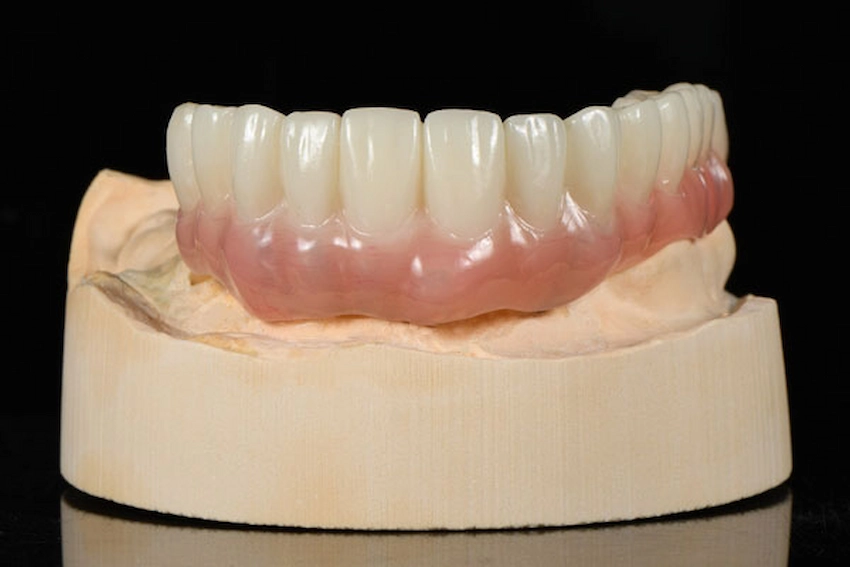
Oral and maxillofacial surgeon Polen Akkılıç is very good at using implant systems that do not require the use of sticking chemical agents. Our specialty is All-on-4, All-on-6, and Zygomatic implants. We fix permanent, lifelike Zirconium bridges directly into the bone.
Such a technique can be compared to the embedding of titanium pillars deep into solid bedrock. One only gets a foundation that is, as a rock, extremely reliable. It is never going to slip. Hence, it also does not need any adhesive. You will be able to eat an apple and a piece of steak with as much force as a natural bite.
Comparison of Treatments: Adhesives vs. Permanent Implants
| Feature | Traditional Dentures (with Adhesive) | Permanent Implant Solutions |
| Daily Routine | Messy, continuous reapplication | Regular brushing and flossing |
| Health Risks | Zinc toxicity, chronic stomach pain | Absolutely no risk of swallowing chemicals |
| Jawbone Health | Speeds up bone loss and facial aging | Protects and helps in bone growth |
| Bite Force | Only 20-30% of natural chewing power | Up to 95% of natural chewing power |
Top 5 Most Asked Questions
What should I do if I unintentionally swallow a big chunk of glue?
However, there is no need to panic; a great deal of water intake will be your best solution since the glue will be able to leave your body without any difficulty. Still, it is also possible that you might feel some nausea or pain in the stomach. Normally, one incident would not form a real threat; the main problem is lifelong uninterrupted contact with the glue.
Can I assume zinc-free adhesives won’t damage my stomach at all?
It is clear that in that case, they exclude the possibility of nerve damage at the highest level. However, these brands of adhesives still contain synthetic polymers and colorants. Regular consumption of these substances may cause you severe cramps, bloating, and heartburn.
Why have I suddenly started using so much more of the adhesive than before?
Why teeth move after all is a mystery. The bone of the jaw gradually diminishes after the permanent teeth are gone. Your denture will remain the same size; however, the gums will be reducing. This growing gap may compel you to apply the denture with thick layers of adhesive in order to have a meal.
Is it true that the denture glue can cause stomach pain after a while?
Yeah, the chemicals designed – DI water specifically – to keep the water from entering your mouth aren’t that easily broken down by stomach acids. Continuous exposure to such chemicals leads to persistent pain and discomfort caused by bloating.
How can I completely give up denture adhesive?
You can only give up the use of adhesive if you get rid of your removable denture. However, you can be permanently fitted with new teeth to your jaw through dental implants—like the All-on-4 or All-on-6 systems that we use in Turkey. The result will be such that you will not have to buy a single tube of adhesive again.
Academic References
- Nations, S. P., Boyer, P. J., Love, L. A., Burritt, M. F., Butz, J. A., Wolfe, G. I., … & Trivedi, J. R. (2008). Denture cream: an unusual source of excess zinc, leading to hypocupremia and neurologic disease. Neurology, 71(9), 639-643.
- Hedera, P., Peltier, A., Fink, J. K., Wilcock, S., London, Z., & Brewer, G. J. (2009). Myeloneuropathy and depletion of copper secondary to massive zinc ingestion. Archives of Neurology, 66(8), 1022-1026.
- Spinner, R. J., & Sorenson, E. J. (2015). Zinc toxicity from denture adhesives. The Journal of the American Dental Association, 146(2), 79-80.
- Zarb, G. A., Hobkirk, J. A., Eckert, S. E., & Jacob, R. F. (2013). Prosthodontic Treatment for Edentulous Patients: Complete Dentures and Implant-Supported Prostheses (13th ed.). Elsevier Health Sciences.
- Misch, C. E. (2014). Dental Implant Prosthetics (2nd ed.). Elsevier Mosby.

