


One of the things that might not seem so important and will probably be left out of consideration is the contradict event of having to replace a missing tooth. Just as a healthy diet is based on the energy and nutritional ingredients of particular food types, in dentistry, no tooth can be without a role and function in oral hygiene and the general health of the organism. A small space in the dental arch can prompt the shifting of teeth, alteration of the bite pattern, speech to be changed and the ability to chew to be weakened. On the bright side, today there are a few good ways to help dental problems, and one of them is an individual dental bridge. The intervention provides for the installation of a non-removable fixture that will imitate the absent tooth and will aid the normal functioning of the mouth without having to undergo surgical procedures.
This extensive manual is nothing but single-tooth versions of one and the same thing, that is, their composition, indications, advantages, procedure, alternative methods, the possibilities of use, and the period of utilization. By the time you finish reading it, you will be able to distinguish if a single-tooth bridge is the most suitable choice for you or not.
What is a Single-Tooth Bridge?
A single-tooth dental bridge is a kind of fixed prosthetic apparatus designed to substitute one lost tooth by fastening an artificial tooth (generally known as a pontic) that lies between the two closest natural teeth. The so-called abutment teeth, along with which the bridge is going to be fixed are cleaned, reshaped, and crowned so that they can carry the support. Different from the removable dentures, the bridge is of permanent character and it is non-metallically plugged in its place, thus being a safe and steady replacement.
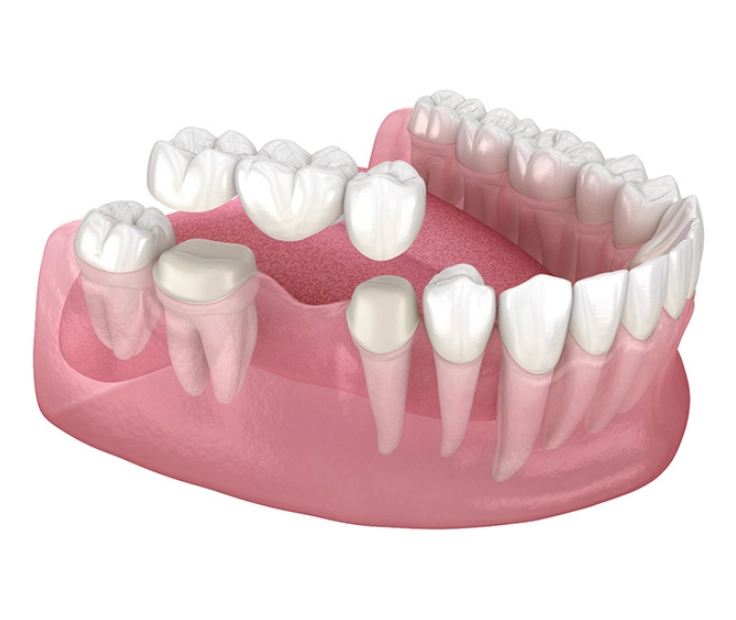
Moreover, the pontic is made of metal that has been fused with porcelain, or it is zirconia, or even ceramic – all of these are strong and durable materials. Makers use such materials as the ones mentioned above for the manufacturing process of artificial teeth giving close attention to the shape, size, and color of natural teeth. This enables the restoration of a smile without being visually distinguishable.
The main goal of a single-tooth bridge is to bring back the lost function and beauty of the mouth and also to stop the disease processes that result from tooth loss which have not been treated. In case of a missing tooth the neighboring teeth will probably shift to the vacant space and this will cause the teeth to become out of alignment, bite problems, and even jaw discomfort. A bridge gives you the chance to avoid this danger and thus have the confidence to smile, eat, and talk as usual.
When Is a Single-Tooth Bridge Appropriate?
The use of single-tooth bridges is suggested by dentists in certain instances only:
- When a tooth has gone missing due to decay, the root of which was severely compromised, fracture, or injured.
- When dental implants cannot be done as a result of lack of jawbone or for medical reasons.
- When patients decide to have their treatment quicker by the way of implant placement rather than the months-long process.
- When the neighboring teeth are already going to have crowns for added strength or aesthetic improvement.
In addition, a bridge can also be the preferred method of treatment when patients choose to avoid surgery. On the contrary, implants are placed through a surgical procedure where a titanium post is inserted into the bone, while bridges only involve reshaping and crowning of the neighboring teeth.
Yet, dentists do each case differently. Proper gum health, checking the supporting teeth, and overall oral condition are all necessary before a bridge is recommended. The patients with gum infections, shaky abutment teeth, and uncontrolled medical conditions might receive the needed additional treatments first before they qualify.
What Are The Benefits of Single Tooth Bridges?
The benefits that come along with a single-tooth bridge far surpass mere appearance. Patients generally recognize a change in their everyday comfort, oral function, and total quality of life.
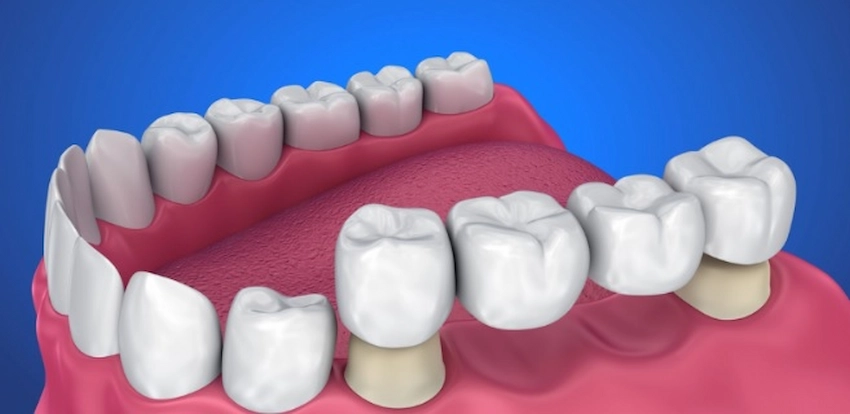
Firstly, bridges can bring back the lost chewing function to be as effective as it was before. When a tooth is missing, the patients tend to chew on the other side only, which in turn can overwork the jaw and the teeth. So the bite is balanced again when the void is filled.
Secondly, bridges can give the person a clear and a normal speech. The role of teeth in the production of some sounds is very important. A gap alone in the front may bring about a lisp or difficulty in articulation. Once the tooth is replaced, speech returns to normal.
Thirdly, the procedure also enhances the aesthetics of the patient. Missing teeth could be the reason for facial asymmetry and low self-esteem in a person. A bridge is the closest thing to an original tooth only that this is a prosthetic one.
Fourthly, bridges also stop the movement of the teeth. The vacant area is where the neighboring teeth gradually shift if there is no replacement. Besides the fact that this phenomenon politically breaks the bite, it may also lead to the recession of the gums and loss of bone over time.
At last, single tooth bridges are a good option if you consider the price and the time. If we compare them with implants, they are less time-consuming and usually less costly.
Benefits of Single-Tooth Bridges:
| Benefit | Description |
| Restored Function | Enables proper chewing and a balanced bite |
| Improved Speech | Corrects speech difficulties caused by gaps |
| Aesthetic Appeal | Provides a natural tooth-like appearance |
| Prevents Shifting | Stops the movement of adjacent teeth |
| Cost-Effective | More affordable than implants |
| Quick Results | Completed in weeks, not months |
How is a Single-Tooth Bridge Performed?
The first step is usually done in several dental appointments.
- Initial Examination and Treatment Planning
- Dentist looks at the area where the tooth is missing, examines the condition of the gums and bones, and checks the health of the supporting teeth.
- To visualize the design of the bridge, X-rays, or digital images may be taken.
- Preparation of Abutment Teeth
- The neighboring teeth are cut little by little and are reshaped with the aim to make space for the crowns.
- A local anesthetic is used during the procedure to take care of the patient’s discomfort.
- If there is no temporary bridge, the dentist might make one for the prepared teeth to ensure their protection.
- Impression and Bridge Fabrication
- A model with very high accuracy or a digital scan is obtained.
- The dental laboratory fabricates the patient’s custom bridge, which is their bite of natural tooth color and is a perfect fit.
- Final Placement
- The temporary bridge is removed and the permanent bridge is installed.
- The dentist before permanently cementing it checks for bite adjustment, comfort, and appearance.
- The patients can then leave with a great function and aesthetic immediate upgrade.
This is a minimally invasive method; no surgery is done, but the final outcomes usually show up in 2–3 weeks.
What are the Alternatives to a Single-Tooth Bridge?
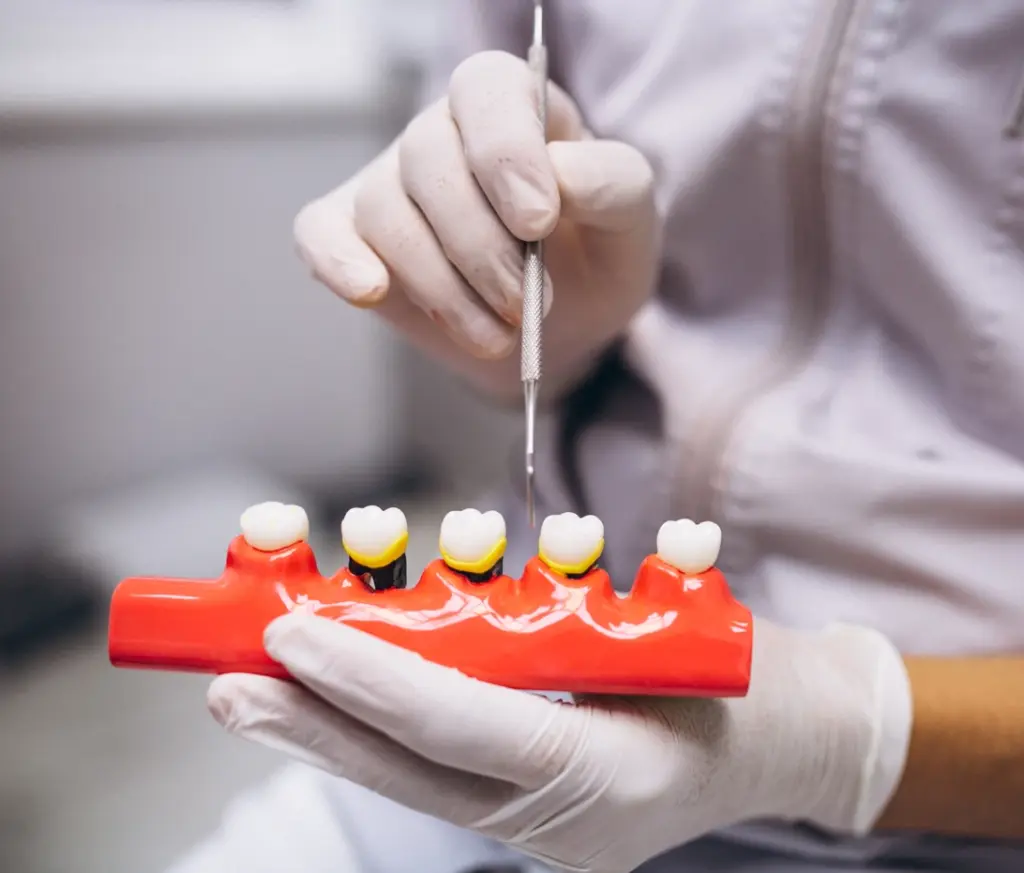
Even though single-tooth bridges are very effective, they are not the only ones available. Besides single-tooth bridges, dentists may also suggest:
- Dental Implants: Basically, implants rank first as the most advantageous, they totally take the place of the tooth root with a titanium post that holds the crown. Implants are longer-lasting than bridges but entail surgery and higher prices.
- Removable Partial Dentures: These are more affordable but may give a less secure feeling and have to be removed every day for cleaning.
- Resin-Bonded Bridges (Maryland Bridges): They are made of a pontic fixed with resin wings to the back of the adjacent teeth, therefore, less tooth preparation is needed.
Any of these alternatives can do with their own particular strengths. Implants, for instance, not only keep the bone healthy as they are the proper stimulation for the jaw but bridges might be the right option for patients who are looking for a quicker and non-surgical solution.
What is the Aftercare for a Single-Tooth Bridge?
Once a bridge is installed, the patient should practice good oral care if he/she want to enjoy the benefits for a long time. Unlike removable dentures, bridges are not taken out, and therefore, cleaning around them is done with the use of special techniques.
People are advised to brush their teeth with a fluoride toothpaste at least twice a day and especially at the edges of the crowns. Besides, flossing under the pontic is a must and the dentists usually recommend the use of floss threaders or interdental brushes in this matter. Regular dental checkups every six months allow the dental professionals not only to spot the problems but also to monitor the bridge, the supporting teeth, and the gums.
The diet of a person also has an impact on the lifespan of the bridge. Patients are advised not to break off pieces of ice, pens, nutshells with their teeth, and not to consume sticky foods that might loosen the cement. Apart from supporting the abutment teeth, the use of an antibacterial rinse or a professional cleaning to maintain healthy gums not only helps but also keeps them strong to support the bridge.
How Long Does a Single-Tooth Bridge Last?
Normally, a single-tooth bridge can be functional for 10 to 15 years, however, with superb treatment, a great number of them will be helpful for much longer. Parts of the longevity that relate to the patient’s condition include:
- The strength and health of the supporting teeth.
- Protection of teeth and gums by the patient through oral care.
- Having regular professional maintenance and problem management at an early stage.
- Not engaging in destructive habits such as grinding or clenching teeth.
In most the situations, patients have the opportunity to get the benefit of the product for an extended period of time when they practice good daily personal care and have regular dental check-ups.
References:
- Ammoun, R., & Walton, J. N. (2020). Single-unit prosthodontic restorations: Clinical decision-making between dental implants and tooth-supported fixed dental prostheses. Journal of Prosthetic Dentistry, 123(6), 812–820. https://doi.org/10.1016/j.prosdent.2019.06.019
- Brägger, U., Karoussis, I., Persson, R., Pjetursson, B., Salvi, G., & Lang, N. P. (2005). Technical and biological complications/failures with single crowns and fixed partial dentures on implants: A 10-year prospective cohort study. Clinical Oral Implants Research, 16(3), 326–334. https://doi.org/10.1111/j.1600-0501.2005.01108.x
- Goodacre, C. J., Bernal, G., Rungcharassaeng, K., & Kan, J. Y. K. (2003). Clinical complications in fixed prosthodontics. Journal of Prosthetic Dentistry, 90(1), 31–41. https://doi.org/10.1016/S0022-3913(03)00184-0
- Pjetursson, B. E., Tan, K., Lang, N. P., Brägger, U., Egger, M., & Zwahlen, M. (2004). A systematic review of the survival and complication rates of fixed partial dentures (FPDs) after an observation period of at least 5 years. Clinical Oral Implants Research, 15(6), 625–642. https://doi.org/10.1111/j.1600-0501.2004.01117.x
- Shillingburg, H. T., Hobo, S., Whitsett, L. D., Jacobi, R., & Brackett, S. E. (2012). Fundamentals of fixed prosthodontics (4th ed.). Quintessence Publishing.Torres-Sánchez, C., López-Pintor, R. M., Hernández, G., y de Vicente, J. C. (2018). Implant-supported single crowns versus fixed dental prostheses: A systematic review and meta-analysis. Journal of Oral Rehabilitation, 45(9), 772–780. https://doi.org/10.1111/joor.12681
Frequently Asked Questions About Single-Tooth Bridges
Absolutely, the bridge is made especially to take the place of the missing tooth, the neighboring teeth with crowns support the bridge by the adjacent teeth.
Indeed, it becomes a fixed restoration that patients cannot remove on their own once it is cemented.
The dentist reshapes the teeth on each side, makes impressions, and inserts a tailor-made bridge that comprises the false tooth.
Most of the bridges are done within 2–3 weeks with two dental visits.
Of course, after the first adaptation, patients can take a full diet with no problem and comfortably.
No, bridges are built for comfort. A short period of sensitivity may be felt but diminishes at once.
The patients who have lost only one tooth, the neighbors’ strong teeth, and the gums in good condition, are the best candidates.

