


Modern Istanbul dental clinics use digital scans, 3D planning, and gentle anesthesia for safer, more comfortable treatment.
Modern dentistry is gradually adopting new, more efficient ways of working. Dental procedures now include technologies like 3D imaging, intraoral scans, computer-assisted implant placement, and CAD/CAM systems, which allow dentists to plan treatments much more precisely and with detail.
“Painless dentistry” does not refer to every procedure being totally free from discomfort. In fact, it simply implies modern methods that help alleviate unnecessary discomfort, shorten treatment in some cases, and overall make the experience smoother for the patients.
Lema Dental Clinic in Istanbul makes use of digital technology to the patient’s benefit together with other diagnostic methods. Dentist Polen Akkılıç and Prof. Dr. Coşkun Yıldız are able to assess the patient’s dental, soft tissue, occlusion, and other factors before making a treatment plan by means of digital records.
Improving the Patients’ Comfort thanks to the State-of-the-Art Dental Technologies
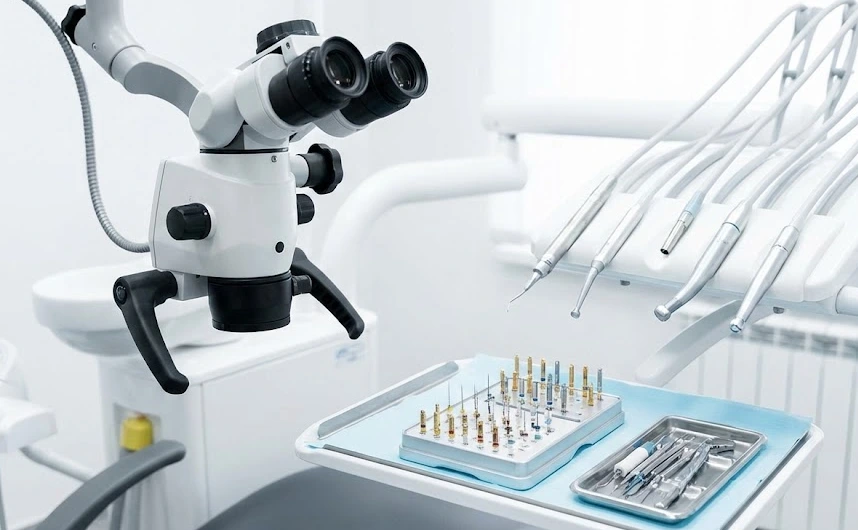
The patient can feel better even before the treatment. Instead of using plaster or the old-fashioned impression materials, a simple digital scan can be made. On the other hand, high-quality X-ray images allow dentists to understand the patient’s situation and make an accurate diagnosis before any procedure.
The advancements made in local anaesthesia technology are of great consequence. A research report points out that computer-controlled delivery systems may possibly minimize injection discomfort in some cases. At the same time, pain management remains largely procedure-, technique-, and patient-dependent.
Thanks to digital workflow, dentists will find themselves repeating the same procedures less as more and more data becomes available to them throughout the treatment planning phase.
| Technology | Main Goal | Patient’s Advantage |
| Digital X-rays | Visualize the teeth and surrounding tissues | Gives the dentist fast access to diagnostic information |
| 3D CBCT imaging | Creates a detailed 3D view of the jawbone and nearby structures | Supports more accurate and comprehensive treatment planning |
| Intraoral scanners | Capture the shape of the patient’s teeth digitally | Provides a more comfortable and convenient scanning experience |
| Computer-guided implant planning | Plan the ideal position and angle of a dental implant | Helps support more precise implant placement |
| CAD/CAM systems for restorations | Design and produce restorations using computer-aided technology | Creates a more efficient workflow and can improve consistency and accuracy |
How X-rays and 3D Imaging Help in Determining Diagnosis Accurately
Good diagnosis is an essential component in the safe delivery of dental treatments.
Although the two-dimensional view that traditional X-rays offer is helpful, a full 3D image is available through CBCT.
This can particularly be a major advantage in cases of implant placement. By examining the bone and identifying nearby structures such as a nerve pre-surgery, the dentist can plan accordingly. According to the FDA, dentists can use dental CBCT for purposes like the assessment of jaws and implant placement.
But one thing is clear- 3D imagery needs to be a result of an actual situation. On the whole, CBCT delivers higher levels of radiation to patients as compared with conventional dental X-rays. Hence, it must only be used if the extra data really justifies it.
Lema Dentist Clinic utilises the results from X-rays to supplement the findings during a dental exam in order to make the treatment plan even more thorough.
Intraoral Scanners for a More Comfortable Dental Experience
The conventional technique involves trays that have impression material. Several patients might experience discomfort with this method, particularly if they have a sensitive gag reflex.
An intraoral scanner takes a different route. A compact scanning unit scans the tooth surfaces and constructs a 3D model of the oral cavity.
Using these digital imaging results, patients can benefit from the planning of crowns, veneers, bridges, implants, and all types of prosthetic restorations.
According to research, when digital and conventional impressions were compared, the digital technique was most likely to be the favorable choice of a patient. In a 2025 systematic review, patient perception and impression time for intraoral scanning in implant prosthetic cases were also found to have advantages.
We acknowledge that digital scanning, while advantageous, isn’t a one-size-fits-all approach. Each patient’s circumstances dictate which impression technique is best suited, and therefore, the dentist has to make that decision still.
Computer-Guided Implant Surgery for Perfect Treatment
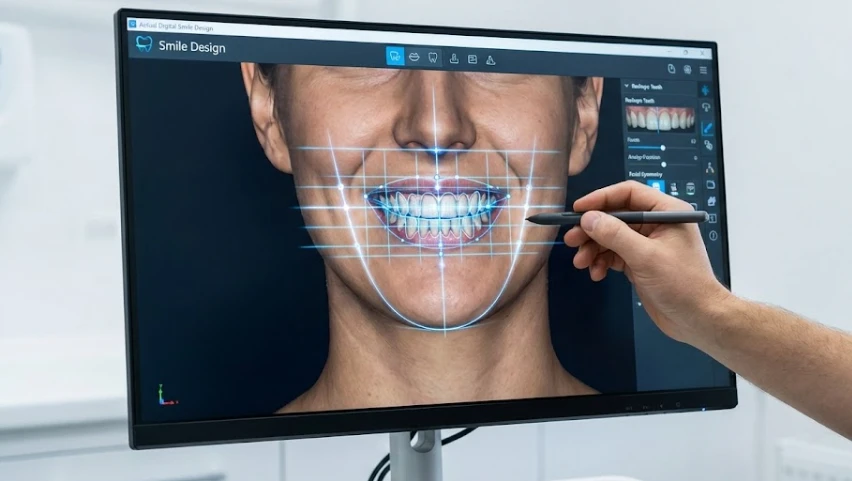
The planning phase of an implant operation is a critical one. The dentist must analyze bone volume, implant angle, neighboring teeth, the neural networks, and the final prosthetic restoration.
A computer-assisted implant surgery allows for implant sites to be transferred more accurately in line with the digitized treatment plan.
Systematic reviews have also supported their finding that computer-assisted implant placement results in superior accuracy at implant placement compared to a free-hand technique, but one cannot also ignore the clinical experience and correct planning.
Lema Dental Clinic’s Dentist Polen Akkılıç and Prof. Dr. Coşkun Yıldız together examine 3D imaging, bone structures, bite, and restoration needs while coming up with a suitable plan for an implant treatment.
No doubt, every guided surgery is a major step in an implant treatment. Still, the method depends upon the case.
Making Treatment Swifter with CAD/CAM Technology
CAD/CAM, which stands for computer-assisted design/computer-guided manufacturing, is a powerful tool in a dentist’s arsenal. Dental restorations can be virtually designed and fabricated on the computer through well-regulated production steps.
CAD/CAM can be especially applicable to restorations made of zirconia and lithium disilicate. Modern CAD/CAM systems have become an indispensable resource in restorative dentistry as they allow for very accurate designs and rapid turnaround.
Patients who are getting a crown, a veneer, or an implant prosthetic restoration will find that digital files get transferred with minimal human intervention from scanning to restorative design and manufacturing. Nevertheless, restorations, even high-tech ones, do not come to you as the magic of the machine, and your biting relationship, proper tooth preparation of the preparation, choice of correct materials, and lab work, along with dentists’ decisions, are also crucial in determining restorations’ quality.
Use of Technology at Lema Dental Clinic to Deliver Comfortable Care
At Lema Dental Clinic, digital dentistry is a patient-focused treatment planning tool. The dental team will take advantage of digital records, which provide them with a thorough understanding before they begin a cosmetic or restorative treatment or dental implant procedure.
The digital workflow is going to depend on the nature of the treatment. In principle, it might include 3D imaging, intraoral scanning, digital planning, computer-guided implant placement, or CAD/CAM restoration design.
The major aim is not to deploy more technology alone, though. Each piece of equipment that we offer must either solve a clinical problem, enhance planning, or make the patients’ journey more pleasant at that part of it that is a bit unpleasant.
Both Dentist Polen Akkılıç and Prof. Dr. Coşkun Yıldız at the Lema Dental Clinic work together with the patient to bring together these technological aids and an examination of the clinical situation to come up with a treatment which truly reflects that particular patient.
FAQ
Which technology helps make dental treatment more comfortable?
Dental treatment can be made more comfortable and efficient through different components of treatment via such technologies as digital scanners, detailed imaging, modern anaesthesia methods, computer-assisted planning, and CAD/CAM workflows.
How do 3D scans help dental diagnosis and treatment planning?
The multi-angle view provided by 3D CBCT scans will give you the details of the teeth, jawbone, and other tissues around. They will be very helpful for surgeons or dentists when planning implants and other surgeries.
Are patients satisfied with intraoral scanning technology?
Intraoral scanning is more pleasant for patients than traditional dental impressions because it doesn’t involve impression trays or other unpleasant materials. In addition to this, the study has shown a better patient preference for digital impressions.
How accurate is computer-guided implant surgery?
The anatomical information will first be incorporated by digital means to get the implant location. Then, the computer-assisted system can be used to translate the plan into an actual surgical process with minimal error.
Can contemporary dental technology assist in minimizing dental treatment pain?
The use of contemporary dental technology such as anaesthesia delivery, digital scanning, and precise planning may contribute to minimizing patients’ discomfort during dental procedures to some extent. However, it’s not an assurance that technology will eliminate dental pain.
References
- U.S. Food and Drug Administration – Dental Cone-Beam Computed Tomography
Information about dental CBCT, implant planning, benefits, and radiation considerations. - PubMed – Accuracy in Dental Implant Placement: Computer-Assisted vs. Noncomputer-Assisted Approaches
Systematic review and meta-analysis of implant placement accuracy. - PubMed – Intraoral Scanning Versus Conventional Impression for Implant Prostheses
Systematic review examining accuracy, working time, and patient preference. - PubMed – Computer-Controlled Local Anaesthesia Delivery
Review examining computer-controlled anaesthesia and patient discomfort. - PubMed – CAD/CAM Materials in Dental Restorations
Systematic review covering modern computer-aided restorative dentistry.

