


Optimal Wisdom Tooth Removal Timing
One of the most common internal debates patients have before coming to Lema Dental Clinic, Turkey, is probably: “My wisdom teeth are not hurting at the moment, so can I simply disregard them?“
We understand the hesitation. No one eagerly anticipates oral surgery. However, as clinical partners to surgeons like Professor Doctor Coşkun Yıldız, we see the consequences of waiting too long almost daily. The desire to avoid a procedure today often leads to more complex, painful, and expensive problems tomorrow.
An impacted wisdom tooth isn’t just a tooth that didn’t show up to the party; it’s a hidden structural threat to your jaw. The question isn’t necessarily “how long can you wait,” but rather, “what are you risking while you wait?”
Understanding the “Ticking Clock” of Impaction
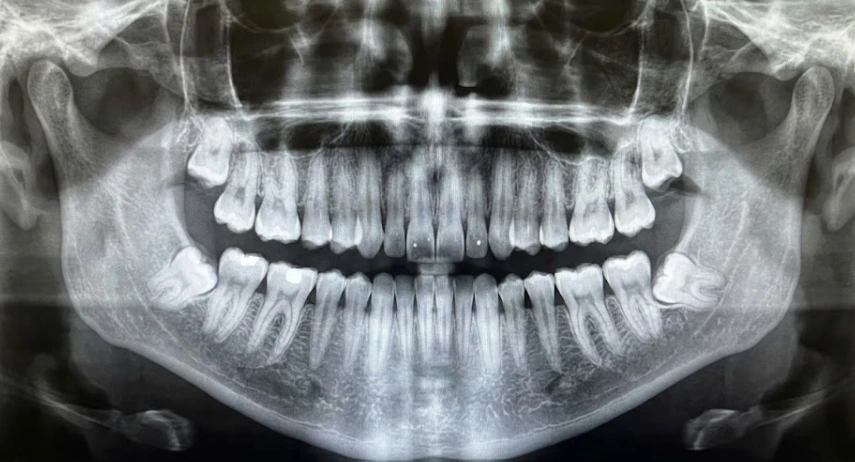
To understand why timing is vital, you need to visualize what is happening beneath your gums.
Think of your jawbone like a crowded bookshelf. By your late teens or early twenties, that shelf is full. When wisdom teeth (third molars) try to emerge, there is simply no room. An “impacted” tooth is like trying to force a large encyclopedia onto that full shelf sideways—it damages the books next to it and warps the shelf itself.
At Lema Dental Clinic, almost all of our first evaluations, which are mainly the work of Dentist Polen Akkılıç and her competent team, employ advanced 3D imaging. We don’t just check the tooth; we also study its closeness to nerves, sinuses, and the roots of your healthy second molars.
The Hidden Risks of “Watchful Waiting”
A common misconception is that lack of pain means lack of a problem. This is very risky in the field of dentistry.
Actually, an impacted tooth is a weak point in your mouth. Even if it is only partially erupted, it will make a deep pocket between your gum and the tooth, which you will not be able to clean even with a toothbrush. This place will thus be turned into a breeding ground.
What we see in the clinic is the following scenarios due to patients ignoring symptoms:
- Pericoronitis (Severe Infection): The most common acute problem by far. The gum tissue flap over a partly emerged tooth becomes infected which leads to severe swelling and pain that can spread to the ear. The patient also has difficulty opening the mouth.
- Damage to Adjacent Teeth: The tooth stuck inside the jaw tries hard to push the healthy second molar that is next to it. The result of this pressure is resorption, which in simple terms means that the root of the healthy tooth is being eaten away, and so the loss of these two teeth is inevitable.
- Cysts and Tumors: The silent threat. The sac around the developing tooth may fill with fluid and thus a cyst is formed, which will subtly and quietly hollow out the jawbone, thereby weakening it greatly.
The “Sweet Spot” for Removal: Why Age Matters

Professor Doctor Coşkun Yıldız often advises patients that oral surgery is a bit like planting a tree: the best time was yesterday; the second-best time is today. However, there is a biological “sweet spot” for removing impacted teeth, usually between the ages of 17 and 25.
Before 25, wisdom teeth have not fully established their roots—they are shorter and not so deeply embedded in the jaw. Besides that, the bone around is still soft and easily bendable. At this stage, the operation is usually quicker, and the patient may be pleasantly surprised by a rapid recovery.
When you get older, the bone gets denser—imagine the difference between drilling into drywall and cured concrete. The roots become longer, and at times, winding around the nerve in the lower jaw or pressing against the sinus in the upper jaw. Deciding to go after your 30s or 40s, or even later, will result in a simple extraction becoming a complicated surgical procedure with prolonged healing periods and a greater risk of complications.
Comparison: The Timeline of Risks
Here is a breakdown of how the clinical picture changes over time:
| Patient Age Profile | Bone Density & Root Structure | Surgical Complexity | Common Risks of Delaying |
| The Ideal Window (Ages 17–24) | Softer bone; roots are incomplete (about two-thirds formed). | Lower complexity; faster healing. | Minimal risks if proactive; fast recovery. |
| The “Gray Zone” (Ages 25–35) | Bone is hardening; roots are fully formed and anchored. | Moderate complexity; recovery takes longer. | Pericoronitis, early signs of damage to adjacent molars, cyst development. |
| Late Stage (Ages 35+) | Dense, brittle bone; roots may be hooked or fused to bone. | High complexity; significantly slower healing. | High risk of nerve proximity issues, significant bone loss due to cysts, potential loss of the second molar. |
The Lema Dental Clinic Approach in Turkey
We know international patients choose Turkey not just for value, but for excellence in complex surgical care. At Lema Dental Clinic, we don’t believe in a “wait and see until it hurts” approach if imaging shows a clear path to future pathology.
Under the guidance of Prof. Dr. Coşkun Yıldız, we utilize sedation protocols that make the procedure virtually memory-free for the patient. The goal is to address the issue during that window of optimal healing, ensuring your long-term oral health foundation remains solid.
FAQ: Expert Insights on Wisdom Tooth Removal Timing
Think of asymptomatic impacted teeth like high blood pressure—it’s a “silent killer” of oral health. You don’t feel the cyst growing in your jawbone or the bacteria slowly eroding the root of the tooth next door until the damage is severe. Removing them preventively is almost always easier than fixing the mess they cause later.
It is never “too late” if the tooth is causing disease, but the surgery becomes more difficult as you age. Removing an impacted tooth in a 50-year-old is vastly different from a 20-year-old. The recovery is longer, and the risk of complicating factors, like nerve involvement, is higher. We always prefer to operate when biology is on your side.
Most of our patients are surprised by how quickly they bounce back. Generally, you’ll have 2-3 days of marked swelling where you’ll want to lay low and eat soft foods. By day 5 to 7, most people return to normal routines. Because we use advanced surgical techniques here in Turkey, tissue trauma is minimized, which speeds up healing.
This is a valid concern, but permanent nerve damage is rare. This is exactly why we use 3D CBCT scans before touching the patient. These scans show us the exact relationship between the tooth root and the mandibular nerve in millimeters. If the risk is deemed high, Professor Doctor Yıldız may recommend alternative techniques, such as a coronectomy (removing just the crown of the tooth), to protect the nerve.
Many of our patients combine wisdom tooth removal with other aesthetic treatments, but even for surgery alone, the level of expertise you receive at Lema Dental Clinic is world-class. You are being treated by professors and specialists who handle complex jaw surgeries daily, using the highest tier of European medical technology, often in a more comfortable and attentive environment than what is available locally.
- American Association of Oral and Maxillofacial Surgeons (AAOMS). (2020). White Paper on Third Molar Data.
- Ghaeminia, H., et al. (2016). Surgical removal versus retention for the management of asymptomatic disease-free impacted wisdom teeth. Cochrane Database of Systematic Reviews, (8).
- Marciani, R. D. (2007). Third molar removal: an overview of indications, imaging, evaluation, and assessment of risk. Oral and Maxillofacial Surgery Clinics, 19(1), 1-13.
- Phillips, C., et al. (2003). Risk factors associated with prolonged recovery and delayed healing after third molar surgery. Journal of Oral and Maxillofacial Surgery, 61(12), 1436-1448.
- Pogrel, M. A. (2012). What is the effect of timing of removal on the incidence and severity of complications? Journal of Oral and Maxillofacial Surgery, 70(9), S32-S36.

