


Immediate implants can be safe in selected cases, but traditional implants are safer when bone or gum healing is uncertain.
Immediate and conventional/traditional dental implants mainly differ according to the timing of treatment. Immediate implants can be placed right after the tooth is removed. Sometimes the dentist can also place a temporary denture right after the surgery.
The traditional method allows the site of the implant to totally heal before the next surgery stage. So, which one is safer, the immediate implant or the traditional one in 2026? Neither of these treatment options can be said to be safer for every single patient. From research findings, it is clear to a great extent that when the case is well-selected, immediate treatment results can be equivalent to the traditional one.
On the other hand, the more traditional method may be preferred if the bone, gum condition, or implant stability is not the best.
If the bone mass is sufficient, there is no infection, the gum condition is good, and an implant placed will have enough contact area between the bone and the implant surface, the doctors will decide either immediate treatment (tooth extraction and implant placement at the same time)
At Lema Dental Clinic, Dentist Polen Akkılıç and Prof. Dr. Coşkun Yıldız can assess the condition of your bones and gums along with how close your teeth will fit and how stable your implants will be before making a treatment decision that suits you best.
What Are Immediate Dental Implants?
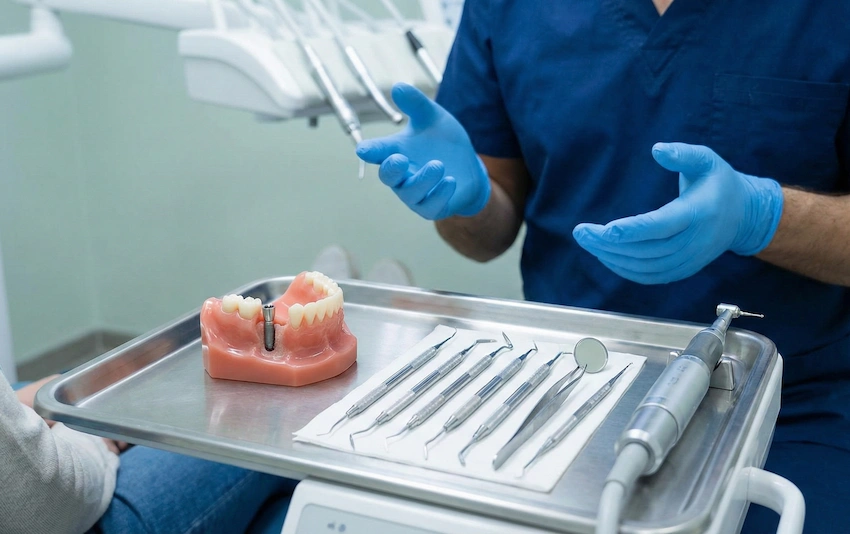
A dental implant that is placed immediately means that the patient gets the dental implant at the same time as they have a tooth extracted. Thus, the number of surgeries that the patient undergoes is reduced. The dentist inserts the implant into the empty socket as it fills up after the tooth removal.
Besides, you must be aware that immediate placement and immediate loading are not the same terms.
Whereas immediate placement refers to the time point when the implant is placed in the bone, immediate loading means that the dentist mounts a temporary prosthesis soon after implant surgery.
As per a systematic review done comparing immediate versus delayed placement, the rate of survival of implants with immediate placement was about 97.4%, and the rate with delayed placement was 97.5%; no difference was detected between the groups.
Advantages of Immediate Implants
The main point is reduced time to complete the treatment, i.e., getting a dental implant only at one time after a tooth has been extracted.
In addition, the following might be other benefits:
- Fewer surgeries,
- Time to completion of the treatment is short,
- In some individuals, preservation of the extraction-site structure. A denture (a fixed temporary restoration) can be considered for a period to suit the patient’s dental needs,
- If the patient prefers, one gets a new tooth within a very short duration from tooth extraction.
- Time without a tooth is very minimal.
Nevertheless, the realization of these advantages depends mainly on the correct diagnosis of the patient’s condition.
What Are Traditional Dental Implants?
Traditional dental treatment of the implant is divided into the first and second stages.
After a tooth has been extracted, the dentist may leave the socket to heal for a certain period, say four months, before starting the next phase to place the implant.
When you undergo implant surgery, you get to wait for some time until the osseointegration of the implant and the bone takes place.
Osseointegration is the process by which the adjacent tissue (mainly, the bone) forms a solid union with a foreign body (i.e., the implant).
Even though conventional treatment prolongs the healing time, it will also allow the patient to be completely healed before a new tooth is placed as well as to recover from potential issues such as infection, bone deficiency, etc.
Furthermore, the extra healing period enables the dentist to better assess the implant stability in case of a problem.
Advantages of Traditional Implants
In traditional implant treatment, the patient benefits from allowing the bone and the soft tissues to heal at every stage.
It might prove advantageous in cases when bone grafting is necessary, or the extraction site is unsuitable for placing a tooth immediately. Moreover, this method allows a higher level of coordination from the dental professional in cases of dental difficulties.
| Feature | Immediate Implants | Traditional Implants |
| Implant timing | Immediately after tooth extraction | Following a healing period |
| Treatment duration | Typically shorter | Typically longer |
| Number of appointments | May require fewer appointments | Generally requires more appointments |
| Bone requirements | The area around the implant site must be in good condition | More time is available for bone grafting or healing if needed |
| Temporary teeth | May be available at an earlier stage | Generally delivered at a later stage |
| Best suited for | Carefully selected cases with suitable conditions | A versatile option for a wider range of cases |
| Safety | Very safe when the case is correctly selected | Very reliable when planned and performed properly |
Which Option Is More Successful?
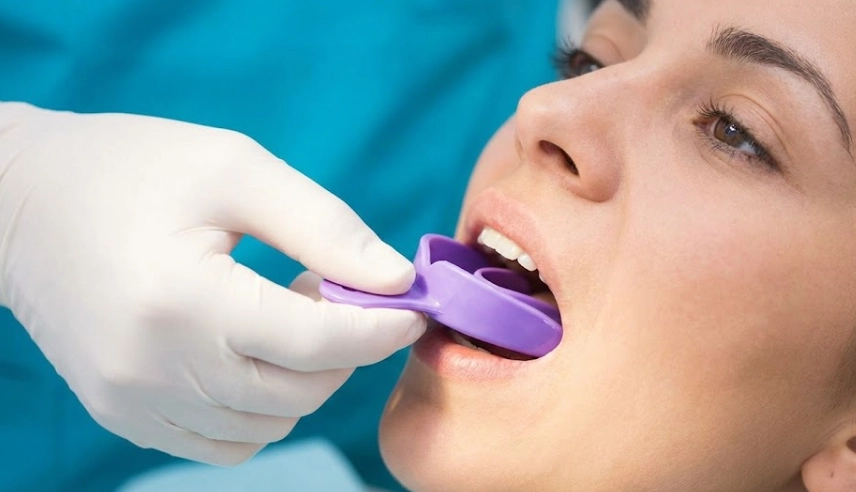
Current studies reveal no large difference in survival between immediate and delayed implant placement in appropriately selected patients.
In 2026, a meta-analysis combining more than 1,200 single implants reported there was no marked difference in survival for both immediate and conventional loading techniques after one, two, three, or five years, given that immediate loading was performed under favorable clinical conditions.
Nevertheless, time is not the only factor leading to success. A variety of elements such as bone quality, gum health, implant position, oral hygiene, smoking, bite forces, and surgical planning can greatly affect the outcome.
For that reason, dentist doctor Polen Akkılıç and dentist professor doctor Coşkun Yıldız may do the necessary evaluation at Lema Dental Clinic so that either an immediate or non-immediate procedure is suggested.
Is Immediate Implant Treatment More Time Efficient?
Indeed, the immediate method may speed up the entire process considerably, as the tooth removal and placing of the implant can be done within a single visit.
For certain patients only, temporary teeth may be placed quite early. However, a quicker process is not a quicker recovery of tissues. The implant still has several weeks or even a couple of months to go before it becomes a part of the bone.
So implanting the tooth without waiting for healing is an option mainly when it is a matter of timing, rather than a quick solution itself.
Risks of Immediate Implants
Immediately placing an implant in the bone requires very good conditions with adequate amounts of bone and a properly healed soft tissue covering the bone. Immediate implants in such sites, for example, those with heavy bone destruction or bad implant stability and the extraction sockets with unfavorable shape, could be difficult.
Owing to all research efforts, overall similar implant survival rates for immediate and delayed placement were discovered. However, there are pieces of evidence that claim that immediate implant protocols have a larger tendency towards some early complications.
Potential problems would be things like the implant shifting during healing, gum tissue receding, the implant loosening, infection, changes or loss of bone in the area, and, of course, failure to integrate.
If there is careful planning before the surgery, like taking 3D radiographs and doing computer imaging, then even the surgeon can be warned about these possibilities before it becomes a problem.
What are the differences in Healing?
In both situations, healing takes advantage of bone integration (osseointegration) to fixate the implant firmly. The difference lies only in the period when the stages of treatment are executed.
The immediate method includes extracting a tooth and fitting a replacement implant in the same sitting, while conventional therapy involves letting the tissue heal at the extraction socket between the two operations.
The safest time frame has more correlation with the individual patient rather than a universal rule. Therefore, at Lema Dental Clinic, dental procedure timing will be decided after taking into account bone quality, gum health, implant stability, and the patient’s desire regarding restorations.
FAQ
Which implants are the safest?
Apart from the fact that no single implant protocol will work best for everyone, both immediate and traditional implants, when planned correctly, can be safe procedures. It is also clear that good patient selection and good clinical planning are more crucial than how fast the treatment is.
What is the healthiest dental implant?
Because of their good compatibility with the human body,y which means there usually won’t be any problems with rejection, and because of their long and proven track record, titanium implants are still the first choice of most dentists these days.
However, a different solution would be provided by zirconium implants. These can only be recommended to certain patients for the very same reason, as they may cause adverse reactions in some mouths.
It is really the individual needs and the unique circumstances of the patient that will determine which of these materials will be the most fitting one. After all, no implant material can be universally good for all patients.
What are the downsides of immediate implant placement?
Bone in good condition, a good level of initial stability of the implant, and being very technically demanding are just some of the drawbacks to placing an implant immediately. For this reason,n one might be better off avoiding the option even if the patient wants an instant result, especially if it’s a case of very delicate areas on the jaws and teeth where a little error can turn into a big problem.
What is the success rate of immediately loaded dental implants?
This paper published in late 2026 revealed that the results of survival were very similar between conventional and immediate loading in selected single implant cases. Anyway, it really depends on the condition and requirements of the patient and treatment conditions.
Which country is best for dental implants?
No doubt one cannot define the best country in such matters. One should pay more attention to the professional skill of the dentist, the standards of facilities and equipment of the clinic, the types of implant systems, availability of diagnostic imaging, provision of post-treatment care, and how the whole process was designed for the treatment and how each patient will benefit from it without worrying just about the country of the dental provider.
References
- PubMed – Differences in Dental Implant Survival Between Immediate vs. Delayed Placement
Systematic review and meta-analysis comparing implant survival. (PubMed) - PubMed – Clinical Outcomes of Immediate vs. Conventional Loading of Single Implants, 2026
RCT-level meta-analysis examining implant survival and complications. (PubMed) - PubMed – Comparison of Immediate Versus Delayed Placement of Dental Implants
Systematic review examining survival, aesthetic outcomes, and complications. (PubMed) - PubMed – Immediate Versus Early or Conventional Implant Loading
Evidence comparing survival and bone-level outcomes under different loading protocols. (PubMed)

