


Orthodontic treatment speeds up with consistent aligner wear and acceleration methods.
One of the most frequent queries that arises at the initial consultation isn’t about pain or aesthetics. It is almost always: “How much longer do I have to wear these?” We get it. In reality, whether you are equipped with traditional brackets or clear aligners, you are basically waiting for a biological transformation. The act of moving teeth is not merely about “pulling” them into place; it involves remodeling the very bone that holds them. At Lema Dental Clinic, we are experts in turning such a transformation into a reality in the most efficient way possible.
The Biology of Movement: Why Can’t We Just Rush It?
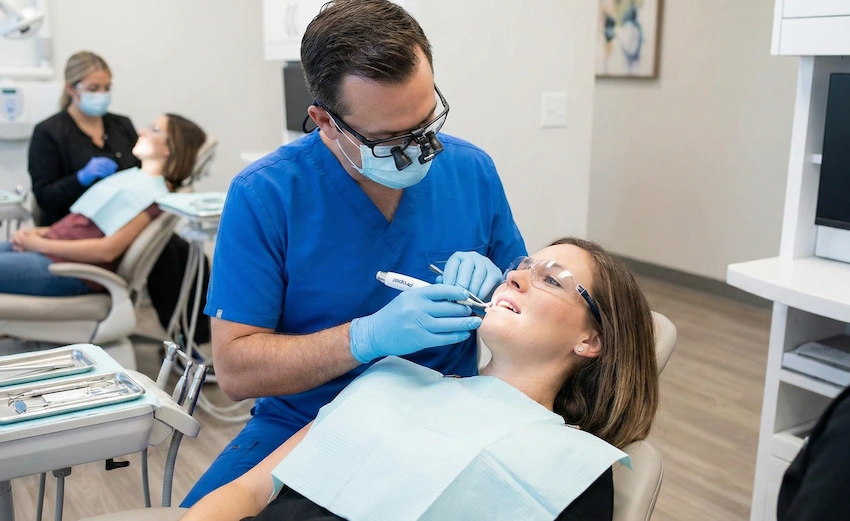
Imagine that your jawbone is not a hard and unaltered stone, but a living “honeycomb”.When teeth move, the bone in front of them must be resorbed (dissolved), and at the same time, new bone must be laid down behind them (deposition). If you push too hard or too fast, you can harm the roots.
Professor Doctor Coşkun Yıldız often points out that the secret to speed lies not merely in applying a greater force but also in doing so with greater precision. If you take good care of your mouth biology, your body will respond faster. From our practice in Turkey, we know that disciplined patients combined with cutting-edge technology can achieve results far beyond the traditional timeline.
Clinical Accelerators: The Tech Behind the Smile
Biology dictates the pace, but we have instruments to gently encourage it to speed up. Here is what we observe in the clinic that really makes a difference:
1. High-Frequency Vibration (Vibration Therapy)
Devices like AcceleDent or Propel release very soft micropulses that can help to raise the blood flow in the area of the roots. This extra circulation encourages the “remodeling” cells to work twice as hard. Think of it as your jawbone getting a daily morning wake-up call.
2. Micro-Osteoperforation (MOPs)
It may sound scientific but it is really quite simple. We accomplish this by making tiny, almost invisible “dimples” in the gum and bone, thereby initiating a localized healing response. This temporarily softens the bone, so teeth can move into the right place more easily. Dr. Polen Akkılıç and her team often perform these little procedures to assist their patients in getting their “final smile” sooner.
3. Clear Aligner Efficiency
If you are using aligners, the “speed” is entirely in your hands. A missed day is not just 24 hours wasted; it is a setback in the biological momentum.
Comparing Your Options for Faster Results
| Method | How It Works | Time Saved (Estimated) | Patient Effort |
| Consistent Wear | Wearing aligners 22+ hours/day | Baseline (standard) | High discipline |
| Vibration Devices | Stimulates bone blood flow | 20%–30% | 20 minutes daily |
| MOPs (Clinical) | Minor bone stimulation | 30%–50% | Minimal (in-clinic) |
| Propel / Accelerated Ortho | Guided tissue remodeling | Up to 50% | Moderate |
The “Human” Factors: What You Can Do at Home
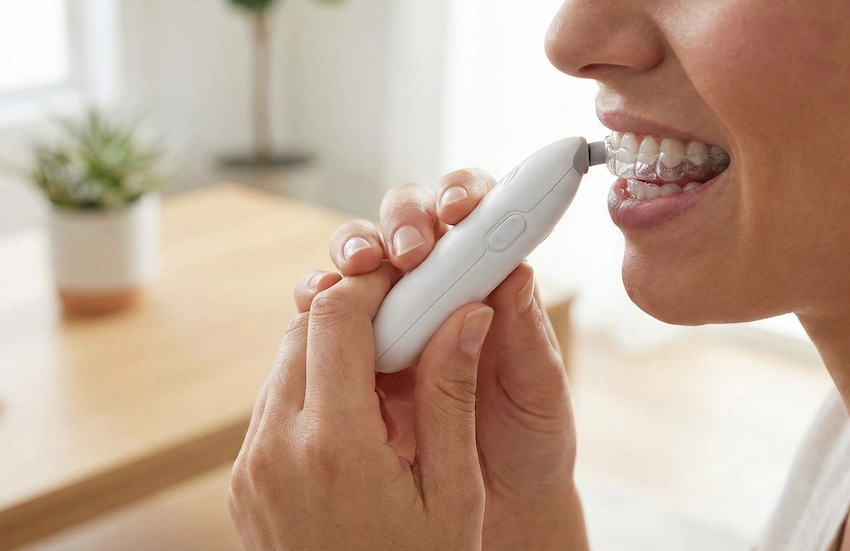
So the question is: how much can you do outside the dental chair? At Lema Dental Clinic, precision only accounts for half of the battle; the rest is in your daily routine.
Never Miss an Adjustment: Each week you postpone your check-up is one less week during which your teeth are guided.
Nutrition is Your Foundation: It takes calcium and vitamin D to move teeth. When your “construction site” is devoid of these raw materials, the building stops.
Hygiene is Non-Negotiable: The gum disease inflammation puts up a “stop sign” for the tooth movement. Teeth that are clean move; teeth that are not healthy stay in place.
Frequently Asked Questions
“I encounter this worry quite a lot. In fact, we are not ‘forcing’ the teeth; what we are doing is clearing the biological path. When these methods are carried out by an expert such as the team here in Turkey, they are not only perfectly safe but they also protect the roots from being subjected to pressure for a long time.” — Professor Doctor Coşkun Yıldız.
Generally, these are considered to be elective additions. However, many of our patients at Lema Dental Clinic report that the cost is compensated by fewer visits to the clinic and the whole experience of being able to finish their treatment six months earlier.
“Sure thing. It doesn’t matter if you have ceramic, metal, or lingual braces; the bone biology remains unchanged. Methods such as MOPs show very good results when used together with traditional brackets.” — Dentist Polen Akkılıç.
Even though each mouth has its own characteristics, it is generally our experience that when patients follow our accelerated protocols, we see a decrease in total treatment time of 30% to 50%.
- Alansari, S., et al. (2015). The effects of micro-osteoperforations on orthodontic tooth movement. Journal of Dental Research.
- Kau, C. H. (2011). A novel device in pharmaceutical orthodontics. Orthodontic Practice.
- Nimeri, G., et al. (2013). Acceleration of tooth movement during orthodontic treatment. Dental Press Journal of Orthodontics.
- Shipley, T. (2014). Effects of high-frequency acceleration on orthodontic tooth movement and treatment time. Clinical Journal of Orthodontics.
- Teixeira, C. C., et al. (2010). Cytokine expression and accelerated tooth movement. Journal of Clinical Orthodontics.

