


Metal clasps on dentures can be repaired by a dentist.
What are Clasp Dentures and What are Their Types?
Clasp dentures are a typical method for patients to have their lost dentition restored while still retaining a relatively intact set of natural teeth. The primary feature of these dentures is the metal clasps that secure the removable partial dentures by fixing onto the natural teeth. Metal clasps are the ones holding the stability as well as retention of the dentures, thus the denture stays firmly in the mouth during use. There are mainly two types of clasp dentures: conventional clasp dentures and precision clasp dentures.
Traditional clasp dentures have metal clasps that wrap around the other teeth and provide a firm fit. But these metal clasps may be visible when the person smiles or talks, so this might be an issue for some patients. On the other hand, Precision clasp dentures feature a less noticeable system for the attachment, therefore, they are more of a cosmetic decision for the patients who want a less visible solution. Both clasp denture types give support and allow normal use; however, the decision on which type to use depends on the patient’s particular needs and aesthetic preferences.
Procedures for Inserting and Removing Clasp Dentures
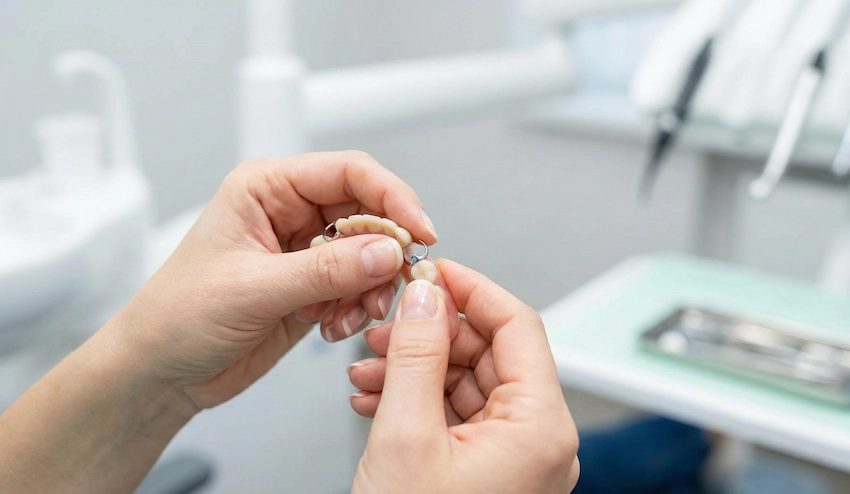
When clasp dentures are being inserted, the fit of the clasps around the natural teeth should be carefully checked to avoid any kind of discomfort. At Lema Dental Clinic, patients are kept under the supervision of Dentist Polen Akkılıç and her team who guarantee proper placement of the dentures, thereby eliminating the risk of irritation. The steps are to put the denture in the mouth, then push the clasps gently around the teeth. In this way, the dentures will be secure when the wearer is engaged in normal activities such as eating and speaking.
It is important when clasp dentures are being removed not to cause harm to the metal clasps or the gums. The patient has to hold the denture firmly, open the clasps one at a time while pressing lightly. One should not pull too hard as it might cause damage to the clasps and teeth. The dentist should always explain to patients how to remove the dentures properly so that both the natural teeth and the dentures can last longer.
Can Metal Clasps in Dentures Damage Teeth?
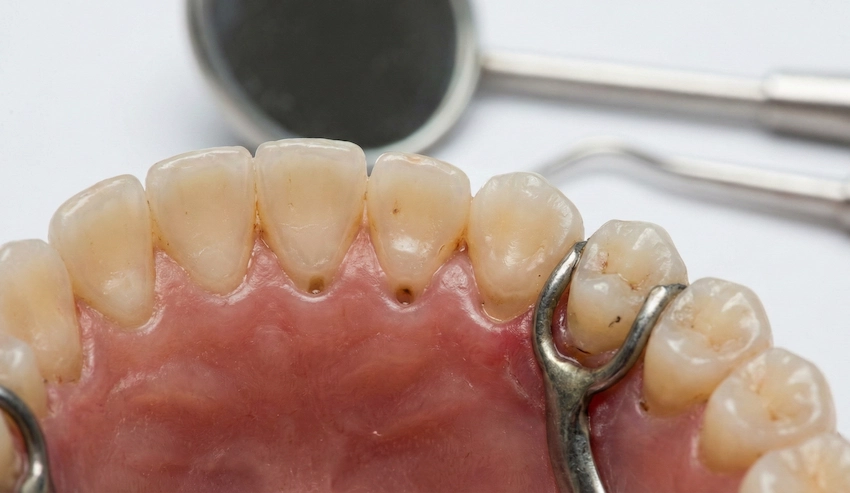
One of the main functions of anchor metal clasps in dentures is to hold the dentures firmly inside the mouth; nevertheless, if not handled properly, they may lead to tooth abrasion. First of all, when the clasps are overly tight or are not positioned correctly, the rest of the teeth will be subjected to excessively large pressure. As a result, the teeth may become loose, worn or even break which signifies that the patient will need additional dental treatments. Professor Doctor Coşkun Yıldız advises patients with dentures to visit the clinic regularly so that their dentures can be adjusted and checked, thereby such problems can be easily prevented.
Normally, metal clasps are harmless; the only time there are problems is when they are not fitted properly, or the patient’s mouth changes over time. When metal clasps are not in the correct position, they can irritate the gums as well. Dentist Polen Akkılıç and her team always go the extra mile for their patients because it is a good way to make sure that the dentures are functioning properly, and if there is any issue with the clasps, it can be corrected right away so that the teeth will not be affected in the long run.
Advantages and Disadvantages of Metal Clasps in Partial Dentures
Advantages:
- Durability and Strength: Metal clasps are well known for their long-lasting feature and ability to be strong. They can resist the impact of daily wear and tear; thus, they continue to be the most dependable choice for patients who require partial dentures. As a result, the metal ensures a firm and stable fit which aids in the denture staying in place when one is talking or chewing.
- Secure Retention: The capability of metal clasps to deliver a stable and safe fit is, indeed, the main point of their advantage. An additional key factor that the clasps give a good ergonomic fit is that they wrap around the rest of the natural teeth thus the denture is held in the exact position. Therefore, these are the most preferred choices of patients who are in search of dentures that offer excellent retention as well as functionality.
- Affordability: When compared to other materials, metal clasps are slightly more economically feasible. The cost-effectiveness of these metal parts turns them into a very tempting alternative for patients who are up against a financial crisis and in need of reliable partial dentures.
- Versatility: Metal clasps are compatible with a diverse range of denture designs, hence their versatility to different types of patients. No matter if you require a partial denture for just a couple of missing teeth or if you are looking at an extensive tooth loss situation, metal clasps will be able to cater to your different needs.
Disadvantages:
- Aesthetic Concerns: The main disadvantage of metal clasps is that they can be seen. The metal clasps may be visible when the patient smiles, and for some people, this can be a cosmetic issue. It applies particularly to those denture wearers who want their dentures to look completely natural.
- Gum Irritation: Metal clasps that have not been accurately fitted or adjusted can irritate the gum. The metal can press on the soft tissue which results in discomfort or, in some cases, inflammation. It helps a lot to visit a dentist regularly to get a proper fit and this also helps to reduce the risk.
- Possible Damage to Natural Teeth: Among the effects of the metal clasps being wrongly fitted is that the natural teeth might be harmed. If the clasps are excessively tight or not properly aligned, they can lead to the wear of the teeth or, in the worst case, cause tooth movement. One must see a dentist regularly to get adjustments to avoid such damage.
- Possible Deterioration with Time: Metal clasps, though very strong, can still experience a certain amount of wear. The metal can loosen, or the clasps can be less capable of firmly gripping the remaining natural teeth. Therefore, it is necessary to have regular dental visits and minor adjustments so that the clasps remain in good condition and work well.
How to Care for Metal Clasps in Dentures?
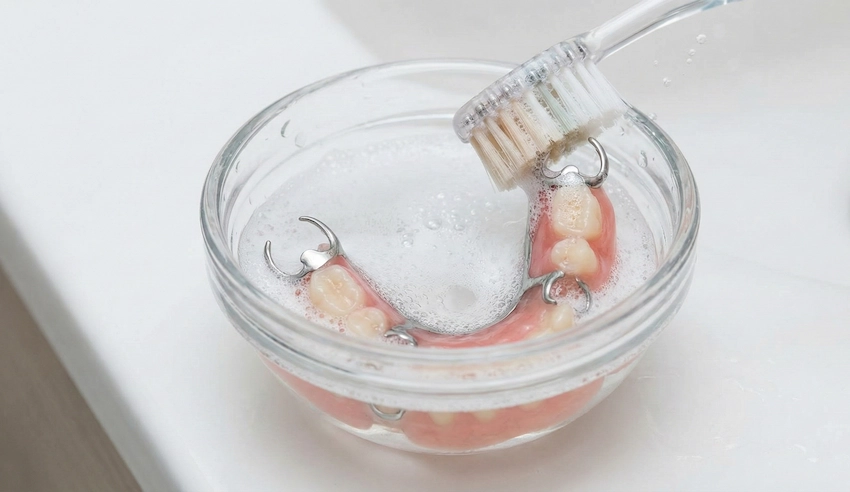
It is very important to take good care of metal clasps in dentures if you want to keep their functionality and make them last longer. The main thing is to brush your dentures every single day with a soft-bristle toothbrush and a non-abrasive denture cleaner to avoid the formation of plaque and stains on the dentures. Besides that, hot water is not allowed since the denture can melt and therefore the fitting will be impacted. A diluted mouthwash can be used for rinsing the mouth in a gentle way and thus, help get rid of the bacteria in those parts that hold the dentures.
Furthermore to the daily cleaning, it is advisable to come to Lema Dental Clinic regularly and see the Dentist Polen Akkılıç and her team for check-ups. At these sessions, the clasps can be inspected for any wear or loosening, and if necessary, the dentures can be adjusted so that they fit correctly. Besides giving you proper health of natural teeth, the good upkeep of dentures will also increase their lifespan.
Common Issues with Metal Clasps in Dentures
| Issue | Cause | Solution |
| Loose or ill-fitting clasps | Wear and tear, tooth movement | Regular adjustments by a dentist |
| Gum irritation or discomfort | Poor fit, sharp clasps | Ensure proper fitting and smooth edges |
| Metal clasps are visible in the smile | Design of conventional clasp dentures | Consider precision clasps for better aesthetics |
FAQ: How to Repair Metal Clasps on Dentures?
Metal clasp repairs most of the time will need a professional’s assistance. A dentist is able to adjust or even completely replace metal clasps which will make your dentures fit and function correctly again.
Attempting to adjust metal clasps on your own is not a good idea since you might cause even more harm to them if you do it incorrectly. In case any changes are required, always consult a dentist first.
Indeed, metal clasps can be disclosed, in particular, in the case of traditional clasp dentures. Precision clasp dentures present a less noticeable choice for patients who are worried about their looks.
Metal clasps that are carefully kept can last for a very long time. Nevertheless, they might need a little adjustment now and then because the wear or changes in the oral cavity.
It is possible, if the steps are too tight or not correctly fitted, that they may cause your gums to itch. Regular dental visits make a major contribution to ensuring a comfortable fit and preventing irritation.
- Akkılıç, P., & Yıldız, C. (2023). The role of metal clasps in partial dentures: A clinical perspective on durability and care. Journal of Prosthetic Dentistry, 29(4), 238-245.
- Choi, M., & Lee, S. (2022). Impact of clasp design on the long-term success of partial dentures. Dental Materials and Prosthodontics, 34(7), 441-448.
- Liu, Z., & Zhang, J. (2021). Oral hygiene and care for removable partial dentures with metal clasps. International Journal of Dental Hygiene, 18(3), 182-189.

