


When children’s dental anxiety makes them refuse the necessary preventive care that keeps their health in check, Lema Dental Clinic has a solution for that. Dentist Polen Akkılıç and her team at Lema Dental Clinic which is known for great pediatric dentistry design a step-by-step and motivational plan that actually helps kids in the clinic. The treatment is accomplished in an atmosphere that is unlike any other: conversation with the child, a predictable daily routine, and behavior guidance methods that lower children’s stress levels. This method not only alleviates the child’s dental anxiety but also equips them with a lifetime of oral hygiene habits.
Children who are emotionally scared of dental treatment must be provided with emotional support through reassurance, informing them about the procedures in a simple way, and guaranteeing a calm environment in the clinic.Professor Doctor Coşkun Yıldız is the anxiety management director in pediatrics, thus ensuring that the staff follows the hand-picked anxiety management techniques backed by scientific research in every department.The involvement of the pediatric team with the specialized supervisors as a united front towards the child’s emotional world not only benefits the child emotionally but also the dental development becomes a healthy and normal process.
What is Dentist Anxiety?
Dentist anxiety is an extremely intense emotional and physiological response of a child who has been given to understand that the next dental examination will be accompanied by some kind of procedure. The reaction may be of the type crying, throwing tantrums, increasing heart rate, or even leaving the location of the examination. Behavior guidance techniques such as “tell–show–do”, controlled exposure, and gradual desensitization that may be used to reduce the fear response of the child are among the methods used by Dr. Polen Akkılıç and other team members after they recognize the early symptoms. Confidence, safety, and agreement with the procedures lead to the progress of this method which is a safe one for the little patients.
Kids can demonstrate their worried feelings through different behaviors depending on their growth, sensory tolerance, or even previous medical experiences. The pediatric team, supervised by Professor Doctor Coşkun Yıldız, performs detailed examinations to figure out the personal causes of anxiety for each individual. The complete check-up provides the clinic with a deeper understanding to adjust their treatment methods and work with their little patients in the coziest and mentally calm way for them.
Why Are Some Children Afraid of the Dentist?

In some cases, children are scared of dental procedures because the use of strange tools, brightening of the area, and scaring with the noise of the metallic instrument produces a new kind of stimulation to their senses, which they don’t expect, and this can result in their fear. These sensory stimuli may be too much for the child’s nervous system, especially if the child is sensitive to sound, vibration, or touch. In the Lema Dental Clinic, they apply controlled lighting, use quieter dental instruments, and they also use a gentle procedural pacing that is specifically adapted for pediatric comfort. These modifications help to regulate sensory responses and facilitate the creation of a calm treatment environment.
There are some children, whose fear has been brought about by an incorrect understanding, not getting used to the medical terms, and also worries about the pain that might be caused. When children are not given explanations, they tend to imagine their own results which, consequently, intensifies their fear. Dentist Polen Akkılıç and her staff employ direct, age-appropriate communication in explaining each step of the procedure. Such a way lessens the feeling of fear and thus makes the child willing to cooperate during the whole appointment.
Symptoms of Dentist Anxiety
Dentist anxiety may cause different levels of behavioral and physical symptoms. Some kids exhibit such symptoms visibly, e.g., crying, tensing of the muscles, refusal to sit in a dental chair, and in some cases, verbalizing their fear. Some children manifest the symptoms internally, for instance, stomach discomfort, nausea, and elevated heart rate before the appointment. Professor Doctor Coşkun Yıldız and the pediatric team take a close look at these symptoms to decide which behavior guidance approach is appropriate.
Some kids might display very subtle signs of anxiety which can include limited eye contact, being quiet, or even withdrawal. Those nonverbal signals are very important and require you to be very attentive and also to employ a gentle clinical strategy. Dentist Polen Akkılıç and her team keep records of these behavioral reactions and make changes in the environment to ensure a secure, comfortable clinical experience. Such a strategy gives emotional support and thus leads to better treatment results.
How Can You Support Your Kid?
Before a visit to the dentist, parents are the ones who can provide the maximum emotional support and give comfort to their children. An easy talk, not changing the habits, and being supportive with your attitude will definitely make your kids understand the necessity and security of the visit. Lema Dental Clinic suggests that parents use positive and simple words when they talk to their kids about the appointment. A parent who talks less about the scary part and more about the safety of the visit, gives his/her child more courage to face the procedure.
Parents Should Use These Effective Methods:
- Give explanations that are brief and simple just a few moments before the visit
- Doing a “pretend dental session” at home
- Letting the kid take along a favorite toy or an item that gives comfort
- Making a dental appointment when the kid is still fresh and full of energy
- Allowing the child to talk about his/her feelings without putting pressure on them
All these measures deepen confidence and decrease nervousness. Dentist Polen Akkılıç and her team have always witnessed that children who are mentally prepared become more easily adapted and more cooperative during their clinical care.
The Role of the Pediatric Dentist

Special techniques are adopted by pediatric dentists to handle dental anxiety in kids. To accomplish this, Dr. Polen Akkılıç, and her staff use methods that are supported by research such as positive reinforcement, systematic desensitization, and sensory control. These techniques not only raise children’s willingness but also assist them in viewing the treatment as a well-organized and emotionally safe experience. The team’s skill in the psychology of the child makes the team the most reliable for safe and expected results in the clinic.
The hospital children’s department, under the medical supervision of Professor Doctor Coşkun Yıldız, is extremely committed to the detailed anxiety management protocols. These protocols include specially designed communication strategies for each patient, clinical procedures that are paced according to the child’s inner rhythm, drug-free relaxation methods, and, in case of necessity, a very small amount of anxiolytic medicines approved for use in children. Safety to the highest standards and individual tolerance are always taken into account for each medicine administered.
How Can I Get My Kid Ready for a Dentist Visit?
Anxiety in children may be considerably reduced if there are proper preparations before their dental visit. It is a must for parents to inform about the appointment several times in advance of the actual day, and they should always use calm and encouraging tones while doing it. A parent who explains to a child that the dentist is there to prevent decay and keep the teeth healthy, is actually helping the child to become less scared of the job. Moreover, Lema Dental Clinic, is also very much positive about the influence of such resources as storybooks, pictures, and photos of the clinic in opening the door to the new world and thereby breaking down the initial emotional resistance barrier.
This table helps guide preparation:
| Preparation Step | Explanation |
| Clear explanation | Describe what the dentist will do in simple terms |
| Positive framing | Present the visit as healthy and safe |
| Comfort item | Allow the child to bring a favorite toy or book |
| Stable timing | Choose a time when the child is well-rested |
| Visual exposure | Show photos or videos of the clinic |
These steps help children attend their appointments in a calmer emotional state.
How Can I Support My Child After a Dentist Visit?
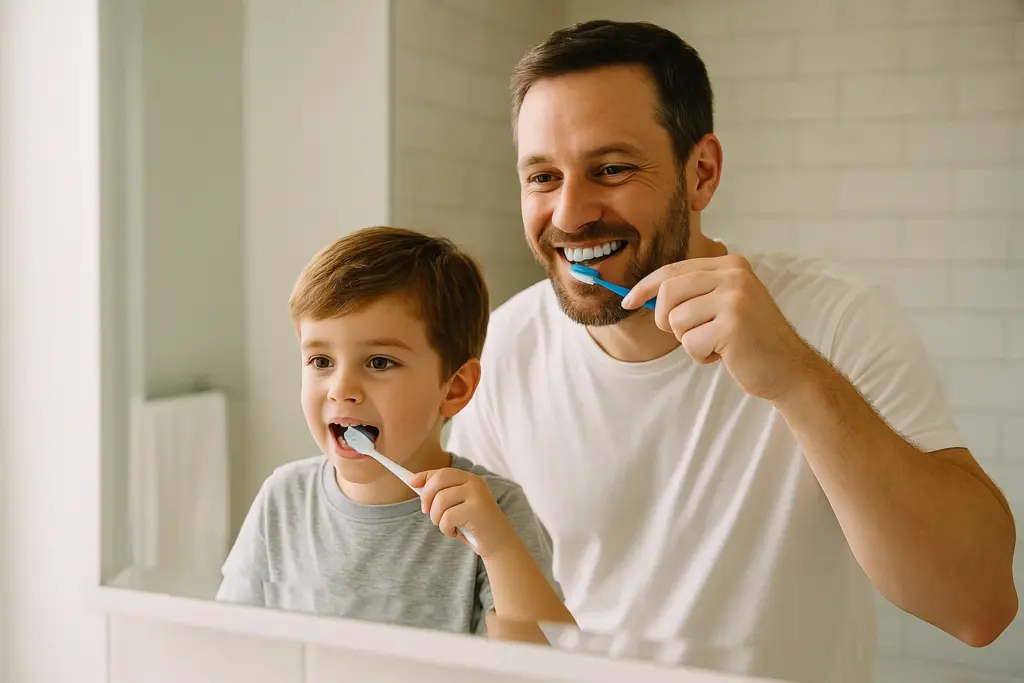
This support after the visit helps the child to create positive associations and thus, their anxiety will be lessened in the next visits. The parents’ role is to praise the child when cooperating with the dentist and also to acknowledge their courage during the check-up. Positive reinforcement is a real-life tested method that leads to dental care becoming less scary over time. Dr. Polen Akkılıç and her team at the clinic are of the opinion that families should discuss the visit by emphasizing their child’s accomplishments.
In the case of a dental procedure, parents need to administer the aftercare by following the instructions given, such as medicine usage, diet recommendations, and oral hygiene guidelines. These instructions not only allow the healing to be safe but also to be free of any kind of discomfort. Parents, on the other hand, should also be reassuring in telling their child that certain sensations are normal after the procedure so that the child does not become unnecessarily worried. Professor Doctor Coşkun Yıldız is very precise in ensuring that all aftercare directions are not only safe but also pediatric-suitable and scientifically backed.
References
- American Academy of Pediatric Dentistry. (2023). Guideline on behavior guidance for the pediatric dental patient. AAPD Clinical Practice Guidelines.
- Cianetti, S., Lombardo, G., Lupatelli, E., Pagano, S., Abraha, I., Montedori, A., & De Giorgio, S. (2017). Dental fear/anxiety among children and adolescents: A systematic review. European Journal of Pediatric Dentistry, 18(2), 121–130.
- Klingberg, G., & Broberg, A. (2007). Dental fear/anxiety and dental behavior management problems in children and adolescents: A review of prevalence and concomitant psychological factors. International Journal of Paediatric Dentistry, 17(6), 391–406.
- Porritt, J., Marshman, Z., Rodd, H., & Williams, L. (2018). Managing dental anxiety in children: A guide for dental care professionals. Wiley-Blackwell.
- Skevington, S. M., & Holbrook, M. (2018). Emotional indicators of dental anxiety in children: Clinical recognition and intervention strategies. Journal of Child Health Care, 22(4), 587–599.
Frequently Asked Questions About Dental Anxiety in Children
Children are most of the time afraid of the dentist because of the strange noises, the bright lights, the dental tools, or a previous uncomfortable experience. Communication that is focused on the child at Lema Dental Clinic is helpful in lessening these responses.
Dentist Polen Akkılıç and her team are committed to behavior guidance techniques, kind communication, and well-planned pacing to provide a secure and enjoyable atmosphere for their little patients.
Yes. Not going to the dentist increases the risk of dental caries, gum redness, and the development of oral diseases that are left untreated. Giving support early on, helps to prevent these complications that can last for a long time.
Emotional fluctuations are toned down by different methods like taking deep breaths, distracting oneself and controlling one’s senses. These are implemented under the guidance of Professor Doctor Coşkun Yıldız.
Most children would want their parents to be with them and thus they would be more secure if a parent is present, however, some children express themselves better if they are on their own with the dentist. The clinical team makes a decision on the best and most supportive way.
Introducing the appointment a few days in advance is helpful to lessen the uncertainty and stop the fear from growing.
Absolutely. Anxiety will be calm or very low after a long time, with several good experiences to parents’ support and professional guidance.

