


Cosmetic dentistry fixes gaps in teeth using veneers, bonding, or dental implants.
Dental gaps, known as diastema in medical terminology, are intervals between teeth characterised by excessively wide spaces that interrupt the continuity of the dental arch. Such a condition appears when there is a mismatch between the sizes of the teeth and the width of the jaw, or when the periodontal attachment or the way the teeth erupt do not allow the formation of normal contact points. Besides changing the way occlusal forces are dispersed, diastema makes it easier for plaque to accumulate locally.
From a clinical point of view, leaving dental gaps untreated can cause gingival inflammation, the development of caries at the sites of contact, and progressive tooth migration. Dentist Polen Akkılıç and her team opine that diastema entails a structured diagnosis because merely removing the visible aspects of the condition without controlling the cause will result in a recurrence and functional imbalance.
Fascinating Factors Contributing to the Formation of Teeth Gaps
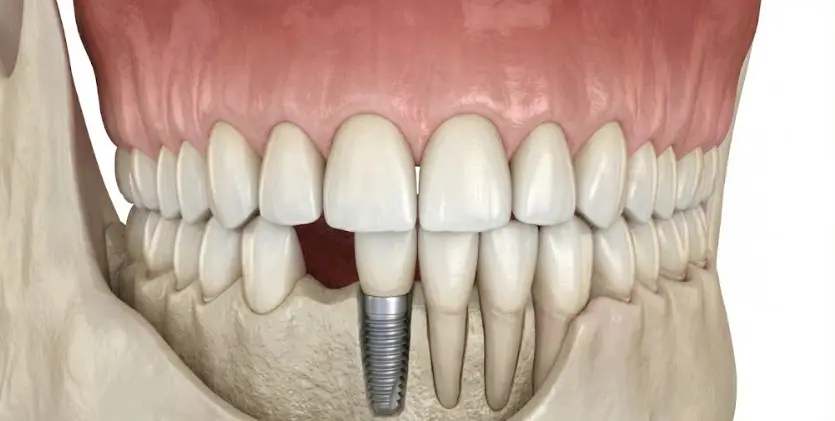
There are known biological mechanisms behind the formation of dental gaps. Through genetic differences in the size of the jaw and teeth, a person may end up with an excess of available space in their dental arch; periodontal attachment loss on the other hand enables the teeth to move in an unhealthy way. An improperly inserted labial frenum creates a continuous traction force, thus, the gap between the two upper incisors is widened.
The progress in spacing that is associated with untreated periodontal disease and missing teeth is demonstrated through systemic evaluation. Professor Doctor Coşkun Yıldız notes that determining the primary cause of the ailment leads to the provision of either cosmetic or functional treatment in a clinical setting.
Porcelain Veneers to Close Gaps in a Controlled Manner
Porcelain veneers are used to close dental gaps, making the teeth appear wider in the mesiodistal direction without altering their position. That high-density ceramics imitate enamel in terms of elasticity and translucency but at the same time they are up to the task when it comes to structural resistance under occlusal load. Thus, work on veneers does not only give the restored teeth the right contact points but also the perfect visual symmetry.
The condition for the clinical outcome is proper work limited to enamel, adhesive isolation during the procedure, and occlusal calibration. If these measures are not met, the resulting marginal leakage or fracture could be expected. Dentist Polen Akkılıç and her team use digital proportion analysis to get the exact anatomical result and the occlusal stability.
Composite Bonding is a Conservative Medical Option
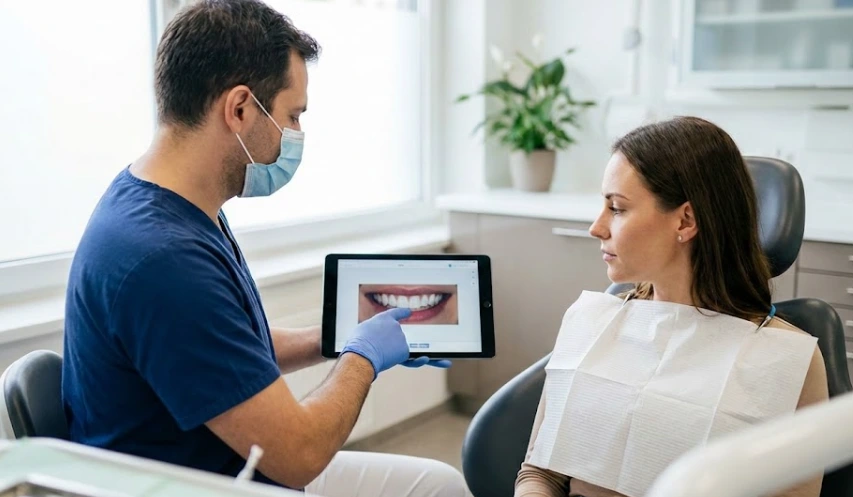
By means of composite bonding, a tiny diastema is closed as a direct resin is being applied to the surfaces of intact enamel. There is no disturbance of the tooth structure, and nothing irreversible is being done. The main indication for this method is when the space is not a result of occlusal or periodontal pathology.
How the material performs is mainly a function of the depth to which it is polymerized, how it is finished on the surface, and how the load is distributed. Professor Doctor Coşkun Yıldız confirms that an incorrect bonding technique results in the deterioration of the surface and staining over time.
Orthodontic Treatment as Functional Spacing Disorders Solution
With the help of orthodontics, diastema is corrected by realigning the teeth within the alveolar bone with the use of force systems that are completely under control. The method is suitable for cases in which the reason for the gaps is malocclusion, the deviation of the midline, or arch-length discrepancies.
It becomes possible with functional correction to get rid of the excessively heavy occlusal stress and to establish the stability of the periodontal support. Digital orthodontic monitoring guarantees biologically safe tooth movement and prevents root resorption.
Dental Implants for Gaps Due to Tooth Loss
The creation of dental implants has made it possible for gaping spaces which arise as a result of missing teeth to be restored through the replacement of root as well as crown structures. With the use of an implant, the adjacent area does not face the risk of tooth migration anymore and also the volume of the alveolar bone is maintained because the functional load can be transmitted properly.
A successful implantation needs the presence of sufficient bone density, the surgical placement has to be atraumatic, and prosthetic alignment should be correct. Dentist Polen Akkılıç and her team keep to the evidence-based implant protocols so as to guarantee biomechanical stability in the long run.
| Treatment | Indication | Tissue Impact | Stability | Functional Outcome |
|---|---|---|---|---|
| Porcelain Veneers | Moderate diastema | Minimal enamel | High | Stable |
| Composite Bonding | Small gaps | None | Medium | Stable |
| Orthodontics | Functional gaps | None | High | Corrective |
| Dental Implants | Tooth loss | Surgical | Permanent | Restorative |
| Crowns | Structural loss | Moderate prep | High | Supportive |
Post-Treatment Maintenance and Clinical Monitoring
Maintaining the results of the treatment for a long time is directly related to factors like good plaque control, keeping the occlusion stable, and regularly going through professional evaluations. Regular oral hygiene is the main factor in the prevention of marginal inflammation and material degradation.
Professor Doctor Coşkun Yıldız says that follow-ups at a pre-arranged time can help see the occlusal imbalance before it becomes a serious problem and also prevent the occurrence of secondary spacing. Preventive monitoring is the key to lowering the rates of retreatment.
Cosmetic Dentistry Options for Fixing Gaps in Teeth
- Porcelain veneers close moderate dental gaps by increasing mesiodistal tooth width and restoring anatomical contact points without altering tooth position, which preserves occlusal balance and enamel-supported strength.
- Composite bonding corrects small diastema through direct resin application onto intact enamel surfaces, maintaining natural tooth structure while improving interdental continuity and plaque control.
- Orthodontic treatment eliminates functional spacing by repositioning teeth within alveolar bone under controlled force systems, correcting arch-length discrepancies and stabilizing occlusal load distribution.
- Dental crowns address gaps associated with structurally weakened teeth by restoring circumferential tooth anatomy, improving both functional load resistance and proximal contact stability.
- Dental implants permanently resolve gaps caused by missing teeth by replacing the tooth root and crown, preventing adjacent tooth migration and preserving alveolar bone through functional stimulation.
Frequently Asked Questions About Fixing Gaps in Teeth
Dental gaps disrupt occlusal balance and increase plaque accumulation.
Bonding is safe when enamel integrity and occlusion remain stable.
Properly planned veneers preserve enamel-supported strength.
Permanent closure requires post-treatment retention.
Implants provide the most stable functional replacement.
Longevity depends on material and occlusal control.
Modern protocols control discomfort effectively.
Relapse occurs without retention or monitoring.
- American Academy of Cosmetic Dentistry. (2020). Guidelines for aesthetic dental treatment planning. AACD Publications.
- Chu, S. J., Devigus, A., & Mieleszko, A. (2018). Smile design: A guide for clinician–technician collaboration. Quintessence Publishing.
- Graber, L. W., Vanarsdall, R. L., & Vig, K. W. L. (2016). Orthodontics: Current principles and techniques (6th ed.). Elsevier.
- Magne, P., & Belser, U. (2003). Bonded porcelain restorations in the anterior dentition: A biomimetic approach. Journal of Esthetic and Restorative Dentistry, 15(1), 5–28.
- Tarnow, D. P., Cho, S. C., & Wallace, S. S. (2000). The effect of inter-implant distance on the height of inter-implant bone crest. Journal of Periodontology, 71(4), 546–549.

