


Cracked teeth are one of the most common dental problems that should be fixed as soon as possible to avoid the development of other problems. If the cracks in the teeth are ignored, they may become larger and thus may cause damage, pain, or even the loss of the tooth. Therefore, it is very important to seek professional help and get the treatment as soon as possible in order to bring back your smile’s health, beauty, and functionality. The article shares information about the best ways for dental crack repair so that people with cracked teeth can get safe and reliable solutions.
Why Do Teeth Crack?
Teeth can get cracks due to various reasons, and learning about the causes will definitely help in the prevention of future damage. To the cracks of the teeth have been attributed the three factors: trauma, teeth grinding, and even normal wear and tear. The tooth-supporting structures can get weaker over time and thus become fracture-prone.
- Trauma: A punch in the face due to an accident or a sports injury may result in a cracked tooth.
- Hard Foods: Biting into hard foods like ice, nuts, or hard candies can put too much pressure on your teeth and thus cause cracks.
- Teeth Grinding: The habitual teeth grinding or clenching, particularly during sleep, which causes gradual wearing and stressing, can eventually lead to holes and cracks in teeth.
- Aging: Enamel on the teeth is inevitably worn down, over the period of years, leaving the teeth more susceptible to cracking.
The first step towards the treatment of cracked teeth is the recognition of the symptoms and then the practice of timely seeking advice from a dental professional The latter will decide the further treatment plan and thus will help to avoid irreversible damage and the need for more invasive procedures.
Best Methods for Dental Crack Repair
1. Dental Bonding
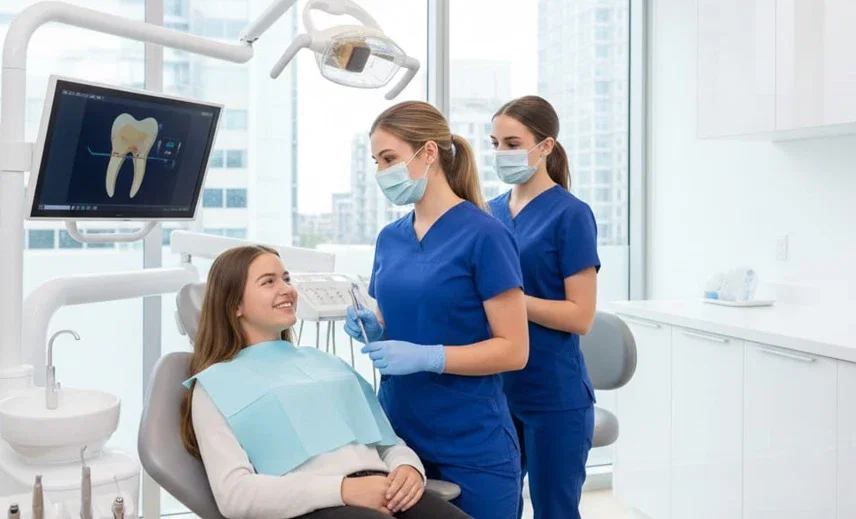
Dental bonding is the most prominent and non-invasive method of the dental portfolio, which treats minor cracks most effectively. A resin-colored like a tooth is prepared and put on a purposefully cracked area, then it is molded for a natural shape and penetrated with a hardening violet light. One appointment is enough to make the affected tooth not only beautiful but also strong again as the bonding material supports the cracked part.
The use of dental bonding is limited to the small cracks of a tooth structure visually serving, whereas the bonding agents not participating in the physical structure will not provide strength. The treatment is absolutely safe, the time required is about 30 minutes, and the cost is very affordable for the patient, thus making this method the first choice for the rapid elimination of dental cracks. Nevertheless, the adhesive layer needs to be renewed after a certain period due to the possibility of wear and tear of the resin, which initiates the recurrence of the cracks and discoloration on its surface.
- Perfect: the work fixes the superficial cracks/fissures and chips of teeth
- Procedure: single application visit
- Cost: relative to other methods, more economical
- Benefits: quick and solution to functionally applicable
2. Dental Veneers
Dental veneers are the thin shells made-to-measure, which cover the front part of the teeth, thus hiding the cracks and other imperfections. Porcelain or composite resin are materials used for dental veneers. Both of them are long-term and good-looking solutions for cracked teeth. This method provides an enormous extra in terms of the natural tooth’s overall appearance by offering a smooth and flawless surface of the tooth.
It is a veneer method that is highly efficient in dealing with moderate to severe dental cracks in cases where bonding provides insufficient coverage or none at all. Converting patients to the complete smile makeover using porcelain veneers requires two visits: One to take the impressions and another for the fitting. They offer a lifetime of benefits as they are almost immune to stains and lasting permanently without degradation.
- Perfect: moderate to difficult situations of tooth cracking/fissuring
- Procedure: two visits for impression and fitting
- Expense: more than bonding but lasts longer
- Benefits: visual appearance improvement and durability
3. Dental Crowns
Where the crack is so severe that it affects the tooth structurally, dental crowns are the most dependable and complete fix measure. An artificial tooth that fits the one-to-one cover is a dental crown that can make a broken tooth work again and shield it from future injuries. Usually, porcelain, ceramic, or zirconia are the materials used for making dental crowns; thus, the dental crown not only gives back the lost strength of the tooth but also beautifies it.
Cases of heavily cracked teeth that are non-repairable with bonding or veneers and cracks going deeply into the roots are the reasons why dentists usually advise the use of crowns. This method brings back the tooth’s function as normal, and, at the same time, its natural appearance, is preserved. The work consists of shaping the broken tooth and then fitting the newly-made tooth aka the crown over it.
- Perfect: serious situations of cracked and broken teeth
- Procedure: 2 appointments (preparation and placing)
- Cost: varies from moderate to high, depending on the material
- Benefits: full coverage plus long life and strength
4. Root Canal Treatment (RCT)
It causes severe pain when the crack in the tooth reaches the pulp, where the blood vessels and nerves are, and at the same time, it raises the likelihood of infection. The only way out is to do a root canal to get rid of the infected part inside the tooth if this is the case. The crown is placed on the tooth to rebuild its structure and make it work again after the operation.
Root canal treatment is extremely important in the case of a cracked tooth to be able to keep the tooth if the internal pulp is infected. It is a pain-relieving measure and at the same time, it removes the infection and functional restoration follows. The procedure takes time and several visits that lead to the salvation of a tooth that is otherwise destined for extraction.
- Perfect: The Pulp Area With Crack/Suffering Severe Pain
- Procedure: cleaning and sealing require multiple visits
- Cost: high because the procedure is complex
- Benefits: keeps the tooth free from infection and pain
5. Tooth Extraction and Implant
If the destruction of the tooth is beyond repair, removal of the tooth is the only way out. Later on, in the empty space that is left after the removal of the tooth, a dental implant is fitted to replace the lost tooth. Through the use of dental implants, a patient is able to get the look and feel of completely natural teeth.
The process of removing a tooth and then placing an implant includes several steps, and the time for healing may be in between extracting and implant installation. It takes a few months in total, but in the end, the patient will have a permanent restoration of both tooth function and aesthetics.
- Perfect: teeth with cracks that are beyond repair
- Procedure: removal, followed by implant (can take several months)
- Cost: rather high due to the difficulty and materials involved
- Benefits: natural and permanent replacement for your teeth
Preventing Future Cracks
Without doubt, prevention of dental cracks is the way to achieve long-term oral health. Those below are some of the safety measures that will help you against cracked teeth risk:
- Put on a Mouthguard: Night grinding of teeth can be prevented by a customized mouthguard which works as a shield.
- Steer clear of Hard Foods: Be big careful with consuming tough foods like ice, nuts that may apply excess load on teeth.
- Keep Up With Dental Checkups: Checking up on a regular basis gives the possibility to catch the crack at early stages and means getting a solution faster.
- Involve Good Oral Hygiene in your Daily Life: Brushing and flossing daily not only makes your teeth strong but also lessens the chances of them getting cracked.
| Method | Application | Ideal Condition | Advantages | Cost |
|---|---|---|---|---|
| Dental Bonding | Applying and shaping tooth-colored resin to the cracked area | Small cracks and chips | Quick and cost-effective solution | Low |
| Dental Veneers | Placing thin porcelain shells over the front surface of the tooth | Moderate cracks and chips | Aesthetic and long-lasting solution | Medium-High |
| Dental Crowns | Placing a protective cap that covers the entire tooth | Severe cracks and broken teeth | Durable, aesthetic, and functional solution | Medium-High |
| Root Canal Treatment | Cleaning and treating the inner part of the tooth when the crack reaches the pulp | Cracks affecting the tooth pulp | Preserves the tooth, relieves pain, prevents infection | High |
| Tooth Extraction and Implant | Removing the damaged tooth and placing an implant | Irreparable cracks | Permanent solution, restores both function and aesthetics | High |
Conclusion
The crack in your teeth may be minor enough not to worry or a deep fissure that can become a real dental problem very soon. Whatever the case, you can always rely on existing methods to restore the tooth’s functionality and appearance. Therefore, the first thing to do is to contact a dentist like Polen Akkılıç or her team or Professor Doctor Coşkun Yıldız at Lema Dental Clinic in Istanbul for a consultation and consequently get the best long-lasting and esthetic treatment for your cracked teeth.
References
- American Association of Endodontists. (n.d.). Cracked Teeth. Retrieved from https://www.aae.org/patients/dental‑symptoms/cracked-teeth/ American Association of Endodontists
- Kakka, A., & ark. (2022). Treatment of cracked teeth: A comprehensive narrative review. PMC. Retrieved from https://pmc.ncbi.nlm.nih.gov/articles/PMC9562569/ PMC
- Hasan, S., & ark. (2015). Cracked tooth syndrome: Overview of literature. PMC. Retrieved from https://pmc.ncbi.nlm.nih.gov/articles/PMC4606573/ PMC
- Liao, W.-C., Tsai, Y.-L., Chen, K.-L., Blicher, B., Chang, S.-H., Yeung, S.-Y., & Chang, M.-C. (2021). Cracked teeth: Distribution and survival at 6 months, 1 year and 2 years after treatment. Journal of the Formosan Medical Association. https://doi.org/10.1016/j.jfma.2021.03.020 ScienceDirect
- Bhuva, B., & ark. (2021). The restoration of root‑filled teeth: a review of the clinical outcomes. International Endodontic Journal. Retrieved from https://onlinelibrary.wiley.com/doi/10.1111/iej.13438
Frequently Asked Questions About Cracked Teeth and Their Repair Methods
If you have a cracked tooth, seek professional dental care as soon as possible. Early treatment helps prevent further damage and restores the tooth’s function.
No, cracked teeth do not heal on their own. Treatment is necessary to repair the crack and prevent complications.
The cost of repairing a cracked tooth varies depending on the severity of the crack and the treatment method. Bonding is the most affordable option, while crowns and veneers are more expensive.
Dental bonding is most effective for small to moderate cracks. For larger cracks, veneers or crowns are typically recommended for better durability and aesthetics.
Dental crowns are durable and can last between 10 to 15 years with proper care, making them a long-lasting solution for cracked teeth.
Root canal treatment is necessary only when the crack extends into the tooth’s pulp and causes pain or infection. Not all cracked teeth require this procedure.
While some cracks are unavoidable due to age or accidents, protecting your teeth by avoiding hard foods, wearing a mouthguard, and maintaining good oral hygiene can reduce the risk of cracks.
Yes, dental implants are a permanent solution for replacing a missing tooth. With proper care, they can last a lifetime.

