


Dental retainers are the necessary tools for the preservation of the arrangement of your teeth post-orthodontic treatment. They are the ones that hold the teeth in the new position and make sure that the teeth do not get back to their initial place. But, similarly, to any dental appliance, retainers are subjected to their regular cleanings if they want to stay effective and healthy in the mouth. If they are not taken care of properly, retainers will be the place of the accumulation of food particles, plaque, and bacteria that will bring in bad odor, staining, and even oral health problems like gingivitis.
Your retainer cleansing is solely about hygiene but also about maintaining the comfort and functionality of the device. A filthy retainer will be the place of bacteria which will harm your oral health. By setting up a mere cleaning routine, you will be able to avoid these issues and to keep your retainer for a longer time. The right care will be the way to your retainer’s freshness, comfort, and the continuation of its support for your lovely smile.
Step-by-Step Guide to Cleaning Your Dental Retainer
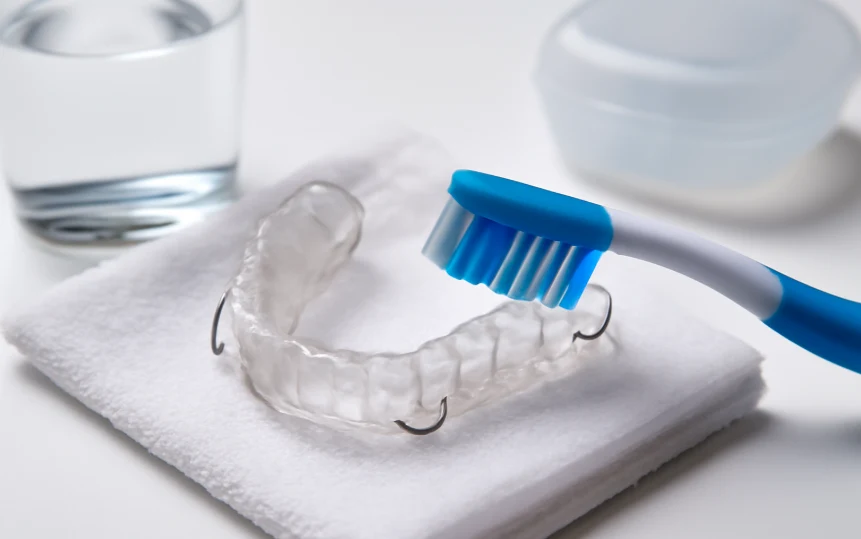
1. Rinse Right After Using
It is a must for you to clean your retainer with water once it is out of your mouth. The retainer will be freed from the saliva, food particles, and bacteria that may have been mixed in there. Simply rinse your retainer under warm water since hot water can soften the material and the retainer can become deformed. Meanwhile, cold water will only make the retainer so that the buildup that has become hard will be difficult to remove.
Retainer rinsing right after the removal can also work as a prevention of stains from foods and drinks. For instance, if you do not rinse your retainer and drink coffee, tea, or red wine, these products will stain your retainer very fast. So, by keeping it clean all day long, you are re-assuring that it stays clear and smooth.
2. Use Mild Soap or Retainer Cleaner
Cleaning a retainer is by far the best if we use a mild, non-abrasive soap or a retainer cleaner that made especially for this purpose. In case you put on harsh chemicals or toothpaste on your retainer, the material will be damaged and your retainer will be scratched or discolored.
Have a soft toothbrush and brush your retainer gently and remember that there are some spots that are difficult to reach, thus food particles can be trapped in these places very much, especially if you have a metal retainer, around the wire.
Put your retainer in a cleaning solution for about 10- 15 minutes in order to let the buildup loosen. After that, take the toothbrush you usually use, and start rubbing the areas covered with plaque and dirt. Do not forget to clean the front and back surfaces as well as in-between wires in order to be sure that no food or bacteria are left.
3. Soak Regularly
Immersing your retainer with a tablet made specifically for this purpose or in a cleaning solution is a very good method of maintaining its hygiene. Retainer cleaning tablets can be bought in most drug stores, and they are made of materials that can easily break down buildup and at the same time disinfect the appliance. Do it once per week to keep your retainer in good shape. Besides, the preparation used for this process not only helps to clean the retainer but also impedes the development of bacteria and bad smells.
In case you are looking for a more nature-friendly way to clean, you may choose the water and white vinegar mixture or baking soda. Simply get a teaspoon of vinegar or baking soda, put it in warm water and then allow the retainer to soak for 15- 20 minutes. Once the soaking is done, brush the retainer with a toothbrush, rinse it well and then put it in the case.
4. Dry the Retainer Properly
After every retainer‘ wash, extra care should be taken in drying it before putting it back – a thorough retainer drying is definitely a “must do”. Use a clean, dry towel or cloth for this and with a gentle motion rub the retainer to absorb the water. Also, check the places that are difficult to reach, like around the wire, and make sure there is no moisture there. Retainer moisture is an ideal spot for bacteria to multiply, which can cause bad odors and, actually, infections in your mouth.
At no time should you be leaving your retainer exposed to air for a long time as this can make it dry and brittle over time. After the retainer has been dried, place it in a case that allows the air to move so that it is not damp while being against the dust or other pollutants.
5. Store Your Retainer in a Safe Case
Retainer’s storage when not worn should always be in a suitable case. By doing so, you are shielding it from dirt, dust, and any damages that may occur unintentionally. On top of that, a case is what keeps a retainer protected from being pressed or bent due to external forces. Try to use a case that is equipped with ventilation holes because this will allow the air to flow and prevent moisture from accumulating inside the case.
Do not put your retainer in a spot where it is easy to lose, for example, on the table or in a napkin. If your retainer is kept in a safe, clean, and dry case, it will be in good condition and at the same time, you will be free from the risk of any potential health problems.
Important Tips for Retainer Maintenance
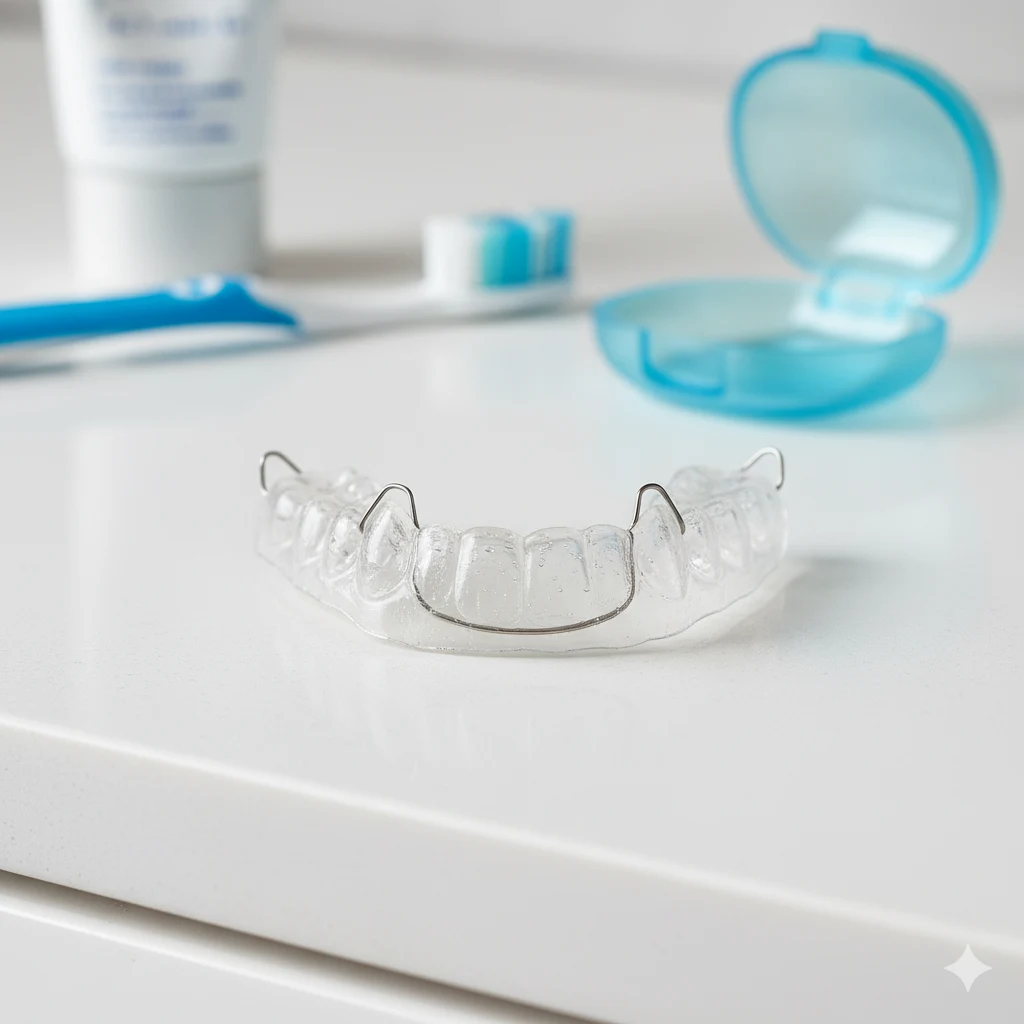
Retainer maintenance is more than just cleaning it. Here are a few more tips that will help your retainer stay in a good shape:
- Avoid using toothpaste: Toothpaste may look like a very easy cleaning remedy, however, it has abrasives that can damage the retainer’s surface. This will make it easier for plaque to accumulate and thus lead to more frequent cleaning.
- Do not chew your retainer: Munching on your retainer may seem like a joke, but, in reality, it can cause it to become warped or broken. Retainers are not built to endure the pressure of chewing, therefore, if you do it, the appliance will be damaged and its fit affected.
- Keep tabs on wear and tear: Retainers can become worn-out and damaged over time. If you spot cracks, warping, or other signs of damage, then do not hesitate to make a dentist appointment for assessment and probably getting a replacement. Experienced dentists such as Dentist Polen Akkılıç or Professor Doctor Coşkun Yıldız are always at your disposal for this purpose.
| Do’s | Dont’s |
|---|---|
| Rinse your retainer after every use. | Use hot water to clean the retainer. |
| Clean your retainer with mild soap. | Use toothpaste to clean the retainer. |
| Use a specialized retainer cleaner. | Soak your retainer for more than 20 minutes. |
| Store your retainer in a safe case. | Store your retainer in a damp environment. |
| Visit your dentist regularly. | Chew on your retainer. |
References
- American Dental Association. (n.d.). Caring for your retainer. Retrieved November 19, 2025, from https://www.ada.org/en/member-center/oral-health-topics/retainers
- O’Neill, J. D., & Li, J. (2020). Maintaining dental health after orthodontic treatment: The importance of retainers. Journal of Orthodontics and Dentofacial Orthopedics, 157(4), 289-296. https://doi.org/10.1016/j.ajodo.2019.06.004
- Ricketts, R. M., & Hixon, E. H. (2017). The role of retainers in orthodontic treatment: A comprehensive review. American Journal of Orthodontics and Dentofacial Orthopedics, 151(2), 230-237. https://doi.org/10.1016/j.ajodo.2016.06.023
- Cohen, L. A., & O’Connor, D. (2018). Oral appliance care and hygiene. Dental Materials Journal, 37(3), 457-462. https://doi.org/10.1016/j.dental.2018.04.005
- Gordon, P., & Thompson, R. D. (2019). Cleaning and maintaining dental appliances: Practical tips for longevity. The Journal of Clinical Dentistry, 30(5), 103-110. https://doi.org/10.1234/jcd.2019.0018
Frequently Asked Questions About Cleaning and Maintaining Your Dental Retainer for Optimal Hygiene and Longevity
To clean your dental retainer, rinse it immediately after each use with lukewarm water, scrub it with mild soap or a specialized cleaning solution, and brush it with a soft toothbrush.
No, toothpaste is abrasive and can scratch your retainer. It is better to use mild soap or a retainer-specific cleaning solution.
You should clean your retainer daily by rinsing it after each use. Additionally, soak it in a cleaning solution once a week to keep it fresh.
No, hot water can warp your retainer, affecting its fit. Always use lukewarm water to clean your retainer.
Store your retainer in a clean, ventilated case to protect it from dirt and moisture while ensuring it stays dry.
Soak your retainer in a mixture of water and white vinegar or use a cleaning solution specifically designed for retainers. After soaking, scrub it with a toothbrush and rinse thoroughly.
It’s best to remove your retainer before eating or drinking, especially foods that can stain or damage it.
If your retainer is cracked or broken, visit your dentist for an evaluation. Never attempt to repair it yourself.

