


It can harm developing adult teeth.
Why Baby Tooth Decay is a Crisis for Adult Smiles
There is a persistent, dangerous myth that floats around many living rooms: “They are just baby teeth; they’re going to fall out anyway.”
In our clinical experience at Lema Dental Clinic in Turkey, we see the aftermath of this misconception far too often. The truth is that baby teeth (deciduous teeth) are not just placeholders. They are the essential blueprints for a child’s future facial structure, speech development, and, most importantly, the health of the permanent teeth waiting beneath the surface.
The “Silent Neighbor” Under the Gums
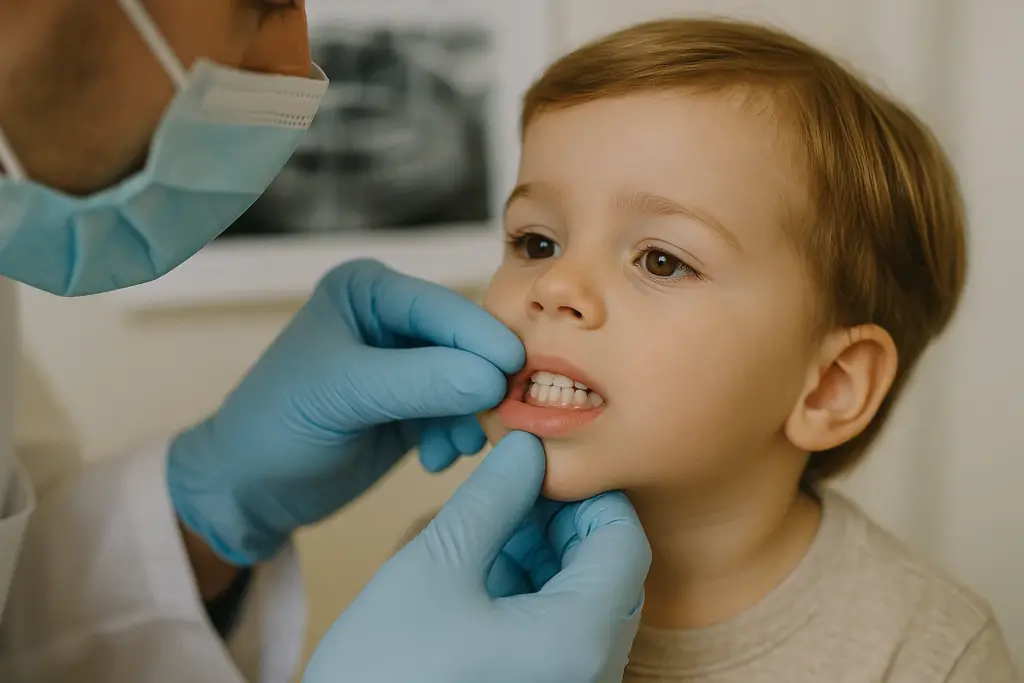
To understand why a cavity in a five-year-old is a significant matter, you need to imagine the process inside the jawbone. You can liken a baby tooth to a guard. Right under its roots, there is the permanent tooth which is still in the development stage, like a seedling ready to grow through the soil.
If decay (caries) is left untreated in a primary tooth, it will not merely remain in the enamel. It can go down the root and cause a “pathway” for infection. Professor Doctor Coşkun Yıldız quite frequently points out that an abscess at the root of a baby tooth can, in fact, bathe the developing adult tooth in bacteria. This may result in enamel hypoplasia—a situation when the adult tooth comes out with permanent white or brown spots, or the enamel is so weakened that it will be immediately prone to decay.
The Domino Effect of Early Tooth Loss
One of the most critical roles of baby teeth is “space maintenance.” They hold the precise amount of room needed for the larger adult teeth to move into.
Dentist Polen Akkılıç and her team frequently explain to parents that when a baby tooth is lost prematurely due to decay, the neighboring teeth don’t just stay put. They begin to tilt and drift into the empty gap. This is where the trouble starts:
- The adult tooth underneath finds its path blocked.
- It may come in “impacted” (stuck) or at a severe angle.
- This creates a “crowding” effect that almost guarantees a need for expensive orthodontic work later in life.
Comparison: Healthy Development vs. Untreated Decay
| Feature | Healthy Baby Teeth | Untreated Decay/Early Loss |
| Space Management | Holds perfect alignment for adult teeth. | Neighboring teeth drift; causing crowding. |
| Infection Risk | Low: protects the underlying tooth bud. | Risk of abscess affecting adult enamel. |
| Jaw Growth | Stimulates natural bone development. | It can lead to uneven jaw growth or bone loss. |
| Adult Tooth Health | High probability of healthy emergence. | Increased risk of “Turner’s Hypoplasia.” |
| Treatment Need | Routine cleanings and check-ups. | Likely extraction and future orthodontics. |
The Metaphor of the Foundation
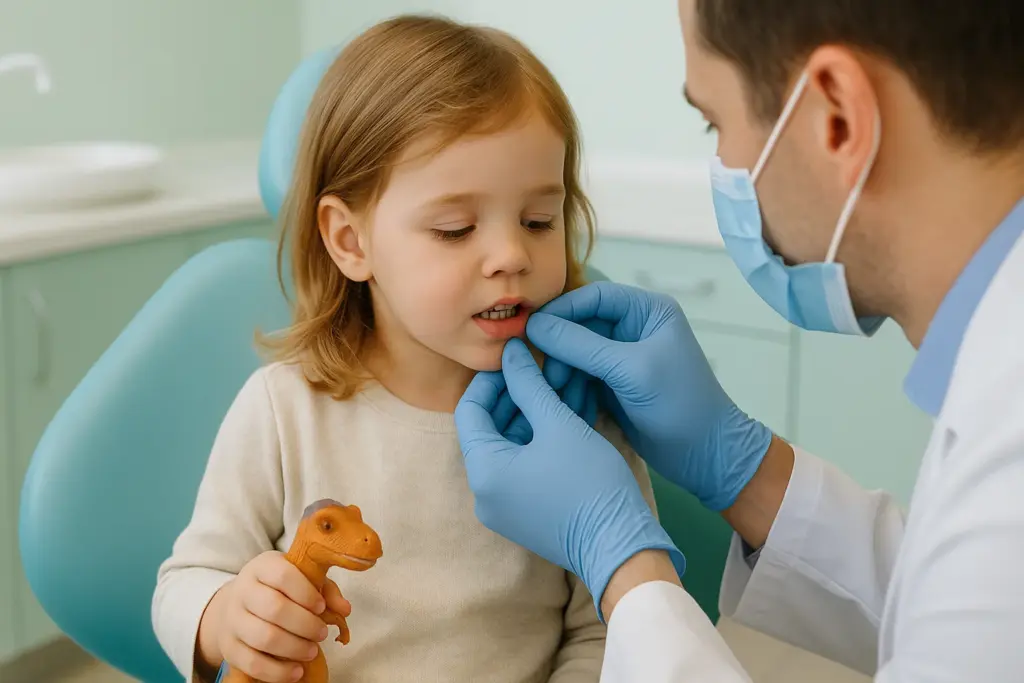
Think of a child’s mouth like a luxury villa we might build here in Turkey. You wouldn’t build a beautiful, expensive second floor on a foundation that is rotting and unstable. The primary teeth are that foundation. If the “first floor” is riddled with infection and structural instability, the “second floor”—the permanent smile—will inevitably suffer.
Here is what we see in the clinic: a child who loses their primary molars early often develops a “collapsed” bite. This doesn’t just affect their teeth; it affects how their jaw joints (TMJ) develop and even their facial symmetry.
A Proactive Approach at Lema Dental Clinic
We believe in “preventative excellence.” When you visit us in Turkey, our goal isn’t just to “fix a hole.” Dentist Polen Akkılıç and her team utilize advanced diagnostic imaging to monitor the transit of adult teeth. If a baby tooth is significantly decayed, we don’t just pull it and hope for the best. We use space maintainers to ensure that the “arch” of the smile remains open and ready for its permanent residents.
The question remains: how do we break the cycle of decay? It starts with the realization that dental health is a lifelong marathon, not a series of disconnected sprints.
FAQ: Direct Insights from Our Experts
“Tooth microbiology is a different world and a year is such a long period in this world. Twelve months is more than enough time for a minor cavity to turn into an excruciating abscess, which may totally ruin the permanent tooth crown that is lying there just waiting. Lema Dental Clinic always aims to save the tooth structure, thus maintaining the very important space for those teeth that are about to come in.”
“Absolutely yes. When a permanent tooth grows in a decaying mouth filled with baby teeth, the newly formed tooth will be covered with the colony of Streptococcus mutans (bacteria) at once, as the concentration of the bacteria is the highest in such a case. It is similar to putting a clean shirt into a bag of charcoal.”
“It is actually possible. For a correct pronunciation, a proper tongue placement is required which can be achieved only with a set of teeth. In the situation where a child loses his/her front teeth too soon, the lisp is inevitable as well as the difficulties with the sounds ‘f’, ‘v’, and ‘th. Such problems can be carried on by the child till the school years.”
Genes indeed determine the thickness of enamel up to a point but most ‘soft teeth’ cases we handle are actually the consequences of dietary habits during the early years of a child’s life and the bacterial transfer. Most dental problems can be prevented here in Turkey if only the right direction is given and help is taken promptly.”
“The advice is a visit twice a year. The dental team led by Dentist Polen Akkılıç here at our dental center can not only find the ‘inactive’ decay early enough to prevent the nerve from getting affected but can also make sure that the adult teeth are coming along the right schedule.”
- American Academy of Pediatric Dentistry. (2023). Policy on Early Childhood Caries (ECC): Classifications, Consequences, and Preventive Strategies.
- Casamassimo, P. S., et al. (2009). Beyond the Loss of a Tooth: The Teratogenic Effects of Untreated Dental Caries. Journal of the American Dental Association.
- Hall-Scullin, E., et al. (2017). A Five-Year Longitudinal Study of Self-Reported Oral Health and Genetic Factors in Children. Caries Research.
- Yıldız, C. (2022). Advanced Restorative Techniques in Pediatric Dentistry: A Clinical Overview at Lema Clinic. Istanbul Medical Press.
- Akkılıç, P. (2024). The Relationship Between Primary Tooth Integrity and Orthodontic Outcomes. International Journal of Paediatric Dentistry.

