


Use adhesive only after gums start healing and your dentist approves it.
Getting your immediate dentures is a significant achievement. You have endured the tooth extractions and finally have a brand-new smile. However, once the dental numbness wears off, a new issue usually emerges: the denture feels too bulky. As your natural post-surgical swelling reduces within a few days, you will probably feel that your teeth are loose.
As a clinical partner with leading oral surgeons, I receive the same worried question daily: “My dentures are slipping. Can’t I just use a little bit of glue?”
In fact, using that adhesive prematurely can seriously compromise your healing. It is something you should avoid at all costs. Here is what we observe in the clinic and why you should be patient.
Your Denture is a Medical Bandage
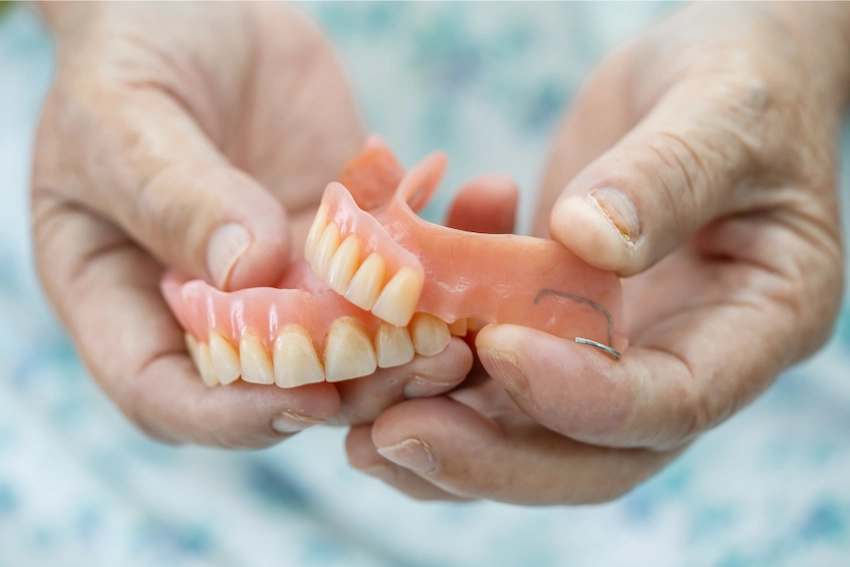
To grasp the reasoning behind the waiting period, we must examine what goes on inside of you.
Professor Doctor Coşkun Yıldız is renowned for presenting an important clinical point.
An immediate denture not only enhances your appearance. In the first week, it functions as a rigid medical bandage that shields your newly operated wounds.
You may liken your jawbone to the base of a building under construction. The blood clots in your empty tooth sockets represent the wet concrete. They have to be left undisturbed for the nerve to be protected and the bone to harden. If you interfere with the curing process of the wet concrete, the whole foundation will crumble.
Should you use adhesive while the wounds are still fresh, the chemicals will penetrate them. Likewise, the cleaning of the denture after gluing results in the detachment of these critical blood clots, which causes a very painful dry socket condition and offers great opportunities for infection by harmful bacteria.
The Safe Timeline for Denture Adhesives
Therefore, when can you eventually keep your teeth in place without worrying?
Each patient’s healing process varies. However, it is interesting to discover the safe clinical timeline. This is the one we use as a guide to protect your oral health.
| Healing Stage | Time After Surgery | What is Happening? | Can I Use Adhesive? |
| Stage 1: Open Wounds | Days 1 to 7 | Sockets are completely open. Gums are swollen and healing. | Absolutely not. Infections and dry socket may reach severe levels. |
| Stage 2: Early Healing | Days 8 to 14 | Gums start growing over the empty tooth sockets. Swelling drops. | Strictly No. Although tissues are closing, they are very vulnerable. |
| Stage 3: Stabilization | Days 15 to 21 | Sockets close up safely. The denture feels noticeably looser. | Generally, Yes. However, have the go-ahead from your doctor. And the amount must be very small. |
| Stage 4: Maturation | Weeks 4 to 6 | Gums shrink completely. The denture needs a clinical update. | Yes, you can. But, in place of that, you will need a professional ‘soft reline.’ |
The Lema Dental Clinic Perspective
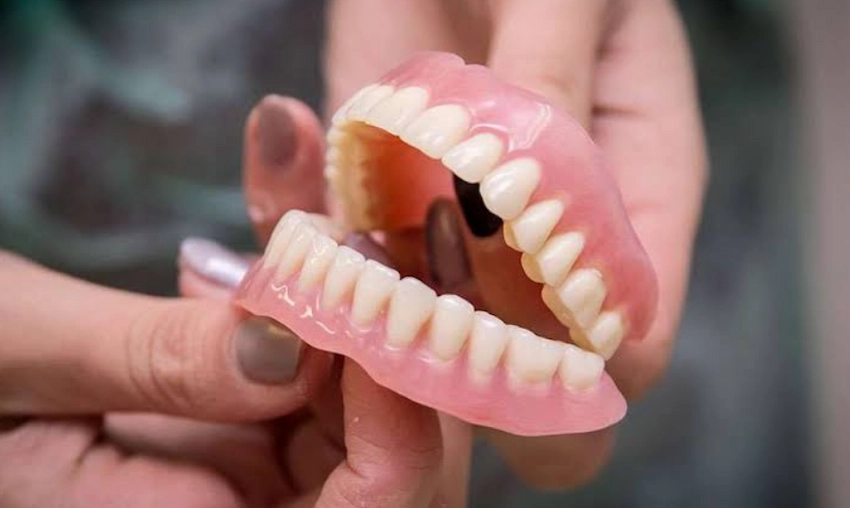
At Lema Dental Clinic in Turkey, denture glue is something we see as a temporary patch only. It should not, and in fact, it rarely is, a permanent lifestyle solution.
Every day, Dentist Polen Akkılıç and her team are involved in complex smile restoration work. They witness continuous harm caused by adhesive use in the mouth. It chronically irritates the gums and, due to intimate biological changes, adversely affects the natural biology.
We, in fact, stress quite a bit on delivering permanent, root-cause solutions by assisting patients who want to get rid of removable plastics and, instead, switch to fixed systems like Zygomatic implants, All-on-4, or All-on-6 zirconium bridges.
By implementing these advanced implant systems, the notion of “adhesive” disappears entirely. We fix your new teeth directly in the jawbone. These teeth are indistinguishable in look and function from the strong natural ones.
The issue remains: how can you handle the loose denture at the moment of writing?
Direct from the Doctor: 5 Frequent Questions
Why does my denture feel so loose just after four days?
“Usually, this means that your healing is going very well! We manufacture the denture for the swollen gums on day one. The swelling goes away as you heal. Thus, there is a natural gap between your shrinking gums and the rigid plastic. Completely normal!”
What will happen if I break the rules by using the glue on day three?
“You end up sealing deep in your wounds harmful bacteria. The blood clots that are healing will be yanked out when the denture is removed at night, which will expose you to great pain and get us back to square one with your healing time.”
Is denture powder safer than gel right after surgery?
“No, it is not. Powder is indeed viscous, but it remains a foreign chemical. The extraction sites in your mouth are open, and powder can easily make its way there. The only safe alternative is for you to wait until your delicate gum tissue has completely closed.”
How do I eat if my teeth are slipping and I cannot use glue?
“For strict rest to be granted to your jaw, a liquid diet or very soft foods only are advised in the first two weeks. Smoothies, broths, and mashed potatoes are what you will have to stick with. It is best not to even consider chewing hard or sticky foods.”
It is week four, and the denture is very loose. Should I use more glue now?
“Under no circumstances should you use thick layers of glue. Your bite will become misaligned,d and then bone loss in the jaw will be accelerated. Come to the clinic for a soft reline. This option will provide a soft, temporary, medical lining that will adjust well to your shrinking gums.
Academic References
- Felton, D., Cooper, L., Duqum, I., Minsley, G., Guckes, A., Haug, S., … & American College of Prosthodontists. (2011). Evidence-based guidelines for the care and maintenance of complete dentures: a publication of the American College of Prosthodontists. Journal of Prosthodontics, 20(s1), S1-S12.
- Nabil, E., & Al-Zordk, W. (2022). Influence of denture adhesives on oral health, quality of life, occlusion, and disocclusion times of digitally fabricated and designed removable complete dentures (clinical crossover study). International Journal of Advanced Research, 10(06), 696-706.
- Maciejewska, I., & Berezowski, J. (2024). Biocompatibility of Denture Adhesives: Effects on Oral Tissues and Inflammatory Responses—Literature Review. Materials, 17(5), 1142.
- Silva-Lovato, C. H., de Wever, B., Adriaens, E., Paranhos, H. F. O., & Watanabe, E. (2010). Clinical and antimicrobial efficacy of NitrAdine™-based disinfecting cleaning tablets in complete denture wearers. Journal of Applied Oral Science, 18(6), 560-565.
- Kordass, B., & Hugger, A. (2015). Biomechanical factors related to occlusal load transfer in removable complete dentures. Clinical Oral Investigations, 19(8), 2005-2016.

