


Apply denture adhesive once a day, and avoid reapplying unless your dentist advises it.
After finishing your coffee, you experience that familiar, unpleasant slip again. The plastic plate moves across your gums. Your first reaction is to grab the denture adhesive. That’s what millions of people do every day.
To a certain extent, today we all get into the habit of action due to our fast lives. But let’s reflect a bit on the habit of seeking relief through that tube. What is the frequency of you grab the tube? If it is more than twice a day, please consider this a warning, since this means that your body is sending frustrated signals to you as the infrastructure is failing.
In fact, you are supposed to use denture adhesives only once a day.
Using paste to keep your teeth in place from morning till night indicates that the teeth do not fit anymore. From our point of view, at Lema Dental Clinic, extra adhesive is not just irritating. It conceals a significant health hazard.
The Diminishing Foundation
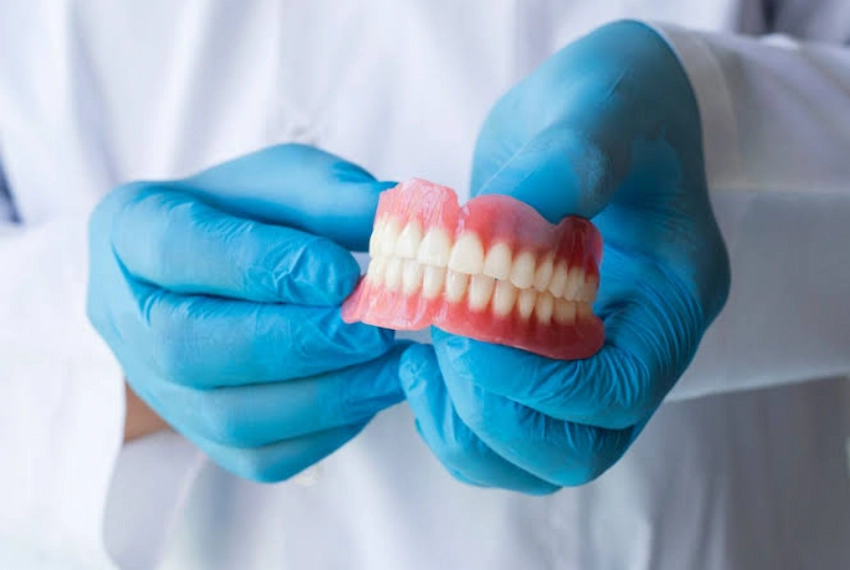
Considering your jawbone like the concrete foundation of a building might be a good analogy. Chewing is done by teeth, as they are the workers performing the job. They also send signals to the bone to remain healthy. When teeth are lost, the stimulation is significantly decreased, and the foundation starts falling apart. The process is known as bone resorption.
Attempting to fix a hard plastic denture on a shrinking jaw is just throwing good money after bad. It is precisely like placing a heavy roof on shifting sand.
Professor Doctor Coşkun Yıldız frequently points out a sad reality in our clinic. Patients who apply adhesive multiple times a day are essentially waging a losing battle. The denture is unchanged. It is the jaw that has altered. Filling that gap, which keeps getting bigger, with chemicals introduces new risks.
Unknown Risk: Zinc Poisoning
This is what we encounter in patients at the clinic with excessive adhesive usage: devastating nerve damage. Numerous widely used adhesive pastes include zinc to increase their sticking power. A very small amount of zinc is harmless. But overusing these pastes, say, three or four times a day, leads to chronic zinc poisoning.
Excess zinc disrupts the body’s copper metabolism. Copper deficiency, in turn, leads to progressive nerve damage.
Some of the initial symptoms may be:
- Loss of sensation or tingling in hands and feet.
- Difficulty in maintaining balance while walking.
- Weakness without a clear reason in arms and legs.
You think you are only making sure your smile stays secure for dinner. The reality is that overusing ointments chronically could lead to irreversible nerve damage.
Changing Forever: Fixing the Foundation
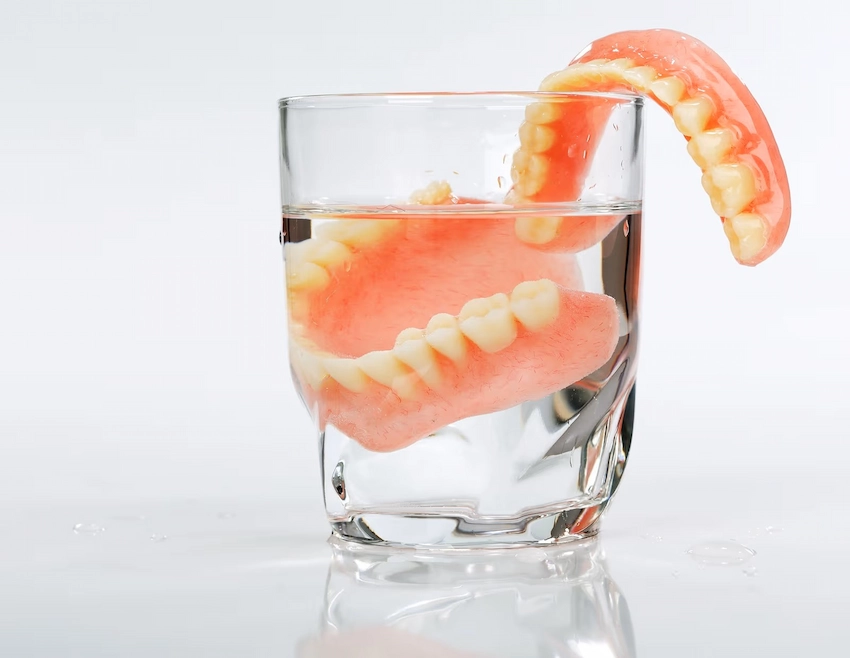
So, what is the answer after all? You are not supposed to be dependent on a tube of paste all your life. Dentistry today has methods that are permanent and completely safe.
Dentist Polen Akkılıç and her team transform the lives of those who opt to never wear traditional dentures again. We employ state-of-the-art techniques such as All-on-4, All-on-6, and Zygomatic implants. These provide a secure base for your custom Zirconium bridge to be affixed directly to the bone.
Some patients are told that they do not have enough bone for implants. For them, Zygomatic implants are a great solution. They fix to the cheekbone, which is a hard part of the skull located above the jaw.
The outcome is a smile for life. There is no more fake plastic palate. It is never going to slip. You will never need glue. The best part is that these implants constantly stimulate the jawbone and therefore, the bone loss is stopped completely.
People come from different countries to have their treatment done at our center in Istanbul, Turkey. They want to regain their bite and freedom of living.
Which One Is Your Fit?
| Feature | Traditional Dentures + Adhesive | Permanent Implants (All-on-4/6) |
| Annual Adhesive Limit | Only once a day, strictly | At no time |
| Teeth Function | About 10% to 20% of own teeth | Nearly 95% of natural teeth |
| Bone Health | Leads to further bone loss | Helps, saves, and preserves bone |
| Mouth Roof | Covered fully with plastic | No palate at all, completely natural |
| Health Risks | Presents high risk of zinc toxicity | Non-toxic titanium; chemically free |
Frequently Asked Questions
Can I use adhesive twice a day if I clean my dentures first?
Once again, we encourage you not to do it. Cleaning is very important, but it doesn’t necessarily mean that the denture fits well . If you have to apply another layer, it means the gap is too big. The ideal solution would be to have the denture fitted or get a permanent upgrade.
What are the first signs of zinc toxicity from denture glue?
First, it’s mostly quiet. Plus, you might feel some tingling sensation, like “pins and needles”, in your fingers or toes. You might even stumble while moving. If those symptoms happen to you after putting a lot of adhesive, stop right away. Tell your doctor about it.
Why are my dentures so loose after fitting perfectly for two years?
It is not your plastic dentures that have shrunk; it is your jawbone that has shrunk. The bone loss never stops. A professional reline is usually required every year or two for traditional dentures to keep up with the melting bone.
Can I get permanent teeth if I have severe bone loss?
Absolutely. Zygomatic implants are our go-to solution when the upper jawbone is severely resorbed. Due to their extended length, the implant posts are securely placed on the cheekbones. A bone graft is not necessary, and they still provide a very stable base.
How long does the All-on-4 procedure take in Turkey?
Lema Dental Clinic places implants and gives you temporary fixed teeth in one day. That is the day you walk out with a smile. Using adhesive becomes a thing of the past.
Academic References
- Nations, S. P., Boyer, P. J., Love, L. A., Burritt, M. F., Butz, J. A., Wolfe, G. I., … & Trivedi, J. R. (2008). Denture cream: an unusual source of excess zinc, leading to hypocupremia and neurologic disease. Neurology, 71(9), 639-643.
- Carlsson, G. E. (2014). Responses of jawbone to pressure. Gerodontology, 31(1), 8-14.
- Maló, P., de Araújo Nobre, M., Lopes, A., Macroux, O., & Goss, E. (2011). “All-on-4” immediate-function concept for completely edentulous maxillae: a clinical report on the medium (3 years) and long-term (5 years) outcomes. Clinical Implant Dentistry and Related Research, 13(s1), e109-e117.
- Aparicio, C., Manresa, C., Francisco, K., Claros, P., Alández, J., González-Martín, O., & Albrektsson, T. (2014). Zygomatic implants: indications, techniques and outcomes, and the zygomatic success code. Periodontology 2000, 66(1), 41-58.
- Plemons, J. M., Brogdon, C., & The Council on Scientific Affairs. (2014). Evidence-based clinical practice guideline for the care and maintenance of complete dentures. The Journal of the American Dental Association, 145(8), 856-857.

