Can Two Teeth Be Extracted at the Same Time?
It is quite possible to have two teeth taken out simultaneously, and, in most scenarios, it might even be your dentist’s suggestion. This methodology is usually applied when both teeth are neighbors in the oral cavity and are going to be removed due to the same reason, for instance, decay, infection, or overcrowding. Removal of more than one tooth at the same time can become a more solution-oriented way of work; thus, you would be able to save your time and cut down the number of your dental appointments.
When evaluating this possibility, your doctor will examine the two teeth’s conditions and give the green light when it is considered safe to extract them at the same time. The less the distance between the teeth and the more they are in bad conditions, examples being severely decayed or impacted, a removal of them together can be a more viable solution to the problem.
But still, the judgment of uprooting two teeth concurrently will be influenced by the patient’s weighted factors, such as age, health, and procedure complexity. If we say, for instance, one tooth is extremely impacted while the other is pretty easy to take out, then only two separate procedures will be carried out to keep the healing process on schedule and reduce any risks.
Even if the thought of multiple extractions frightens you, the Lema Dental Clinic team in Istanbul is trained to do it with accuracy and gentleness, and thus you can be assured of your tranquility and comfort during the whole procedure.
How to Prepare for a Tooth Extraction?

Tooth extraction preparation is the key to having the operation done smoothly and your recovery as fast and as painlessly as possible. Here are some must-do preparations before your dental extraction appointment:
Check with Your Dentist Before: the extraction, you are going to have a meeting with your dentist to go through the procedure step by step. At this consultation, promptly disclose to your dentist if you have any kind of health conditions, allergies, or medications you take. Situations like diabetes or clotting problems can slow healing, so the dentist must be informed of such conditions.
Strictly Comply with Pre-Procedure Instructions: Your dentist will surely give you a set of instructions that you have to follow on the day of the procedure. For instance, if you’re going to extract a tooth under anesthesia, you might get a directive not to eat or drink for some hours just before the procedure. This is very vital if you are going to be sedated, since the gas can cause vomiting if food is still in your stomach.
Have a Plan for Transportation: If you get sedated or fall under general anesthesia, the best thing to do is to get someone to drive you home after the operation. You might feel the effects of the anesthesia, like being sleepy or confused; thus, a friend or a family member needs to be there for you.
Get Ready for Treatment at Home: It is also significant to be prepared for the recovery time at home. Fill your refrigerator with foods of easy to chew, painkillers (only if your dentist recommends them), and water in abundance. Don’t smoke or drink through a straw after the operation because this might cause the blood clot to come out and prolong the healing process.
A dentist who is good at his job will not let you be anxious because he will surely explain to you what will be done and what you should expect. Your dentist will inject a local anesthetic in the area that surrounds the tooth to be taken out, and based on how complicated the extraction is, you could be given local anesthesia, sedation, or general anesthesia. Generally, the removal takes only a short time, but if the work is more complex, the dentist will need more time to finish.
What Care Should Be Provided After a Tooth Extraction?
After undergoing a tooth extraction, the most important thing is to follow the aftercare instructions given by your dentist. The right care results not only in fast healing but also in the reduction of the risk of infections and other issues. This is a complete guide on what you should do:
Control Bleeding
Right after the removal, your dentist will put gauze on the place where the tooth used to be to stop the bleeding. You will have to gently bite on this gauze for about 30 minutes to allow the blood clot to form. In case the bleeding goes on, you might be required to replace the gauze and put more pressure.
Rest and Relax
It is necessary to rest and stay away from any heavy work for the first 24 hours after the extraction. Do not bend over or lift heavy stuff, as these will increase the blood flow to the extraction site and cause you to bleed more. While resting, keep your head elevated with the help of pillows, as this will absorb more than the desired quantity of blood and prevent further swelling.
Follow a Soft Food Diet
At least for the first few days, you should eat only soft food like mashed potatoes, yogurt, soups, and scrambled eggs. Do not eat hot, spicy, or crunchy food as it can cause more wound irritation. Make sure you eat on the side that is not affected by the extraction to prevent disturbing the area.
Pain Management
Your dentist may either give you a prescription for the painkillers or advise you to take some that are available over the counter to manage the pain. Follow the instructions while taking the medications. Using ice wrapped in a towel to the outside of your face can also be a method of getting the swelling to subside and thus relieving the pain further.
Keep the Area Clean
After the initial 24 hours, you should clean the area by rinsing your mouth with warm salty water. This will ensure that the place where the tooth has been extracted remains clean. Do not rinse or spit vigorously because the blood clot can be dislodged. Brush the rest of your teeth as usual, but be sure not to touch the extraction site.
Be Alert for Infection Symptoms
Continuously watching for signs of infection is very important, for instance, the enlargement of the affected area, the presence of pus, or fever. If you experience any of these symptoms, then you should seek the advice of your dentist promptly.
What Should I Do If Bleeding Increases After a Tooth Extraction?
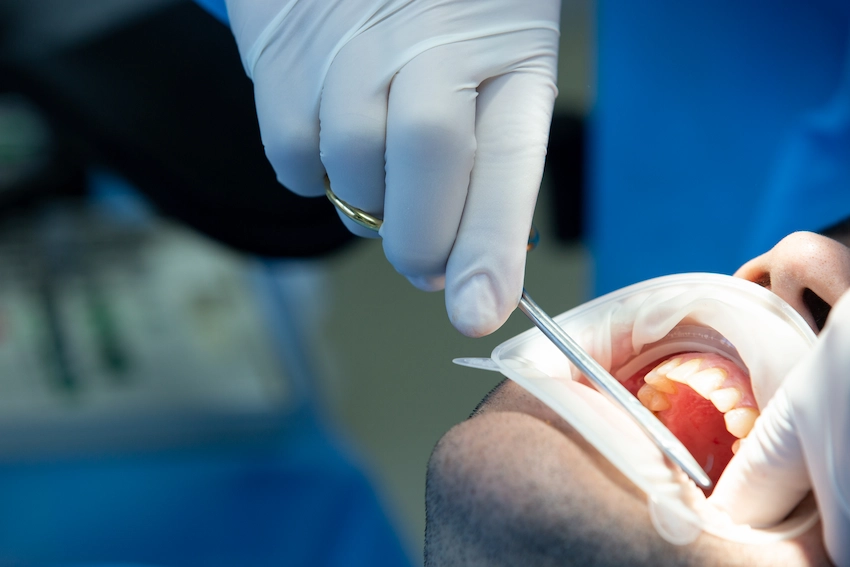
Some bleeding is expected after a tooth removal. Nevertheless, if the blood flow has gone up after the first few hours or the bleeding has not ceased, it might imply an issue. The following suggestions are for you if blood is still coming out:
Apply Pressure: Put a clean gauze or a tea bag on the place where the extraction is and gently bite it for 30 minutes. The tannins in the tea bag may assist in coagulation, which in turn can decrease bleeding.
Stay Calm: Remain calm and do not excessively move or talk. It will lower the likelihood of the bleeding getting worse.
Avoid Certain Activities: Don’t do things like sucking on a straw, spitting with a lot of force, or smoking because these can make the blood clot at the extraction site to become loose, and dislodge, thus leading to more bleeding.
If the bleeding still continues or the bleeding cannot be controlled, then you should call your dentist right away. In some situations, they might need to put in some stitches or use a hemostatic agent to stop the bleeding.
Does Tooth Extraction Improve Your Oral Health?

Tooth extraction can be the right solution to your oral health problems if a tooth is giving you pain, infection, or other complications. Below is how extractions could be of benefit for your oral health:
Prevention of Infection: When a tooth is decayed to an extreme extent or has an infection, its removal can stop the infection from spreading, which will then be a safe place for the remaining teeth and gums. This is very true for wisdom teeth, as they are the main cause of problems like impaction and infection in most cases.
Relief from Overcrowding: Tooth extraction can be a very effective way to relieve overcrowding of your mouth, which ultimately means better alignment of your remaining teeth. It is especially true if you are getting orthodontic treatments like braces.
Aesthetic Improvements: In fact, removing a severely damaged or misaligned tooth may be the reason that your smile is getting better. Your dentist may also suggest dental implants, veneers, or bridges to bring back the lost tooth and to brighten your smile in such situations.
Located at Lema Dental Clinic in Istanbul, we provide a wide range of services covering from extractions to smile makeovers with Hollywood Smile treatments. We offer several solutions, like dental implants and veneers, if you are worried about missing teeth and want to restore both the function and beauty of your smile.
FAQ: How Many Teeth Can Be Extracted at the Same Time?
It is possible to get three teeth removed at the same time, but in that case, the procedure is going to be longer. Before coming up with a decision on the best treatment plan, your dentist will first assess your health condition, check the teeth for issues, and evaluate the complexity.
The removal of 10 teeth in just one day is doable only in theory, and therefore, it is very rare to happen. This scenario would only occur, for instance, when the denture or implant treatment is being prepared. Assessing the integrity of the patient, the dentist will judge if this is the right technique to proceed with.
In general, 4 teeth are removed at one time if they are close together or in the same area of the mouth. It is possible to extract more teeth, but the operation will be longer and will require that the patient be thoroughly checked to ensure they are comfortable.
The wisdom teeth are usually the most difficult to remove due to their location at the rear of the mouth, the shape of their roots, and the possibility of them being impacted. They not only remove these, but they also do surgery at the same time.
The interval between the removals is not the same in all cases. Most of the time, patients are asked to wait from a few days to one week to have the second extraction so that the oral cavity can heal. In case multiple teeth are to be extracted, your dentist will let you know the most convenient timing for you.