


Denture adhesive usually sets within a few minutes for a secure hold.
It’s normal to feel lost when you get up from the dental chair after getting your teeth replaced. In fact, the first few days you could easily feel a bit like a gambler as you are fumbling with your denture adhesive and bonding the paste to your teeth and gums; during this time, you will probably be wondering: “Is it safe for me to have my coffee now?” Or “Will my smile still be intact while I am giving my presentation this morning?”
Rest assured, using removable dentures, es as a matter of fact, does not have to stress you out if you understand the nature of the materials used. At Lema Dental Clinic in Turkey, we value that nothing gives you more confidence throughout the day than a smile that you don’t feel the need to hide.
The truth is that we should go straight to the point because talking about the bonding agents is an easy topic to get lost in – the question is: how long does it take for the bond to set?
The Golden Window: Setting Times Explained
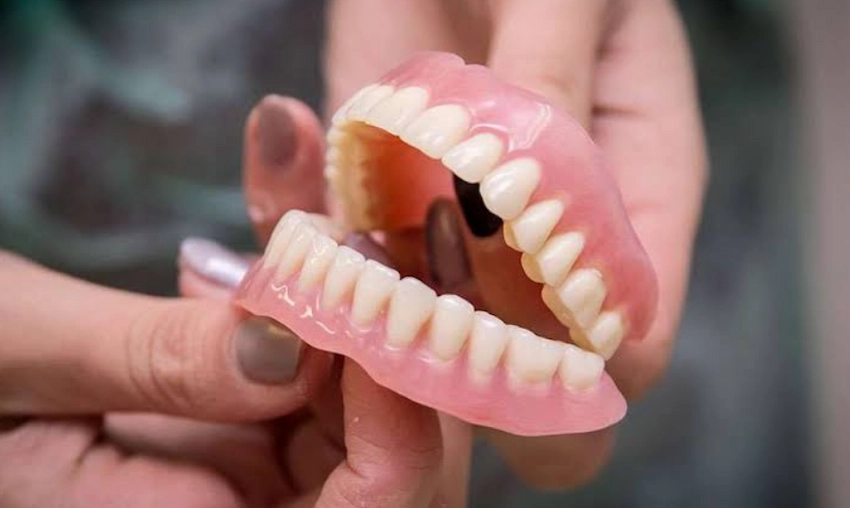
Many denture adhesives you can buy at a store require several steps to work. Unlike super glue, these products don’t set immediately. They operate by coming into contact with your mouth’s natural moisture, causing them to swell and form a bond.
Imagine that your gum tissue is a slightly moist piece of glass. Comparing your denture to a hefty suction cup makes the adhesive not just sticky tape but the actual seal that converts your natural saliva into a really strong lock.
In order to achieve a good seal, the initial setting time is generally 3 to 5 minutes.
On the other hand, you will be surprised that it might be okay with you if the bond is there immediately, but that the complete curing time is much longer. The paste requires 15 to 30 minutes to be able to bear the maximum load.
Professor Doctor Coşkun Yıldız gives his patients this piece of advice: “Delay five minutes now, or worry for twelve hours later. If you break the seal too early, you end up fighting a losing battle all day.”
Comparing Your Options
Not all adhesives work in the same way. Depending on what you have in your bathroom cabinet, your timing will change. Here is what we find in the clinic with respect to the various substances:
| Adhesive Type | Initial Set Time | Full Bond Achieved | Best Used For |
| Cream / Paste | 3 – 5 minutes | 15 – 30 minutes | Daily usage and bridging larger gaps. |
| Powder | 1 minute | 5 – 10 minutes | A thin layer with zero mess. |
| Adhesive Strips | 1 – 2 minutes | 10 – 15 minutes | Travel-friendly and quick application. |
The Lema Protocol for a Bulletproof Hold
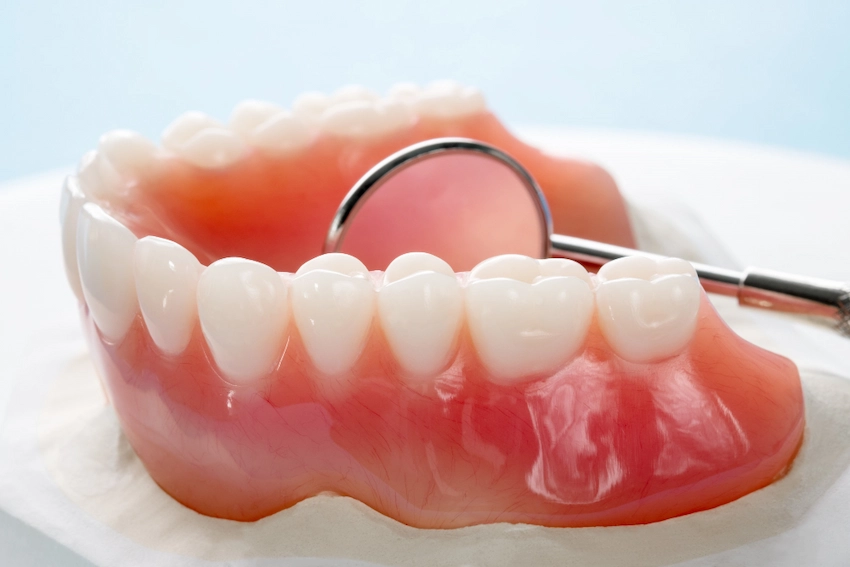
Getting to know how long it will take is only half of the story. How you use that time is just as important. Dentist Polen Akkılıç and her team put in a lot of hours fixing people’s smiles. Also, in addition to the dental treatment, they educate patients on the best ways to look after their oral health.
Getting the strongest hold possible is just following these simple steps, as per our clinical experience at Lema Dental Clinic:
- Dry the Acrylic Thoroughly: After washing your dentures, make sure to dry the acrylic thoroughly before you apply the paste. Water on the plastic will cause the adhesive to expand prematurely. This will make the bonding ineffective.
- Apply Small Pea-Size Amounts: Place three or four small pea-size dots of paste on your denture. Avoid drawing a long continuous line.
- Bite Firmly: Immediately after putting the denture in your mouth, bite firmly. Maintain this pressure for at least 60 seconds. This helps in forcing out the trapped air pockets.
- Don’t Drink Immediately: At least wait for 15 minutes before you drink anything hot. The paste will get melted by hot coffee or tea even before it has completely set.
Frequently Asked Questions (From the Doctor’s Desk)
Can I eat right after putting my dentures in?
Doctor’s Answer: When I am advising my patients in this manner, I do also explain that it is perfectly fine to be patient and wait. At least 15-20 minutes should pass before you eat. Also, refrain from having hot soup during the first half-hour. Essentially, you desire that the seal has entirely healed. If the seal is not adequate, chewing will lead to intracantine suturing.
Why does the paste ooze out the sides when I bite down?
Doctor’s Answer: This is a sign of overdoing it! Many people equate more glue with a better hold. However, the opposite is true. Excessive paste will result in a change of your bite and the breaking of suction. The rule of thumb is the three small dots.
Is it better to use powder or cream?
Doctor’s Answer: That is an excellent question. If your denture fits perfectly, powder is wonderful. It forms a very thin, secure layer. On the opposite side, if the bony ridge has decreased and the fit is loose, cream goes a long way in filling those gaps.
How often should I put more paste on during the day?
Doctor’s Answer: Only in the morning. If you need to add more paste after lunch, that is a clear sign that your dentures are no longer fitting properly. As time passes, your jawbone changes. You might be in need of an appointment with your clinic to get the fit adjusted.
What if no adhesive keeps them in place anymore?
Doctor’s Answer: The thing is, why do you want to struggle with an ill-fitting denture? This is the reason why patients from all over the world come to Turkey to see us. At the stage of implant-supported dentures, we talk about the fact that adhesive is only a temporary fix when bone loss becomes so severe. With the teeth being fixed directly to the jawbone, there is no longer a need for adhesive.
Academic References
- Bartlett, D., & Carter, N. (2020). Denture adhesives: A comprehensive review of clinical efficacy and patient satisfaction. Journal of Prosthetic Dentistry, 124(3), 289-295.
- Felton, D., Cooper, L., Duqum, I., Minsley, G., Guckes, A., Haug, S., … & Sweitzer, B. A. (2011). Evidence-based guidelines for the care and maintenance of complete dentures: a publication of the American College of Prosthodontists. Journal of Prosthodontics, 20(s1), S1-S12.
- Grasso, J. E. (2004). Denture adhesives: changing attitudes. Journal of the American Dental Association, 135(1), 95-96.
- Polyzois, G. L., Lagouvardos, P. E., & Frangou, M. J. (2006). Yield strength and initial failure of denture adhesives. International Journal of Prosthodontics, 19(4), 396-398.
- Zhao, K., Cheng, X. R., Chao, Y. L., & Li, Z. A. (2004). Laboratory evaluation of a new denture adhesive. Dental Materials, 20(5), 419-424.

