


With proper care, zygomatic implants are designed to last a lifetime.
It can be quite devastating if you hear that you have lost a great deal of bone in your upper jaw. After all, it takes a good deal of time and effort to get a fully functioning smile again.
Most people who come to us tell us that just the thought of undergoing complicated bone grafts is the last thing they want to do, and that is why they ask a very simple and straightforward question. If I decide to go with zygomatic implants, will it be a permanent solution?
Actually, dental implants in the traditional sense are not an option for everyone. However, zygomatic implants can be a wonderful alternative for those with extreme cases of bone resorption. Of course, for many, investing in a smile means that you are totally convinced that it is a good decision, and this is particularly true when you are planning on traveling to Turkey for world-class dental care. You want to know your new smile will last. The foundation we build today must support your confidence for decades to come.
Here is a clear look at how they work, what the clinical data proves, and what you can expect at Lema Dental Clinic.
Understanding the Bedrock: How They Work
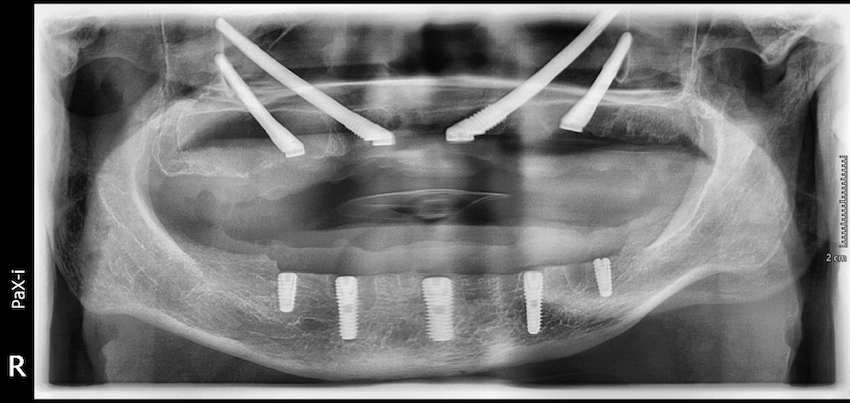
The first step to figuring out how long these implants will last is to first understand how they actually work. A good analogy might be comparing standard implants to building a house on unstable ground. So, if the ground keeps eroding, eventually, the house is bound to come down.
Unlike standard implants, zygomatic implants do not even touch the problematic part of the house – eroding soil – in the first place! They are therefore not affected by the reduction of bone in the upper jaw. Moreover, they are fixed into the zygoma or cheekbone. It is equivalent, in terms of anatomy, to a skyscraper being anchored into solid bedrock.
Professor Doctor Coşkun Yıldız correctly points out a very important fact that also has clinical implications. The cheekbone or zygoma is a dense bone that does not disappear after the loss of teeth, as the other bones do. It offers very strong support. The exceptional stability after the implant placement that we witness is the result of this fact.
The Lifespan: What the Clinical Data Shows
Two matters that determine the success or failure of zygomatic implants in the long term are follow-up time and sample size.
A comprehensive analysis of the literature reveals an outstanding outcome. The survival rate of zygomatic implants is extremely high, with a 96% to 98% success rate even after the passage of 10 to 12 years since their placement. The majority of patients receiving these implants may consider them as a lifelong solution. Due to the anchorage in very dense bone, the probability of failure at a later time is very low. The difference between the two groups was not statistically significant, meaning that the implant type did not influence the amount of marginal bone loss.
Why Precision Matters for Your Surgery in Turkey
Once you get down to it, what determines how long your implants will last is the quality of the surgery and the prosthetic work.
The approach for the implantation step is a very demanding one. It is, however, one of the key elements to restoring the phase at our clinic in Turkey, where Dentist Polen Akkılıç, together with her team, charts out the entire restorative plan for you. This means that it is the perfect placement of the implant that is the main objective. Such a great level of attention to detail in the prosthetic aspect is also required.
If the patient’s masticatory forces result in an even pressure distribution on the dental implants, then the mechanical stress is minimized. Thanks to this very nice, harmonious interaction, it is possible for the titanium hardware to remain in good working order even after decades without any fatigue.
Comparing Your Implant Options
| Feature | Standard Implants | Zygomatic Implants |
| Bone Needed | Requires healthy jawbone density | Bypasses the jawbone; uses the cheekbone |
| Bone Grafts? | Often requires months of grafting | No bone grafting is required |
| Timeline | 6 to 12 months (with grafting) | Immediate loading (teeth in one day) |
| Success Rate | ~95% (if bone is very healthy) | 96% – 98% (even with severe bone loss) |
| Lifespan | 15+ years to a lifetime | Designed to last a lifetime |
Maximizing Your Investment at Home
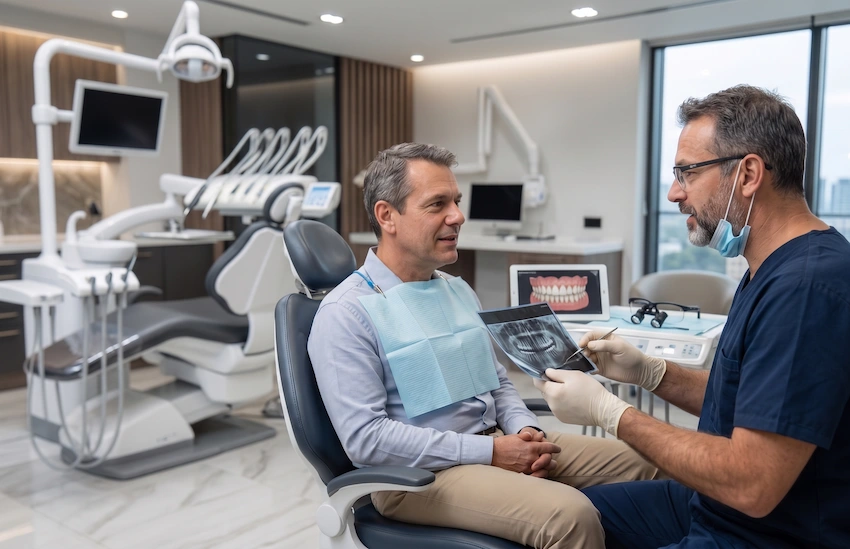
The question that still lingers is: how can you make sure your implants will be well-maintained?
Titanium itself is a very stable mineral that cannot be broken down. However, the gums remain susceptible to bacterial attacks. If the tissue is inflamed as a result of the bacteria-producing plaque, then surgical failure is inevitable. There is no other reason for the restoration not to keep working except peri-implantitis or inflammation of the gingiva and the bone around the implant.
Therefore, for the zygomatic implants to be the ones that will be with you for your entire life, it will be necessary for you to have good dental hygiene and do the following:
- Perfectly Clean: The use of water flossers and specialized interdental brushes should be incorporated into your daily oral care routine. Make sure that the area below the bridge is always free from food and any plaque accumulation.
- Go See Your Dentist Regularly: Getting a professional cleaning every 4 to 6 months by your local dental hygienist is very important.
- Use a Night Guard: If you are one of those who grind their teeth at night, then you should be wearing a night guard. This will ensure that the titanium fixtures will not experience any abnormal stresses while you sleep.
Just as the bedrock itself cannot be moved, the surroundings are a different matter. That is why they require your care on a daily basis.
Frequently Asked Questions
Zygomatic implants have the same, or even slightly better, long-term survival rates than standard implants. This is because they are anchored in the very dense facial bone. If you take good care of them, we expect them to last you a lifetime.
Such a response is practically unheard of. The material of the implants is pure titanium, which integrates perfectly with your bone. There have, however, been other reasons leading up to implant failures. Poor oral hygiene, heavy smoking, and uncontrolled diabetes are some of these reasons. Basically, an allergy is the least likely biological reason to cause failure.
The answer is No – in fact, it is the major benefit of this procedure. We do not even use the jawbone that is missing. Instead, we fix the implant into the cheekbone so you can avoid months of painful grafting and waiting.
It is highly unlikely that you will feel any pain at all since deep sedation or general anesthesia is utilized by us for this kind of surgery. Normally, you will encounter some swelling and bruising at first. However, the pain itself is usually quite easily handled with the standard pain medications.
You treat them just like natural teeth, but you will also need a few additional tools. We will teach you before you leave the clinic as to how to use a water flosser. Additionally, we will give you the cleaning brushes specifically designed for removing the plaque from underneath your new fixed bridge. Keeping the gumline impeccably clean is undoubtedly the best way of guarding your investment.
- Aparicio, C., Manresa, C., Francisco, K., Claros, P., Alández, J., González-Martín, O., & Albrektsson, T. (2014). Zygomatic implants: indications, techniques, and outcomes, and the zygomatic success code. Periodontology 2000, 66(1), 41-58.
- Chrcanovic, B. R., Albrektsson, T., & Wennerberg, A. (2016). Survival and complications of zygomatic implants: an updated systematic review. Journal of Oral and Maxillofacial Surgery, 74(10), 1949-1964.
- Malevez, C., Abarca, M., Durdu, F., & Daelemans, P. (2004). Clinical outcome of 103 consecutive zygomatic implants: a 6-48 months follow-up study. Clinical Oral Implants Research, 15(1), 18-22.
- Sharma, A., & Rahul, G. R. (2013). Zygomatic implants—a literature review. Journal of Oral Implantology, 39(2), 215-224.
- Tzerbos, F., Bountaniotis, F., Theologie-Lygidakis, N., Fakitsas, D., & Fakitsas, I. (2016). Complications of zygomatic implants: our clinical experience with 4 cases. Acta Stomatologica Croatica, 50(3), 251-257.

