


All-on-6 implants can last 15 to 20 years with proper care and regular dental check-ups.
All-on-6 Dental Implants: How Long Can We Expect Them to Last?
Patients who come to Lema Dental Clinic in Istanbul aren’t just looking for temporary solutions to their dental problems. They want resolutions that will last them permanently. Dentist Polen Akkılıç and her team get asked one of the most common questions at the first consultation: “How long do these last?”
That is indeed a very reasonable question. Agreeing to undergo an All-on-6 dental implant in Turkey means investing in your future. Naturally, you want to make sure that your new smile is more than just a temporary cosmetic enhancement but something that will last you a lifetime.
The Simple Answer: Maybe a Decade or Even an Entire Lifetime?
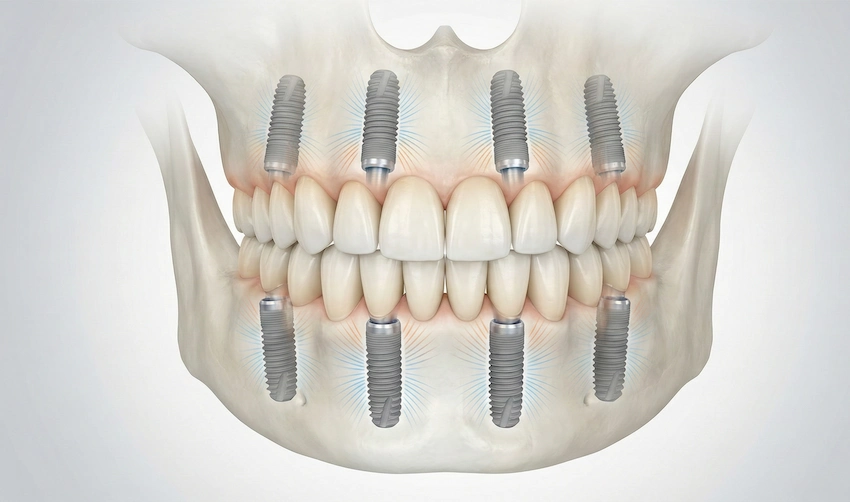
Indeed, dental implants have been made with the intention of being permanent. Getting the implants done, you are close to your jawbone while, in the case of traditional dentures, the dentures simply rest on the gum like loose carpets.
Research has demonstrated that the success rate of titanium posts is over 95% even 10 years after the operation. At Lema Dental Clinic, based on our experience, when a patient perfectly follows his/her aftercare instructions, those titanium roots can be his/her lifetime companions, being the 25th anniversary of the implants or the 60th for that matter. However, the implant (the screw) and a prosthetic (the visible teeth) must be recognized as two different things.
The Bottom Vs. The Face
Imagine that your All-on-6 system is like a villa of premium quality by the coast.
- The Implants: Just like concrete piles are deeply driven into the rock so are these implants in the bone. If it can be assumed that the ground is healthy they will be there forever.
- The Bridge: The house on top is the bridge which is exposed and vulnerable to the “weathering” of chewing, acidic foods, as well as sometimes grinding. Even if the foundation is supposed to remain intact, in the case of the house, a new coat of paint or roof repairs might be needed (replacement of the bridge) every 10 to 15 years.
What Determines the Duration?
Professor Doctor Coşkun Yıldız underscores that the durability of an All-on-6 product depends on more than just the procedure itself, it is also intimately relevant to the patient’s physiology. Here are a few that can severely impact it:
- Bone Density: You would not build a skyscraper on the beach with the ground shaking and shifting, right? Implants can similarly be trusted only with a jawbone of a suitable density. If the bone had been lost, we would, therefore, perform a bone grafting to make sure that the foundation is as “rock solid” as possible.
- Systemic Health: Some diseases, such as diabetes, when not under control can lengthen the time of (osseointegration) which is the healing process.
- Lifestyle Habits: Men and women who take up smoking demolish their dental implants the most. It limits blood circulation to the gums just as a blocked garden hose prevents water from reaching the lawn.
- Oral Hygiene: You cannot get “cavities” in porcelain, but you can get gum disease. You might be in trouble with your implants if you neglect them, as peri-implantitis (implant infection) might lead to implant failure.
Comparing the Options: All-on-6 vs. Alternatives
| Feature | Traditional Dentures | All-on-4 Implants | All-on-6 Implants (Lema Standard) |
| Expected Lifespan | 5–7 Years | 15–20 Years | 25+ Years / Lifetime |
| Stability | Low (Slides/Clicks) | High | Maximum |
| Bone Preservation | None (Bone Loss) | Moderate | High (Stimulates Bone) |
| Maintenance | Daily Removal | Professional Cleaning | Professional Cleaning |
| Chewing Power | 20-30% | 80% | 95-100% |
Why All-on-6 Implant in Turkey i Great Choice?
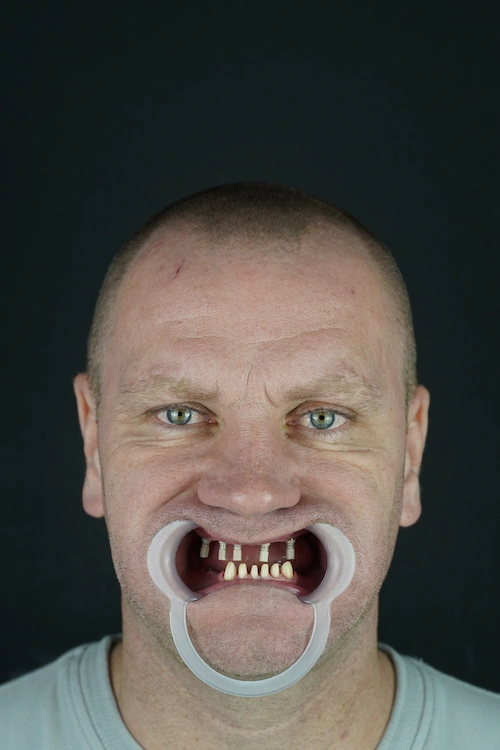

It is still unclear: what is it that attracts such a large number of people to Turkey for this procedure? By means of innovative 3D imaging at Lema Dental Clinic we work out the nerve paths, bone thickness, etc. with absolute precision before the first cut.
Dentist Polen Akkılıç along with her team identifies that the number “6” in the context of All-on-6 brings in a higher level of mechanically loaded distribution. The clinicians are able to reduce the stress on the jawbone by spreading the biting force over six points instead of four. Imagine the difference between supporting a heavy table with four legs or six – the extra support makes a world of difference for long-term durability.
FAQ: Your Concerns Addressed Directly
Most cases are such that the answer is no. The titanium becomes your bone once the bone encloses the titanium. Only if there is a heavy injury or very bad gum disease, the screws taken out.
We are constantly attentive to your comfort. Most patients report that they just felt the “pressure” and not the pain . Due to state-of-the-art sedation techniques coupled with our team of highly skilled surgeons, the whole process is normally less painful than what people expect.
You care for them as if they were your natural teeth but with some modifications. Brushing is a must, and to get rid of the food particles from under the bridge, we strongly advise using a water flosser (like a Waterpik).
It could be yes, but bone volume testing might be necessary first. Although your jawbone may be thin, Professor Doctor Coşkun Yıldız and our team are highly experienced in bone grafting and sinus lifts to get the place ready.
One of the advantages of the All-on-6 system is redundancy. Since there are six points of contact, if one implant doesn’t fuse, there is a high possibility that we can change it without damaging the whole bridge.
- Adell, R., Eriksson, B., Lekholm, U., Brånemark, P. I., & Jemt, T. (1990). A long-term follow-up study of osseointegrated implants in the treatment of totally edentulous jaws. International Journal of Oral & Maxillofacial Implants.
- Buser, D., Sennerby, L., & De Bruyn, H. (2017). Modern implant dentistry is based on osseointegration. Periodontology 2000.
- Malo, P., de Araújo Nobre, M., Lopes, A., Moss, S. M., & Molina, G. J. (2011). “All-on-4” immediate-function concept for completely edentulous maxillae: A clinical report on the medium- (3 years) and long-term (5 years) outcomes. Clinical Implant Dentistry and 1Related Research.
- Papaspyridakos, P., Busaid, S., & Gallucci, G. O. (2012). Implant survival rates and prosthetic complications of OTG (one-time-guidance) protocols. Journal of Prosthetic Dentistry.
- Vogel, R. C. (2008). Implant-overdentures: A longitudinal study of 127 patients followed for 10 to 20 years. International Journal of Oral & Maxillofacial Implants.

