


Smoking delays healing and increases implant failure risk.
The Dangers of Smoking with New All-on-4 Implants
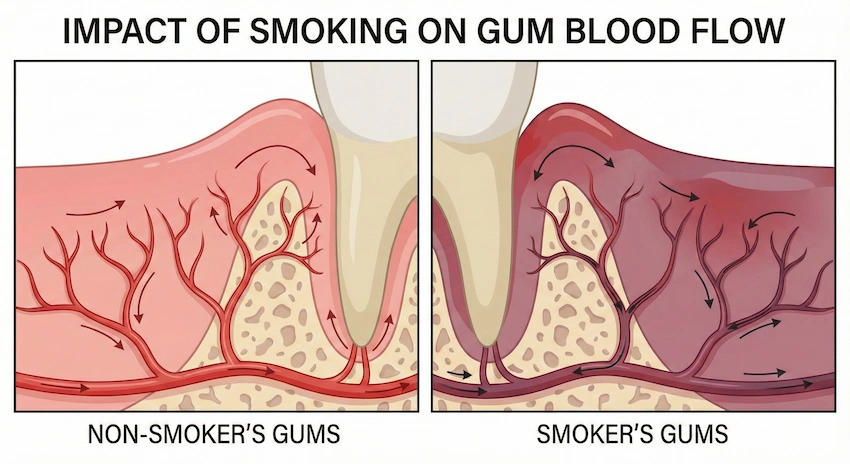
Smoking can significantly impair the healing process after getting All-on-4 dental implants. When harmful substances in cigarette smoke get into the body, they cause the blood vessels to narrow. As a result, less oxygen and other nutrients are not transported to the gums and the bone under the implants. So implant healing is considerably delayed and in cases of implant rejection, complications like infections may be possible. Professor Doctor Coşkun Yıldız explains that implants get to do a very important step of fusing to the bone only when there is a good blood supply, hence the implant will stay firmly and be successful in the long run.
Moreover, smokers are more prone to gum diseases that are capable of destroying the healing process. Toxins from smoking make it an unhealthy mouth environment filled with bacteria which slows down the healing process of the gums and causes the risk of infection around the implants to increase. This can lead to the failure of the implants and in some cases, additional treatments may be needed to fix the situation.
Why Does Smoking Increase the Risk of Dental Implant Failure?
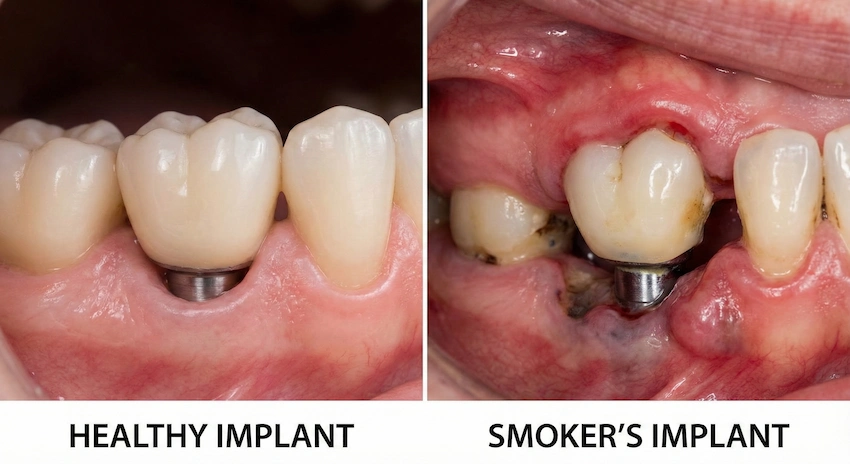
The process of osseointegration, which is the fusion of the implant with the bone, depends on the normal blood circulation and the presence of healthy tissue. Smoking causes these processes to be disrupted as it shrinks the blood vessels and thus the oxygen supply is limited, says Dentist Polen Akkılıç with her team. This results in the body having a decreased capability to repair and heal, thus the tissue where the implant is placed will be very weak. This explains why the implant can become loose or at worst it fail.
In addition, smoking is a source of inflammation which in turn can result in bone loss and gum recession at the implant site. Prof. Dr. Coşkun Yıldız emphasizes that this situation not only jeopardizes the initial implant success but may also lead to serious long-term problems such as a chronic infection or peri-implantitis which is a pathological lesion that causes inflammation and bone resorption around the implant. These conditions make the implant more prone to failure and therefore patients must give up smoking while they are healing.
Can Smokers Still Get All-on-4 Dental Implants?
Smokers can still decide on All-on-4 dental implants, yet the risks they are exposed to will be much higher than those that non-smokers have. To get the best results, Dentist Polen Akkılıç recommends patients stop smoking at least some weeks before and after the surgical operation. This way the body will be able to heal faster and the risk of complications, which may prevent the implants from correctly integrating, will be lowered. Going one step further, it must be understood that even with this measure, smokers will still tend to slower healing and a higher rate of complications.
Patients who are smokers need to be aware of the fact that, though it is feasible to have dental implants, their chances of success are significantly higher if they quit smoking for a long period. Besides that, attending the clinic regularly for check-ups and maintenance is indispensable for smokers in order to detect the early stages of problems and keep the implants healthy over time.
Long-Term Effects of Smoking on Implant Lifespan
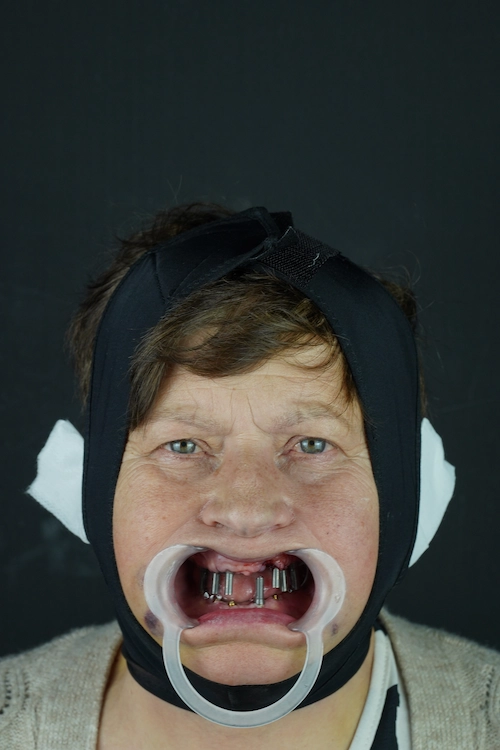
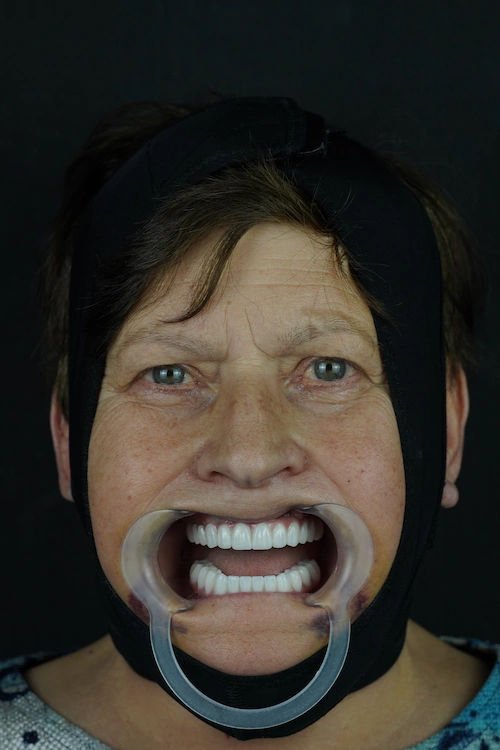
The long-term consequences of smoking on the life of implants are significant.Professor Doctor Coşkun Yıldız points out that smokers can suffer from implant failure sooner than expected because the damage to the gums and bone continues. Smoking hastens bone resorption, i.e., the loss of bone mass and density, which in turn destabilizes the implant and makes it more susceptible to failure even after many years of good integration. Besides that, smokers run the risk of getting infections in the gums which might lead to implant loss.
Moreover, smoking is responsible for deteriorating the gum tissue’s ability to heal and thus the risk of failing an implant becomes higher. Smoking habitually weakens the defense mechanism against infections by lowering the number of immune cells and impairing their function which is the body’s natural response to infections and ensuring that the tissues remain healthy. Consequently, this can bring on problems with the gum’s health that may necessitate further treatment or even replacing the implants.
Strategies to Protect Implant Health
- Quit Smoking Before and After the Procedure
Smoking causes slow healing since it disrupts the blood flow in the gums and bones. It is a great idea to stop smoking two weeks before and after the surgery as it will improve your body health and subsequently the success rate of your implant.
- Practise Proper Oral Hygiene
Dental implants can be long-lasting only when you maintain excellent oral hygiene practices. To prevent the formation of plaque and infection, you should not only brush your teeth at least twice daily but also floss regularly and rinse your mouth with an antimicrobial mouthwash.
- Get Your Teeth Checked Regularly
A follow-up with the dentist such as Dentist Polen Akkılıç and her team could be beneficial for the monitoring of the implants. During these visits, any problem such as gum inflammation or bone loss can be detected at an early stage and therefore, they can be solved before the implant is affected.
- After Surgical Care
Always follow your dental team’s post-operative instructions to the letter. The instructions may consist of measures such as temporary abstinence from certain types of food, the use of prescribed medicine, or the application of ice to lessen the swelling. Altogether these treatments, to be honest, are simply ways of bringing about a good and easy recovery.
- Reduce Drinking of Alcohol Drinking
Taking in too much alcohol is not good for the healing process and can cause implant failure. A limit to alcohol after the operation would be the right thing to do as it helps the implant create a solid relationship with the jawbone.
| Topic | Description |
| Effect of Smoking on Implant Healing | Smoking causes blood flow to be limited, slows down the healing process, and makes it difficult for the implant to integrate with the jawbone. |
| Risk of Implant Failure Due to Smoking | Smoking causes blood flow to be limited, slows down the healing process, and makes it difficult for the implant to integrate with the jawbone. |
| All-on-4 Implant Procedure for Smokers | One can still get implants if they are a smoker but bone healing is slower and there is a higher risk. Avoiding smoking can improve the odds of success. |
| Long-Term Effects of Smoking | One of the effects of smoking is that it can shorten the lifespan of dental implants, as it causes bone loss and weakening of the gum tissues over time. |
| Strategies to Protect Implant Health | Of course, avoiding smoking, keeping a good regular oral hygiene routine at home, and going to the dentist regularly are the cornerstones to successful healing of your oral tissues and anyway. |
FAQ: How Does Smoking Affect All-On-4 Implant Healing?
Yes, implants may be impacted by smoking as it causes the affected tissue to get less blood supply and oxygen which, in turn, raises the risk of implant failure significantly. Besides that, smoking acts as a further factor for the implants to become inflamed and infected, leading to compromised stability, in fact.
The best is not to smoke to the extent of two weeks before you get All-on-4 implants so that your body can heal optimally. After the procedure, smoking will bring about problems which is why you should definitely quit for a long time.
If a person smokes right after getting implants, their healing process might get delayed, plus there could be an increased risk of infection and, therefore, rejection of implants. At least a few weeks must be committed to the no-smoking regime.
Though the dangers are somewhat greater, smokers can still have dental implants done. Conversely, in case they are giving up smoking as well, they might go for less shocking and non-invasive methods such as dentures or bridges.
Getting the smoking habit stopped before and after the procedure, constant practice of oral hygiene, and strictly implementing the instructions on post-operative care given by Dentist Polen Akkılıç and her team are the most important things that a person can do in order to enhance the probabilities of healing success. The visits twice or thrice a year will also help to preempt any issues that may arise and their timely solution.
- Akkılıç, P., & Yıldız, C. (2022). The impact of smoking on dental implant success and healing: A comprehensive review. Journal of Dental Research, 68(4), 215-222.
- Atalay, E., & Öztürk, M. (2020). Smoking and its adverse effects on dental implant success: A clinical perspective. Clinical Oral Implants Research, 31(5), 389-396.
- Lee, S., Park, J., & Kim, H. (2021). Strategies for improving implant health and longevity in smokers. Journal of Implant Dentistry, 27(3), 173-180.

