


Misaligned midline teeth are corrected with orthodontic treatment or dental veneers.
Dental midline alignment describes the ideal situation where the vertical line passing through the center of your face has the contact point between the upper and lower central incisors on it. If this line shifts to the right or left, it results in dental midline misalignment which causes asymmetry of the smile, however, it also negatively impacts bite stability, chewing efficiency, and can even lead to oral health problems in the long run. The clinical examinations performed by experienced teams like that of Dentist Polen Akkılıç, her team, aim at determining if the issue is due to the position of teeth, the structure of the jaw, or the habits of the patient.
Dental midline problems from a natural science point of view are treated as a part of an in-depth occlusal examination instead of merely being considered as blemishes. Prof. level assessments, e.g., by Prof. Dr. Coşkun Yıldız, indicate that aligning the midline area results in an even distribution of the force among the dental arches, consequently, the abnormal loading on the temporomandibular joints is reduced, and, thus, the periodontal state is stabilized over time. A realistic and specific patient plan, diagnosis, and digital imaging are all part of the effective beginning of the treatment.
What Causes Midline Misalignment of Teeth?
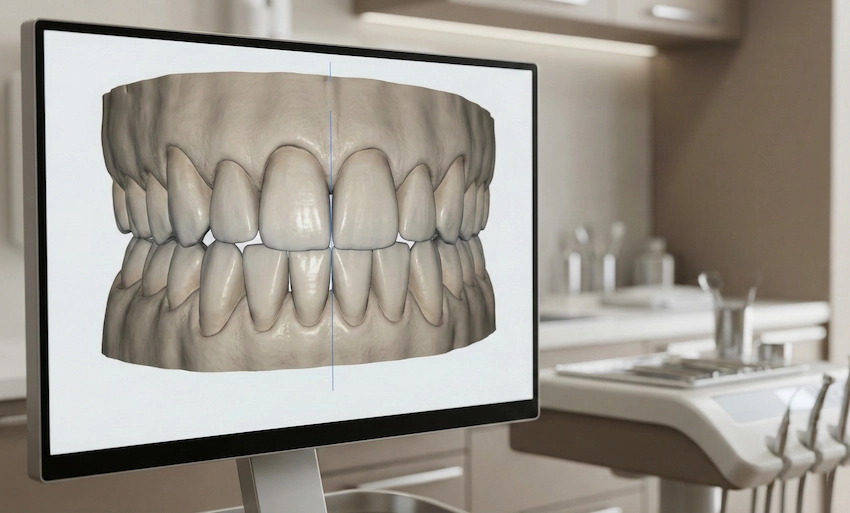
One of the reasons for the dental midline drop may be an irregular tooth eruption, primary tooth early loss, or crowding, which results in the rest of the teeth drifting away from their ideal position. If there is not enough space for the permanent teeth to erupt, they will most likely be pushed to the side, and thus, the dental midline will be pulled away from the center of the face along with the teeth. Moreover, clinical examinations reveal that non-correction of crowding in the teenage period is a very dependable source of midline deviation.
Moreover, a different major reason is a skeletal imbalance between the upper and lower jaw. Growth of unequal jaws, a history of trauma, or a birth defect can cause a dental midline shift even if the dentition looks to be properly aligned. Other than that, functional elements like picking on one side only, thumb sucking, tongue thrusting, or mouth breathing can increase the risk level even more as they apply uneven forces to the teeth and bone of the developing child.
Among other things, the common factors that contribute to the case are:
- Early loss of primary teeth
- Overcrowded or a spaced dentition
- Discrepancies in jaw growth
- Missing teeth or delayed eruption
- Chronic habits as a cause of muscle imbalance
How Is Midline Misalignment of Teeth Corrected?
Dental Midline correction basically starts with a detailed diagnostic work that examines every aspect which includes intraoral examination, digital photographs, panoramic radiographs, and 3D bite analysis. The team of dentist Polen Akkılıç sees it as a very important step to find out first if the misalignment is dental, skeletal, or functional because each of these types requires a completely different therapy method. Thorough diagnosis is a prerequisite for achieving the expected results and at the same time it removes the risk of over-treatment that is done unnecessarily.
Subsequent to the uncovering of the cause, orthodontic appliances are fabricated to subtly and securely move the teeth back into their correct positions. The regulated movement of teeth is dependent on the biological bone remodeling process, which is kept healthy by good oral hygiene and regular check-ups. On the condition that midline deviation is caused by the absence of the teeth, it might be planned to restore such as with crowns or implant-supported structures, and this might be in conjunction with the orthodontic plan to secure the final results.
The Importance of Correcting Midline Misalignment
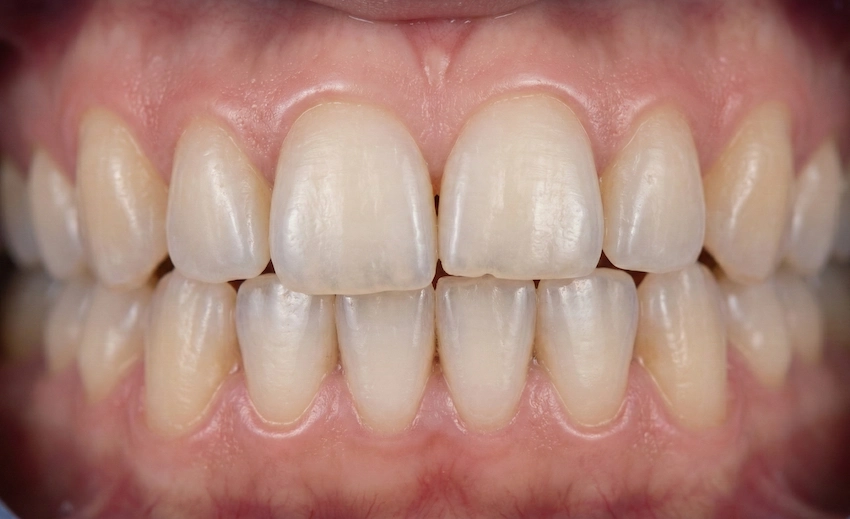
Fixing a dental midline misalignment has a huge effect on getting the bite in the right direction and leads to a decrease in an unequal load of stress on teeth, jaw joints, and the supporting bone. Leaving the midline issue untreated, in reality, the patients get into the situation of enamel wear, tooth fractures, gum recession, and temporomandibular joint discomfort. Professor Doctor Coşkun Yıldız points out that midline correction is a preventive measure as well as a corrective one.
Besides the profile, the appearance and the smile, the midline change can also result in the improvement of the facial symmetry, speech, hearing, and management of the food. In addition, to these, patients disclose their comfort in the performance of the above functions and their self-esteem also gets boosted. All these changes steadily lead to a better level of oral health-related quality of life.
Orthodontic Treatments That Correct Midline Misalignment of Teeth
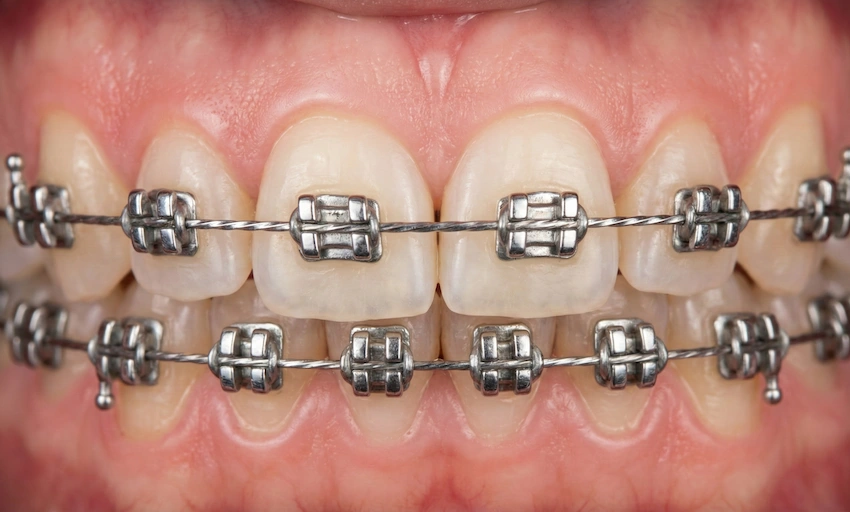
Braces are still considered one of the most accurate and dependable ways to fix moderate and severe midline discrepancies. They are fixed appliances that enable orthodontists to administer very specific forces to the brackets, wires, and elastics in order to reposition the dental segments in a controlled manner. This method is highly effective when it is necessary to involve multiple teeth or even the whole dental arch.
Clear aligner treatment is most commonly used to fix mild and moderate midline shifts,especially in those adult patients who wish for a less visible mode of treatment. When properly carried out, the use of aligners results in the gradual movement of teeth through a sequence of stages that has been digitally mapped out. Where orthodontic intervention involves greater complexity and therefore demands a higher degree of precision and stability, elastics or mini-screws may be employed as an adjunctive apparatus.
Some of the most common orthodontic options are:
- Fixed metal or ceramic braces
- Clear aligner systems
- Interarch elastics for midline guidance
- Temporary anchorage devices for precise movement
How Long Does It Take to Correct Midline Misalignment?
The time length of a dental midline correction is indeed dependent on how far the midline has been shifted, the biological response of the patient, and the treatment approach chosen. If it is a slight deviation of the midline, then aligners or simple orthodontic appliances under the supervision of a professional can be used for about 6 to 9 months.
It is usually 12 to 24 months of thorough orthodontic treatment for a case of more complex orthodontics with not only significant crowding but also jaw discrepancies, missing teeth, etc. Ultimately, the long-lasting success of the treatment will be determined by regular follow-up visits, constant appliance use, and good retention after the end of the treatment to avoid a relapse.
Average Treatment Timeline Overview
| Severity of Midline Shift | Primary Treatment Method | Estimated Duration |
| Mild | Clear aligners | 6–9 months |
| Moderate | Braces or aligners | 9–15 months |
| Severe | Comprehensive orthodontics | 18–24 months |
Frequently Asked Questions About Dental Midline Correction
A dental midline shift is the deviation of the central line of the teeth from the facial center. Such a condition may cause the bite and smile to become asymmetrical.
The misalignment of the dental midline is a daily functional problem of teeth, which leads to a change in one’s face. Therefore, by solving this problem not only does the smile get prettier but the bite also becomes stronger and the overall oral health is maintained for a long time.
Clear aligners can be a great help in correcting a dental midline up to a moderate level if the treatment plan has been properly worked out. Meanwhile, a severely exaggerated case would just be an example of where fixed orthodontic appliances are definitely needed.
Midline correction is a treatment using carefully regulated orthodontic forces that can lead to a feeling of mild, temporary discomfort. This feeling typically goes away after a couple of days.
Retention plays a key role in keeping midline alignment stable post-treatment. If retainers are used according to the instructions, one can avoid relapse and thus keep the results obtained.
- Proffit, W. R., Fields, H. W., Larson, B. E., & Sarver, D. M. (2019). Contemporary orthodontics (6th ed.). Elsevier.
- Graber, L. W., Vanarsdall, R. L., Vig, K. W. L., & Huang, G. J. (2017). Orthodontics: Current principles and techniques (6th ed.). Elsevier.
- Bishara, S. E., Jakobsen, J. R., Treder, J. E., & Nowak, A. (1998). Arch width changes from 6 weeks to 45 years of age. American Journal of Orthodontics and Dentofacial Orthopedics, 114(3), 261–272.

