


Permanent Gold Teeth Turkey Guide
For centuries, gold has been highly valued in dentistry, not only because of its prestigious status, but primarily due to its outstanding biological compatibility. Although current fashion trends tend to favor the pure white color of zirconia, the fact is that gold is still the “gold standard” among patients who want a mixture of long-lasting and tissue-friendly materials.
At Lema Dental Clinic in Istanbul, we treat patients from all over the globe who desire to combine the everlasting look of a gold smile with the top-notch Turkish dental techniques. Whether you want a single-story crown or a full-arch reconstruction, the path to a permanent gold smile is a combination of metallurgy and medicine.
Why Gold? The Biological “Bespoke Suit”
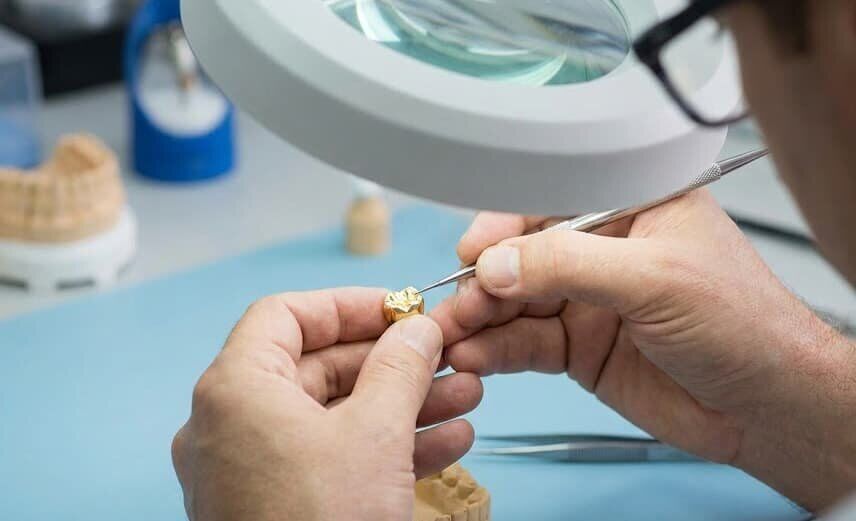
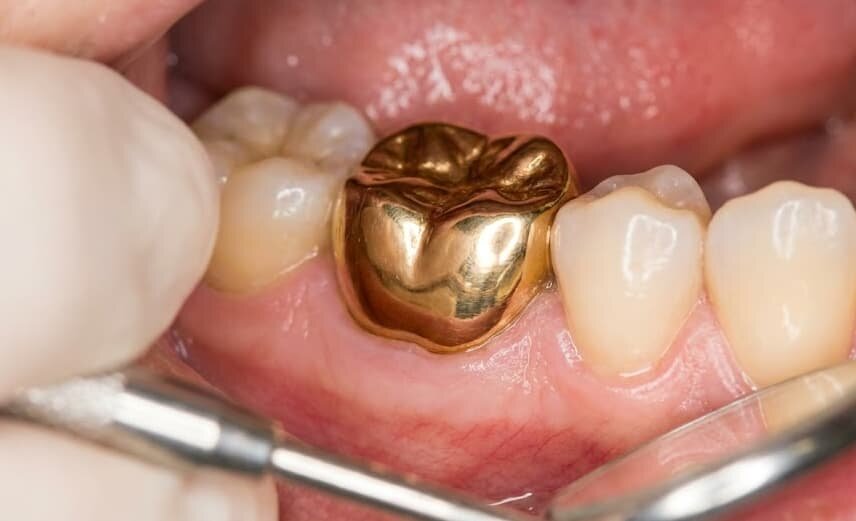
When we say permanent gold teeth, it does not mean the “grillz” that you can put on and take off at will. What we mean is dental crowns or bridges made of medical-grade materials. Based on our experience at Lema Dental Clinic, gold alloys are more compatible with natural tooth enamel than almost any other material.
A gold crown is essentially a custom-made tooth with the precision of an Italian tailor. You may have a “ready-to-wear” ceramic crown that looks nice, but gold adapts and changes with your bite. It doesn’t cause wear on other natural teeth, and it forms such a tight seal that it’s almost like a second skin. Professor Doctor Coşkun Yıldız frequently mentions that the edges of a gold restoration—where the metal and the gum line meet—are the tissue-friendly choices available in contemporary surgery.
The Process: How We Build Your Smile in Turkey
The main thing is how you go about getting them. Doctor Polen Akkılıç, a dentist at Lema, and her team approach the task as both a clinical procedure and a work of art.
- The foundation: The basis of a strong skyscraper is not sand, similarly, we make sure you have good oral health. In case of a missing tooth, we place a titanium implant first, which acts like the “anchor” in your jawbone.
- The Impression: We utilize high-definition digital scanners to take a 3D image of your mouth. This step cannot afford to have any mistakes.
- The Craft: Our lab technicians make use of high-noble alloys. These are not merely 24k gold (which is too soft for chewing); they are specially formulated mixes that can endure the heavy forces of your jaw.
- The Final Fit: The crown is permanently fixed either by cement or screw once it is ready.
Comparing Your Options: Gold vs. The Rest
When choosing a restorative material, it helps to see the data side-by-side. Here is what we typically share with our patients during a consultation:
| Feature | High-Noble Gold Alloy | Zirconia | Porcelain-Fused-to-Metal (PFM) |
| Durability | Extremely High (20+ years) | Very High | Moderate |
| Biocompatibility | Excellent (Hypoallergenic) | Good | Moderate (Can cause grey lines) |
| Wear on Natural Teeth | Minimal (Matches enamel) | High (Can be abrasive) | Moderate |
| Aesthetic Goal | Iconic / Bold | Natural / White | Natural-ish |
| Precision Fit | Highest | High | Moderate |
The Lema Difference: Surgery Meets Artistry
Turkey has become a global hub for dental excellence, but what sets the experience apart at Lema Dental Clinic is the synergy between our specialists. Professor Doctor Coşkun Yıldız brings a surgeon’s heavy-duty expertise to the placement of implants, ensuring the “foundation” of your gold tooth is unshakable.
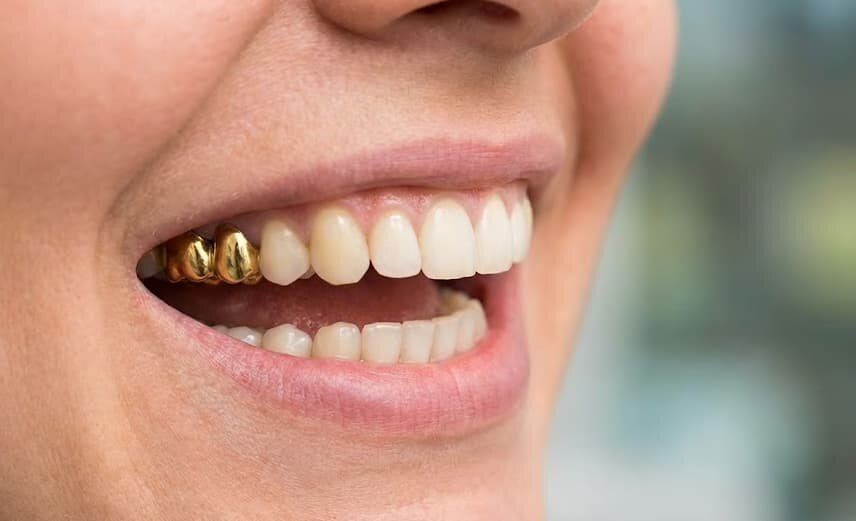
On the other hand, Dentist Polen Akkılıç and her team focus on the “human” side of the equation—the fit, the feel, and the way the gold catches the light when you speak. But let’s look closer at the experience: patients often tell us they expect the process to feel “industrial.” In reality, because gold requires less tooth reduction than ceramic, the procedure is often more conservative and less invasive.
Common Misconceptions
Some patients are concerned that gold might feel heavy or metallic in their mouth. Actually, the truth is the very reverse. Gold is such a strong metal that we can make the restoration very thin and light. Since it is a good conductor of heat and cold just like a natural tooth, you won’t get those “shocks” when eating ice cream or drinking hot coffee.
FAQ: Direct Insights from Our Doctors
Actually, pure gold is far too soft for the daily ‘marathon’ of chewing. We use high-noble alloys, which contain a high percentage of gold mixed with metals like platinum or palladium. This ensures your tooth is both beautiful and strong enough to last a lifetime.
Absolutely. We can custom-craft a gold crown to fit onto almost any existing, healthy implant system. We simply replace the old ‘top’ with a new gold one.
No. That ‘black line’ you see on old dental work usually comes from non-noble base metals. High-noble gold is highly biocompatible and very kind to your gum tissue.
Typically, we can complete the process in 5 to 7 days. This allows us time for the initial prep, the precision lab work, and a final ‘wear-test’ to ensure your bite is perfect.
Treat it like a natural tooth! Regular brushing and flossing are all you need. Gold doesn’t decay, but the bone and gums supporting it still need your protection.
- Anusavice, K. J., Shen, C., & Rawls, H. R. (2012). Phillips’ Science of Dental Materials. Elsevier Health Sciences.
- Donovan, T. E., & Cho, G. C. (2001). Predictable aesthetics with metal-ceramic and all-ceramic crowns: The state of the art. Journal of the California Dental Association, 29(9), 661-671.
- Kelly, J. R., & Nishimura, I. (2008). Science-based decision making in fixed prosthodontics. Journal of Prosthetic Dentistry, 100(2), 136-146.
- Pjetursson, B. E., Sailer, I., Zwahlen, M., & Hämmerle, C. H. (2007). A systematic review of the survival and complication rates of all-ceramic and metal-ceramic reconstructions after a five-year period. Clinical Oral Implants Research, 18(s3), 73-85.
- Yıldız, C. (2023). Advanced Implantology and Material Biocompatibility in Modern Restoration. Istanbul Medical Press.

