


Full arch treats one jaw, full mouth treats both—choice depends on need and scope.
Making the Right Choice Between Full Mouth and Full Arch Dental Implants
Simply put, your tongue and my tongue are going to be caught in a tussle clay-wrestling ‘full arch‘ versus ‘full mouth’ solutions battle at the Lema Dental Clinic. You might be shocked by the huge differences these terms make in the patient’s life depending on the surgeon who uses them. Is it a Prof. Dr. Coşkun Yıldız type of reconstructive surgery, or is it the Dentist Polen Akkılıç and her team for aesthetic refinement that makes the difference? In any case, grasping the details is the first step to your brand-new smile in Turkey.
What Is the Real Difference?: Full Arch vs Full Mouth Implants
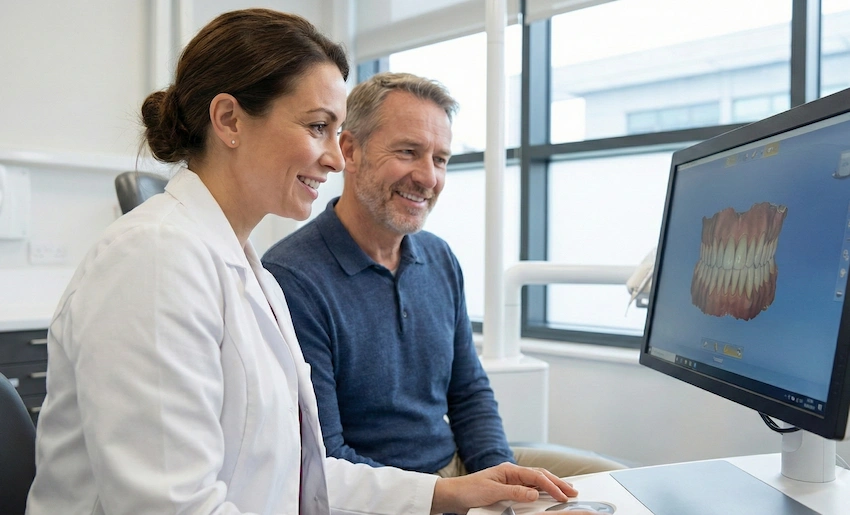
In simple words, a Full Arch means one dental arch, which can either be the top or the bottom. A “normal” set of teeth consists of two arches. On the other hand, Full Mouth dental implants mean a complete “top and bottom” renovation.
Using an Example: Full Arch vs Full Mouth Implants
Imagine your jawbone as a house foundation. If the foundation is breaking down on one side (one arch), then you can simply add a few sets of pillars (implants) to strengthen the arch. But if the whole building structure is down, then it will be a total site-wide intervention. Most patients who come to Lema Dental Clinic for “Full Mouth” treatment actually mean that they want us to do two “Full Arch” restorations at the same time, as per our clinical experience.
The Full Arch Treatment The All-on-4 and All-on-6
Basically, the full arch idea for the implant is a well-thought-out solution just as the classical engineering works. Rather than inserting individual implants for every tooth, which may be more of a disruption and definitely less necessary, we go for the strategic anchors.
- All-on-4: Four titanium posts are enough to carry a full bridge. This is most often the solution for patients who have some bone loss.
- All-on-6: Seven dental implants are frequently used to secure a dental arch. Professor Doctor Coşkun Yıldız considers this method especially in cases with high bite pressure or large jaw structures.
Comparing the Paths: A Clinical Overview
| Feature | Full Arch Restoration | Full Mouth Reconstruction |
| Scope | One jaw (Upper or Lower) | Both jaws (Complete mouth) |
| Implant Count | Typically 4 to 6 implants | Typically 8 to 12 implants total |
| Procedure Time | 2–4 hours per arch | 4–6+ hours (often staged) |
| Recovery | 3–7 days for initial healing | 7–14 days for initial healing |
| Ideal For | Localized tooth loss/decay | Total tooth loss or terminal disease |
The Journey at Lema Dental Clinic
The question arises: How can you tell which one you need? Actually, now that you think about it, the whole adventure kicks off straightaway after you land in Istanbul. Dentist Polen Akkılıç and her team heads use 3D Tomography that allows them to look “inside” your tissues, and get a thorough understanding of your case.
Imagine the bone density of your jaw as if it were the thickness of a wall. If it is very thin, like drywall, we might have to do a sinus lift or a bone graft which is a procedure we do under a microscope very gently. We don’t simply put a post and leave. Each implant is precisely directed at the site of the densest bone so that your teeth will not only be like beautiful diamonds on the outside, but behave like a durable iron on the inside.
Why the “Turkey Factor” Matters?
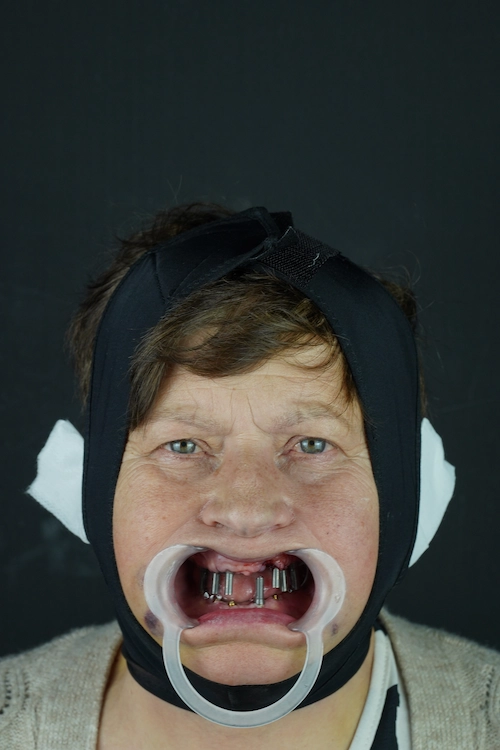
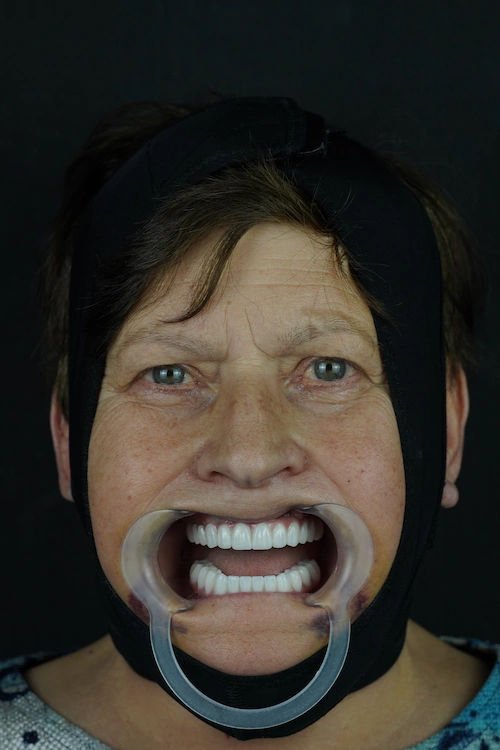
Many patients ask why they should travel to Turkey for such a major procedure. Apart from the top-notch dental facilities of Lema Dental Clinic, it is really a matter of overall experience. Teeth need more than just dental work. What we do is give back to the person the natural and effortless use of his mouth for eating, laughing, and speaking without the constant worry of his dentures slipping.
What we witness in the clinic is this scenario: a patient drops in, hesitant, laughing while covering their mouth. The same person walks out of the clinic, with a “Full Mouth“ restoration, a new smile, and the confidence that changes his whole body language, voice, and life.
Frequently Asked Questions
We really focus on your comfort at our clinic. Getting dental implants might seem like a big job but the fact is that the jawbone contains very few pain-sensing nerves. So, the majority of the patients feel the sensations just as “pressure” rather than pain. We have many sedation methods to make you feel as if you are just waking up from a very deep sleep.
Usually, we advise our patients to come twice. During the first visit (7-10 days), implants are placed and temporary teeth are given. The second time (after a few months) you come for the “final” permanent porcelain or zirconia bridge.
Our success rates are 98% +/- under the mentorship of Professor Doctor Coşkun Yıldız. This is the result of premium Grade 5 titanium usage and extremely thorough digital planning before the first incision.
100%! You see, the problem with dentures is that they only provide about 20% of the original biting force while implants will restore nearly 90-95%. Accordingly, you can enjoy your steaks, apples, and nuts again after the recovery process.
Basically, you do everything as if those are your natural teeth but you want to bring some extra “pro” tips. The main thing is brushing, water-flossing, and regular visits. Implants themselves do not get cavities, but, you still need to take care of the gums around them.
- Malo, P., de Araújo Nobre, M., Lopes, A., Moss, S. M., & Molina, G. J. (2011). “All-on-4” immediate-function concept for completely edentulous maxillae: A clinical report on the medium- (3 years) and long-term (5 years) outcomes. Clinical Implant Dentistry and Related Research.
- Buser, D., Sennerby, L., & De Bruyn, H. (2017). Modern implant dentistry based on osseointegration. Periodontology 2000.
- Papaspyridakos, P., Chen, C. J., Chuang, S. K., Weber, H. P., & Gallucci, G. O. (2012). A systematic review of biologic and technical complications with fixed implant rehabilitations for edentulous patients. International Journal of Oral & Maxillofacial Implants.
- Adell, R., Lekholm, U., Rockler, B., & Brånemark, P. I. (1981). A 15-year study of osseointegrated implants in the treatment of the edentulous jaw. International Journal of Oral Surgery.
- Taruna, M., Bengalimal, J., Singh, R. P., & Yadav, B. (2014). Prosthodontic perspectives in full mouth rehabilitation. Journal of Clinical and Diagnostic Research.

