


Yes, mild sensitivity is normal.
You have invested weeks imagining yourself with a perfect smile. You have even flown to Istanbul, toured our modern Lema Dental Clinic facilities, and finally left with a stunning set of porcelain or composite veneers. However, local anesthesia fades, and you may feel a slight, dull ache, a zing of cold sensitivity, or maybe a tightness in the gums at the treated tooth area.
The query that naturally comes to mind is: “Is this normal?”
The fact is that veneers, being a minimally invasive cosmetic procedure, still require some physical adjustment. At our clinic in Turkey, we place a high priority on patient education, in addition to surgical precision. Knowing the reason behind your mouth feeling ‘different’ is a crucial step towards a comfortable recovery.
The “New Shoe” Analogy: The Reason for Discomfort
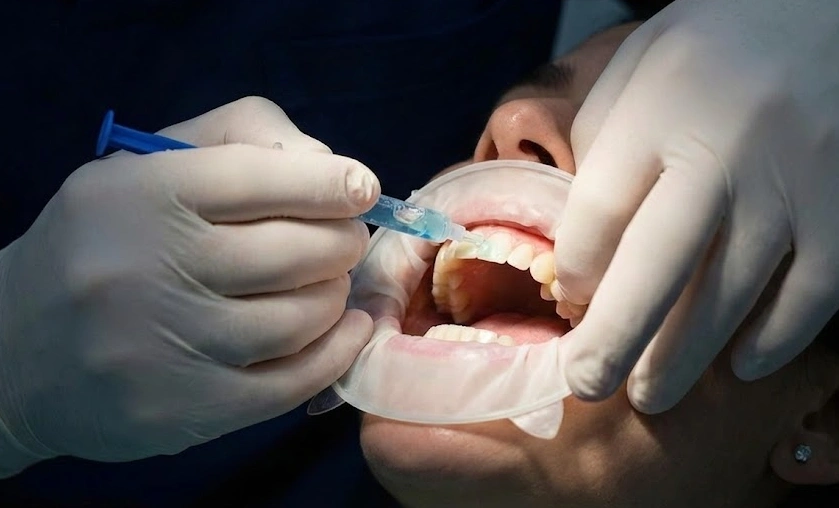
Imagine your new veneers are like a pair of custom-made, luxury leather shoes. They were made according to your feet’s exact measurements but still, the first time you put them on, they might feel somewhat tight. Your feet need some time to get used to the new shape, and likewise, the leather has to get worn in.
Here at Lema Dental Clinic, we believe teeth and gums work in a similar way to “breaking-in” the shoes. Professor Doctor Coşkun Yıldız reminds that one of the most sensitive parts of our body is the mouth. Placing a new material in it – even if it is as biocompatible as high-quality porcelain – will inevitably cause a biological negotiation period.
1. Sensitivity to Temperature
One of the frequent complaints is a sudden sensation of pain upon consumption of cold or hot drinks. Enamel removal is typically involved in the preparation stage. This exposes the dentin, the living part of a tooth, to the outside world. The nerve inside the tooth needs a few days to get used to the protection from the newly formed shell.
2. Gum Tenderness
Every veneer is fitted precisely by Dentist Polen Akkılıç and her team. However, since the edge of the veneer lies right next to the gum line, the soft tissue may feel slightly crowded or irritated for 48 to 72 hours. This is just a minor inflammatory reaction to the arrival of a new “neighbor”.
3. Bite Realignment and Jaw Fatigue
Imagine how your brain has memorized for decades the exact way your upper and lower teeth fit together. When there is a change in the length or thickness of your teeth, your brain has to “re-map” your bite. This may cause muscles in your jaw to feel tired just like your leg muscles after walking with an unfamiliar posture.
Recovery Timeline: What to Expect
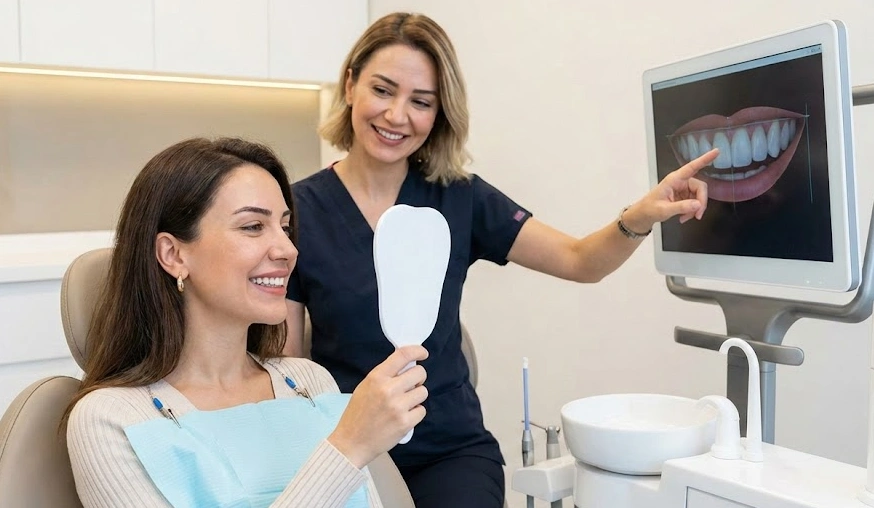
To help you plan your recovery in Turkey, here is a breakdown of the typical post-operative experience we see in our clinic.
| Phase | Typical Sensation | Recommended Action |
| Hours 1–6 | Numbness, followed by a dull ache. | Avoid hot liquids until the anesthesia wears off completely. |
| Days 1–3 | Sensitivity to cold/hot; “tight” gums. | Use a soft-bristled brush and lukewarm salt water rinses. |
| Days 4–10 | Decreasing sensitivity; “foreign object” feeling. | Practice speaking and chewing slowly to adapt your bite. |
| 2 Weeks + | Complete integration; no pain. | Schedule a follow-up if any “high spots” are felt when biting. |
When Should You Be Concerned?
Therefore, let’s focus on the signals of discomfort that do not conform to a typical healing process. While a certain level of discomfort is a normal reaction of the body, the “pain” should never be so severe as to make living difficult.
Experiencing incessant, “throbbing” pain that keeps one awake, or having a “high” bite that makes it very painful to close the mouth could indicate that the treatment needs a small adjustment. Doctor Professor Coşkun Yıldız points out that a “high spot” – that is the area on the veneer that first comes in contact with the opposing tooth – can result in the ligament being bruised to an extent that it hurts.
We do not have to worry about this for long, as the solution time is very short, just five minutes in the dental chair. All we need to do is remove the almost invisible excess by polishing to make the pressure even.
Expert Tips for a Pain-Free Transition
Here is what we recommend to our patients at Lema Dental Clinic to speed up the healing process:
- Stick to “Soft” Sightseeing: While Turkey has incredible culinary delights, stick to softer foods like hummus or yogurt for the first 48 hours.
- Anti-Inflammatories: Standard over-the-counter pain relief is usually more than enough to manage gum swelling.
- Sensodyne is Your Friend: Use a desensitizing toothpaste to “calm” the nerves during the first week.
FAQ: Direct Insights from the Team
A small amount of pinkness in the sink during your first brush is quite common. Your gums are just reacting to the bonding process. However, if bleeding persists beyond the second day, please let us know.
This is usually due to ‘holding’ your mouth open during the procedure or your muscles adapting to a new bite position. It’s similar to a workout cramp and usually fades within a few days.
Absolutely. We often recommend a mild anti-inflammatory to manage the minor swelling that occurs around the gum margins. It helps the tissue ‘settle’ around the porcelain more comfortably.
While rare, lingering sensitivity might mean the bond needs a quick check or the bite is slightly off. Since you are our guest in Turkey, we ensure your final checks are thorough before you fly home.
Not at all. Pain is almost always a sign of the body’s ‘adjustment’ process, not a failure of the restoration itself. High-quality porcelain is incredibly stable once bonded.
- Beier, U. S., Kapferer, I., Burtscher, D., & Dumfahrt, H. (2012). Clinical performance of porcelain laminate veneers for up to 20 years. Journal of Dentistry, 40(10), 790-799.
- Friedman, M. J. (1998). A 15-year review of porcelain veneer failure—A clinician’s observations. Compendium of Continuing Education in Dentistry, 19(6), 625-630.
- Gurel, G. (2003). The Science and Art of Porcelain Laminate Veneers. Quintessence Publishing.
- Pini, N. P., et al. (2012). Advances in dental veneers: materials, applications, and retrospective analyses. Journal of Conservative Dentistry, 15(1), 3.
- Radz, G. M. (2011). Minimum preparation veneers: the evolution of restorations. Journal of Esthetic and Restorative Dentistry, 23(3), 164-172.

