


No, applying denture adhesive should not hurt; pain may mean poor fit or gum irritation.
Getting comfortable with a new look takes time and adjustment, especially when it comes to a new smile. You are trying to adapt how to communicate and eat with your brand new teeth. Therefore, it is expected and quite natural to be concerned when you get your first dental adhesive, such as “Will it cause discomfort when it dries?” or “Will it really hurt my gums?”
First of all, let’s clarify. Denture adhesive shouldn’t hurt at all. Denture adhesive is like the soft gel in the bottom part of your shoe, which supports your foot on uneven ground and makes the walk comfortable without the feeling of slipping even a bit. In other words, the adhesive fills in every tiny dent between your denture and your gums. Consequently, it creates a very light, gentle, and comfortable connection. In the unlikely event that you feel pain while using denture adhesive, there might be a problem.
At Lema Dental Clinic in Turkey, one of the most widespread issues our patients have is prosthetic dental appliances not being comfortable. Prof. Dr. Coşkun Yıldız, who works here, often mentions that denture adhesive is merely a tool and not the solution itself. If you are experiencing discomfort, the reason behind the problem is quite possibly a physical issue that is more serious than the adhesive. Actually, the adhesive itself is a very rare factor to blame.
Sources of a Painful Denture
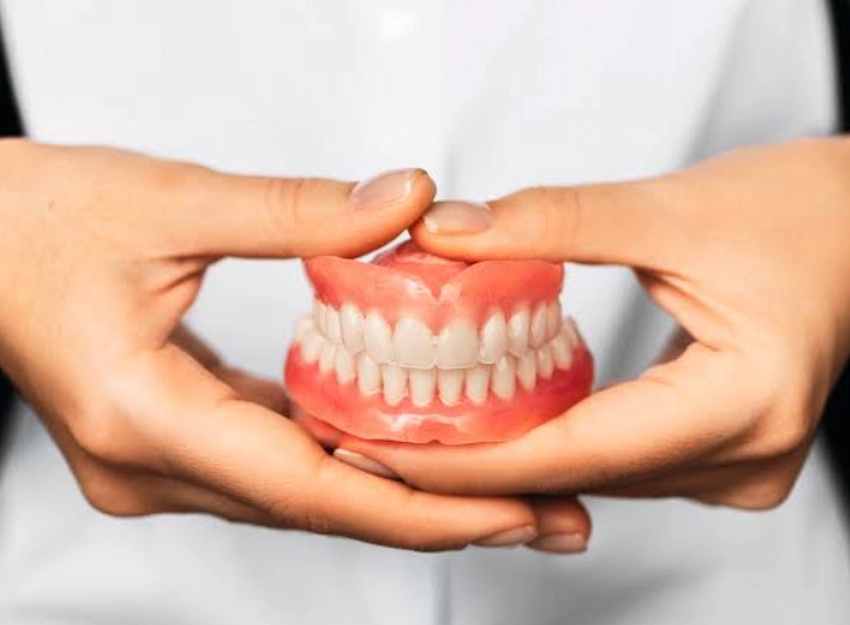
Now that we have covered why denture adhesives should not hurt, let’s try to understand what your mouth does when you put adhesive onto your dentures. Let’s see what is really happening inside your dental cavity.
Loose Dentures Blister the Soft Tissues inside the Mouth
Loose dentures rubbing inside the mouth are like being in very big-sized shoes for hiking, where your shoes cause blisters. The only thing you feel is sore feet. Similarly, when you lose your denture over time, due to shrinking bone in your jaw. A denture that fit perfectly at that time starts to move. Putting the adhesive on a loose denture, it is rubbing a soft place on your gum, which would bring about acute pain.
The “Too Much Adhesive” Trap
This is an issue that we have encountered multiple times. Usually, our patients, not sure of the right amount of adhesive, think that more means better adhesion. As a result, they literally coat their full denture with a thick layer of adhesive. Nevertheless, when they close their jaws, their teeth come closer, and the excess adhesive solidifies and becomes hard little bumps. Those hard little bumps become like rocks in a shoe and thus constantly and very uncomfortably press against the gum when people chew.
Allergic Reactions to Denture Adhesive
This is very uncommon, but some patients are allergic to commercial adhesives like these. The most frequent allergen is zinc. Unlike allergic reactions in general, such as the feeling of deep pain, the allergic reactions result in an intense hot sensation, stinging burn, or burning, especially on the palate.
Mistaking Normal Feelings for Unhealthy Ones
To know if you are in pain because of the denture or if you have some other oral problem, you should pay attention to these signs.
| Pain sensation | Reason Behind It | Do I Have to See a Dentist? |
| Mild tingling | No reason for alarm. Likely just the flavor or the coldness of the paste. | No. It will be gone in a few minutes. |
| Good and close fit | This is a positive thing, and it means that the seal is good and the denture is well secured. | No. Have fun with your food! |
| Pain while chewing | An alarm. This means that the denture is rubbing over a bone ridge. | Yes. Your denture needs a rebasing so that it fits without rubbing. |
| Intense burning feeling | An alarm. It could be that your gums have come into contact with some allergen, or that there is some abrasion from using the paste, or some other irritation is present. | Yes. Stop using it and visit the dentist. |
| Jaw pain | The warning sign. Your bite is causing your jaw to be under stress, as it is out of balance. | Yes. You will be having a bite check soon. |
Going Beyond Denture Adhesive
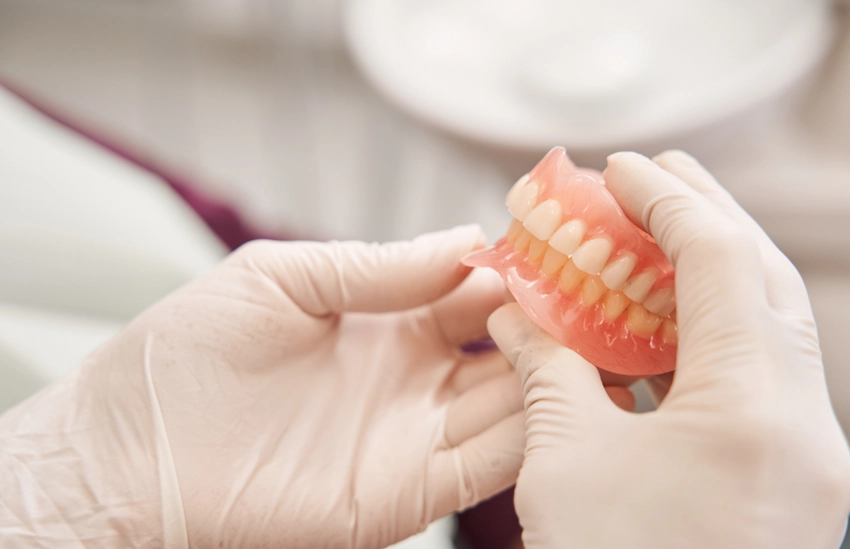
Dentist Polen Akkılıç and her team spend an ample amount of time educating patients about oral health and smiling properly. Actually, to be perfectly frank, you need denture adhesive for a very short period of time. You cannot and are discouraged from using it throughout your entire lifetime.
In case a very large amount of the adhesive paste, enough to keep the denture in place by its weight, is necessary for you to have one meal, you need to consider other options besides the use of denture adhesives. We help the patients here in Lema Dental Clinic transition from very old dentures to dental implants. Dental implants are like the roots of a great tree and are very stable, and they keep the tree upright in any kind of weather. In dental terms, the prosthetic dentition that is attached to the implants stays stable; the movement is only from the part that is attached to the implant.
Frequently Asked Questions
I feel a burning feeling right after I put my dentures in. Is that normal?
On the contrary, it is not normal at all. A slight refreshing flavor is normal thing, and there is nothing to worry about. The burning feeling, on the other hand, points to an irritant substance contact that has occurred in your mouth. Immediately after feeling a burning sensation, you should rinse your mouth to get rid of the denture paste. Allow your gums to rest without contact to any material or chemical.
How much adhesive should I actually be applying?
Using less is definitely better. To cover your denture base thoroughly, all you need are only 3, four tooth-size dots. Make sure that these drops do not get too close to the margin so that adhesive does not escape when you bite. Remember, any excess will mean that you have used far more than what is advisable.
Does removing my dentures at night hurt?
In theory, it should not cause pain. But if you take a dry denture out very quickly, that might result in the tearing of your gums. Therefore, before you take your dentures out of your mouth, the dentist recommends thoroughly rinsing your mouth with warm water for around a half minutes. This treatment is going to weaken the adhesive, which then would give rise to denture removal without any trouble.
My gums are sore. Can I put adhesive over a mouth ulcer?
For heaven’s sake, no! If you put a chemical substance such as adhesive or a medicine on the inside of a mouth ulcer, you are doing several wrong things. Firstly, the chemical will kill off most of your good bacteria, which have helped you to start the healing process. And second, the oxygen supply is stopped, which is needed for the skin to regenerate. In order to get quick relief, you have to leave your mouth free for a night or so until the area where you had the ulcer is healed completely.
I am tired of using adhesive. What are my options in Turkey?
What are other things you can do if using adhesive is not your cup of tea? Well, in a few situations, we recommend getting All-on-4 dental implants in one jaw. Alternatively, getting full mouth implants, which would correspond to you getting All-on-6. First, it’s a matter of our surgical department putting some small titanium posts inside the jawbone. The artificial teeth, which are fixed onto these posts, can never be taken loose, or they can never cause any pain.
Academic References
- Felton, D., Cooper, L., Duqum, I., Minsley, G., Guckes, A., Haug, S., … & Sweitzer, B. (2011). Evidence-based guidelines for the care and maintenance of complete dentures: a publication of the American College of Prosthodontists. Journal of Prosthodontics, 20(s1), S1-S12.
- Grasso, J. E. (2004). Denture adhesives: changing attitudes. The Journal of the American Dental Association, 135(1), 81-86.
- Kiesow, A., Sarembe, S., Pizzey, R. L., Axe, A. S., & Bradshaw, D. J. (2016). Material compatibility and antimicrobial activity of consumer products for denture care. The Journal of Prosthetic Dentistry, 115(2), 189-198.
- Polyzois, G. L., & de Baat, C. (2012). Attitudes and practices of Greek dentists regarding denture adhesives. Gerodontology, 29(2), e319-e325.
- Slaughter, A. (2006). The evidence base for denture adhesives. Journal of Prosthodontics, 15(4), 223-228.

